


Guterres in Senegal: ‘Triple Crisis’ in Africa Aggravated by War in Ukraine

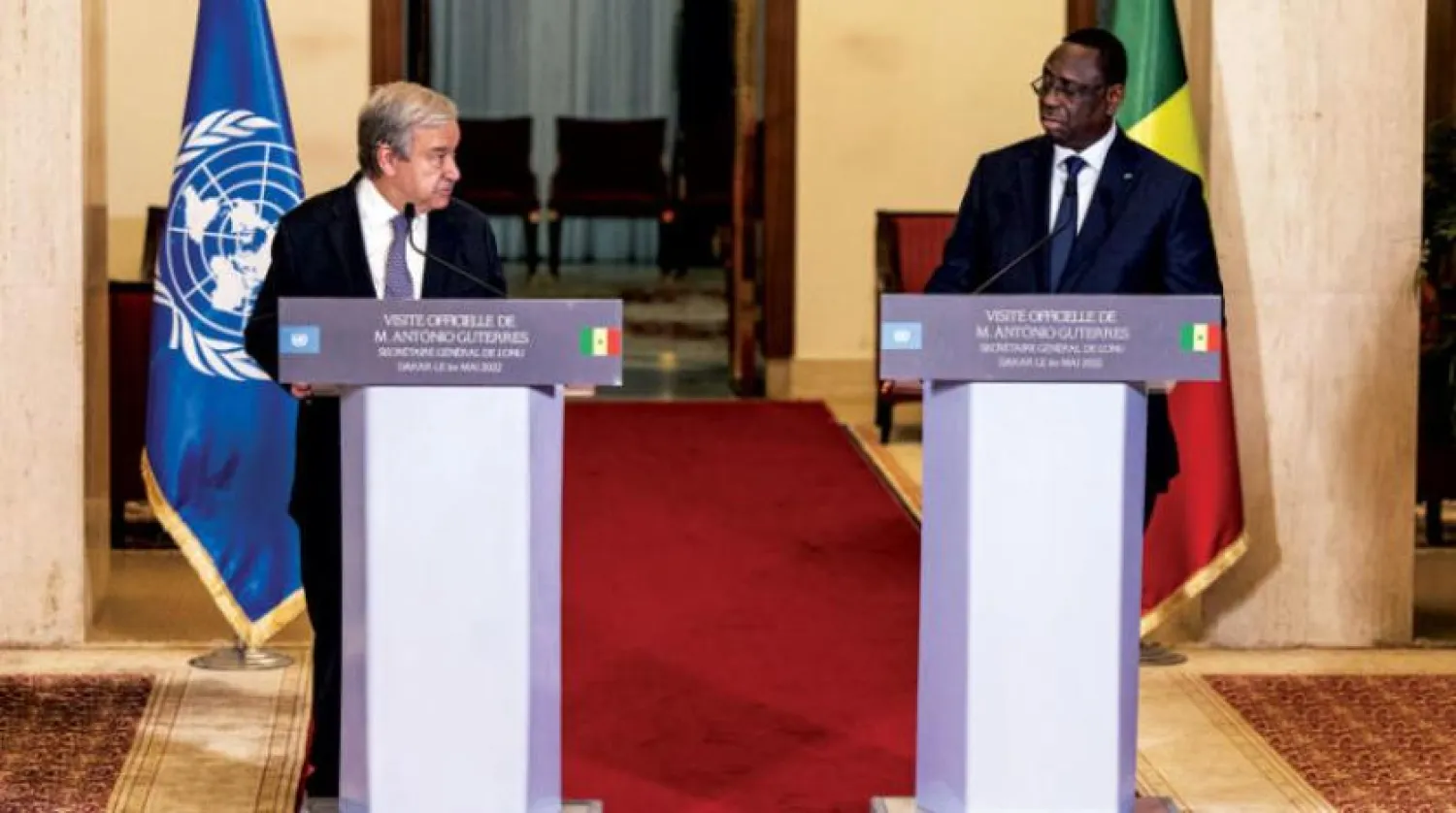
UN Secretary-General Antonio Guterres and Senegal's President Macky Sall at a press conference in Dakar. AFP
TT

Guterres in Senegal: ‘Triple Crisis’ in Africa Aggravated by War in Ukraine

UN Secretary-General Antonio Guterres and Senegal's President Macky Sall at a press conference in Dakar. AFP

The war in Ukraine is aggravating a “triple food, energy and financial crisis,” across Africa, according to UN Secretary-General Antonio Guterres.

Speaking in Dakar, the capital of Senegal, on his first visit to Africa since the beginning of the COVID-19 pandemic, Guterres said, “when discussing the socio-economic situation, it is impossible not to mention the war in Ukraine and its impact on Africa.”

The UN chief made the remarks after meeting the country’s President Macky Sall, who said that the war in Ukraine was “a human tragedy” which can have “a dramatic impact on economies, in particular, those of developing countries.”

Before the Russian invasion began in February, the combination of climate change, conflict and the pandemic, was already impacting the socio-economic situation in Africa, especially in the Sahel region which includes Senegal.

Earlier Guterres and Sall toured a new hi-tech vaccine production facility, currently being built by the Institut Pasteur in Dakar. When completed, it will be able to produce a range of vaccines including Pfizer-BioNTech, one of the most widely used immunizations against COVID-19. It will also be able to manufacture experimental vaccines against malaria and tuberculosis.

Guterres said that it was necessary to “build true vaccine equity across the world,” and that it was “unacceptable” that close to 80 percent of Africans are not vaccinated against COVID-19; a situation which he called a “moral failure.”

Sall has called for pharmaceutical sovereignty by supporting the emergence of an African pharmaceutical industry capable of meeting basic needs and coping with pandemics.

As part of the COVID-19 recovery plan, Senegal is strengthening its drugs manufacturing sector. It’s expected that the vaccination facility will produce at least 50 percent of the country’s needs.

Guterres added that the world’s “wealthiest countries and pharmaceutical companies should accelerate the donation of vaccines and invest in local production” of the type seen at Institut Pasteur facility.

Increased investment is part of a global strategy to support developing countries facing what the UN has called “cascading crises.” In March 2022, the UN chief established the Global Crisis Response Group on Food, Energy and Finance (GCRG) set up in response to the crisis provoked by Russia’s invasion of Ukraine, saying that the invasion was producing alarming effects on a world economy already battered by COVID-19 and climate change.

Sall is one of six eminent world leaders who have been named as Champions of the group and who are supporting the Secretary-General’s call for immediate action to prevent, mitigate and respond to the crisis. He is also the Chairperson of the African Union for 2022.

Talking to reporters in Dakar, Guterres said, “we must ensure a steady flow of food and energy in open markets, removing all unnecessary export restrictions,” adding that “countries must resist the temptation to hoard and instead release strategic stocks of energy.”

The UN estimates that a quarter of a billion people could be pushed into extreme poverty this year, caused by the consequences of the conflict in Ukraine. International financial institutions have a key role to play and “must urgently provide debt relief by increasing liquidity and fiscal space,” the UN chief said, “so that governments can avoid default and invest in social safety nets and sustainable development for their people.”



Barclays Says Brent Crude Oil Could Reach $100 a Barrel

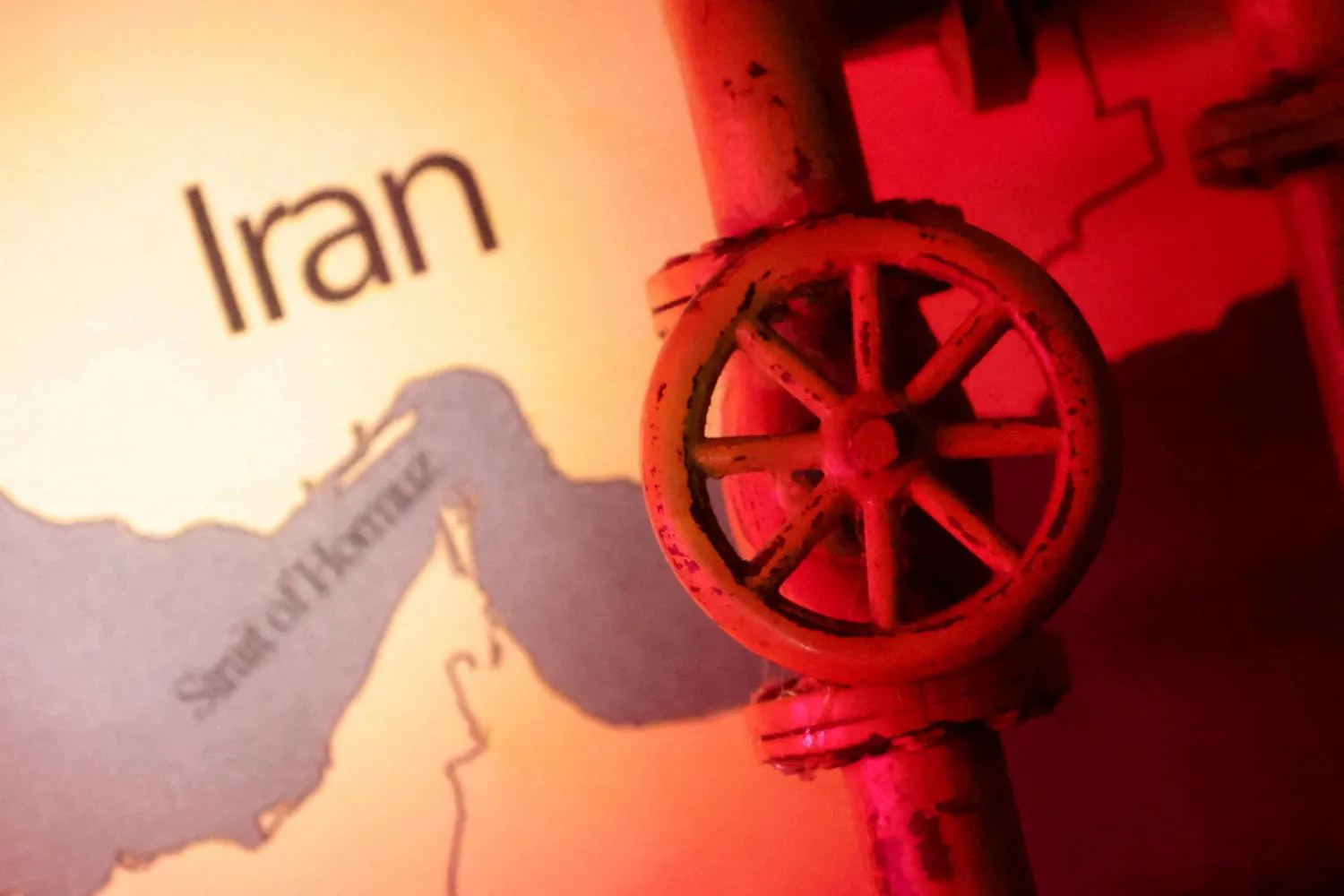
FILE PHOTO: A map showing the Strait of Hormuz and Iran is seen behind a 3D printed oil pipeline in this illustration taken June 22, 2025. REUTERS/Dado Ruvic/Illustration/File Photo
TT

Barclays Says Brent Crude Oil Could Reach $100 a Barrel

FILE PHOTO: A map showing the Strait of Hormuz and Iran is seen behind a 3D printed oil pipeline in this illustration taken June 22, 2025. REUTERS/Dado Ruvic/Illustration/File Photo

Barclays boosted its Brent crude oil futures price forecast to around $100 per barrel on Saturday, up from $80 on Friday, after the United States and Israel bombed several sites in Iran.

"Oil markets might have to face their worst fears on Monday. As things stand right now, we think Brent could hit $100 (per barrel), as the market grapples with the threat of a ⁠potential supply disruption amid ⁠a spiraling security situation in the Middle East," the bank said in a report.

The United States and Israel attacked Iran on Saturday, targeting its top leaders and calling for the overthrow ⁠of its government, while Iran responded with missiles fired at Israel and neighboring Gulf countries.

Oil prices rose about 2% on Friday, with traders bracing for supply disruptions as nuclear talks between the US and Iran had yet to reach an agreement.

Brent settled at $72.48 a barrel.

About a fifth of the oil consumed globally passes through the Strait of ⁠Hormuz between ⁠Oman and Iran, making any disruptions in the area a major risk to global oil supplies.


Oil Prices Set for Swings Next Week as US-Israel Strikes Raise Supply Uncertainty

Markets are anticipating movements in oil prices after the American-Israeli attack on Iran (Reuters)
TT

Oil Prices Set for Swings Next Week as US-Israel Strikes Raise Supply Uncertainty

Markets are anticipating movements in oil prices after the American-Israeli attack on Iran (Reuters)

Oil markets currently closed for the weekend are set to see price swings next week as the impact from the US and Israeli strikes on oil supplies from the Middle East remains unclear.

Scenarios before the latest conflict with Iran foresaw a quick price spike that fades if the attacks didn't affect oil shipping and infrastructure such as Iranian pipelines and its Kharg island terminal. However, there would be a bigger price spike and longer-lasting impact if oil infrastructure or supplies were interrupted, for instance because of disruption of tanker traffic through the Strait of Hormuz.

Oil prices have already risen on war fears. International benchmark Brent crude closed at a seven-month high of $72.87 on Friday, Reuters reported.

Iran exports some 1.6 million barrels of oil a day, most of it going to China, where privately owned refineries are less concerned about the US sanctions that prevent Iran from selling its oil elsewhere. If that supply is disrupted, Chinese customers would look elsewhere for oil on the global market, potentially driving up prices.

Another question is around the Strait of Hormuz, through which 20% of global oil supply pass through each day. Middle East exporters Saudi Arabia, Iraq and the United Arab Emirates send most of their exports through the strait. However analysts say Iran has no incentive to try to close the strait because it would cut off its own exports and hurt its only big customer, China.

Limited strikes on Iran’s nuclear program and the Revolutionary Guard that avoid regime change or all-out war could see prices jump $5-$10 based on fear alone, according to Rystad Energy in a prewar scenario.

A wider war involving Iranian disruption of tanker traffic could see crude push past $90 per barrel and US gas prices “well above” $3 per gallon, according to another prewar scenario from Clayton Seigle at the Center for Strategic & International Studies. US gas prices averaged $2.98 per gallon last week according to US motoring club AAA.


Israel Shuts Down Gas Fields After US-Israel Strikes on Iran

The gas platform for Leviathan, Israel's largest gas field is seen from a helicopter near Haifa bay, northern Israel, August 1, 2023. REUTERS/Ari Rabinovitch
TT

Israel Shuts Down Gas Fields After US-Israel Strikes on Iran

The gas platform for Leviathan, Israel's largest gas field is seen from a helicopter near Haifa bay, northern Israel, August 1, 2023. REUTERS/Ari Rabinovitch

The Israeli Energy Ministry has ordered the temporary shutdown of parts of the country's natural gas reservoirs after Israel and the United States launched strikes on Iran on Saturday.

The Leviathan gas field offshore Israel, operated by Chevron has been shut down, three sources told Reuters. Energean’s production vessel that serves several Israeli fields has also been shut down, the company said in a statement.

Israel’s ministry said the decision was based on “the current situation and in accordance with security assessments”, Reuters reported.

It said country’s energy needs would be met through alternative sources and that the electricity sector was prepared to operate power stations using alternative fuels if necessary.