

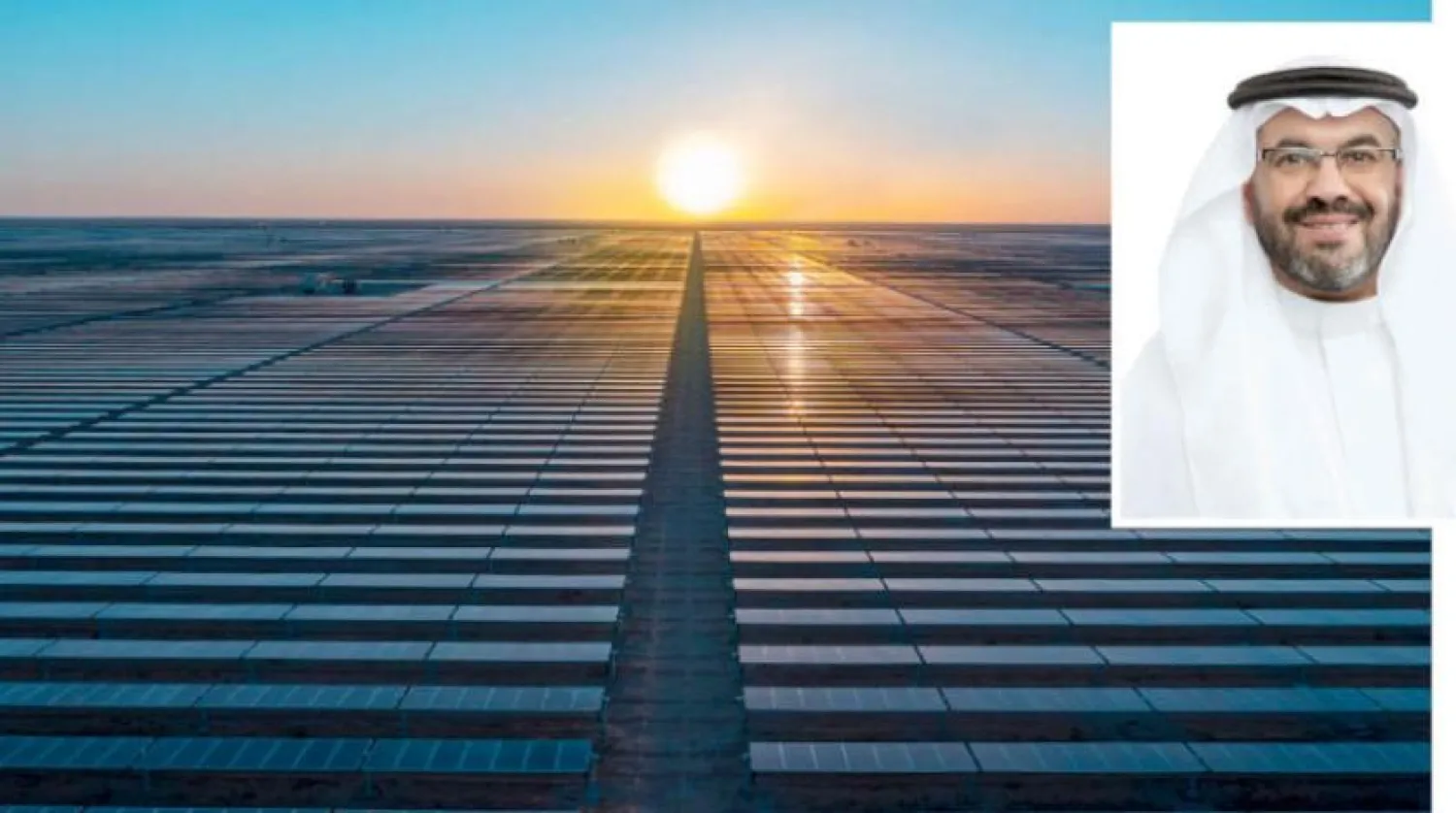

Saudi Arabia Takes Rapid Steps to Export Solar Panels Worldwide

Saudi Arabia expands efforts to adopt the uses of solar energy (Asharq Al-Awsat)
TT

Saudi Arabia Takes Rapid Steps to Export Solar Panels Worldwide

Saudi Arabia expands efforts to adopt the uses of solar energy (Asharq Al-Awsat)

Desert Technologies’ Chief Commercial Officer Majid Refae confirmed that Saudi Arabia is offering several programs that support Saudi manufacturers and facilitate the export of solar panels to all countries of the world.

In an interview with Asharq Al-Awsat, Refae revealed that the Kingdom has set its priorities for green energy generation and is driving the sector’s companies and institutions towards achieving key goals while expanding and developing their businesses in the next stage.
On exporting solar panels, Refae said it was vital as it helps in increasing and creating more job opportunities in the Kingdom and contributes to growing Saudi Arabia’s GDP.

He reminded that the export of national products is one of the most important axes of Saudi Arabia’s national transformation plan, Kingdom Vision 2030.

In coordination with the Saudi Energy Ministry, Desert Technologies has plans to provide the needs of the Kingdom's market. This includes building solar power plants with capacities greater than 2 megawatts for citizens and major consumers inside their facilities and homes.
Any surplus would be exported to the public electricity network in 2022.

Exporting Solar Panels

The Kingdom has taken great strides in exporting solar panels through several programs that support Saudi manufacturers, such as the Saudi Export-Import Bank, the Saudi Development Fund, the National Companies Leadership Program.

“We, as a specialized company, have had the privilege of cooperating with the National Companies Leadership Program and the Import-Export Bank in signing agreements to export solar panels to Europe, Africa and the US,” Refae told Asharq Al-Awsat.

Positive Returns

Besides generating more job opportunities for the Kingdom’s youth, exporting solar panels also contributes to growing Saudi Arabia’s GDP by focusing on export activity, which is one of the main objectives of Kingdom Vision 2030.

Moreover, the manufacture and export of solar panels helps advance the Saudi Green Initiative which brings together environmental protection, energy transformation and sustainability programs to work towards a green future.

Desert Technologies, the first Saudi factory and company to export solar panels, has been keen on being one of the main contributors to renewable energy projects, stressed Refae.

The company has developed a production line to manufacture solar panels with an accumulated capacity. This will contribute to making Desert Technologies one of the most important national factories for solar panels in the region.

Energy Ministry

“Our plan is compatible with the Energy Ministry and works to provide the Kingdom’s market needs of solar energy products,” said Refae, noting that the Saudi market is one of the largest Arab markets in need of solar products.

“The residential sector in the Kingdom constitutes more than 50% of the market size,” noted Refae, adding that the demand is increasing with the rise of new cities such as Neom.

“We are working to contribute to the realization of plans aimed at expanding the use of solar energy at the commercial and residential levels,” affirmed Refae.

Saudi Made

Refae pointed out that the “Saudi Made” program is a milestone for all Saudi manufacturers, as it reflects the ability of the Saudi product to compete with high quality.

“Saudi Made” builds a cooperative society linking several companies, whereby adequate support is provided to the public and private sectors. It also contributes to making the Kingdom's goods and services a preferred and prominent option at the local and global levels.

Exporting Outside the Kingdom

On foreign projects, Refae added that Desert Technologies had expanded its participation in the framework of supporting the “Saudi Made” program and increasing the volume of Saudi non-oil exports.

Its activities reached Greece, where it is currently supplying solar panels for renewable energy projects on one of the Greek islands with a capacity of 11 megawatts.

“The company has signed a commercial agreement with a US company to export solar panels to its projects in the US,” revealed Refae.

The deal puts Desert Technologies in a leading position in the US market and enhances its position in the field of producing and exporting solar panels at the international level.



China Widens Foreign Investment Incentive List to Stem Falling Inflows

People visit a shopping center in Beijing on December 20, 2025. (AFP)
TT

China Widens Foreign Investment Incentive List to Stem Falling Inflows

People visit a shopping center in Beijing on December 20, 2025. (AFP)

China on Wednesday listed more sectors eligible for foreign investment incentives, from tax breaks to preferential ​land use, in its latest effort to stem a prolonged decline in overseas capital inflows.

Under the 2025 edition of the catalogue of industries for encouraging foreign investment, China added more than 200 and revised about 300, with a ‌focus on ‌advanced manufacturing, modern services and ‌green ⁠and ​high-tech ‌sectors, the list jointly issued by the National Development and Reform Commission and the commerce ministry showed.

The new catalogue, which takes effect on February 1, 2026, replaces the 2022 version and continues a policy framework ⁠that offers foreign-invested enterprises tariff exemptions on imported equipment, preferential ‌land pricing, reduced corporate income ‍tax rates in ‍designated regions and tax credits for reinvestment ‍of profits.

The catalogue also extends incentives to central and western regions, as well as the northeast and Hainan, as Beijing seeks to attract ​more foreign investment into less developed areas.

China has in recent months ⁠taken a raft of measures to boost foreign investment, including pilot programs in Beijing, Shanghai and other regions to expand market access in services such as telecoms, healthcare and education, amid trade tensions with the United States.

Foreign direct investment in China totaled 693.2 billion yuan ($98.84 billion) from January to November this year, down 7.5% from the ‌same period last year, data from the commerce ministry showed.


Environment Ministry Launches Saudi Citrus Season with Production Exceeding 158,000 Tons

The citrus production season in the Kingdom begins in July and continues through March each year. (SPA)
TT

Environment Ministry Launches Saudi Citrus Season with Production Exceeding 158,000 Tons

The citrus production season in the Kingdom begins in July and continues through March each year. (SPA)

The Saudi Ministry of Environment, Water and Agriculture launched on Wednesday the Kingdom’s citrus season in local markets as part of its efforts to support and develop the agricultural sector and enhance food security in the country, in line with the Saudi Vision 2030.

The is part of the ministry’s ongoing efforts to support national agricultural products, raise awareness of citrus varieties and their nutritional benefits and production areas, and highlight their year-round diversity across production seasons.

These efforts help in improving marketing efficiency, boost competitiveness, and achieve rewarding economic returns.

Citrus fruits are among the most widely cultivated crops in the Kingdom. They are grown in several regions that produce a variety of citrus types, most notably lemons, oranges, mandarins, grapefruit, citron, and kumquats.

The ministry said lemon production leads Saudi citrus output, with total production exceeding 123,000 tons and more than 1.5 million fruit-bearing trees. Orange production follows, with total output reaching 35,700 tons and more than 397,000 fruit-bearing trees.

The citrus production season in the Kingdom begins in July and continues through March each year, it added.

The ministry said the Saudi citrus season has been launched with a number of major retail markets across the Kingdom showcasing local products through innovative packaging and display methods. This boosts the quality and reliability of local products and increases consumer demand during production seasons.


SLB Awarded 5-Year Contract to Stimulate Unconventional Gas in Saudi Arabia

SLB has been awarded a five-year contract by Saudi Aramco to provide stimulation services for its unconventional gas fields. (Asharq Al-Awsat)
TT

SLB Awarded 5-Year Contract to Stimulate Unconventional Gas in Saudi Arabia

SLB has been awarded a five-year contract by Saudi Aramco to provide stimulation services for its unconventional gas fields. (Asharq Al-Awsat)

Global technology company, SLB, has been awarded a five-year contract by Saudi Aramco to provide stimulation services for its unconventional gas fields, the company said in a statement on Tuesday.

The move is part of a broader multi-billion contract, supporting one of the largest unconventional gas development programs globally, it said.

The contract encompasses advanced stimulation, well intervention, frac automation, and digital solutions, which are important to unlocking the potential of Saudi Arabia’s unconventional gas resources - a cornerstone of the Kingdom’s strategy to diversify its energy portfolio and support the global energy transition.

“This agreement is an important step forward in Aramco’s efforts to diversify its energy portfolio in line with Vision 2030 and energy transition goals,” said Steve Gassen, SLB executive vice president.

“With world-class technology, deep local expertise, and a proven track record in safety and service quality, SLB is well positioned to deliver tailored solutions that could help redefine operational performance in the development of Saudi Arabia’s unconventional resources,” he added.

These solutions provide the tools to work toward new performance benchmarks in unconventional gas development.

SLB is a global technology company that drives energy innovation for a balanced planet.

With a global footprint in more than 100 countries and employees representing almost twice as many nationalities, it works on innovating oil and gas, delivering digital at scale, decarbonizing industries, and developing and scaling new energy systems that accelerate the energy transition.