


Egypt Provides Digital Transformation Training to Mosque Preachers

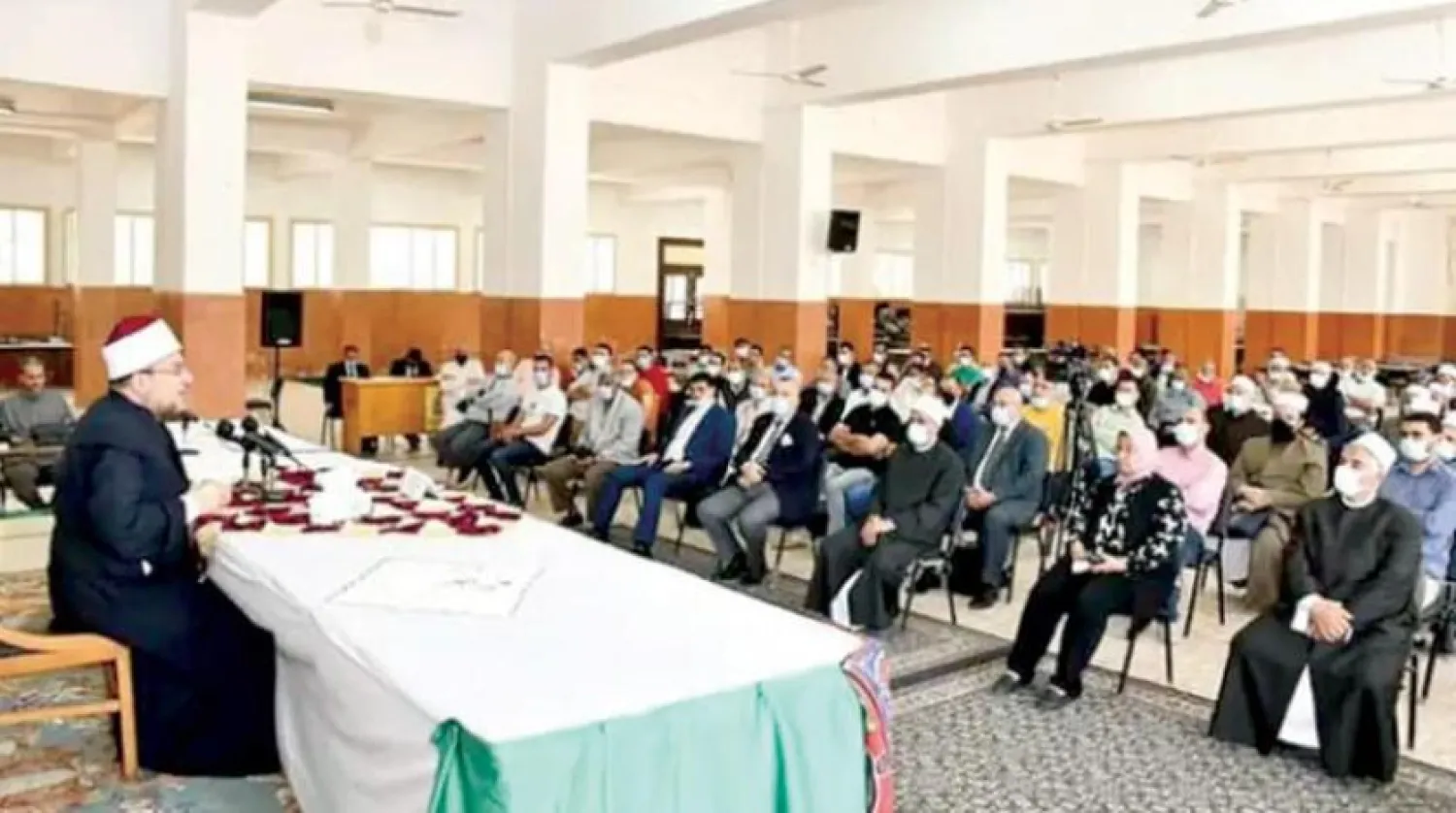
The Egyptian Minister of Endowments leads the activities of an “educational camp”, organized by the ministry in Alexandria. (Photo: Egyptian Endowments website)
TT

Egypt Provides Digital Transformation Training to Mosque Preachers

The Egyptian Minister of Endowments leads the activities of an “educational camp”, organized by the ministry in Alexandria. (Photo: Egyptian Endowments website)

Egypt will train mosque imams and preachers on digital transformation and cyberspace, in an endeavor to improve their capabilities and maximize their communication skills.

The training on computer and digital transformation will kick off on Saturday at the International Endowment Academy for Training and Rehabilitation of Imams in Giza.

The Egyptian Ministry of Endowments (Awqaf) said that the program was aimed at enhancing scientific excellence and knowledge among the imams and the ministry’s employees.

Egyptian Minister of Endowments Mohamed Mokhtar Gomaa inaugurated in January the International Awqaf Academy (IAA), a training institute for imams and preachers in the governorate of Giza.

In a speech on the occasion, the minister said that the Academy was a starting point toward moving forward with the call “to renew Islamic discourse to face an intellectual stalemate and extremism.”

The IAA was built on an area of 11,000 square meters for 100 million Egyptian pounds ($5.6 million), funded by the Ministry of Endowments, and fitted with modern equipment and computer rooms.

The initiative came upon the directives of President Abdel-Fattah El-Sisi, who had called for developing training programs for imams and preachers, to improve their capabilities and communication skills.



Hezbollah Rejects Disarmament Plan and Government’s Four-Month Timeline

29 July 2024, Iran, Tehran: Then Hezbollah deputy leader Sheikh Naim Qassem is pictured during a meeting in Tehran. (Iranian Presidency/dpa)
TT

Hezbollah Rejects Disarmament Plan and Government’s Four-Month Timeline

29 July 2024, Iran, Tehran: Then Hezbollah deputy leader Sheikh Naim Qassem is pictured during a meeting in Tehran. (Iranian Presidency/dpa)

Hezbollah rejected on Tuesday the Lebanese government's decision to grant the army at least four months to advance the second phase of a nationwide disarmament plan, saying it would not accept what it sees as a move serving Israel.

Lebanon's cabinet tasked the army in August 2025 with drawing up and beginning to implement a plan to bring all armed groups' weapons under state control, a bid aimed primarily at disarming Hezbollah after its devastating ‌war with ‌Israel in 2024.

In September 2025 the cabinet formally ‌welcomed ⁠the army's plan to ⁠disarm the Iran-backed Shiite party, although it did not set a clear timeframe and cautioned that the military's limited capabilities and ongoing Israeli strikes could hinder progress.

Hezbollah Secretary-General Sheikh Naim Qassem said in a speech on Monday that "what the Lebanese government is doing by focusing on disarmament is a major mistake because this issue serves the goals of Israeli ⁠aggression".

Lebanon's Information Minister Paul Morcos said during a press ‌conference late on Monday after ‌a cabinet meeting that the government had taken note of the army's monthly ‌report on its arms control plan that includes restricting weapons in ‌areas north of the Litani River up to the Awali River in Sidon, and granted it four months.

"The required time frame is four months, renewable depending on available capabilities, Israeli attacks and field obstacles,” he said.

Hezbollah lawmaker Hassan ‌Fadlallah said, "we cannot be lenient," signaling the group's rejection of the timeline and the broader approach to ⁠the issue of ⁠its weapons.

Hezbollah has rejected the disarmament effort as a misstep while Israel continues to target Lebanon, and Shiite ministers walked out of the cabinet session in protest.

Israel has said Hezbollah's disarmament is a security priority, arguing that the group's weapons outside Lebanese state control pose a direct threat to its security.

Israeli officials say any disarmament plan must be fully and effectively implemented, especially in areas close to the border, and that continued Hezbollah military activity constitutes a violation of relevant international resolutions.

Israel has also said it will continue what it describes as action to prevent the entrenchment or arming of hostile actors in Lebanon until cross-border threats are eliminated.


Syria Starts Evacuating ISIS-linked Al-Hol Camp

TOPSHOT - Members of Syrian security forces march through the entrance of the Al-Hol camp in the desert region of Hasakeh province on January 21, 2026. (Photo by OMAR HAJ KADOUR / AFP)
TT

Syria Starts Evacuating ISIS-linked Al-Hol Camp

TOPSHOT - Members of Syrian security forces march through the entrance of the Al-Hol camp in the desert region of Hasakeh province on January 21, 2026. (Photo by OMAR HAJ KADOUR / AFP)

Syrian authorities began evacuating remaining residents of the ISIS group-linked Al-Hol camp in the country's northeast on Tuesday, as they empty the formerly Kurdish-controlled facility, two officials told AFP.

Fadi al-Qassem, the official appointed by the government with managing Al-Hol's affairs, told AFP that the camp "will be fully evacuated within a week, and nobody will remain", adding that "the evacuation started today".

A government source told AFP on condition of anonymity that "the emergencies and disaster management ministry is working now to evacuate Al-Hol camp" and take residents to a camp in Akhtarin, in the north of Aleppo province.


Protesters Block Beirut Roads after Cabinet Approves New Taxes that Raise Fuel Prices

Taxi drivers, foreground, block a main highway with their cars during a protest against the increased taxes and gasoline prices issued by the Lebanese Cabinet on Monday, in Beirut, Lebanon, Tuesday, Feb. 17, 2026. (AP Photo/Hussein Malla)
TT

Protesters Block Beirut Roads after Cabinet Approves New Taxes that Raise Fuel Prices

Taxi drivers, foreground, block a main highway with their cars during a protest against the increased taxes and gasoline prices issued by the Lebanese Cabinet on Monday, in Beirut, Lebanon, Tuesday, Feb. 17, 2026. (AP Photo/Hussein Malla)

Protesters blocked main roads in and around Beirut on Tuesday after Lebanon’s Cabinet approved new taxes that raise fuel prices and other products to fund public pay hikes.

The Cabinet approved a tax of 300,000 Lebanese pounds (about $3.30) on every 20 liters (5.3 gallons) of gasoline on Monday. Diesel fuel was exempted from the new tax, as most in Lebanon depend on it to run private generators to make up for severe shortages in state electricity.

The government also agreed to increase the value-added tax on all products already subject to the levy from 11 to 12%, which the parliament still has to approve, The Associated Press said.

The tax increases are to support raises and pension boosts of public employees, after wages lost value in the 2019 currency collapse, giving them the equivalent of an additional six months’ salary. Information Minister Paul Morcos said the pay increases were estimated to cost about $800 million.

Though the Mediterranean country sits on one of the largest gold reserves in the Middle East, it suffers ongoing inflation and widespread corruption. The cash-strapped country also suffered about $11 billion in damages in the 2024 war between Israel and the Hezbollah militant group.

Anger over fuel hike Ghayath Saadeh, one of a group of taxi drivers who blocked a main road leading into downtown Beirut, said the country’s leaders “consider us taxi drivers to be garbage.”

“Everything is getting more expensive, food and drinks, and Ramadan is coming,” he said. “We will block all the roads, God willing, if they don’t respond to us.”

When the Lebanese government proposed new taxes in 2019, including a $6 monthly fee for using internet calls through services such as WhatsApp, mass protests broke out that paralyzed the country for months. Demonstrators called for the country’s leaders to step down over widespread corruption, government paralysis and failing infrastructure, and for an end to the country’s sectarian power-sharing system.

Lebanon has been under international pressure to make financial reforms for years, but has so far made little progress.

Weapons plan discussed

Also Monday, the cabinet received a report from the Lebanese army on its progress on a plan to disarm non-state militant groups in the country, including Hezbollah.

Last month, the army announced it had completed the first phase of the plan, covering the area south of the Litani River, near the border with Israel. The second phase of the plan will cover segments of southern Lebanon between the Litani and the Awali rivers, which includes the port city of Sidon.

Morcos, the information minister, said following the cabinet session that the second stage is expected to take four months but could be extended “depending on the available resources, the continuation of Israeli attacks and the obstacles on the ground.”

The disarmament plan comes after a US-brokered ceasefire nominally ended a war between Hezbollah and Israel in November 2024. Since then, Israel has accused Hezbollah of rebuilding and has continued to launch near-daily strikes in Lebanon and to occupy several hilltop points on the Lebanese side of the border.

Hezbollah has insisted that the ceasefire deal only requires it to disarm south of the Litani and that it will not discuss disarming in the rest of the country until Israel stops its strikes and withdraws from all Lebanese territory.