


77% of the Displaced in Yemen Are Women, Children

Young girls in a displaced persons camp near Marib in Yemen (WFP)
TT

77% of the Displaced in Yemen Are Women, Children

Young girls in a displaced persons camp near Marib in Yemen (WFP)

An estimated 77 percent of the 4.3 million people displaced in Yemen are women and children, according to factsheets released by UNDP.

Marib hosts over 60 percent of all Yemeni refugees and asylum-seekers who escaped the hell of Houthi militias that turned the country to one of the world’s largest humanitarian crises.

“Approximately 26 percent of displaced households are now headed by women, compared to 9 percent before the escalation of the conflict in 2015,” following the militias' coup against legitimacy in Yemen.

The UNDP report revealed that this number is an indication of increased precarity because of the loss of male breadwinners, while discriminatory societal attitudes towards women’s economic engagement and movement remain unchanged.

The UN said that a staggering 23.4 million people or 73 percent of the population, require some form of humanitarian assistance in 2022, the result of seven years of escalating conflict.

The report also revealed that an estimated 8.1 million women and girls of childbearing age require help accessing reproductive health services, including antenatal care, safe delivery services, postnatal care, family planning, and emergency obstetric and newborn care.

“Among them are 1.3 million women who will deliver in 2022, of whom 195,000 are projected to develop complications, requiring medical assistance to save their lives and that of their newborns,” it noted.

Also, over 1 million pregnant and breastfeeding women are projected to experience acute malnutrition sometime in the course of 2022.

“Due to extreme shortages of essential medicines, supplies and specialized staff, only 1 in 5 of the functioning facilities is able to provide maternal and child health services,” the report said.

It showed that 19 out of 22 governorates face severe shortages in available maternity beds – 6 beds per 10,000 people, half of the WHO standard.

In addition, an estimated 42.4 percent of Yemen’s population lives more than one hour away from the nearest fully or partially functional public hospital.

The UN report said women and girls also suffer disproportionately from gender-based violence, poverty and violations of basic rights.

“With limited shelter options and a breakdown in formal and informal protection mechanisms, girls are increasingly vulnerable to child marriage, human trafficking, begging and child labor,” the report said.

Therefore, an estimated 6.5 million women and girls will require services to prevent and address gender-based violence in 2022, it expected, adding that such services remain overstretched across Yemen, and completely absent in some hard-to-reach areas.

The UN report expected that the cumulative impact of conflict and deprivation has also taken a heavy toll on the mental health of Yemenis, particularly its women and girls, stressing that an estimated 7 million people require mental health treatment and support, but only 120,000 have uninterrupted access to these services.



Reports: US to Withdraw All Troops from Syria

A US Army patrol in the Syrian city of Qamishli (Reuters file photo)
TT

Reports: US to Withdraw All Troops from Syria

A US Army patrol in the Syrian city of Qamishli (Reuters file photo)

The United States is planning to withdraw all of its 1,000 troops from Syria over the next two months, according to US media reports.

Washington will end its presence in the country after the Syrian government extended its control over the country and the Kurdish-led Syrian Democratic Forces once key to fighting ISIS pledged to integrate into the state, the Wall Street Journal reported.

Television network CBS also reported on the plan, citing unnamed US officials.

The decision comes after US forces recently withdrew from some bases
in Syria including Al-Tanf and Al-Shadadi, which were used in the US-led international coalition's fight against ISIS, AFP reported.

The US is building up its military capabilities near Iran, where officials have vowed to respond to any attack by laying siege to American military outposts in the region.

US media reported Wednesday that Washington will be ready to launch strikes against Iran as early as this weekend, though Trump has reportedly not made a final decision yet.

The Pentagon did not immediately respond to a request for comment.


Canada Eases Sanctions on Syria

13 February 2026, Bavaria, Munich: Anita Anand, Minister of Foreign Affairs of Canada, arrives at the Bavarian Hof for the 62nd Munich Security Conference. Photo: Felix Hörhager/dpa
TT

Canada Eases Sanctions on Syria

13 February 2026, Bavaria, Munich: Anita Anand, Minister of Foreign Affairs of Canada, arrives at the Bavarian Hof for the 62nd Munich Security Conference. Photo: Felix Hörhager/dpa

Canadian Minister of Foreign Affairs Anita Anand said on Wednesday that Canada had amended its economic sanctions on Syria ‌to ease ‌restrictions related ‌to the ⁠import and export ⁠of goods, investment activities and the provision of financial and other ⁠services, according to Reuters.

"The amendments also ‌remove ‌24 entities and ‌one individual from ‌the Syria Regulations to reduce barriers to economic activity and ‌to enable transactions with state-affiliated entities ⁠in ⁠key sectors critical to Syria’s recovery," Anand said in a statement.


Tetteh: Despite UN Engagement, No Progress in Libya Roadmap

Head of the United Nations Support Mission in Libya Hanna Tetteh Getty)
TT

Tetteh: Despite UN Engagement, No Progress in Libya Roadmap

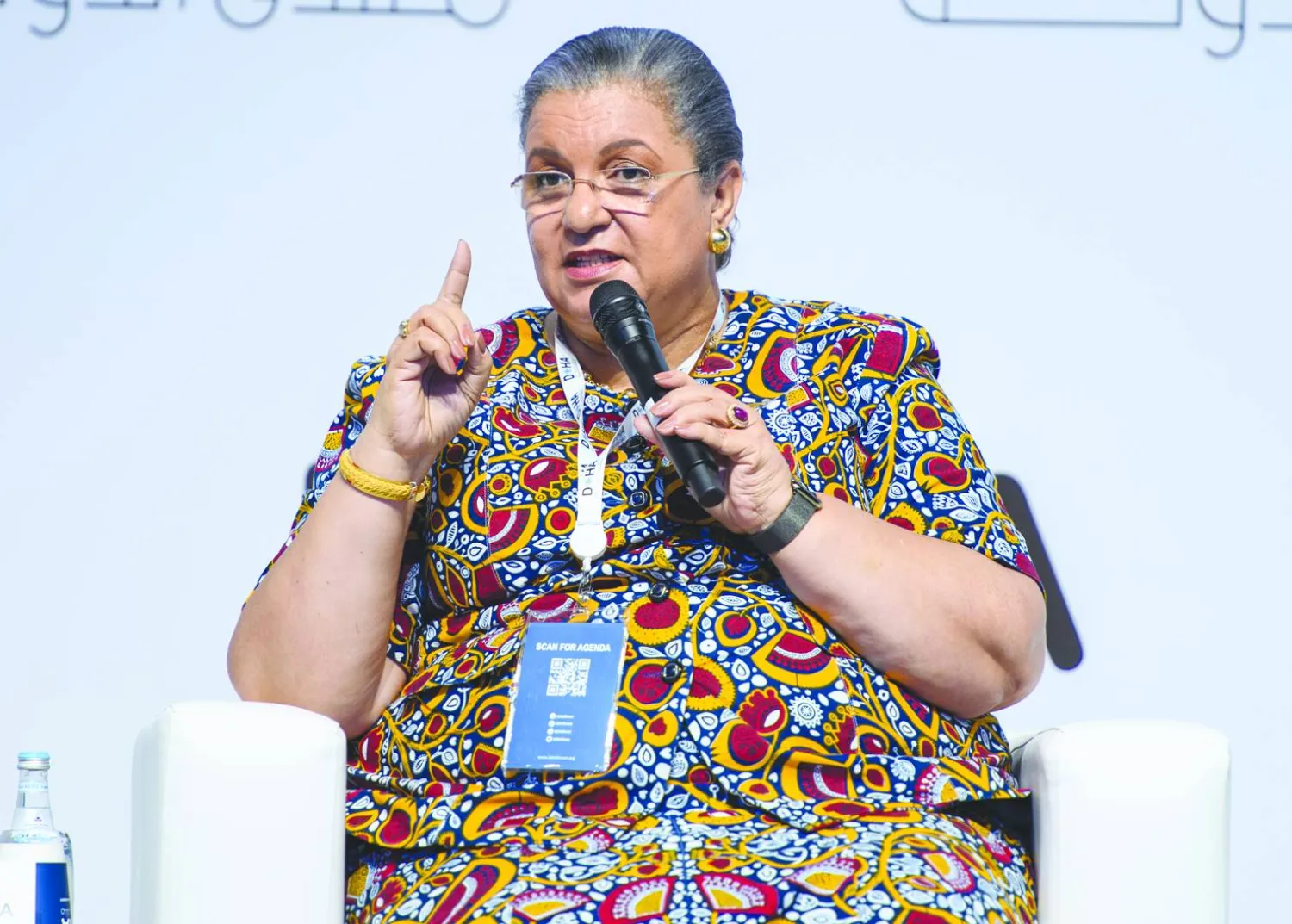
Head of the United Nations Support Mission in Libya Hanna Tetteh Getty)

The UN’s top envoy for Libya, Hanna Tetteh, has informed the Security Council that despite active United Nations engagement, the Libyan House of Representatives and the High Council of State have failed to make progress on the first steps of the agreed political roadmap, including establishing a mechanism to select the board of the High National Elections Commission (HNEC) and advancing electoral legislation.

Briefing the Council in New York on Wednesday, the Special Representative of the Secretary-General said: “Their inability to use their agreed mechanism and follow-on unilateral actions has further eroded their credibility."

Tetteh added that Libyan public perceptions reflect a growing belief that the bodies are “unable or unwilling” to deliver.

She told Council members that she has begun consultations with key actors on an alternative two-step approach aimed at restoring momentum. Should a smaller group of Libyan representatives fail to agree on the roadmap’s milestones, she warned, a broader convening would be required. “We cannot wait indefinitely,” she emphasized.

The UN envoy also issued a stark warning about escalating tensions within Libya’s judicial system.

She said “contradictory, parallel judicial decisions put into jeopardy the unity of the legal and judicial systems,” cautioning that the situation “is a red line that if crossed can undermine the unity of the state.”

She urged Libyan leaders to refrain from further escalatory steps and called on the Council to hold accountable those taking actions that threaten to fracture the judiciary.

Tetteh also warned that transnational criminal networks continue to expand, turning Libya into a major transit hub for drug trafficking and sustaining illicit economies linked to corruption and armed groups.