


Luxury Brands Navigate Shanghai’s Lockdown to Keep VIPs Pampered

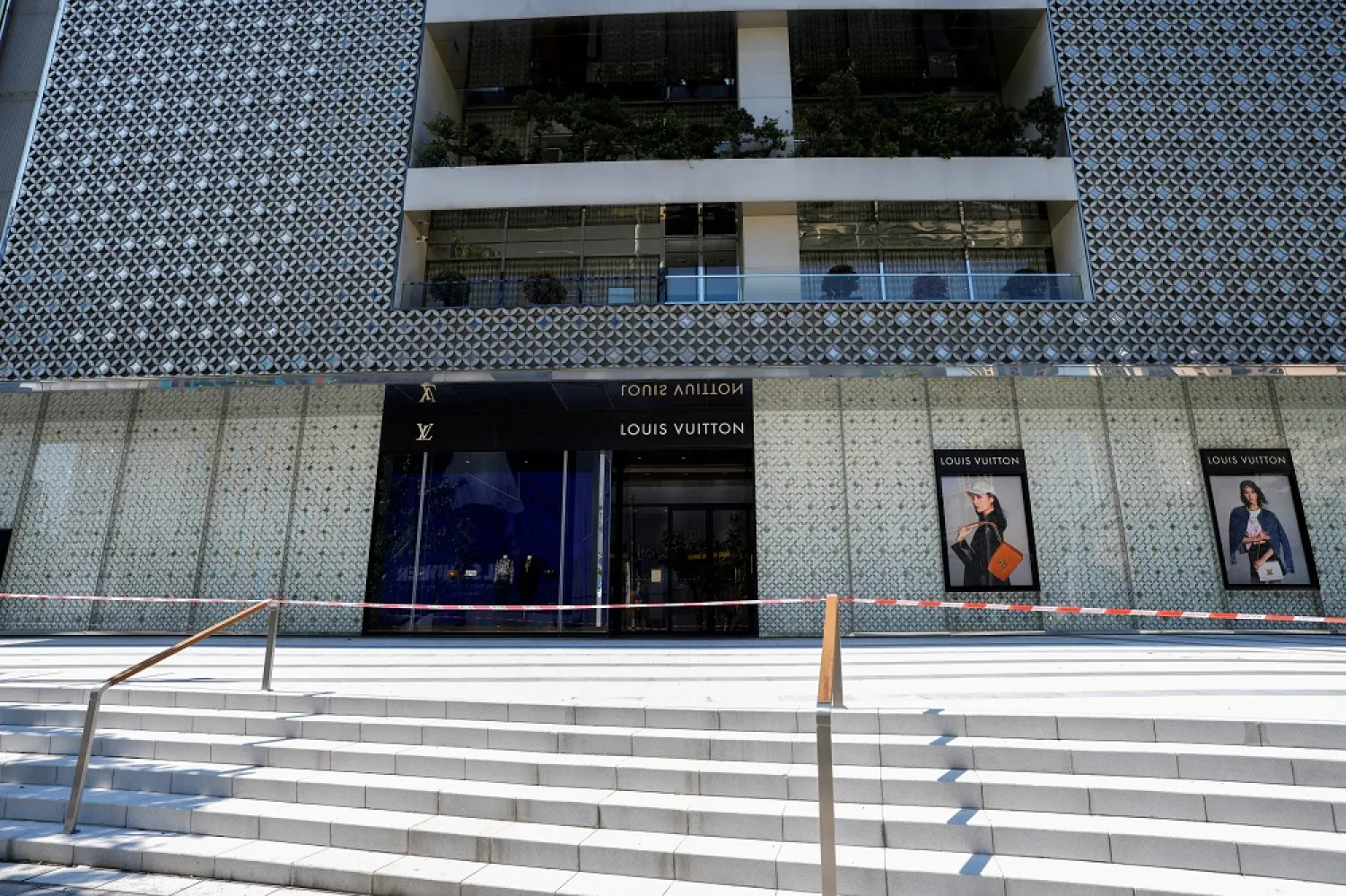
A closed store of French luxury brand Louis Vuitton is pictured during lockdown, amid the coronavirus disease (COVID-19) pandemic, in Shanghai, China, May 6, 2022. (Reuters)
TT

Luxury Brands Navigate Shanghai’s Lockdown to Keep VIPs Pampered

A closed store of French luxury brand Louis Vuitton is pictured during lockdown, amid the coronavirus disease (COVID-19) pandemic, in Shanghai, China, May 6, 2022. (Reuters)

What Ms. Zhang didn't expect when she hunkered down for Shanghai's citywide lockdown was complementary ready meals and desserts from luxury brands such as Louis Vuitton and Cartier to start arriving the very next day.

Since the COVID-19 containment began on April 1, closing stores and paralyzing online shopping, brands have overcome attendant delivery difficulties to gift provisions to "very important clients" (VICs) like 24-year-old entrepreneur Zhang.

Though not high-value gifts, the effort to keep in touch has "impressed and surprised us," said Zhang, who wanted to be identified by surname only citing privacy.

Shanghai has seen some of the strictest containment measures worldwide, with residents forbidden from leaving apartments in blocks where COVID-19 cases have been found, while some buildings and even entire streets have been fenced off.

With supermarkets shuttered and logistics chains upended, residents have struggled to buy food. Government provisions aimed at filling gaps have been delivered sporadically, with reports of mixed quality from district to district.

Helping out, many companies have delivered provisions to employees. For the more wealthy, banks and high-end hotels have joined luxury brands in sending out goodies - a privilege not unnoticed on social media.

"During the epidemic, class division is more obvious. Ordinary citizens rush to grab rice while considerate luxury brands can't wait to give first-class takeaway to VIP customers," wrote Weibo user Li Xiaozhou's Tea Room.

Besides gifts, some brands have organized online classes. La Mer has taught DIY facial massages while Dior has offered seven-day passes for virtual classes at a premium yoga studio.

Prada has hosted a virtual cultural club, inviting writers, directors and musicians to recommend books, movies and albums.

Prada SpA declined to elaborate when contacted by Reuters beyond saying the initiative had been well-received.

Christian Dior SE and LVMH Moet Hennessy Louis Vuitton SE declined to comment.

Cartier, owned by Compagnie Financiere Richemont SA, and La Mer, owned by Estee Lauder Companies Inc, did not respond to requests for comment.

Emotional connection

As much as 12% of China's offline luxury retail is in Shanghai so store closure has necessitated a pivot to virtually, but still personally, serving VIPs, said Thomas Piachaud, Shanghai-based head of strategy at consultancy Re-Hub.

Consumers in this segment are the most likely to escape the economic impact of lockdown and emerge more ready to spend, Piachaud said.

"These kind of VIP customers are the ones that brands really know on a more personal level. Brands know how to tailor communications and talk to them," he said.

Luxury is not just selling products; it is also selling an emotional connection, said Lily Lu, senior business director for digital at marketing firm Gusto Luxe.

"There is a bond that goes beyond the product," said Lu. "During the toughest times, even though the customer can't buy things from the brand (right now) that relationship needs to be maintained and nurtured."

VIC status comes with annual spending of hundreds of thousands of yuan (about $15,000) at some brands, though minimum spend varies widely. Some sales staff can also award the status to people they think likely to spend more in the future.

Though Shanghai VICs cannot spend in stores at the moment, brands are trying to ensure they do when lockdown is lifted.

"We got maybe 10 birthday cakes and flowers from different brands," Zhang said, referring to her mother, who is also a VIC. "I'm sure after lockdown, purchases will be made."



Fashion Commission, Saudi Retail Academy to Develop National Talent 

Fashion Commission, Saudi Retail Academy to Develop National Talent 
TT

Fashion Commission, Saudi Retail Academy to Develop National Talent 

Fashion Commission, Saudi Retail Academy to Develop National Talent 

The Saudi Fashion Commission signed a memorandum of understanding (MoU) with the Saudi Retail Academy to develop national capabilities and boosting specialized skills in the fashion and retail sectors, reported the Saudi Press Agency on Monday.

The MoU aims to support local talent and the creation of sustainable employment opportunities in this vital industry. It stems from the two sides’ keenness to cooperate in the fields of training and professional development.

The agreement was signed on the sidelines of the graduation ceremony of the academy’s first cohort.

The Fashion Commission focuses on developing local talent, transferring global expertise, and advancing the fashion sector in the Kingdom, while the Saudi Retail Academy is a non-profit institute and a specialized entity in training and development in the retail field and in building professional competencies and skills related to retail and sales.

The MoU aims to establish a framework for cooperation to design and implement specialized training programs that boost the readiness of national cadres and qualify them according to the highest professional standards, with a focus on developing skills in sales, customer experience, and store management to meet labor market requirement and the needs of the growing fashion sector.

Fashion Commission chief executive Burak Cakmak said that developing human capital is a fundamental pillar for the long-term growth of the Kingdom’s fashion sector.

The partnership reflects the commitment to strengthening the capabilities that form the foundation of a competitive and sustainable industry through investment in specialized skills within retail and customer experience, enabling brands to grow and supporting the sector’s confident evolution, he added.

Saudi Retail Academy chief executive Hend Al-Dhaban stressed that the partnership embodies a shared vision to empower national talent and elevate professionalism in the retail sector.

The agreement will help channel training expertise to meet the specialized needs of the fashion sector and equip young men and women with the practical skills required to succeed in the labor market, thereby boosting service quality and supporting localization targets and economic growth, she explained.

This cooperation is part of the Fashion Commission’s ongoing efforts to develop the fashion value chain through building strategic partnerships with specialized training and education entities, expanding professional opportunities for national talent, and linking education and training outputs with labor-market needs.

Through their partnership, the commission and the academy will help in building an integrated ecosystem that connects education, vocational qualification, and employment, bolstering the competitiveness of the fashion and retail sectors and supporting the objectives of Saudi Vision 2030 in empowering national cadres, localizing jobs, and improving quality of life.


Saudi 100 Brands Debuts Landmark Fashion Presentation at Saudi Cup 2026

The experience introduced global audiences to Saudi Arabia’s dynamic and growing fashion ecosystem - SPA
TT

Saudi 100 Brands Debuts Landmark Fashion Presentation at Saudi Cup 2026

The experience introduced global audiences to Saudi Arabia’s dynamic and growing fashion ecosystem - SPA

The Fashion Commission launched its Saudi 100 Brands showcase at the Saudi Cup 2026, marking a historic milestone for the world-renowned equestrian event at King Abdulaziz Racecourse in Riyadh.
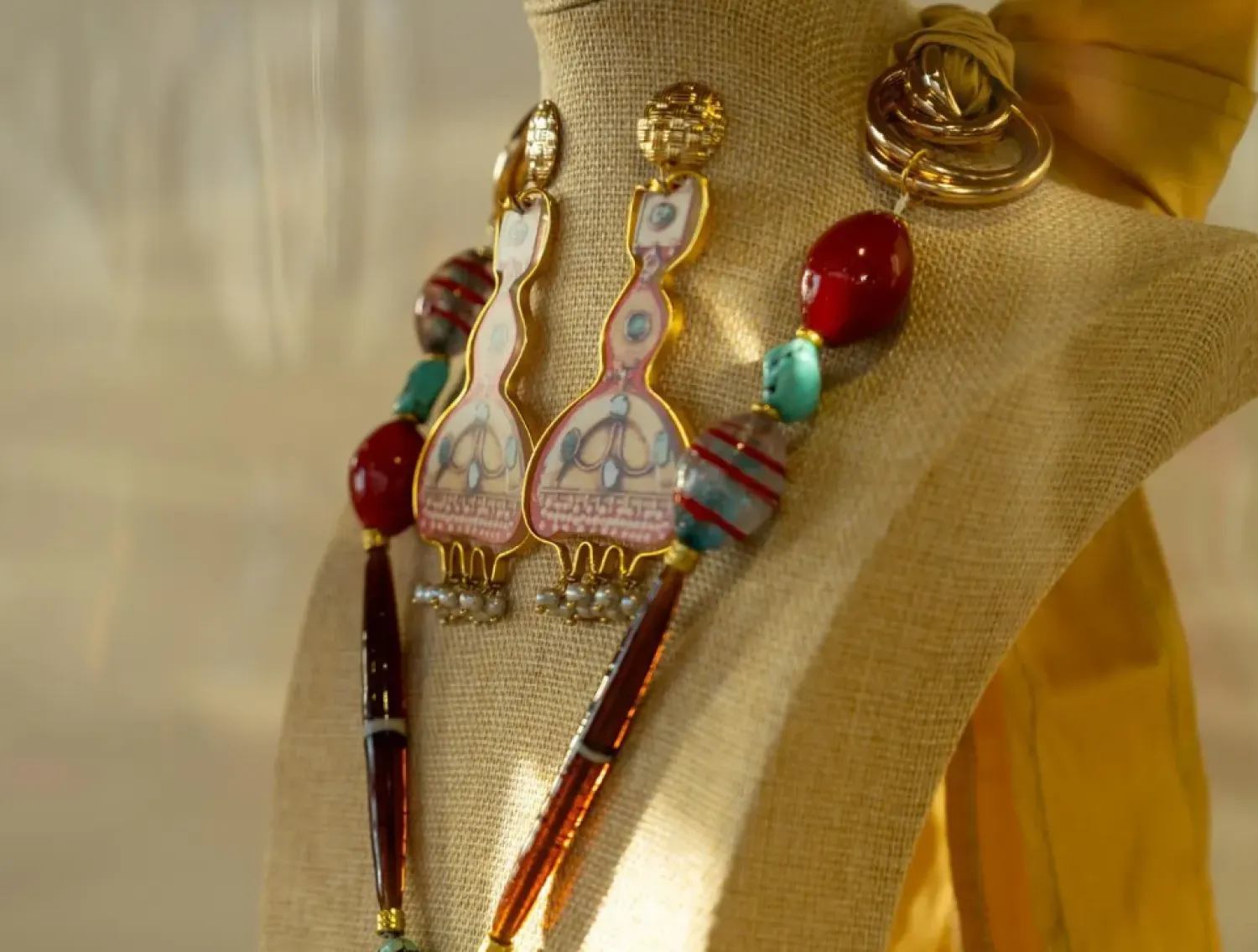
The collections celebrate Saudi heritage by blending traditional and contemporary design. Jewelry and accessory brands also exhibited throughout, providing Saudi designers with a platform to reach a broader global audience. These showcases emphasize the fusion of heritage and modern design, offering a new perspective on the Kingdom's creative identity.
The Saudi 100 Brands program, a flagship initiative of the Fashion Commission, supports emerging designers by providing tools, expertise, and platforms to grow their global presence. This collaboration with the Saudi Cup underscores the importance of celebrating cultural heritage while advancing design innovation.

Each piece in the exhibition incorporates heritage motifs, textiles, and storytelling, reimagined through innovative design to appeal to modern and international audiences.

The exhibition aims to celebrate national identity, highlight local creative talent, and present the evolving direction of Saudi fashion, SPA reported.

Visitors explored the intersection of craftsmanship and cultural expression, discovering how designers honor tradition while advancing fashion design.

The experience also introduced global audiences to Saudi Arabia’s dynamic and growing fashion ecosystem.

This participation reflects the Fashion Commission’s vision to develop a thriving fashion sector rooted in cultural heritage and global ambition. By combining cultural narratives with innovative design, the commission enables Saudi fashion to contribute to global creative industries, nurture talent, and position Saudi brands for sustained success.


L’Oreal Shares Sink as Sales Miss Forecasts 

This photo taken on February 16, 2018 shows a board with the L'Oreal logo outside of the L'Oreal plant, in Lassigny. (AFP)
TT

L’Oreal Shares Sink as Sales Miss Forecasts 

This photo taken on February 16, 2018 shows a board with the L'Oreal logo outside of the L'Oreal plant, in Lassigny. (AFP)

L'Oreal shares fell heavily on the Paris stock market on Friday after the cosmetics giant posted sales that fell short of analyst expectations, stoking fears of weakness for its luxury brands and in the key Chinese market.

While revenues rose seven percent in the fourth quarter in Europe -- still the company's biggest market -- they edged up just 0.7 percent in North America and fell five percent in North Asia, which includes China.

Overall, sales were up 1.5 percent to 11.2 billion euros ($13.3 billion) in the final quarter of 2025 -- usually when the company benefits from strong holiday-fueled buying.

This was a marked slowdown from the 4.5-percent growth seen the previous year.

On a like-for-like comparison that excludes the impact of currency fluctuations, sales rose six percent, whereas the consensus forecast was around eight percent, analysts said.

The luxury division (Luxe) in particular, which includes high-end perfumes and make-up and is L'Oreal's biggest by revenue, saw a 0.5-percent sales slide in the fourth quarter, to 4.2 billion euros.

"We think the miss, led by North Asia and Luxe, will be a concern amid a vague outlook," said David Hayes, an analyst at investment bank Jefferies.

L'Oreal's stock was down 3.2 percent in morning trading, partly recovering from a drop of more than six percent at the open.

Net profit for the full year was down 4.4 percent to 6.1 billion euros.

Chief executive Nicolas Hieronimus said when he presented the results on Thursday that L'Oreal had achieved a "solid" performance "despite a context that was at the very least volatile and unfavorable".

For 2026, he said the company had to be "cautious and humble", although he expected "the beauty market to continue its acceleration" unless there was "a new surprise".

"We're going to have to intensify our efforts in terms of innovation to energize the market and win over customers," he added.