


stc Group and Alibaba Establish Alibaba Cloud for Cloud Computing in Saudi Arabia

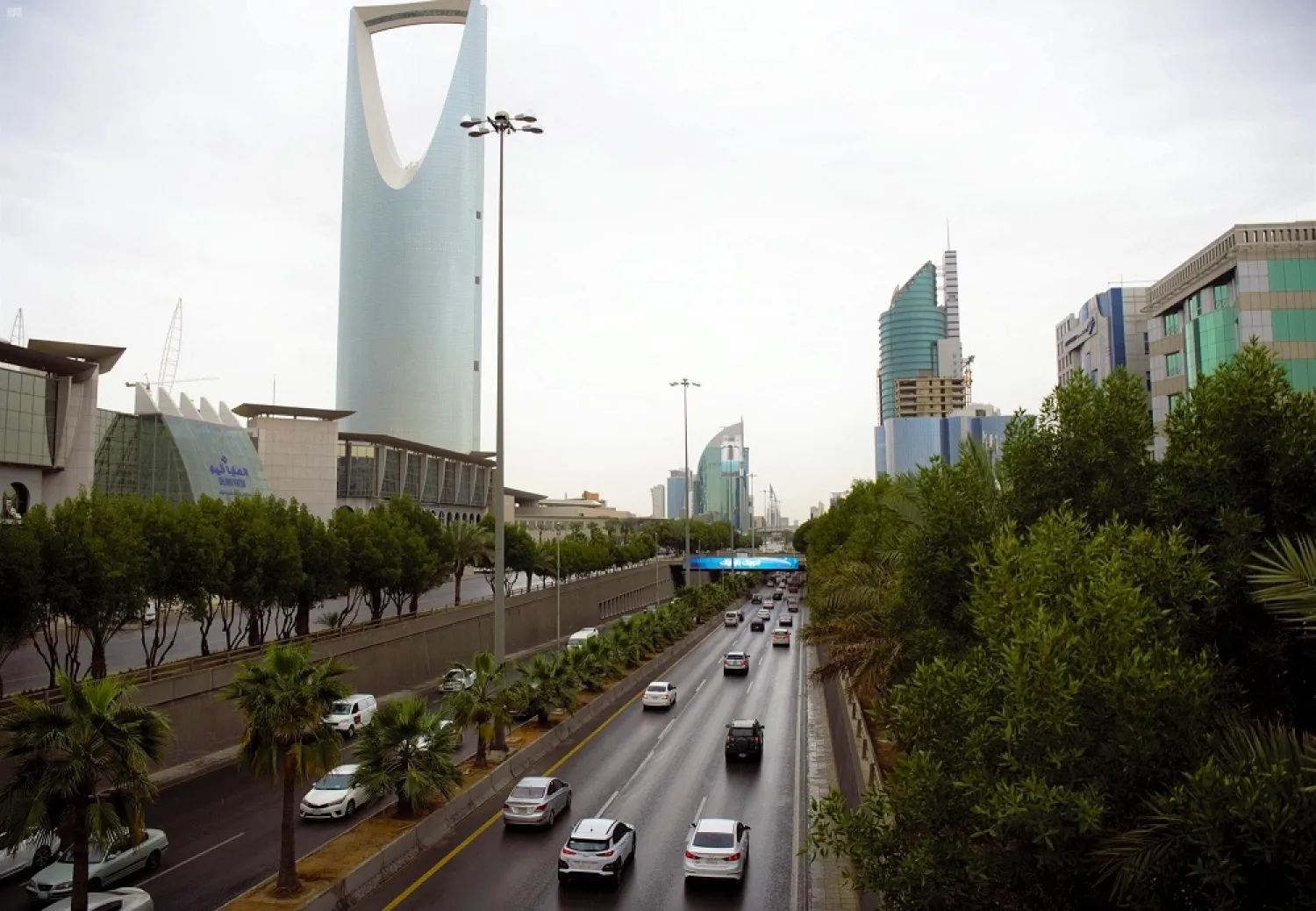
A general view of Riyadh on a rainy day. (SPA)
TT

stc Group and Alibaba Establish Alibaba Cloud for Cloud Computing in Saudi Arabia

A general view of Riyadh on a rainy day. (SPA)

stc Group, the leading national digital enabler announced the establishment of "Alibaba Cloud” in Riyadh, Saudi Arabia, for high-capacity cloud services in partnership with the Chinese technology giant, "Alibaba Group”, eWTP Arabia for Technical Innovation Ltd., the Saudi Company for Artificial Intelligence (SCAI), and the Saudi Information Technology Company (SITE).

The establishment of the new company in the Saudi capital, Riyadh, came in response to the significant increase in demand for cloud computing services and solutions in the region.

The company will provide advanced cloud computing services to companies operating in the Kingdom, ensuring that they employ the highest standards of security and protection.

The new company’s capital will amount to SAR 894 million, and the new company will benefit from the distinguished position of stc Group in the services and technology solutions sector and will employ the best talent and expertise to support the local capabilities of the Kingdom and enable it to enhance digital development and build an advanced ecosystem capable of meeting the future needs of the Kingdom.

Alibaba, one of the best providers of cloud computing services and solutions in the world, will offer a wide range of cloud computing services and solutions, a step that will enable local companies and institutions to digitize their businesses, employ the technologies of the Fourth Industrial Revolution, raise work standards and enhance businesses.

In line with the Kingdom’s efforts to enhance economic diversification and stimulate investment opportunities in the cloud computing sector, the new company will contribute to providing quality jobs, transferring knowledge and expertise to the Kingdom, and ensuring a safe work environment for entrepreneurs in the region.

stc’s investment with Alibaba for cloud computing services, in cloud computing solutions in Riyadh, reflects the company’s future vision and its great role in pushing digital transformation efforts in the Kingdom. It reflects its commitment to forging strong partnerships with leading technology companies around the world in line with Saudi Arabia’s Vision 2030 to attract foreign and international investments into the Kingdom, creating a secure environment for entrepreneurs, and enhancing information security by protecting data internally in the Kingdom.

The establishment of the company specialized in cloud computing services and solutions in Saudi Arabia will contribute to developing the Kingdom’s digital infrastructure and preparing it to provide the latest digital data storage services and solutions and ensure its protection and security, which will boost the country’s ability to provide cloud computing services to global companies.



SDAIA, World Bank Conclude Int’l Consultations on Data Governance and AI in Belgium and Germany

The program aimed to review leading international experiences in data governance, AI, and digital policy frameworks. SPA
TT

SDAIA, World Bank Conclude Int’l Consultations on Data Governance and AI in Belgium and Germany

The program aimed to review leading international experiences in data governance, AI, and digital policy frameworks. SPA

The Saudi Data and Artificial Intelligence Authority (SDAIA), in partnership with the World Bank, has concluded an international program held from June 8 to 12 in Belgium and Germany.

The program aimed to review leading international experiences in data governance, artificial intelligence (AI), and digital policy frameworks. It also included consultations with experts in both countries to exchange knowledge and expertise.

During the program, participants reviewed the Kingdom's experience in building a national ecosystem for data and AI. They also highlighted achievements in data governance, digital policy, and regulatory frameworks, as well as Saudi efforts to promote the responsible use of advanced technologies.

The program included a series of meetings and specialized sessions in Brussels and Berlin involving European and international entities, government and non-profit organizations, and think tanks focused on digital policy and AI governance.

Discussions covered international cooperation in AI, regulatory frameworks, data governance and privacy, and cross-border challenges associated with emerging technologies. Participants also examined frameworks that support responsible innovation and digital transformation.

SDAIA and World Bank teams reviewed advanced practices in digital policy development and the design of regulatory frameworks for data and AI. They also discussed mechanisms for strengthening international cooperation and knowledge exchange to support the development of a sustainable national ecosystem for data and AI.

The program is part of SDAIA's efforts to strengthen international cooperation and build partnerships with leading global organizations and institutions. It also seeks to benefit from international expertise and best practices in support of the Kingdom's objectives to strengthen its global position in data and AI.

The initiative aligns with the goals of Saudi Vision 2030 and the Year of AI 2026 and supports efforts to transfer knowledge and expertise to the Kingdom.


SpaceX: Five Key Moments, from First Launch to Starship Megarocket

SpaceX employees celebrate the company's Wall Street debut, the largest initial public offering in US history. TIMOTHY A. CLARY / AFP
TT

SpaceX: Five Key Moments, from First Launch to Starship Megarocket

SpaceX employees celebrate the company's Wall Street debut, the largest initial public offering in US history. TIMOTHY A. CLARY / AFP

More than 20 years after its founding, SpaceX made history Friday with its record-high stock market debut, crowning a unique journey marked by dazzling successes but also catastrophic failures and unfulfilled promises.

Here are five key moments in the company's history:

- 2008: The founding myth -

Six years after its founding, SpaceX launched its first rocket into orbit after multiple failures, taking off in September 2008 from a remote archipelago in the Pacific Ocean.

"I messed up the first three launches; the first three launches failed," co-founder Elon Musk recalled years later.

"Fortunately, the fourth launch -- that was the last money that we had -- the fourth launch worked, or that would have been it for SpaceX. But fate liked us that day."

- 2012: Next stop, ISS -

After the successful launch, SpaceX grew and developed more powerful launchers, including its flagship rocket, Falcon 9, which has become the most widely used rocket today.

Among its creations was the Dragon spacecraft, which docked as a cargo vessel at the International Space Station in 2012, a first by a private company.

Eight years later, the Dragon spacecraft carried its first astronaut to the ISS, beating other aerospace companies like Boeing to becoming the main American transport to the space station.

- 2018: A Tesla in space? -

At the same time, SpaceX in 2015 successfully landed the first stage of its Falcon 9 rocket, ushering in the age of partially reusable rockets.

This was followed by Falcon Heavy, a much more powerful launcher with two Falcon 9 boosters.

To mark its first test flight in 2018, Musk decided to place the car made by one of his other companies, a Tesla, on board.

The image of the red Tesla occupied by a mannequin dubbed Starman -- after David Bowie -- was seen around the world.

Not all SpaceX promises were kept though: that same year, Musk said he would send a group which included Japanese billionaire Yusaku Maezawa around the Moon by 2023, but that never came to pass.

- 2020-2023: Starbase's explosive beginning -

The tech trillionaire ended up prioritizing the development of his megarocket Starship, designed to travel to the Moon and, eventually, Mars.

To complete the project, he bought vast amounts of land in Texas and developed an industrial complex known as Starbase, where he would launch a series of Starship prototypes, most of which blew up into spectacular fireballs.

Musk justified the "rapid unscheduled disassembly" of these rockets, to use the entrepreneur's favorite euphemism for explosions, by saying they were part of the learning process.

- 2024: The unprecedented 'Super Heavy' catch -

In October 2024, SpaceX succeeded in recovering the first stage of Starship, its "Super Heavy" booster, in a unique maneuver that had never been achieved before.

After launching the spacecraft, the booster detached and began its descent, returning to the SpaceX launch pad where a pair of "chopsticks" reached out to catch the booster and bring it to a halt.

The feat, while impressive, is only the first part of SpaceX's plan to make Starship a fully reusable rocket -- a goal it remains in pursuit of while dealing with several technical challenges.


India Clears Way for Self-driving, Safety Car Tech to Reduce Road Deaths

A woman crosses street through a dust storm accompanied by rain in Jammu, India, Thursday, June 11, 2026.(AP Photo/Channi Anand)
TT

India Clears Way for Self-driving, Safety Car Tech to Reduce Road Deaths

A woman crosses street through a dust storm accompanied by rain in Jammu, India, Thursday, June 11, 2026.(AP Photo/Channi Anand)

India has scrapped a license requirement for radar sensors, freeing automakers to adopt technology that helps cars avoid crashes and drive themselves by sensing surrounding objects, in a bid to make some of the world's deadliest roads safer.

The world's third largest car market, India reported more than 177,000 deaths in nearly half a million ⁠road accidents in 2024, the ⁠latest figures show, according to Reuters.

In a notice on Thursday, the government waived the license requirement for radar sensors operating in the frequency band from 77GHz to 81 GHz. That lets companies ⁠enable the technology without the government having to separately assign the airwaves.

Automakers Maruti Suzuki, Tata Motors and Mahindra & Mahindra, stand to benefit from the change, as well the suppliers behind them, such as Germany's Bosch and Continental.

The radar sensors let a car gauge safe distances, and drive features such as emergency braking, adaptive cruise ⁠control ⁠and blindspot warnings, to form a basis for autonomous driving.

The change brings India in line with the United States, the European Union and a global telecoms standard, all of which dedicate the same frequency band to vehicle radar.

That lets carmakers and suppliers tap into the same off-the-shelf hardware worldwide, rather than having to build an India-specific version.