Biden Faces Cloud on Summit to Reset Latin America Ties

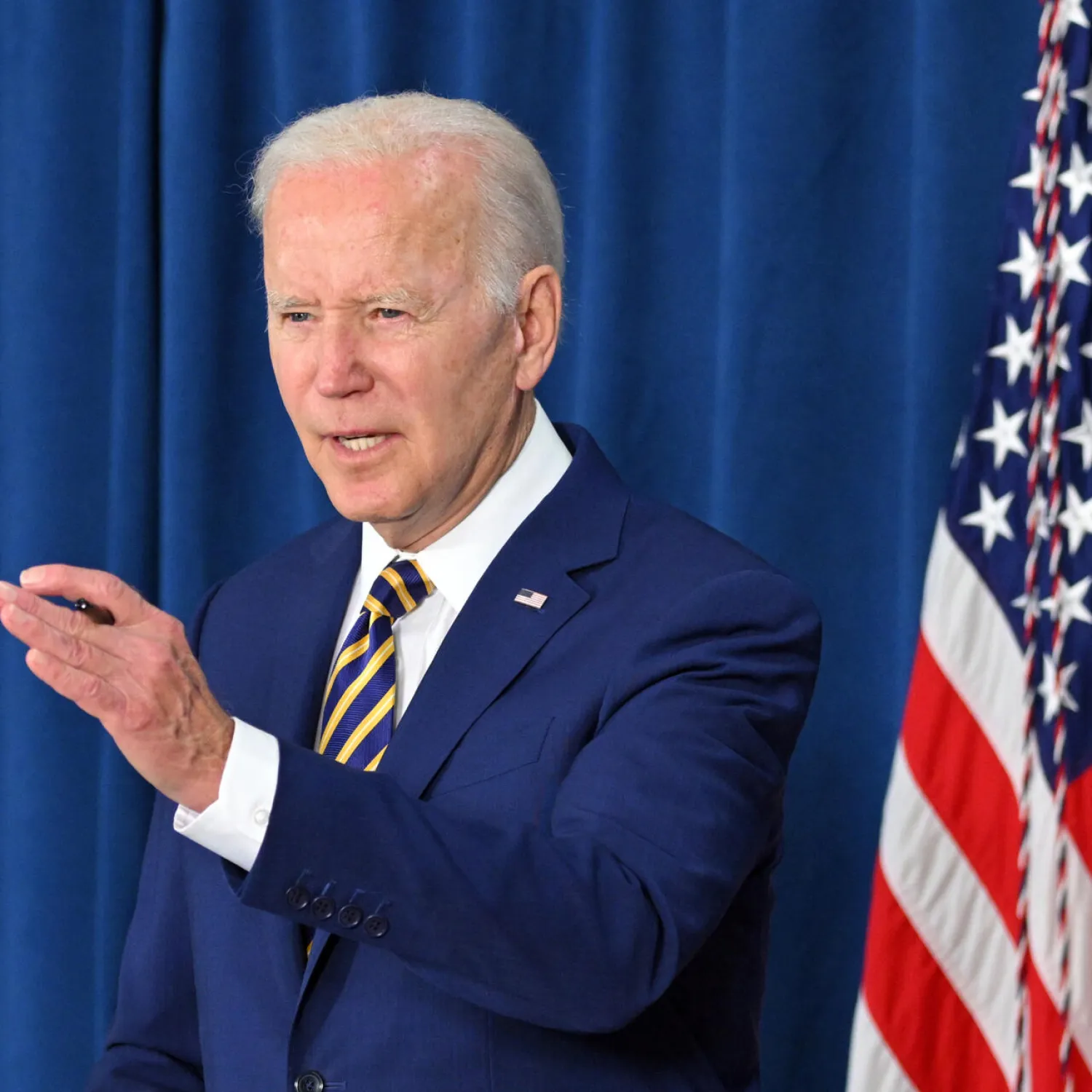
US President Joe Biden, who will welcome Latin American leaders in Los Angeles, speaks in Rehoboth Beach, Delaware MANDEL NGAN AFP
TT

Biden Faces Cloud on Summit to Reset Latin America Ties

US President Joe Biden, who will welcome Latin American leaders in Los Angeles, speaks in Rehoboth Beach, Delaware MANDEL NGAN AFP

President Joe Biden is hoping to show a new era of US engagement with Latin America at a long-heralded summit next week, but the meeting has been clouded by boycott threats and charges of an unambitious agenda.

Regional leaders will descend on Los Angeles starting Monday for the weeklong Summit of the Americas at a time when China, seen by the United States as a fast-emerging rival, has been making inroads in a zone Washington has historically considered its turf, AFP said.

Days ahead of the summit, the White House was still finalizing the invitation list in a bid to please Mexican President Andres Manuel Lopez Obrador, who has threatened not to come unless all nations are included.

Biden, vowing to champion democracy, had planned to exclude the leftist governments of Cuba, Nicaragua and Venezuela on the grounds that they are autocratic, and instead to welcome representatives of civil society from the three countries.

Juan Gonzalez, the top White House adviser on Latin America, told reporters that Biden plans to "advance a vision of a region that is secure, middle class and democratic," which is "fundamentally in the national security interest of the United States."

Biden is expected to make announcements at the summit on economic cooperation and fighting both the Covid-19 pandemic and climate change, Gonzalez said.

Biden also hopes to secure an agreement on regional cooperation on an issue over which he has faced domestic attacks from the rival Republican Party -- migration.

The number of Central Americans and Haitians seeking to enter the United States has been surging as they flee poverty and violence in their homelands.

- 'Unfortunate subplot' -
Biden has secured the attendance of other key presidents including Argentina's left-leaning Alberto Fernandez, whom Biden also invited to Washington, and Brazil's far-right Jair Bolsonaro, despite his questioning of the legitimacy of October elections.

Benjamin Gedan, who heads the Latin America program at the Woodrow Wilson International Center for Scholars, said that Lopez Obrador's absence would mark a "significant void" and said the Mexican leader seemed more focused on domestic political gain.

The boycott threat has been "a really unfortunate subplot in the run-up to the summit because it has drained an enormous amount of US diplomatic energy for a bizarre cause celebre," Gedan said.

He said that Biden has crafted a positive agenda, avoiding simply summoning Latin American leaders to lecture them on democracy, corruption and China.

But he said it was unclear whether Biden will bring substantial resources to the table, in contrast to China's lavish infrastructure spending and trade privileges.

"The real barometer for this summit will be whether the United States offers meaningful new market access, lending and foreign assistance to support economic recovery and infrastructure in the region," Gedan said.

" And there I think, inevitably, the United States will disappoint."

- 'Progressively less ambitious' -
The Summit of the Americas is the first held by the United States since the inaugural meeting in 1994 in Miami, where then US president Bill Clinton sought the creation of a trade area to cover the whole continent except communist Cuba.

The United States has since soured on free trade, with Biden following the lead of his predecessor Donald Trump, who said such pacts hurt US workers.

Trump championed a hard line on Venezuela and Cuba, reversing his predecessor Barack Obama's opening to the island, and did not attend the last Summit of the Americas, in Peru in 2018.

Eric Farnsworth, vice president of the Council of the Americas, recently told a congressional hearing that each summit has become "progressively less ambitious" with a shift "from a shared vision for democracy, trade and prosperity to a venue for taking a stand."

The Los Angeles summit, he said, "offers the perfect opportunity for Washington to announce a commitment to regional growth and recovery."

Michael Shifter, a senior fellow at the Inter-American Dialogue, said that the drama over summit attendance showed the waning hold of the United States over the region.

China has emerged as a leading partner, he said, and Latin American leaders are keenly aware of Biden's political woes including the possibility that Republicans will retake control of Congress in November.

The United States "still has a lot of soft power," Shifter said. "As for political and diplomatic influence, it is diminishing by the day."


Iran Rejects France’s ‘Baseless Accusations’ on Cyberattack

Empty refrigerated shelves are seen inside a Delhaize Shop & Go store after an overnight IT incident affected cooling and freezer systems in a number of Delhaize stores in Belgium and Luxembourg, causing temperature spikes in refrigeration units, in Linkebeek near Brussels, Belgium, November 2, 2026. (Reuters)
TT

Iran Rejects France’s ‘Baseless Accusations’ on Cyberattack

Empty refrigerated shelves are seen inside a Delhaize Shop & Go store after an overnight IT incident affected cooling and freezer systems in a number of Delhaize stores in Belgium and Luxembourg, causing temperature spikes in refrigeration units, in Linkebeek near Brussels, Belgium, November 2, 2026. (Reuters)

Iran on Tuesday said French accusations that it was responsible for cyberattacks on supermarket fridges last month were "baseless".

"Iran's foreign ministry categorically rejects the French government's baseless and one-sided accusations against Iran regarding alleged cyber activities in France," the ministry said in a statement.

It added that it "strongly condemns this hackneyed policy of leveling accusations against the country".

Hundreds of French supermarkets were hit in the October 11 and 12 cyberattacks, which raised the temperatures in their refrigerators and freezers, forcing many to throw away entire inventories of perishable food.

Similar incidents were then reported in at least 11 other European countries in early November.

Along with summoning Iran's ambassador and seeking European-level sanctions, French Foreign Minister Jean-Noel Barrot said Tuesday that Paris would "rule nothing out and will take all measures -- including those we may not disclose publicly -- that we deem proportionate and necessary to deter any further attacks".

Tehran, meanwhile, said it would "not hesitate to take necessary and appropriate measures to safeguard its national interests and security in the face of unlawful foreign activities".

It added that France "is merely projecting its own governance failures" with these accusations.

Later in the day, Iran's Foreign Minister Abbas Araghchi blamed the French government for the incident.

"Unable to manage fridges let alone addressing grievances of its people, French government is shifting blame for its failures onto others," the top diplomat said on X.

Also on Tuesday, the European Union said it would look to provide a "swift and united response" pending discussion with member states after France's announcement.


Eisenkot Quickly Targets Netanyahu’s Legacy in New Israeli Parliament

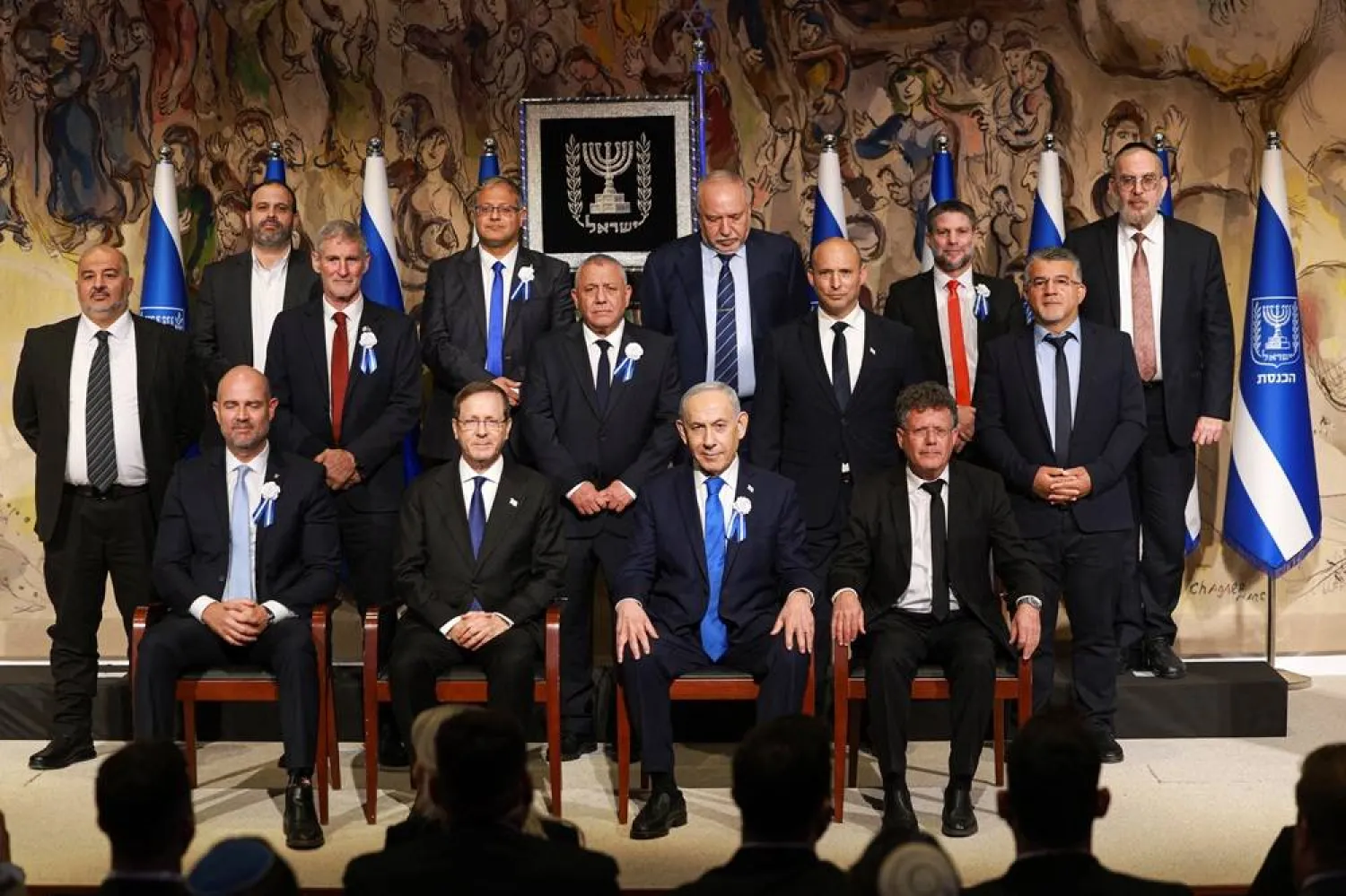
 Former military chief Gadi Eisenkot, Israeli Prime Minister Benjamin Netanyahu, Israeli President Isaac Herzog and other Israeli officials pose for a family photo on the day of the inauguration of Israel's 26th parliament, at the Knesset in Jerusalem, November 10, 2026. (Reuters)
Former military chief Gadi Eisenkot, Israeli Prime Minister Benjamin Netanyahu, Israeli President Isaac Herzog and other Israeli officials pose for a family photo on the day of the inauguration of Israel's 26th parliament, at the Knesset in Jerusalem, November 10, 2026. (Reuters)
TT

Eisenkot Quickly Targets Netanyahu’s Legacy in New Israeli Parliament

 Former military chief Gadi Eisenkot, Israeli Prime Minister Benjamin Netanyahu, Israeli President Isaac Herzog and other Israeli officials pose for a family photo on the day of the inauguration of Israel's 26th parliament, at the Knesset in Jerusalem, November 10, 2026. (Reuters)
Former military chief Gadi Eisenkot, Israeli Prime Minister Benjamin Netanyahu, Israeli President Isaac Herzog and other Israeli officials pose for a family photo on the day of the inauguration of Israel's 26th parliament, at the Knesset in Jerusalem, November 10, 2026. (Reuters)

Israeli ex-army chief Gadi Eisenkot and his allies launched a legislative onslaught against caretaker Prime Minister Benjamin Netanyahu's legacy on Tuesday, as a new parliament convened in a heated first session. 

Though questions still linger as to who can form a government, Eisenkot's broad left-to-right bloc wasted no time in setting the agenda of the new Knesset with a green light from Israeli-Arab lawmakers, whose role has stirred up heated opposition from Netanyahu's base and even right-wing supporters of Eisenkot. 

Eisenkot's Yashar party said it submitted a slew of proposals before the new parliament, including establishing an independent commission to investigate security failures that allowed the Hamas attack on October 7, 2023, the deadliest day in Israel's history. 

Netanyahu has long opposed such a probe, denying any wrongdoing and calling instead for a politically appointed commission. 

Eisenkot's party also moved for a sweeping repeal of a judicial overhaul implemented by Netanyahu's government, which had triggered some of Israel's largest-ever protests before being overshadowed by three years of war. 

Setting the stage for legislative action, Eisenkot's bloc announced it had secured the votes to install a new parliament speaker, Matan Kahana, also a former senior military figure. 

But neither Eisenkot nor Netanyahu -- Israel's longest-serving prime minister with nearly two decades in power -- have the 61 votes needed to form a government. 

"I am committed in this complex situation to form a national-emergency government as quickly as possible," Eisenkot, a low-key 66-year-old who only recently entered politics, said before his swearing-in. 

Netanyahu, speaking after the inaugural session, made a new push for a national-unity government, saying Israel needed to confront a threat from Iran's clerical government, which has survived two major Israeli bombing campaigns the premier ordered with support from US President Donald Trump. 

With his political survival on the line -- and facing potential jail time if convicted on corruption charges after he is out of power -- Netanyahu appeared to acknowledge a shifting diplomatic reality after US Democrats soundly defeated Trump in midterm elections last week on the back of anger over the war. 

"In the very near future, we're going to be confronted by international pressure to accept a nuclear-armed Iran and the preservation of this terror regime that seeks to annihilate us," Netanyahu said. 

Iran denies seeking nuclear weapons and both Netanyahu and Trump have previously boasted that its nuclear program was devastated. 

Eisenkot dismissed the remarks as a "shameful" exploitation of the occasion, casting them as evidence that Netanyahu was "unfit to remain in office for even one more minute". 

- Confrontations over Arab-Israelis - 

President Isaac Herzog on Sunday tasked Eisenkot with forming a government, giving him an initial 28 days, which can be extended by 14 more. 

Opening the session, Herzog, who otherwise holds a largely ceremonial role, urged lawmakers to "do everything to avoid a repeat election". 

"Reach out a hand for compromise, even between rivals," Herzog said. 

But the tone in the new parliament was immediately tense, with shouting breaking out between lawmakers. 

Eisenkot's choice for speaker is expected to sail through thanks to support from Arab-Israeli lawmakers, whose ranks grew to historic highs due to anger over Netanyahu's far-right government. 

But Avigdor Liberman -- a member of Eisenkot's bloc who has become a staunch critic of his former mentor Netanyahu despite sharing his hawkish views -- has refused to serve in a government that relies on the Israeli-Arabs. 

A number of Israeli-Arab lawmakers -- descendants of Palestinians who stayed after Israel's creation in 1948 -- left the opening session Tuesday as children sang the national anthem so as to avoid standing for it. 

Liberman posted news of the walkout on social media, writing: "You want to form a government with them?" 

Far-right caretaker national security minister and Netanyahu ally Itamar Ben-Gvir loudly heckled Yousef Jabareen, leader of the largest Arab-majority grouping, the Joint List, during the session. 

"Who is he pledging allegiance to, Hamas?" Ben-Gvir shouted before order was restored. 

Mansour Abbas, leader of the Israeli-Arab party Raam, generally seen as more moderate, promised to work to replace the Netanyahu government, saying: "We aspire to be part of the solution." 

- Plea for ultra-Orthodox - 

Shunning Arab-Israelis, Liberman has instead proposed an alliance with ultra-Orthodox Jews, despite his years of bitter denunciations of the community for its singular priority on maintaining an exemption from mandatory military service. 

Eisenkot's core bloc has 48 seats, but would achieve a majority if the 19 Arab-Israeli lawmakers either enter the government or, more likely, vote for it without joining. 

The two ultra-Orthodox parties hold 13 seats. United Torah Judaism, which has seven, has stopped short of recommitting to Netanyahu, leaving him with 46 seats. 

Netanyahu publicly pleaded with the ultra-Orthodox to stay with him. 

"They're going to promise you the moon and the stars but one minute after, God forbid, they form a government run by the left, all of those promises will vanish," he said. 


Paraguay Partially Reimburses Almost All Bank Crisis Victims

The interior of a closed Ueno Bank's office, which Paraguay's central bank seized amid a solvency crisis, is seen through its window that broken last week during a protest against the government and the bank in Asuncion, Paraguay, Monday, Nov. 9 , 2026. (AP)
TT

Paraguay Partially Reimburses Almost All Bank Crisis Victims

The interior of a closed Ueno Bank's office, which Paraguay's central bank seized amid a solvency crisis, is seen through its window that broken last week during a protest against the government and the bank in Asuncion, Paraguay, Monday, Nov. 9 , 2026. (AP)

Almost all eligible depositors who lost access to their money in a bank seizure that rocked Paraguay have had part of their funds reimbursed, the Central Bank said Tuesday.

The November 3 takeover of Ueno Bank amid major insolvency concerns locked almost half the population of the normally stable country out of their accounts.

Senators impeached President Santiago Pena, who is linked to Ueno, over the crisis -- a key demand of large-scale nationwide protests along with the return of the money.

The government, now led by Pena's former vice president Pedro Alliana, sped up the return of deposits via a guarantee fund.

Ninety-three percent of eligible depositors had been at least partially reimbursed via the fund as of Monday, its director Jose Maciel told a press conference.

"They finally transferred the money I was missing," 45-year-old Rosario, who preferred not to give her surname, told AFP.

Between Thursday and Monday, $340 million had been reimbursed to nearly 1.7 million people, according to Central Bank data.

The bank has identified 1,867,000 Ueno clients entitled to access the guarantee fund, its press office told AFP, without specifying how many people do not qualify.

Ueno began as a small fintech company with a digital-first model that attracted many low-income customers.

Within three years it became a major bank handling state pensions and the accounts of several government entities.

The number of individuals affected by the crisis surpasses the number of direct clients of the bank, which held over $800 million in public funds.