Twitter to Share Data at Heart of Musk Deal Dispute

Analysts have doubts about Elon Musk's notion of relying on subscriptions instead of ads at Twitter Britta Pedersen POOL/AFP/File
TT

Twitter to Share Data at Heart of Musk Deal Dispute

Analysts have doubts about Elon Musk's notion of relying on subscriptions instead of ads at Twitter Britta Pedersen POOL/AFP/File

Twitter will yield to Elon Musk's demand for internal data central to a standoff over his troubled $44 billion bid to buy the platform, US media reported on Wednesday.

The news comes just days after the Tesla chief threatened to back out of his deal to purchase Twitter, accusing it of failing to provide data on fake accounts, AFP said.

The Washington Post, New York Times and website Axios cited unnamed sources familiar with the negotiations as saying Twitter's board decided to let Musk access its full "firehose" of internal data associated with the hundreds of millions of tweets posted daily at the service.

"This would end the major standoff between Musk and the board on this hot button issue which has paused the deal," Wedbush analyst Dan Ives said in a tweet.

Twitter chief executive Parag Agrawal has said that fewer than five percent of accounts active on any given day at Twitter are bots, but that analysis cannot be replicated externally due to the need to keep user data private.

About two dozen companies already pay to access the massive trove of internal Twitter data, which includes records of tweets along with information about accounts and devices used to fire them off, according to the Post.

Twitter declined to comment on the reports but has defended its responsiveness to Musk's requests, and vowed to complete the deal on the original terms.

The mercurial Musk agreed to buy Twitter in a $44 billion deal in late April.

Twitter's top legal officer has told employees that a special shareholder vote whether to approve the buyout deal could be held in late July or early August, according to Bloomberg.

Musk began making significant noise about fake accounts in mid-May, saying on Twitter he could walk away from the transaction if his concerns were not addressed.

Some observers have seen Musk's questioning of Twitter bots as a means to end the takeover process, or to pressure Twitter into lowering the price.

The potential for Musk to take Twitter private has stoked protest from critics who warn his stewardship will embolden hate groups and disinformation campaigns.

US securities regulators have also pressed Musk for an explanation of an apparent delay in reporting his Twitter stock buys.

Twitter shares finished the official trading day slightly above $40, significantly lower than the $54.20 Musk agreed to pay when he inked the purchase deal.


Related articles

Sudan Delays Signing of Deal to Usher in Civilian Government

Arab World Sudan Delays Signing of Deal to Usher in Civilian Government

Sudan Delays Signing of Deal to Usher in Civilian Government

Sudan’s military leaders and pro-democracy forces will delay the signing of an agreement to usher in a civilian government, both sides said in a joint…

Asharq Al Awsat
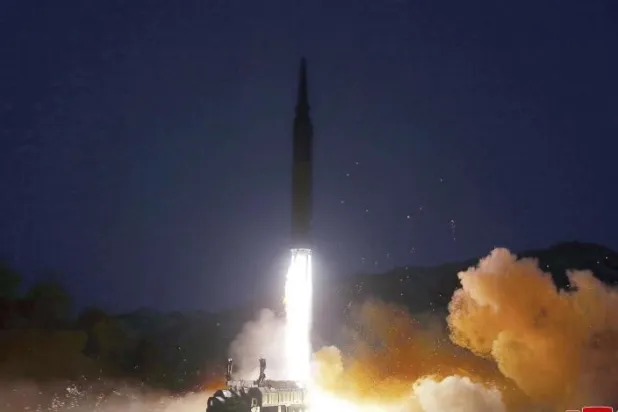
World FILE - This photo provided by the North Korean government shows what it says is a test launch of a hypersonic missile on Jan. 11, 2022 in North Korea. (Korean Central News Agency/Korea News Service via AP, File)

North Korea Fires More Missiles, Seventh Launch in Two Weeks

North Korea fired two ballistic missiles into the sea early Sunday, Seoul's military said, the seventh such launch in two weeks, just hours after a nuclear…

Asharq Al Awsat
Entertainment Italian-Tunisian actress Claudia Cardinale (2nd-L) poses in front of a mural of her during a street naming ceremony in her honor in Tunisia FETHI BELAID AFP

60s Filmstar Claudia Cardinale Honored in Tunisian Birthplace

Actress Claudia Cardinale may have been a sixties legend of Italian and French cinema, but in Tunisia, in the portside district where she grew up, she says she…

Asharq Al Awsat

App Developers Urge EU Action on Apple Fee Practices 

An Apple logo adorns the façade of the downtown Brooklyn Apple store on March 14, 2020, in New York. (AP)
TT

App Developers Urge EU Action on Apple Fee Practices 

An Apple logo adorns the façade of the downtown Brooklyn Apple store on March 14, 2020, in New York. (AP)

A coalition of 20 app developers and consumer groups on Tuesday called upon European regulators to enforce EU laws against Apple, saying the company's fee structure unfairly disadvantages European developers compared to their US rivals after a recent court decision in the United States.

The European Union's Digital Markets Act (DMA), implemented in 2023, mandates that large tech platforms labelled "gatekeepers", such as Apple, facilitate in-app transactions outside their ecosystem at no charge.

The coalition's appeal reflects concerns over a disparity following a US court ruling that restricts Apple's ability to impose fees on external transactions.

The European Commission earlier this year fined Apple 500 million euros ($588 million) for breaching the DMA by obstructing developers from guiding users to alternative payment methods.

In response to the EU ruling, Apple revised its terms to impose fees ranging from 13% for smaller businesses to up to 20% for App Store purchases, alongside penalties of 5% to 15% on external transactions.

The Coalition for Apps Fairness (CAF), representing firms such as Deezer and Proton, argues these revised fees still violate DMA stipulations and says that US developers benefit from more favorable terms after the court decision.

"This situation is untenable and damaging to the app economy," CAF said in a statement, accusing Apple of undermining transparency and stifling innovation.

Global Policy Counsel for CAF, Gene Burrus, said that developers in the EU have to either bear the cost of those fees or pass them down to customers.

"It is bad for European companies, and it is bad for European consumers," he said.

According to CAF, European developers remain disadvantaged six months after the Commission declared Apple's policies illegal under the DMA.

Although Apple has announced further policy changes to take effect in January, it has yet to specify what these revisions will entail, fueling dissatisfaction among developers over the lack of clarity.

"We want the EU Commission to tell Apple that the law is the law and that free of charge means free of charge," Burrus said, adding that the European authorities should consider referring the issue to the European Court of Justice if necessary.


Will OpenAI Be the Next Tech Giant or Next Netscape?

While OpenAI does not expect to be profitable before 2029, the startup's valuation keeps climbing in funding rounds baffling some financial analysts. Kirill KUDRYAVTSEV / AFP
TT

Will OpenAI Be the Next Tech Giant or Next Netscape?

While OpenAI does not expect to be profitable before 2029, the startup's valuation keeps climbing in funding rounds baffling some financial analysts. Kirill KUDRYAVTSEV / AFP

Three years after ChatGPT made OpenAI the leader in artificial intelligence and a household name, rivals have closed the gap and some investors are wondering if the sensation has the wherewithal to stay dominant.

Investor Michael Burry, made famous in the film "The Big Short," recently likened OpenAI to Netscape, which ruled the web browser market in the mid-1990s only to lose to Microsoft's Internet Explorer.

"OpenAI is the next Netscape, doomed and hemorrhaging cash," Burry said recently in a post on X, formerly Twitter.

Researcher Gary Marcus, known for being skeptical of AI hype, sees OpenAI as having lost the lead it captured with the launch of ChatGPT in November 2022.

The startup is "burning billions of dollars a month," Marcus said of OpenAI.

"Given how long the writing has been on the wall, I can only shake my head" as it falls.

Yet ChatGPT was a tech launch like no other, breaking all consumer product growth records and now boasting more than 800 million -- paid subscription and unpaid -- weekly users.

OpenAI's valuation has soared to $500 billion in funding rounds, higher than any other private company.

But the ChatGPT maker will end this year with a loss of several billion dollars and does not expect to be profitable before 2029, an eternity in the fast-moving and uncertain world of AI.

Nonetheless, the startup has committed to paying more than $1.4 trillion to computer chip makers and data center builders to build infrastructure it needs for AI.

The fierce cash burn is raising questions, especially since Google claims some 650 million people use its Gemini AI monthly and the tech giant has massive online ad revenue to back its spending on technology.

Rivals Amazon, Meta and OpenAI-investor Microsoft have deep pockets the ChatGPT-maker cannot match.

Turbulence ahead?

A charismatic salesman, OpenAI chief executive Sam Altman flashed rare annoyance when asked about the startup's multi-trillion-dollar contracts in early November.

A few days later, he warned internally that the startup is likely to face a "turbulent environment" and an "unfavorable economic climate," particularly given competitive pressure from Google.

And when Google released its latest model to positive reactions, Altman issued a "red alert," urging OpenAI teams to give ChatGPT their best efforts.

OpenAI unveiled its latest ChatGPT model last week, that same day announcing Disney would invest in the startup and license characters for use in the bot and Sora video-generating tool.

OpenAI's challenge is inspiring the confidence that the large sums of money it is investing will pay off, according to Foundation Capital partner Ashu Garg.

For now OpenAI is raising money at lofty valuations while returns on those investments are questionable, Garg added.

Yet OpenAI still has the faith of the world's deepest-pocketed investors.

"I'm always expecting OpenAI's valuation to come down because competition is coming and its capital structure is so obviously inappropriate," said Pluris Valuation Advisors president Espen Robak.

"But it only seems to be going up."

Opinions are mixed on whether the situation will result in OpenAI postponing becoming a publicly traded company or instead make its way faster to Wall Street to cash in on the AI euphoria.

Few AI industry analysts expect OpenAI to implode completely, since there is room in the market for several models to thrive.

"At the end of the day, it's not winner take all," said CFRA analyst Angelo Zino.

"All of these companies will take a piece of the pie, and the pie continues to get bigger," he said of AI industry frontrunners.

Also factored in is that while OpenAI has made dizzying financial commitments, terms of deals tend to be flexible and Microsoft is a major backer of the startup.


China Approves First Two Level-3 Autonomous Driving Cars from State-owned Automakers

People pass by the entrance to Volkswagen (China) Technology Company, a 3 billion euros ($3.5 billion) R&D center in Hefei in eastern China's Anhui province, on Feb. 25, 2025. (AP Photo/Ken Moritsugu)
TT

China Approves First Two Level-3 Autonomous Driving Cars from State-owned Automakers

People pass by the entrance to Volkswagen (China) Technology Company, a 3 billion euros ($3.5 billion) R&D center in Hefei in eastern China's Anhui province, on Feb. 25, 2025. (AP Photo/Ken Moritsugu)

China's industry regulator on Monday approved two Chinese cars with level-3 autonomous driving capabilities, marking the first time such vehicles have been cleared by the national regulator as legitimate products ready for mass adoption.

The Ministry of Industry and Information Technology approved the two electric sedans from state-owned automakers Changan Auto and BAIC Motor in its latest automobile product entry category, said Reuters.

The two models are allowed to activate conditional autonomous driving in designated areas of Chongqing and Beijing with speed limits of 50km/h and 80km/h, respectively, the ministry said in a statement. The automakers will conduct trial operation with the cars on the specific roads via their ride-hailing units, it added.

The auto industry has defined five levels of autonomous driving, from cruise control at level one to fully self-driving cars at level five, and level three allows drivers to take their eyes and hands off the road in certain situations.

The move underscored China's ambition to lead the development and adoption of autonomous driving, a technology poised to disrupt the auto industry globally. Last year, China lined up nine automakers for public tests to advance the adoption of self-driving cars.

Chinese regulators earlier this year had sharpened scrutiny of the assisted driving technologies following an accident involving a Xiaomi SU7 sedan in March. That incident killed three occupants when their car crashed seconds after the driver took control from the assisted-driving system.

But government officials are pressing Chinese automakers to rapidly deploy even more advanced systems. In their level-3 push, Chinese regulators also are upping the regulatory ante by holding automakers and parts suppliers liable if their systems fail and cause an accident.

Autonomous driving developers such as Pony AI and WeRide have been testing their level-4 cars with licenses granted by local governments across China.

Tesla's Full Self-Driving, a level-2 driver assistance system, has been partially approved in China since February and falls short of its capabilities in the United States.