


Iraq’s Kurdistan Works to Establish Two Oil Firms as Erbil-Baghdad Tensions Rise

A picture shows a view of the area around the citadel of Erbil, the capital of the autonomous Kurdish region of northern Iraq, as dust engulfs the sector on May 24, 2022. (AFP)
TT

Iraq’s Kurdistan Works to Establish Two Oil Firms as Erbil-Baghdad Tensions Rise

A picture shows a view of the area around the citadel of Erbil, the capital of the autonomous Kurdish region of northern Iraq, as dust engulfs the sector on May 24, 2022. (AFP)

Iraq's Kurdistan Regional Government (KRG) is working to establish two oil firms, the latest move in the battle between Erbil and Baghdad to control the oil sector in the semi-autonomous region.

The KRG's new oil firm KROC would specialize in oil exploration, while the second - KOMO - would focus on oil exports and marketing from the semi-autonomous region, a spokesperson said in a statement on Friday.

The regional government has presented the idea and discussed it with the federal government in Baghdad recently, the KRG spokesperson said in a statement.

The statement follows months of disputes between Erbil and Baghdad after a February federal court ruling that deemed the legal foundations of the Kurdistan region's oil and gas sector unconstitutional.

The oil ministry in Baghdad has since made fresh attempts to control revenue from the Kurdistan region, including summoning seven firms operating there to a commercial court on May 19. The firms were Addax, DNO, Genel, Gulf Keystone, HKN, Shamaran and WesternZagros.

The commercial court sitting has been postponed twice as some of the representation for these international oil firms did not have power of attorney, several sources told Reuters. The court session is due to resume on Monday, June 20.

As well as announcing plans to establish its own oil company in the Kurdistan region, the Iraqi oil ministry has ordered international lead contractors and subcontractors through Basrah Oil (BOC) and Iraq's national oil firm (Inoc) to pledge not to work on contracts or projects there.

Through letters sent on June 7 and 12, the firms were given three months to terminate existing contracts or projects in the KRG oil sector or face being blacklisted, according to two sources familiar with the matter.

The oil ministry is using two law firms - Vincent and Elkins and Cleary Gottlieb Steen and Hamilton - to help with gaining control of the KRG oil sector, according to two sources. Both firms have declined to comment.

The KRG has repeatedly rejected the federal court ruling. On June 5, the KRG's ministry of natural resources filed a civil suit against the minister of oil in Baghdad, Ihsan Ismael, for sending emails and letters to intimidate oil firms operating in the Kurdistan region and for interfering with the contractual rights of these firms and the KRG, according to a June 13 statement.

Also on June 5, the Erbil court of investigation ruled that the commercial court sessions against international oil firms must be brought to the Erbil court.

There have been years of attempts by the federal government to bring KRG revenues under its control, including local court rulings and threats of international arbitration.

The implications of the latest dispute are not fully clear as more than eight months since elections in Iraq, the formation of a government is still underway.

Israel Says Military Operation Against Hezbollah 'Still Not Complete'

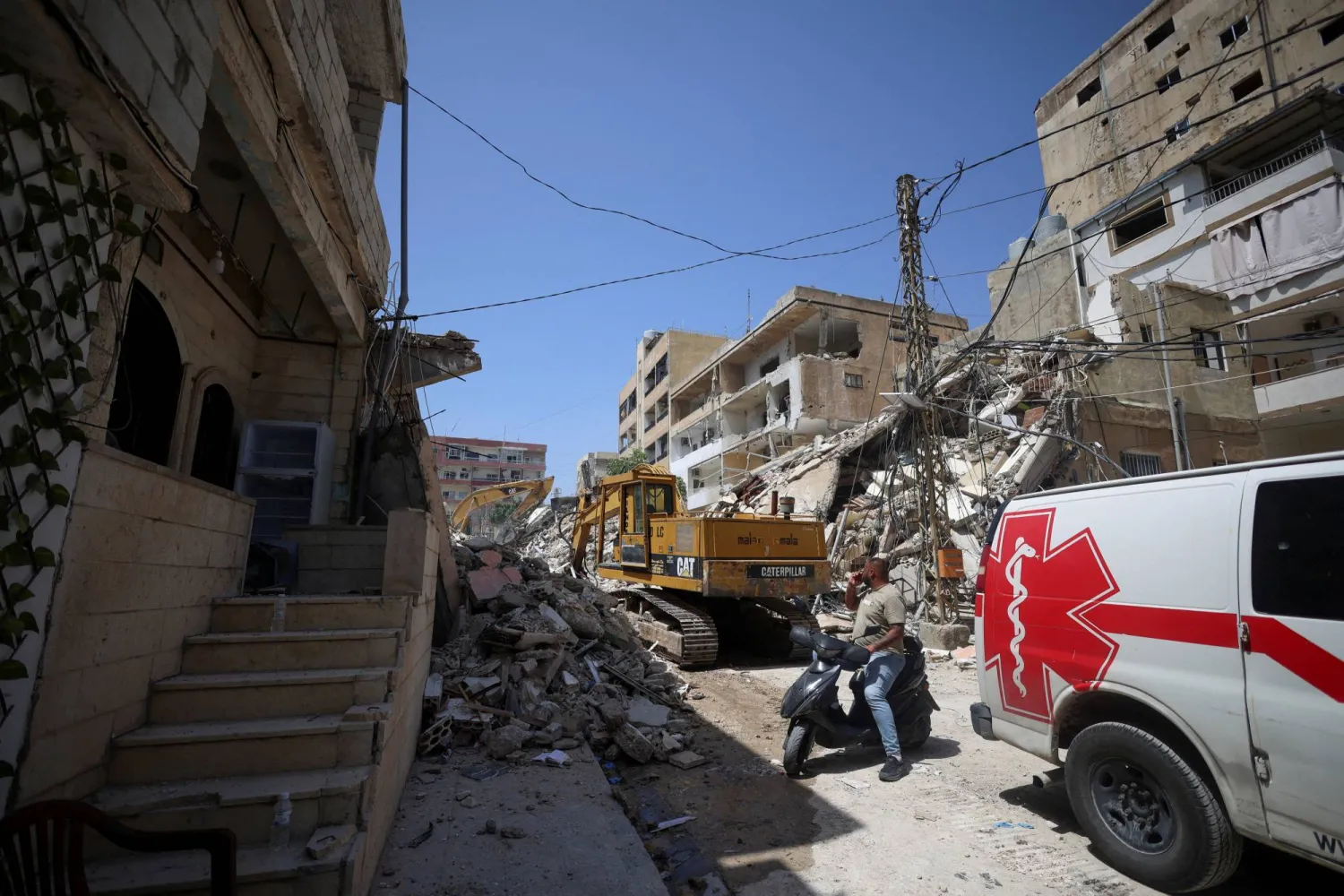
A man next to an ambulance looks at the site of an Israeli strike carried out before a 10-day ceasefire between Lebanon and Israel went into effect, in Tyre, Lebanon, April 17, 2026. REUTERS/Louisa Gouliamaki
TT

Israel Says Military Operation Against Hezbollah 'Still Not Complete'

A man next to an ambulance looks at the site of an Israeli strike carried out before a 10-day ceasefire between Lebanon and Israel went into effect, in Tyre, Lebanon, April 17, 2026. REUTERS/Louisa Gouliamaki

Israel's defense minister said on Friday that the campaign against Hezbollah was not yet complete, just hours after a 10-day ceasefire came into force in Lebanon.

He also warned that if the fighting resumed, displaced residents returning to the country's war-torn south would have to evacuate again.

"The ground maneuver into Lebanon and the strikes on Hezbollah have achieved many gains, but they are still not complete," Defense Minister Israel Katz said in a broadcast statement.

There remained areas of the south that had not yet been cleared of Hezbollah militants, which would have to happen one way or another, he added.

"The area between the security zone and the Litani (River) line, which is currently under our control, has not yet been cleared of terrorists and weapons," Katz warned.

"This will have to be carried out either through diplomatic means or by continued IDF activity once the ceasefire ends."

As the truce took effect at midnight (2100 GMT), thousands of displaced Lebanese civilians began heading south, hoping to return to their homes.

But Katz said a fresh bout of fighting could force them to leave again.

"If the fighting resumes, those residents who return to the security zone will have to be evacuated to allow completion of the mission," AFP quoted him as saying.

According to details of the truce released by the US State Department, Israel reserves the right to continue targeting Hezbollah to prevent "planned, imminent, or ongoing attacks".

Israel, whose troops are occupying parts of southern Lebanon, has also said it will maintain a 10-kilometer (six-mile) security zone it has established along the border.

"The security zone has been cleared of militants and weapons, is empty of residents, and will continue to be cleared of terrorist infrastructure, including the destruction of homes in front-line villages that have effectively become terrorist outposts," Katz said.

The details of the truce also stipulate that Lebanon "with international support... will take meaningful steps to prevent Hezbollah" from undertaking any attacks against Israeli targets.


Beirut Conference Sees Wide Consensus Over Weapons-free Capital

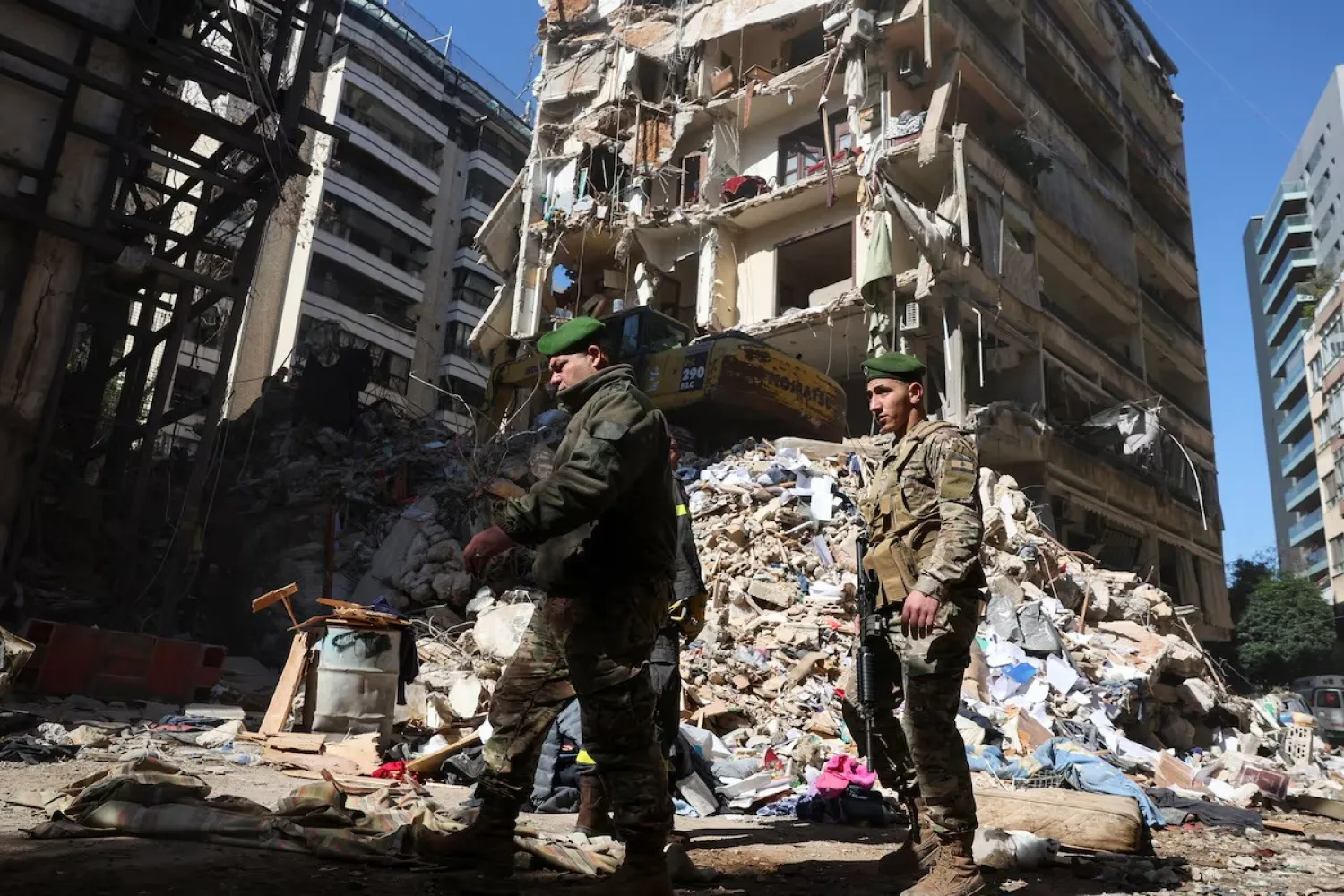
Members of the military at the site of an Israeli strike carried out on Wednesday April 8, in Ain Al Mraiseh in Beirut, Lebanon, April 9, 2026. REUTERS/Mohamed Azakir 
TT

Beirut Conference Sees Wide Consensus Over Weapons-free Capital

Members of the military at the site of an Israeli strike carried out on Wednesday April 8, in Ain Al Mraiseh in Beirut, Lebanon, April 9, 2026. REUTERS/Mohamed Azakir 

Beirut MPs representing most of Lebanon’s political parties met in the capital to support a government move declaring the city “safe and weapons-free,” following recent security incidents and Israeli strikes.

The conference brought together most factions, except MPs from Hezbollah, the Amal Movement and Al-Jamaa al-Islamiya.

Despite political divisions, participants struck a unified rhetoric, calling for all weapons to be placed exclusively under state control and for a stronger presence of official institutions, chiefly the Lebanese Army, across the capital to ensure stability and restore public confidence in security.

MP Fouad Makhzoumi said Beirut “deserves to be protected together” and would remain “a city that embraces everyone,” describing the “Black Wednesday” as a serious warning of the risks still facing the capital.

He called for the army to deploy across all neighborhoods, for checkpoints to be reinforced and for effective security oversight, stressing that state-building requires a monopoly on arms “without exception.”

He further stressed all necessary measures should be taken to restore order, “up to declaring general mobilization if needed.”

For his part, MP Ghassan Hasbani of the Lebanese Forces said the meeting reflected a national stance tied to the responsibility of representing Beirut’s residents. He voiced support for state efforts to assert full authority, confiscate illegal weapons and treat any armed activity outside state control as a direct threat to the capital’s security and stability.

Kataeb Party lawmaker Nadim Gemayel noted that Lebanon should no longer be used as a bargaining chip by external actors, calling for firm implementation of government decisions and for the army to deploy across the country, starting with Beirut, to protect citizens and reinforce sovereignty.

Similarly, MP Ibrahim Mneimneh said Hezbollah had dragged Lebanon into a conflict unrelated to it, exposing the country to heavy losses, while Beirut and other regions paid the price in security and stability. He stressed that the current phase required restoring state authority and ensuring its exclusive control over arms.

MP Waddah Sadeq said the Lebanese “have the right to loyalty to Lebanon alone,” urging support for what he described as “historic” government decisions. He called for unity under a state based on institutions and the rule of law, and for security forces to fully carry out their duties.

MP Nicolas Sehnaoui of the Free Patriotic Movement highlighted the need for an inclusive national approach to rebuild trust in the state, stressing that limiting arms to the army and legitimate forces remains essential, while avoiding exclusionary rhetoric.

Lawmaker Edgar Traboulsi said Beirut, despite wars and crises, “does not die,” but needs unity and solidarity free from division and incitement.

MP Faisal Sayegh of the Progressive Socialist Party stated that Beirut’s security is inseparable from Lebanon’s, calling for adherence to sovereignty and independence and implementation of the Taif Agreement and relevant government decisions.


Beirut Conference Sees Wide Consensus Over Weapons-free Capital

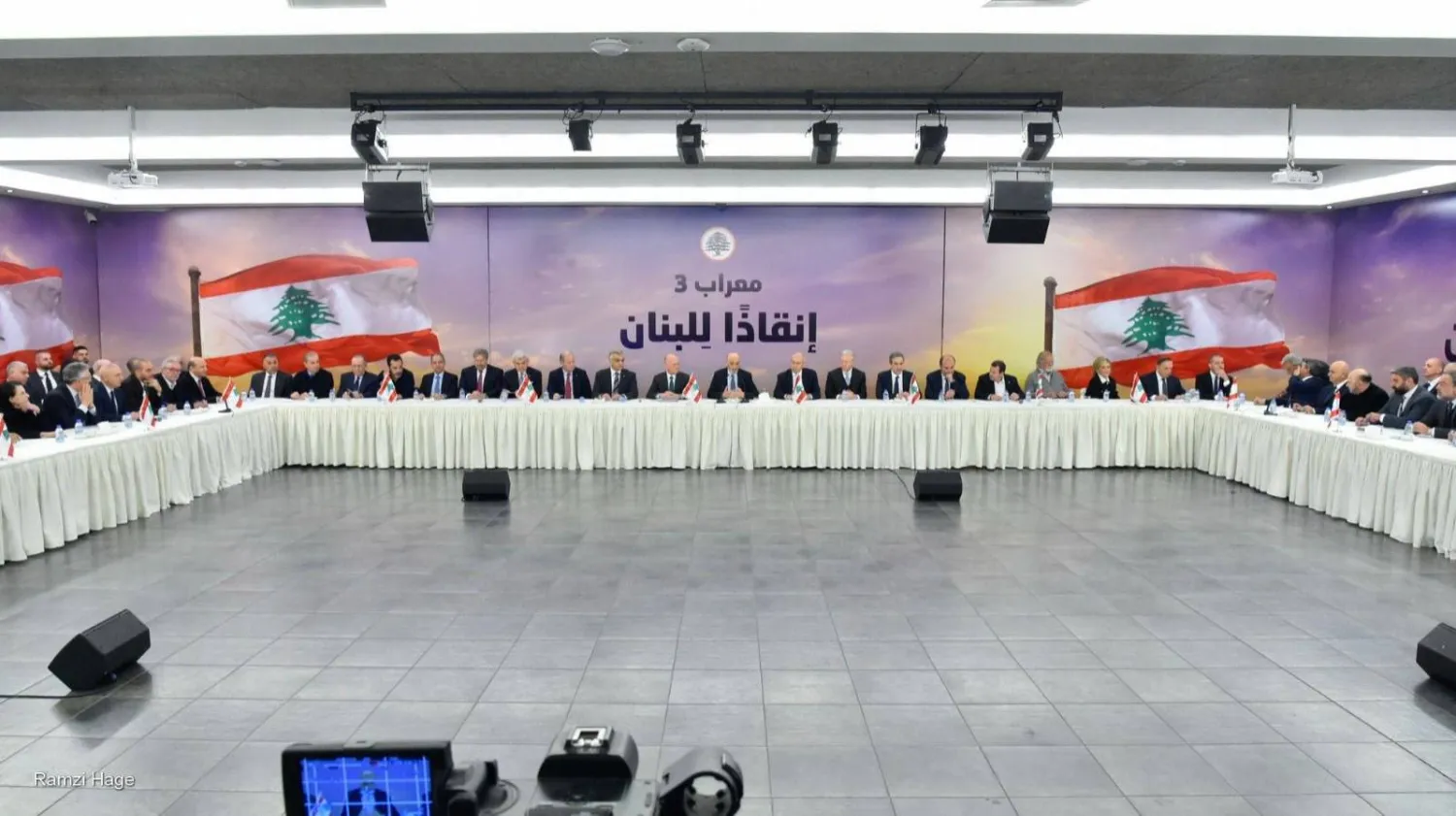
Beirut MPs met in the capital to support a government move declaring the city “safe and weapons-free." Asharq Al-Awsat
TT

Beirut Conference Sees Wide Consensus Over Weapons-free Capital

Beirut MPs met in the capital to support a government move declaring the city “safe and weapons-free." Asharq Al-Awsat

Beirut MPs representing most of Lebanon’s political parties met in the capital to support a government move declaring the city “safe and weapons-free,” following recent security incidents and Israeli strikes.

The conference brought together most factions, except MPs from Hezbollah, the Amal Movement and Al-Jamaa al-Islamiya.

Despite political divisions, participants struck a unified rhetoric, calling for all weapons to be placed exclusively under state control and for a stronger presence of official institutions, chiefly the Lebanese Army, across the capital to ensure stability and restore public confidence in security.

MP Fouad Makhzoumi said Beirut “deserves to be protected together” and would remain “a city that embraces everyone,” describing the “Black Wednesday” as a serious warning of the risks still facing the capital.

He called for the army to deploy across all neighborhoods, for checkpoints to be reinforced and for effective security oversight, stressing that state-building requires a monopoly on arms “without exception.”

He further stressed all necessary measures should be taken to restore order, “up to declaring general mobilization if needed.”

For his part, MP Ghassan Hasbani of the Lebanese Forces said the meeting reflected a national stance tied to the responsibility of representing Beirut’s residents. He voiced support for state efforts to assert full authority, confiscate illegal weapons and treat any armed activity outside state control as a direct threat to the capital’s security and stability.

Kataeb Party lawmaker Nadim Gemayel noted that Lebanon should no longer be used as a bargaining chip by external actors, calling for firm implementation of government decisions and for the army to deploy across the country, starting with Beirut, to protect citizens and reinforce sovereignty.

Similarly, MP Ibrahim Mneimneh said Hezbollah had dragged Lebanon into a conflict unrelated to it, exposing the country to heavy losses, while Beirut and other regions paid the price in security and stability. He stressed that the current phase required restoring state authority and ensuring its exclusive control over arms.

MP Waddah Sadeq said the Lebanese “have the right to loyalty to Lebanon alone,” urging support for what he described as “historic” government decisions. He called for unity under a state based on institutions and the rule of law, and for security forces to fully carry out their duties.

MP Nicolas Sehnaoui of the Free Patriotic Movement highlighted the need for an inclusive national approach to rebuild trust in the state, stressing that limiting arms to the army and legitimate forces remains essential, while avoiding exclusionary rhetoric.

Lawmaker Edgar Traboulsi said Beirut, despite wars and crises, “does not die,” but needs unity and solidarity free from division and incitement.

MP Faisal Sayegh of the Progressive Socialist Party stated that Beirut’s security is inseparable from Lebanon’s, calling for adherence to sovereignty and independence and implementation of the Taif Agreement and relevant government decisions.