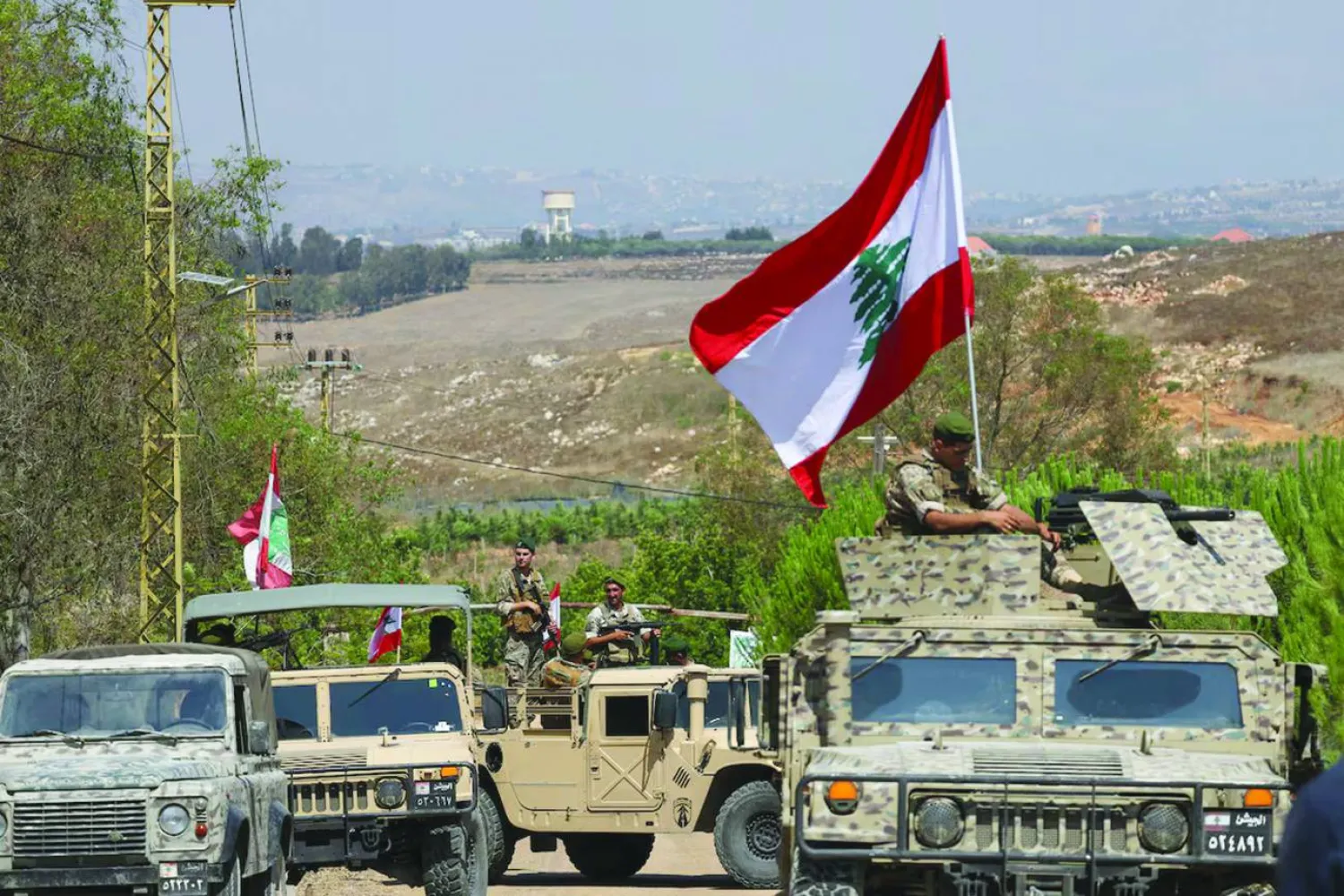
The Lebanese Army has rejected Israeli demands for direct military coordination while Israeli forces continue to occupy Lebanese territory, fearing the move could undermine negotiations and draw the military into domestic political disputes.
The army wants to preserve the trust it has built with communities in South Lebanon, even as it cracks down on gunmen and weapons traffickers and expands its deployment in areas outside Israeli control.
Washington has conveyed Israel’s demand for direct coordination between the two armies, which would replace the existing US-mediated mechanism, the Military Coordination Group for Lebanon (MCG4L).
The group oversees implementation of the “framework agreement”, coordination arrangements and assistance with military deployments, beginning in designated pilot areas.
Israel repeated its demand during the eighth round of military-only talks in Tampa, Florida.
President Joseph Aoun backs the army’s refusal. Visitors to the president told Asharq Al-Awsat that he had personally instructed the military not to establish direct contact with Israeli forces.
“It is still far too early to discuss such a step,” Aoun told his visitors. “Under the current circumstances, direct communication is impossible while the Israeli army continues to occupy our territory and attack it every day.”
Indirect coordination
Sources familiar with contacts between the army and Lebanon’s political leadership explained that the military insists coordination with Israel remain indirect, either through the US military or the United Nations, as under previous UN-chaired tripartite and five-party committees.
The army wants an international witness to any discussions, particularly after what the sources described as negative experiences with Israel.
They cited Israel’s refusal to acknowledge the Lebanese Army’s progress in implementing the first phase of the government’s plan to bring weapons under exclusive state control south of the Litani River before fighting resumed on March 2.
Political and domestic concerns
The army’s position also reflects Israel’s continued occupation of Lebanese territory and its refusal to withdraw, halt attacks or offer political concessions that could strengthen Beirut’s negotiating position, according to the sources.
They stressed that the military does not oppose negotiations and has participated in US-mediated talks in Rome and the United States under the framework agreement.
But the army is determined to avoid becoming a target of domestic political disputes over direct negotiations with Israel.
“The military wants to preserve its standing as a national institution trusted across Lebanon’s political and sectarian divides,” the sources explained.
They warned that “direct coordination could expose the army to criticism whenever Israeli forces carried out attacks or violations, weakening public confidence in the institution.”
“Such divisions could also obstruct its mission to implement Cabinet decisions on bringing all weapons under state control and extending government authority across Lebanese territory.”
US praise
The sources reported that the Lebanese Army had faced no opposition from residents south of the Litani River while implementing the first phase of the government’s weapons-control plan.
It collected 2.7 million weapons and pieces of ammunition without coordinating with any domestic party, including Hezbollah, they noted.
The army also pursued and arrested gunmen, people who opened fire and those transporting weapons, while maintaining local support.
US Central Command praised its operations and recognized the difficulties of working in heavily damaged areas, according to the sources.
These included clearing roads, restoring basic living conditions and helping residents return to their villages, particularly in designated pilot areas.
The sources highlighted US military support for the army’s civil-military operations, which have enabled it to carry out its mission without confrontation with local communities.