


Egypt: Sisi Inaugurates Huge Transportation Projects

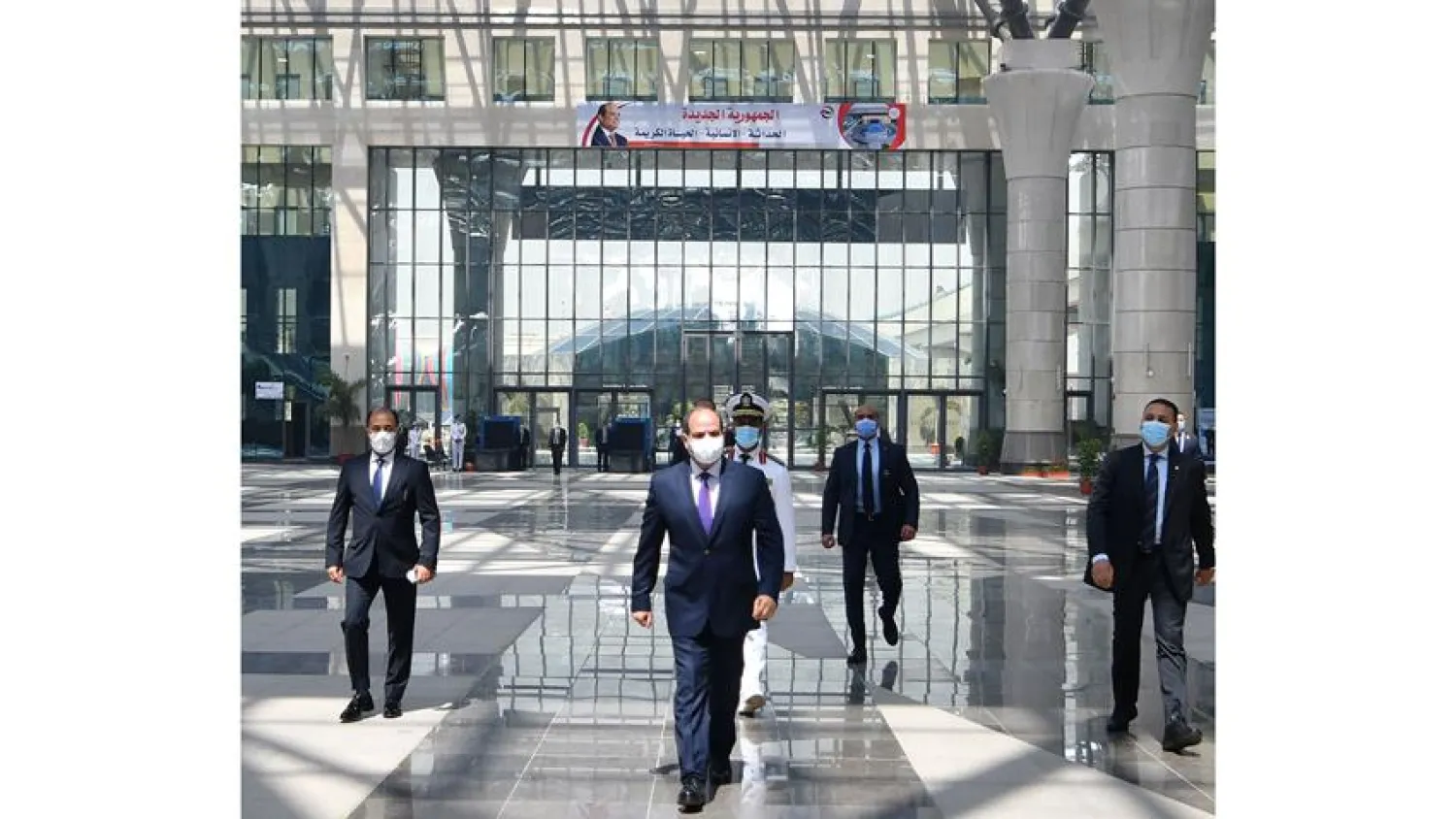
Egyptian President Abdel Fattah El-Sisi at the new station (Egyptian presidency)
TT

Egypt: Sisi Inaugurates Huge Transportation Projects

Egyptian President Abdel Fattah El-Sisi at the new station (Egyptian presidency)

Egyptian President Abdel Fattah El-Sisi inaugurated Adly Mansour Central Interchange Station, the largest such station in the Middle East and Africa.

The inauguration of the new projects coincided with the country's celebration of the ninth anniversary of ousting the banned Muslim Brotherhood.

In 2013, Sisi, Minister of Defense at the time, announced the suspension of the constitution and early presidential elections. The head of the Constitutional Court, Adly Mansour, was assigned as interim president.

Widespread protests erupted in the country against president Mohammed Morsi who was affiliated with the Brotherhood.

Transport Minister Kamel al-Wazir explained that the Adly Mansour station was implemented within the transport sector development plan approved by Sisi.

Wazir explained that the plan mainly incorporated turning public transport means in Greater Cairo into echo-friendly electro-green transportation as applied in Adly Mansour interchange station as the station includes seven various means of transport, four of which are electric.

He said that it includes the Cairo-Suez railway line, the third line of the underground metro, the light electric train, the Super Jet bus station, the electric bus, and bus rapid transit (BRT).

Each carriage is equipped with Wi-Fi service and screens, offering passengers an even greater choice of content on board, the Transport Minister told Sisi.

There are also seven surveillance cameras in each train carriage, added the Minister.

The Minister noted that Egypt is the only country in Africa and the Middle East to have electric mass transportation lines of 500 kilometers long and eco-friendly.

Later, a documentary was displayed on the "Egyptian Railways," one of the oldest railways in Africa and the Middle East and the second worldwide after Britain.

The documentary showed that the first railway line in Egypt was established between Cairo and Alexandria with a length of 208 kilometers in 1851.

Sisi, accompanied by Egyptian Prime Minister Mostafa Madbouly and several officials, inspected the train carriages, while the Minister of Transport stated that about 100 Egyptians were trained in the first stage.

At the end of the tour, the president took the train from Adly Mansour station to Badr City Station, marking the start of its operation, accompanied by Madbouly and the Transport Minister.



Some South Lebanon Residents Trickle Back as Israel-Hezbollah Fighting Pauses

A man walks past a destroyed building targeted by Israeli air strikes on the historic old market in the town of Nabatieh, southern Lebanon, 21 June 2026, following the ceasefire between Israel and Hezbollah. (EPA)
TT

Some South Lebanon Residents Trickle Back as Israel-Hezbollah Fighting Pauses

A man walks past a destroyed building targeted by Israeli air strikes on the historic old market in the town of Nabatieh, southern Lebanon, 21 June 2026, following the ceasefire between Israel and Hezbollah. (EPA)

Some south Lebanon residents cautiously headed back to their hometowns on Sunday after fighting paused between Israel and Hezbollah the previous evening, even as Lebanon's army warned locals to delay returns.

In the southern city of Nabatieh, AFP correspondents saw just a few residents trickling back to inspect homes and businesses.

Mohammad Salloum said he had come back briefly to check on his shop but would return to the city of Sidon further north where he has taken refuge.

"Nabatieh is disaster-stricken," he told AFP while inspecting the damage.

But "God willing, the city will return to life within two or three months", he added.

Lebanon's army on Sunday emphasized "the need for residents to delay their return to southern border villages and towns" and to comply with army instructions "to preserve their safety from the danger of Israeli violations and attacks".

In the southern Tyre region, an AFP correspondent reported a cautious return of some residents, but said many were waiting for the outcome of further Middle East war talks on Sunday and the green light from local authorities.

Hezbollah's backer Iran, which is holding talks in Switzerland with the United States on Sunday, had warned it would not enter into negotiations on a broader agreement with Washington unless the war in Lebanon came to an end.

The latest Israel-Hezbollah ceasefire was announced on Friday, but Lebanese authorities said Israeli strikes on the country's south and east on Saturday killed at least 30 people before fighting paused in the evening.

Israel's Defense Minister Israel Katz on Sunday said Israeli forces had standing orders to act against any threat inside Lebanon, insisting troops would remain in a so-called security zone inside Lebanese territory.

Israeli military operations have recently been focused on the Nabatieh region, and Lebanon's central bank on Saturday said an Israeli strike targeted its branch in the city.

Mayor Abbas Badreddine told AFP that "the scope of destruction in the city of Nabatieh in the past 48 hours amounts to about half of what happened" during the rest of the war.

Lebanon says Israeli attacks have killed more than 4,000 people since Hezbollah drew the country into the Middle East conflict on March 2 with rocket fire at Israel in support of Tehran.


Israel PM Says Troops to Stay in South Lebanon ‘as Long as Necessary’

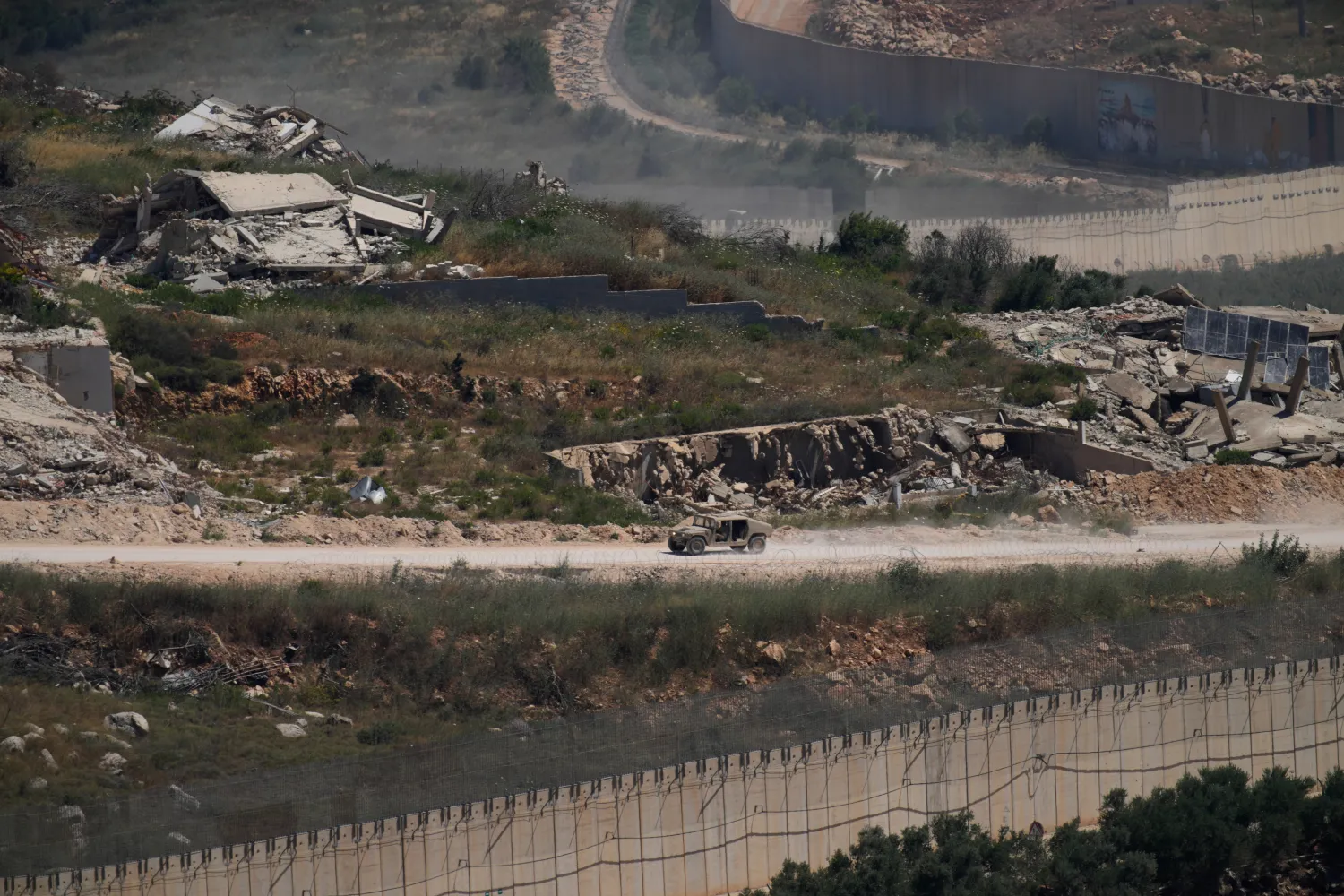
 An Israeli military vehicle moves past destroyed buildings in southern Lebanon as seen from northern Israel, Sunday, June 21, 2026. (AP)
An Israeli military vehicle moves past destroyed buildings in southern Lebanon as seen from northern Israel, Sunday, June 21, 2026. (AP)
TT

Israel PM Says Troops to Stay in South Lebanon ‘as Long as Necessary’

 An Israeli military vehicle moves past destroyed buildings in southern Lebanon as seen from northern Israel, Sunday, June 21, 2026. (AP)
An Israeli military vehicle moves past destroyed buildings in southern Lebanon as seen from northern Israel, Sunday, June 21, 2026. (AP)

Israeli Prime Minister Benjamin Netanyahu said on Sunday that Israeli forces would remain in occupied regions of southern Lebanon "as long as necessary", while also vowing to prevent Iran from acquiring nuclear weapons. 

"We will remain in the security zone in southern Lebanon for as long as necessary to protect the cherished residents of the north and all the citizens of Israel... Nothing will alter that commitment," Netanyahu said. 

"And with regard to Iran: whatever political developments may unfold, I will not allow Iran to acquire nuclear weapons. As long as I serve as prime minister of Israel, that will not happen." 

Israel's military chief said on Sunday that Hezbollah had suffered a severe blow fighting Israeli forces and was now in a "very difficult position", as he met with troops in southern Lebanon. 

He spoke as the United States and Iran held talks in Switzerland after signing a preliminary agreement to end the broader Middle East war, with the conflict in Lebanon threatening to derail the deal. 

"Hezbollah has suffered a severe and significant blow, and we are committed to remaining prepared to continue operating and prevent its rebuilding," Lieutenant General Eyal Zamir said, according to a military statement. 

"Hezbollah is in a very difficult position," he added. 

Hezbollah had pulled Lebanon into the Middle East war in early March when the Iran-backed Lebanese group fired rockets at Israel in retaliation for the killing of Iran's supreme leader in US-Israeli strikes. 

Despite a new ceasefire announcement on Friday as part of the memorandum of understanding signed by Tehran and Washington, Israel and Hezbollah had continued to clash. 

However, there were no reports of fresh strikes in Lebanon since Saturday evening. 

Zamir vowed to defend the communities of northern Israel from Hezbollah rockets. 

"This is the purpose guiding all our efforts... The ceasefire that has been declared is fragile, and we must maintain a high level of readiness for the renewal of combat operations," Zamir said. 

Earlier on Sunday, Defense Minister Israel Katz said Israeli forces had standing orders to act against any threat inside Lebanon and insisted they would remain in the so-called security zone established within occupied Lebanese territory. 

"There has never been, and there is currently no restriction on Israeli soldiers in Lebanon from acting to eliminate threats... As Prime Minister Benjamin Netanyahu and I have made clear: Israel will not withdraw from the security zone in Lebanon," Israel Katz said in a statement, referring to an area extending roughly 10 kilometers (six miles) into Lebanese territory that Israel is occupying. 

Katz's remarks came shortly after Iran warned that it would not enter talks on a broader agreement with Washington unless the war in Lebanon comes to an end. 

Israeli forces and Hezbollah fighters engaged in fierce clashes this week, with Lebanese officials reporting dozens of people killed and the Israeli military reporting five of its own soldiers dead. 


Iran Says Lebanon Conflict 'Main Topic' in US Talks

Smoke billows from southern Lebanon following an Israeli strike, as seen from Nabatieh, Lebanon, June 20, 2026. REUTERS/Stringer
TT

Iran Says Lebanon Conflict 'Main Topic' in US Talks

Smoke billows from southern Lebanon following an Israeli strike, as seen from Nabatieh, Lebanon, June 20, 2026. REUTERS/Stringer

Iran said on Sunday that the ongoing conflict in Lebanon between Israel and militant group Hezbollah will top the agenda in talks with the United States in Switzerland, as well as issues such as frozen Iranian funds and the sale of the country's oil.

"The Zionist regime continues to violate its commitment in Lebanon, this issue will be the main topic of discussion in today's talks," foreign ministry spokesman Esmaeil Baqaei said in a video shared by IRNA state news agency.

Tehran said on Thursday it had signed a deal with Washington to end months of hostilities that began on February 28 following US-Israeli attacks on Iran.

Under the agreement, the Israel-Hezbollah conflict in Lebanon was also due to stop, said AFP.

Iran's military announced on Saturday that it has closed the Strait of Hormuz again over ongoing Israeli attacks in Lebanon.

But there were no reports of fresh strikes in Lebanon after Saturday evening and Baqaei said since Saturday "a fragile cessation (in Lebanon) has been established".

He added that Tehran would also pursue the issue of its frozen and inaccessible funds during the talks.

"The issue of making available Iran's frozen or restricted assets, as well as the discussion related to issuing the necessary licenses for the sale of Iranian oil, will also be on the agenda," he said from Switzerland.

Iran has not officially disclosed the value of its frozen assets, though media reports have estimated them at more than $100 billion, largely frozen since the 1979 Iranian Revolution that toppled the US-backed shah.

According to Baqaei, the Iranian delegation will meet the US delegation in a "quadrilateral meeting" that will also include mediators Pakistan and Qatar.