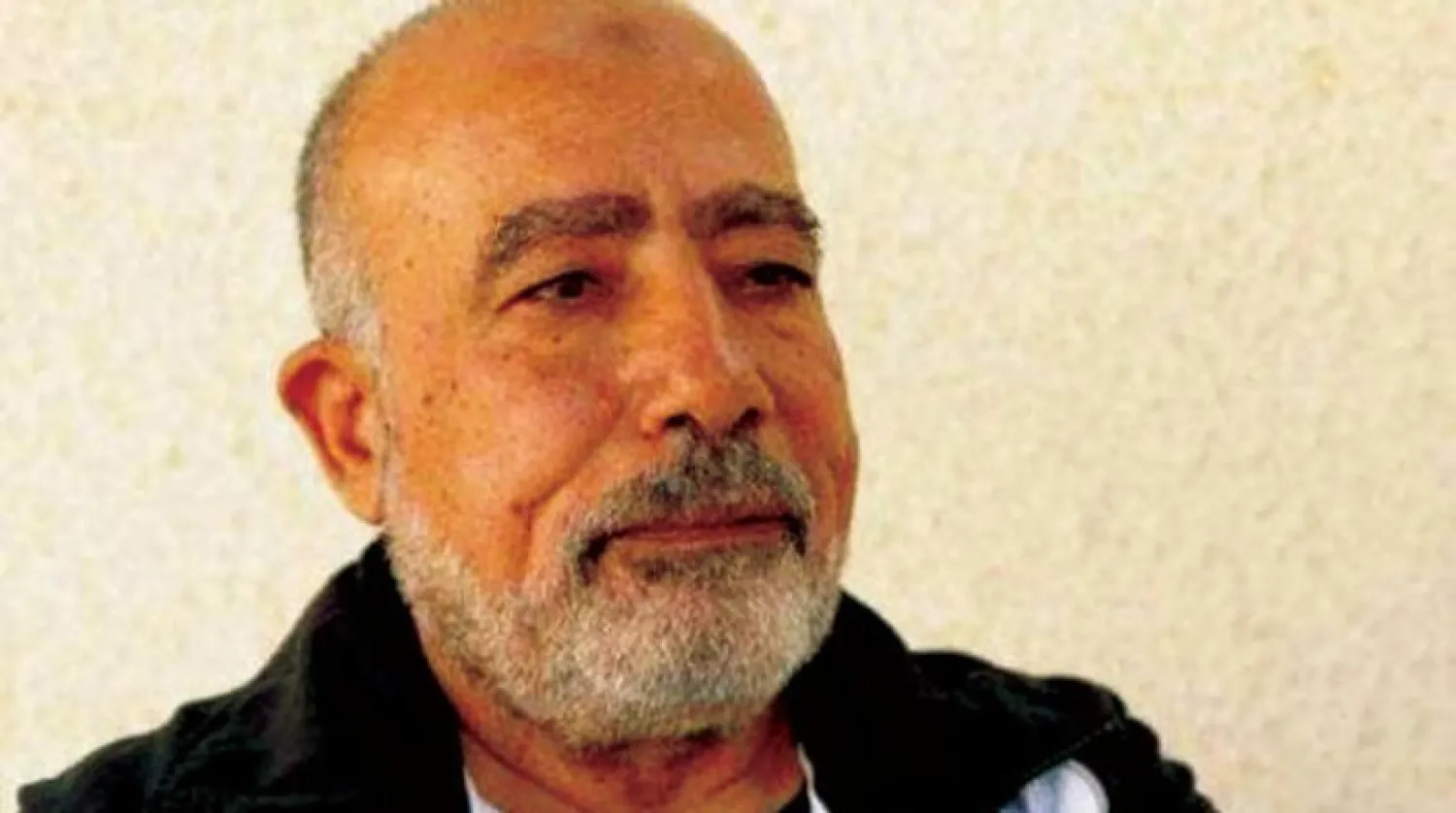
After killing the most prominent members of the Qassam Brigades’ military council during the Gaza war, Israel has turned its focus to the Hamas armed wing’s second-tier commanders, who now oversee military operations in the enclave.
Over the past week, Israel killed Mohammed al-Yazouri and Nael Abu Obeid, commanders of the Khan Younis and Rafah brigades, in separate strikes on the Mawasi area of Khan Younis in southern Gaza. Both were among the Qassam Brigades’ most prominent commanders in the south.
Al-Yazouri took command of the Khan Younis Brigade shortly after commanders Izz al-Din al-Haddad and Mohammed Ouda were killed in separate strikes less than 10 days apart in May.
Hudhayfa Abu Muammar was killed alongside al-Yazouri. A Qassam Brigades engineer close to its senior commanders, Abu Muammar, was responsible for developing the group’s military capabilities.
Abu Obeid took command of the Rafah Brigade after Mohammed Shabana was killed in May 2025, when Israel struck a tunnel in Khan Younis where he was with Mohammed Sinwar, the Qassam Brigades’ commander-in-chief.
Sinwar had succeeded Mohammed Deif, who was killed in an Israeli strike on July 13, 2024, alongside Rafa Salama, the former commander of the Khan Younis Brigade.
Hamas and its armed wing have notably confined their responses to mourning the commanders, omitting the threats of retaliation common in their statements during and before the war.
Some observers say Hamas has been weakened and can no longer respond militarily. Others say it is merely seeking to avoid provoking a harsher Israeli response or giving Israel a pretext to resume the war.
Israeli media
Israeli media have portrayed Hamas as incapable of responding.
Israel’s Channel 12 said the group feared Israel’s reaction and did not intend to retaliate for the killings, adding that it had “come to realize that the Israeli military has the upper hand on the battlefield.”
Haaretz quoted a former senior Palestinian security official in Gaza as saying Hamas could no longer operate freely in response to the killing of its senior commanders.
Signs of this had emerged even before the October 2025 ceasefire, the official said. Rocket fire from Gaza toward Israel had become “almost nonexistent” during the final months of the war, and there had been no major military operations.
Yedioth Ahronoth quoted Israeli military Chief of Staff Eyal Zamir as telling a closed-door security meeting attended by Prime Minister Benjamin Netanyahu and Defense Minister Israel Katz that Hamas had been defeated and Israel had prevailed in the confrontation.
An official in the military intelligence directorate, however, warned that Hamas still posed a threat and was seeking to rebuild its capabilities and restore its rule.
Katz said Hamas faced a “difficult strategic reality,” adding that Israel would “continue working to achieve its security objectives and ensure that the threat of Oct. 7 is not repeated.”
“We have eliminated Hamas leaders inside and outside Gaza, and even in Iran,” Katz said. “We will not allow Iran or any other party to arm Hamas again.”
Hamas’ Priorities
Four Hamas sources — a political official abroad, another source in Gaza and two field operatives in the enclave — separately told Asharq Al-Awsat that the group and its armed wing had other priorities, chiefly denying Israel any pretext to exploit the situation and resume the war.
The political source abroad said there was “a clear decision not to respond to any assassination, because what Israel wants is a reaction that would lend credibility to its narrative that Gaza contains real weapons capable of affecting it and that these weapons must be removed by force.”
The Gaza-based source said Hamas did not want to drag the enclave’s residents back into war. Palestinian factions had therefore reached broad understandings on the need to avoid any action that could be described as “provocative” and might trigger an unpredictable Israeli response.
Both sources said Hamas remained committed to the ceasefire agreement reached last year and to understandings with the Board of Peace on the second phase.
The problem lay with Israel, they said, accusing it of continuing to violate the agreement and refusing to honor any deal.
They said Hamas, in coordination with the other factions, had decided to move forward with the agreement, including transferring governing authority to the National Committee for the Administration of Gaza and placing all weapons exclusively under its authority, rather than under the control of Israel or the United States.
Israel’s obstruction of the agreement was preventing that process from beginning, they said, adding that Israel was still blocking the committee from entering Gaza and assuming its duties.
The two field sources said Hamas and other factions retained what they described as “limited” capabilities, including small arms, explosive devices and anti-vehicle munitions that could be used to carry out attacks.
The political and military leaderships had decided, however, to preserve calm for as long as possible and prepare only for defensive, not offensive, operations.
One source said the decision reflected a desire to protect civilians, rather than fear of confronting Israel. It was also intended to prevent Israel from exploiting any attack to displace Palestinians, force them to move from one area to another and destroy more of the homes still standing in Gaza.
“The prevailing belief in Israel that Hamas has been defeated is merely a slogan with no value on the ground,” the source said.
“Hamas would rather spare Gaza’s residents the horrors of war than disprove that slogan through an attack whose outcome would have no significance at this time.”
Board of Peace Criticism
Separately, Israel’s i24NEWS quoted a Board of Peace official as criticizing Israel’s current strategy in Gaza: killing commanders while armed operatives remain and Hamas continues to govern.
The Board of Peace seeks to dismantle Hamas and eliminate it completely, while Israel is killing operatives without destroying the movement itself, the official said, according to the channel.
The official said Israel’s policy resembled the approach that prevailed before Oct. 7, 2023.
Dismantling Hamas, the official said, would require 14 days of calm, except for action needed to counter immediate threats; the Israeli government’s full cooperation with all preparations and logistical measures required for voluntary disarmament; and adherence to the Board of Peace’s deadline for halting attacks.
That would allow the parties to agree on a timetable for beginning to bring weapons under a single authority, as agreed in Cairo, the official said.
“If Hamas begins dismantling itself quickly and provides the coordinates of all the tunnels, that would be excellent,” the official added. “If it does not disarm, the Israeli military will receive international support to do so by force.”