This year’s Hajj season, which concluded yesterday, saw great success despite the political, health and economic woes worldwide. More so, Hajj 2022 marks a centennial passing on the Saudi government’s organization of the annual Islamic pilgrimage to Makkah.
Over the course of a century, the Kingdom demonstrated exceptional ability in overcoming challenges, confronting difficulties, and delivering the finest of services to pilgrims.
Organizing and supervising Hajj seasons posed serious challenges to Saudi leadership. In turn, the Kingdom spent tremendous efforts in building an integrated system that is centered around institutional development and that focuses on managing crowds, crises, and resources.
Saudi leadership efforts are directly overseen by the Kingdom’s monarch, who also holds the title of the Custodian of the Two Holy Mosques.
At the beginning of the state’s emergence, King Abdulaziz was able to confront many issues and worked to build an integrated system to serve the Two Holy Mosques and their pilgrims. This coincided with the Kingdom founding and developing several primary state sectors such as security, health, media, transport and so much more.
All the efforts spent by the Kingdom reflect its dedication to reconstructing the Two Holy Mosques and holy sites in the service of the pilgrims.
It is remarkable that despite all these efforts, campaigns, fallacies, rumors, and conspiracies related to Hajj are still repeated.
After the pledge of allegiance to King Abdulaziz, propaganda campaigns led some countries to prevent their citizens from performing Hajj under the pretext of threat to their safety.
There were also calls for the Two Holy Mosques to be under Islamic administration. Some Muslims even demanded that the two holy sites be under British protection!
But endless pages can be devoted to the magnanimous efforts spent by King Abdulaziz to ensure the safety of Hajj and pilgrims.
Although some do not believe the stories of how bad the security situation was before King Abdulaziz unified the Kingdom, many historians, such as Abd al-Rahman al-Jabarti, have produced works that document the horrendous experiences lived by pilgrims during those dark times.
Fourteenth century Islamic jurist (Faqih) Alwan al-Hammawi even went as far as redacting one of his books to remove the part pertaining to Hajj over his belief that people at the time mustn’t perform the pilgrimage for security reasons.
Centuries later, Ahmed Shawqi, nicknamed the Prince of Poets, wrote a poem that goes to show how Hajj has evolved over time.
Despite the establishment of security under Saudi rule, many campaigns were launched to incite Muslims around the world against the Hijaz, a region in the west of Saudi Arabia which includes Makkah and Medina, becoming a part of the Kingdom.
Saudi Arabia had to also fight off rumors targeting its integrity in safeguarding Islam’s holy sites.
In September 1926, Zafar Ali Khan, a Pakistani journalist who owned a newspaper in India, wrote to King Abdulaziz about rumors spreading over the Saudi leadership having plans to alter the green-colored dome built above the tomb of Islam’s prophet Muhammad (pbuh).
The founding king then replied by denying the rumors and labeling them as utter lies. King Abdulaziz assured Khan that all holy sites in Saudi Arabia are safe and are being protected by the Saudi people and leadership.
In October 1926, a conference held in the Indian city of Lucknow decided that the greatest Islamic governments have come under the shadow of the British government and that they had the right to demand that it helps with cutting political chords.
For years, several countries, including Iran and Turkey, barred their citizens from performing Hajj pilgrimage in Saudi Arabia for different reasons. They used Hajj as a pressure card to advance their agendas, especially those opposing the rule of King Abdulaziz.
Worse than that, some of those governments demanding to place the Two Holy Mosques under Islamic administration are the same ones who toyed with the endowments of the holy sites.
Commenting on the matter, Shakib Arslan, dubbed as Amir al-Bayan, accused these governments of unrightfully seizing proceeds and endowments meant for the Two Holy Mosques.
Talaat Harb Pacha, a leading Egyptian entrepreneur, noted that performing the Hajj pilgrimage was once an arduous task that was unsafe until King Abdulaziz rose to power and made the desert “safer than any city in the world.”
The founding king not only provided the pilgrims with security, but he also harnessed all possibilities - despite the scarcity of state resources at the time - to expand and build the Two Holy Mosques and provide all services to visiting Hajj pilgrims.
In the same fashion, King Abdulaziz’s successors also dedicated all possible resources to build the Two Holy Mosques and serve pilgrims.
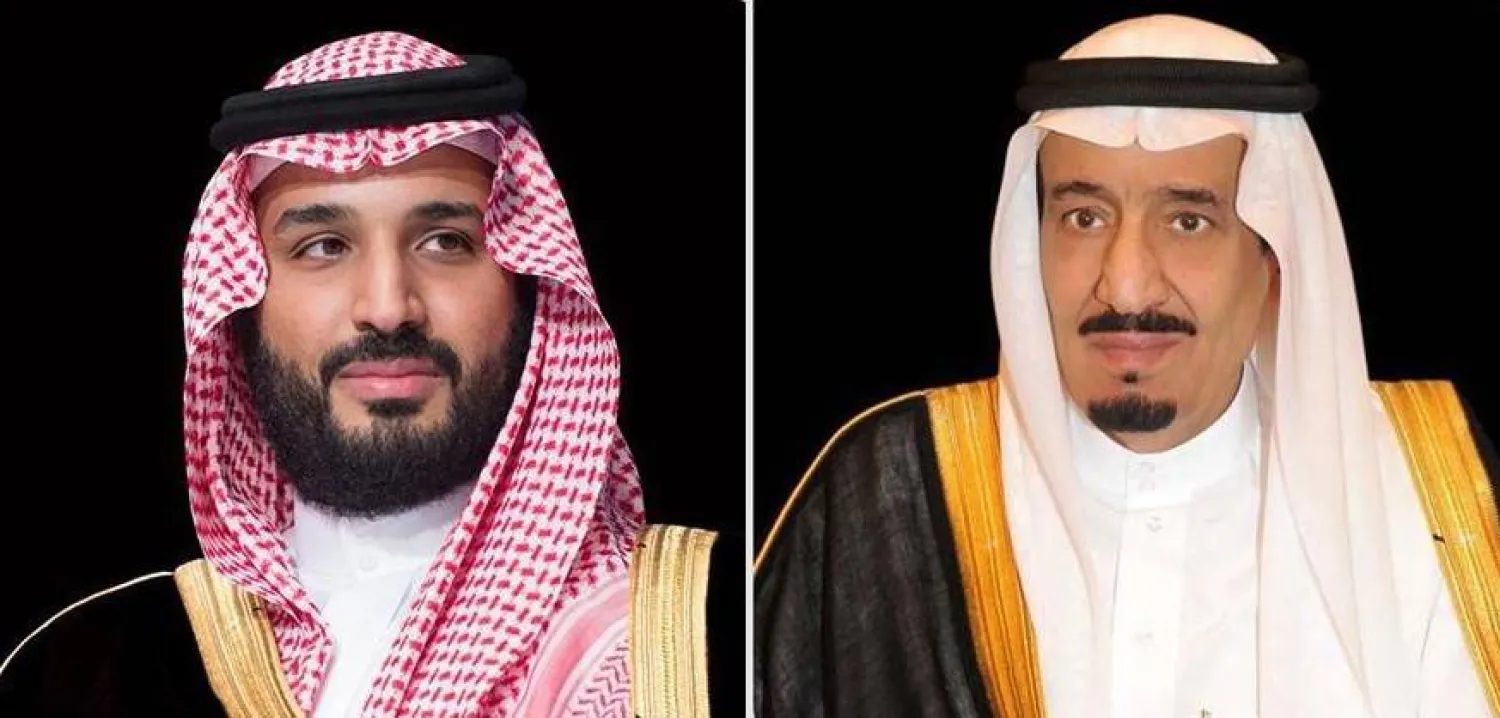
Today, these giant achievements and distinguished services provided by Saudi Arabia, under the leadership of the Custodian of the Two Holy Mosques King Salman bin Abdulaziz and his Crown Prince Mohammed bin Salman, come to serve and care for pilgrims as an extension of what the founder had started.
The Kingdom's government has spent hundreds of billions of riyals on projects of the Two Holy Mosques and the holy sites, in addition to annual operating budgets of tens of billions of riyals.
There are many aspects and details related to Hajj that deserve to be highlighted and published, but an article like this cannot cover all aspects and services provided for Hajj and pilgrims, especially when compared to what pilgrims suffered before the Saudi era.
Under Saudi rule, the sites of the Two Holy Mosques have substantially expanded in size to accommodate the large influx of pilgrims.
The area of the Grand Mosque was developed from about 30 thousand square meters to about 1.5 million square meters. Its capacity has grown to accommodate around two million worshippers. Before, it used to hold a mere 60,000 worshipers.
Other mega projects in Holy Sites have made it possible for millions of pilgrims to visit at the same time.
As the centenary coincides with the Hajj season this year, we must recall the efforts of the Saudi leadership, government, and people in the service of the Two Holy Mosques and in providing facilities for pilgrims.