


Sudan Forces Fire Tear Gas at Protests as Death Toll from Tribal Clashes Rises

Sudanese demonstrators take to the streets calling for civilian rule and denouncing the military administration, in Khartoum, Sudan, Sunday, July 17, 2022. (AP)
TT

Sudan Forces Fire Tear Gas at Protests as Death Toll from Tribal Clashes Rises

Sudanese demonstrators take to the streets calling for civilian rule and denouncing the military administration, in Khartoum, Sudan, Sunday, July 17, 2022. (AP)

Police fired tear gas in Sudan's capital Khartoum Sunday against hundreds of anti-coup protesters who also called attention to increasingly deadly tribal clashes in the country's south.

The capital has been the scene of near-weekly protests since army chief General Abdel Fattah al-Burhan launched a power grab in October last year that derailed a transition to civilian rule.

The coup saw key donors pull the plug on funding, exacerbating a long-running economic crisis and feeding into inter-communal unrest in remote parts of the country.

Blue Nile state, bordering Ethiopia, is the latest crucible of tribal clashes -- and on Sunday, authorities there raised the death toll to 60, from 33 the previous day, in fighting that began nearly a week ago.

"Al-Damazin is bleeding," one Khartoum protester's placard read on Sunday, referring to the provincial capital of Blue Nile.

In the city of Wad Madani, some 200 kilometers south of Khartoum, protesters diverted their demonstration to the local hospital to "donate blood to our brothers wounded in tribal clashes in Blue Nile," protest organizer Ammar Mohamed told AFP.

The clashes in Blue Nile state, between the Berti and Hawsa tribes, first erupted last Monday.

The violence came after the Berti tribe rejected a Hawsa request to create a "civil authority to supervise access to land", a prominent Hawsa member had told AFP on condition of anonymity.

But a senior member of the Bertis had said the tribe was responding to a "violation" of its lands by the Hawsas.

The revised death toll of 60 was provided by Blue Nile health minister Jamal Nasser, who also told AFP that 163 people have been wounded.

"Violence is never a solution," UNICEF tweeted Sunday, in a country where the UN estimates half the population will be pushed into extreme hunger by September.

Post-coup security vacuum
Pro-democracy demonstrators accuse Sudan's military leadership and ex-rebel leaders who signed a 2020 peace deal of exacerbating ethnic tensions in Blue Nile for personal gain.

Security forces had erected road blocks on bridges crossing the Nile linking Khartoum to its suburbs, AFP reporters said, to deter protesters who vowed to take to the streets in large numbers to protest against Burhan.

Sudan's latest coup sparked regular protests and an ongoing crackdown by security forces that has killed at least 114, according to pro-democracy medics.

Nine were killed on June 30, the medics said, when tens of thousands gathered against the military.

Early this month, Burhan vowed in a surprise move to make way for a civilian government.

But the country's main civilian umbrella group rejected his move as a "ruse" and protesters have continued to press the army chief to resign.

The rallies on Sunday follow a period of relative calm in Khartoum in recent days.

Experts say last year's coup created a security vacuum that has fostered a resurgence in tribal violence, in a country where deadly clashes regularly erupt over land, livestock, access to water and grazing.

Guerrillas in Blue Nile battled former president Omar al-Bashir during Sudan's 1983-2005 civil war, picking up weapons again in 2011.

Prompted by enormous protests against his rule, the army ousted Bashir in 2019.

The following year, a civilian-military power-sharing government reached a peace deal with key rebel groups, including from Blue Nile as well as the war-ravaged western Darfur region.

Both areas remain underdeveloped and awash with weapons and there has also been an increase in violence in Darfur in recent months.



Anger in Iraq Over Use of ‘Greatest Arab Poet’ in Ramadan Ad

The late Iraqi poet Muhammad Mahdi al-Jawahiri serves tea to Prime Minister Mohammed Shia al-Sudani, as portrayed in a Ramadan advertisement
TT

Anger in Iraq Over Use of ‘Greatest Arab Poet’ in Ramadan Ad

The late Iraqi poet Muhammad Mahdi al-Jawahiri serves tea to Prime Minister Mohammed Shia al-Sudani, as portrayed in a Ramadan advertisement

Baghdad - A promotional video produced by a local platform and sponsored by several companies has sparked widespread criticism in Iraq over content described as “irresponsible,” according to the Iraqi Writers and Authors Union, for allegedly insulting the “Greatest Arab Poet,” Muhammad Mahdi al-Jawahiri (1899–1997), as well as former royal-era prime minister Nuri al-Said (1888–1958).

Although the production company branded the advertisement “Unified Iraq,” it depicted al-Jawahiri in an AI-generated image serving tea to Prime Minister Mohammed Shia al-Sudani inside his office. In a similar scene, Nuri al-Said was shown serving tea to former parliament speaker Mohammed al-Halbousi, triggering a wave of public outrage.

Alongside the controversy over the AI-generated portrayals of al-Jawahiri and al-Said, another debate erupted after the video showed US Chargé d’Affaires Joshua Harris, British Ambassador Irfan Siddiq, French Ambassador Patrick Durel, and German Ambassador Daniel Krebber at a banquet, appearing to be hosted by Farhad Alaaldin, the Iraqi prime minister’s adviser for foreign affairs.

The advertisement also briefly featured the late Iraqi president, Jalal Talabani, holding an umbrella while walking through the streets of Erbil, the capital of the Kurdistan Region, raising further questions about its purpose.

While the video included a song about “a unified Iraq as a homeland of peace,” critics said its central narrative — built around a homeless young beggar — was confusing and poorly defined. Sources close to the production team told Asharq Al-Awsat that the creators had “their own artistic methods” of expressing the idea.

Government Distances Itself

Amid the mounting backlash, the prime minister’s office expressed rejection of “the virtual video in which al-Jawahiri appeared in a manner inconsistent with the prime minister’s respect and appreciation for his literary and national stature.”

Al-Sudani instructed the Communications and Media Commission to launch an urgent investigation into the entities that produced, promoted, or published the advertisement, citing its alleged offense to cultural icons and state institutions, as well as what he described as the irresponsible and unprofessional use of artificial intelligence technologies.

He also signaled the possibility of legal action against the party responsible for producing what he called “the offensive video against Iraq and its national symbols.”

In contrast, the production company asserted that the PM’s office had prior knowledge of the project, and that the same applied to al-Halbousi. However, sources denied being aware of the inclusion of al-Jawahiri and Nuri al-Said in the work.

The sources also suggested that a government official may have been involved in facilitating the production in cooperation with Al-Bayan University, whose building and offices appeared in the advertisement.

“Deliberate Insult”

The Iraqi Writers and Authors Union condemned what it called an “insult to the immortal al-Jawahiri” after the video showed him serving tea to the prime minister.

In a statement, the union said the act reflected “a deliberate offense to a poet distinguished by his immense cultural and moral value, and his well-known national and humanitarian positions.”

It urged relevant authorities to take a firm and deterrent stance against “irresponsible acts aimed at distorting facts and undermining Iraq’s national symbols.”

The union added that al-Jawahiri remained a national symbol “we proudly present to the world and refuse to see insulted by any party.”

The union was founded in al-Jawahiri’s home in 1959 and he became Iraq’s first journalists’ syndicate head the same year.

Claims of Prior Approvals

Facing intense criticism, the advertisement’s author and head of the production company said all participating political figures had approved the details of the project and filming inside their offices.

She stated that the scenes featuring al-Sudani and al-Halbousi were real, with only the figures of al-Jawahiri and Nuri al-Said later added using artificial intelligence.

In a statement on Instagram, al-Jumaili said the project took two months to complete and was reviewed by several international parties before being shown in Iraq, adding that “no step was taken without official approvals.” She did not specify the nature of those entities or whether the political figures were aware of the AI portrayals alongside them.

She argued that the backlash was politically driven and overlooked the advertisement’s positive messages, later explaining that the tea-serving scenes symbolized a “national identity” passed from past intellectual and political leaders to a new generation of leaders.


Trump to Preside over First Meeting of Board of Peace with Many Gaza Questions Unresolved

US President Donald Trump speaks during a Black History Month event in the East Room of the White House in Washington, DC, on February 18, 2026. (Photo by SAUL LOEB / AFP)
TT

Trump to Preside over First Meeting of Board of Peace with Many Gaza Questions Unresolved

US President Donald Trump speaks during a Black History Month event in the East Room of the White House in Washington, DC, on February 18, 2026. (Photo by SAUL LOEB / AFP)

US President Donald Trump will preside over the first meeting of his Board of Peace on Thursday with unresolved questions on the future of Gaza hanging over an event expected to include representatives from more than 45 nations.

The disarmament of Hamas militants, the size of the reconstruction fund and the flow of humanitarian aid to the war-battered populace of Gaza are among the major questions likely to test the effectiveness of the board in the weeks and months ahead.

Trump is to address the group at the Donald J. Trump US Institute of Peace - a building in Washington the president recently renamed for himself - and announce that participating nations have raised $5 billion for the reconstruction fund.

The money is expected to be a ‌down payment on ‌a fund that will likely need many more billions.

Trump's Board of Peace has been controversial. It includes Israel but not Palestinian representatives and Trump's suggestion that the Board could eventually address challenges beyond Gaza has stirred anxiety that it could undermine the UN's role as the main platform for global diplomacy and conflict resolution.

Senior US officials said Trump will also announce that several nations are planning to send thousands of troops to participate in an International Stabilization Force that ⁠will help keep the peace in Gaza.

Disarming Hamas militants in order for the ‌peacekeepers to begin their mission remains a major sticking point, ‌and the force is not expected to deploy for weeks or months.

The Palestinian group Hamas, fearful of Israeli ‌reprisals, has been reluctant to hand over weaponry as part of Trump's 20-point Gaza plan that brought ‌about a fragile ceasefire last October in the two-year Gaza war.

"We are under no illusions on the challenges regarding demilitarization, but we have been encouraged by what the mediators have reported back," a senior administration official said.

MOST SECURITY COUNCIL MEMBERS NOT ATTENDING

Delegations from 47 countries plus the European Union are expected to attend the event, US officials ‌said. The list includes Israel and a wide array of countries from Albania to Vietnam.

It does not, however, include permanent United Nations Security Council members ⁠like France, Britain, Russia ⁠and China.

Speakers at the event are expected to include Trump, Secretary of State Marco Rubio, US envoys Steve Witkoff and Jared Kushner, former British Prime Minister Tony Blair, who is expected to have a senior role in the board, US ambassador to the UN Mike Waltz, and High Representative for Gaza Nickolay Mladenov, among other attendees.

A member of the peace board, who declined to be named, said the Gaza plan faces formidable obstacles. Establishing security in the enclave is a precondition for progress in other areas, but the police force is neither ready nor fully trained, said the official.

The official added that a key unresolved question is who would negotiate with Hamas. The peace board’s representatives could do so with countries that have influence over Hamas - notably Qatar and Türkiye- but Israel is deeply skeptical of both.

Another major issue is the flow of aid, which the official described as “disastrous” and in urgent need of scaling up. Even if aid surges in, it remains unclear who will distribute it, the official said.


Reports: US to Withdraw All Troops from Syria

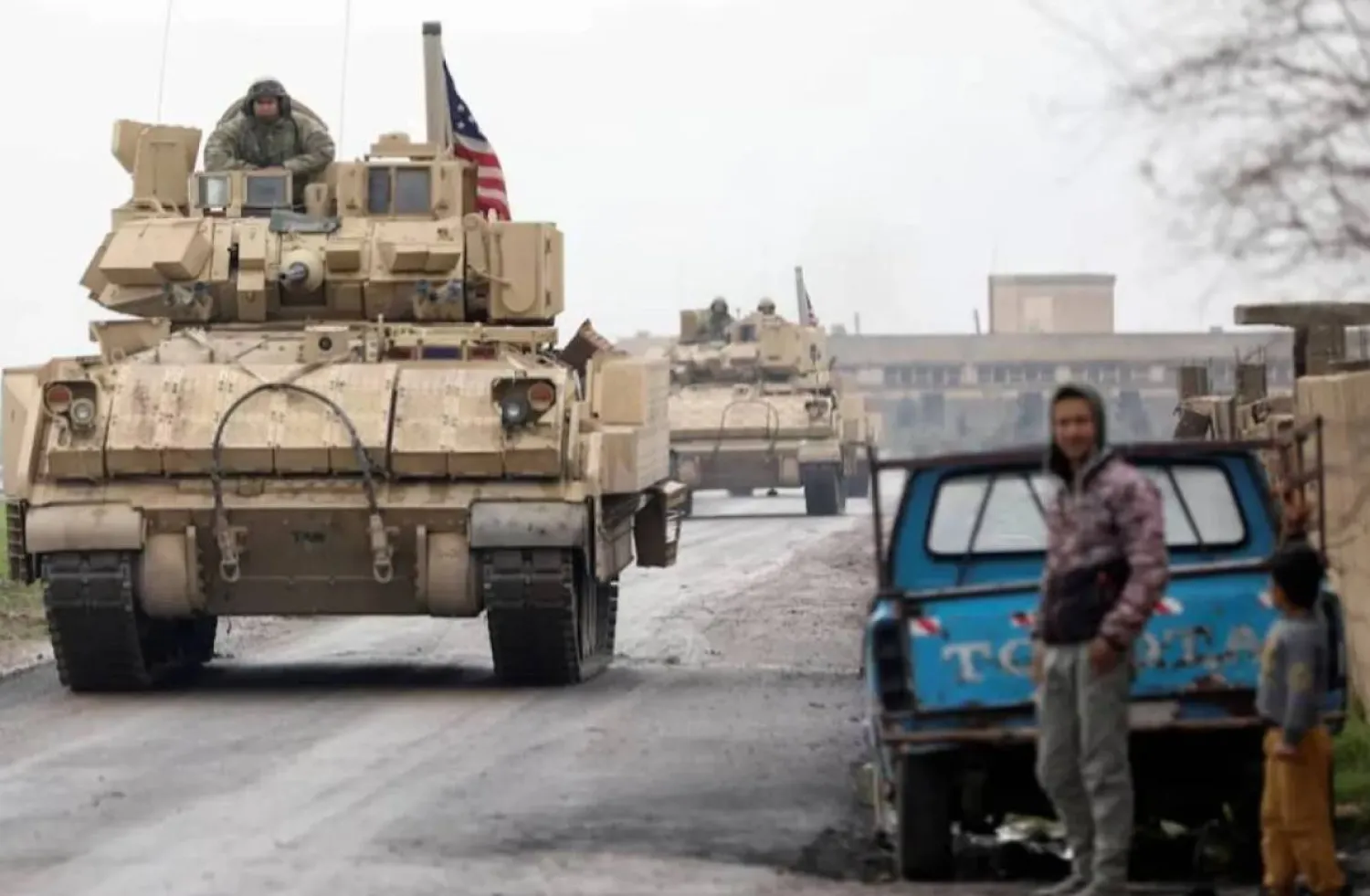
A US Army patrol in the Syrian city of Qamishli (Reuters file photo)
TT

Reports: US to Withdraw All Troops from Syria

A US Army patrol in the Syrian city of Qamishli (Reuters file photo)

The United States is planning to withdraw all of its 1,000 troops from Syria over the next two months, according to US media reports.

Washington will end its presence in the country after the Syrian government extended its control over the country and the Kurdish-led Syrian Democratic Forces once key to fighting ISIS pledged to integrate into the state, the Wall Street Journal reported.

Television network CBS also reported on the plan, citing unnamed US officials.

The decision comes after US forces recently withdrew from some bases in Syria including Al-Tanf and Al-Shadadi, which were used in the US-led international coalition's fight against ISIS, AFP reported.

The US is building up its military capabilities near Iran, where officials have vowed to respond to any attack by laying siege to American military outposts in the region.

US media reported Wednesday that Washington will be ready to launch strikes against Iran as early as this weekend, though Trump has reportedly not made a final decision yet.

The Pentagon did not immediately respond to a request for comment.