


Syrian Refugees Anxious over Lebanon's Plans to Deport Them

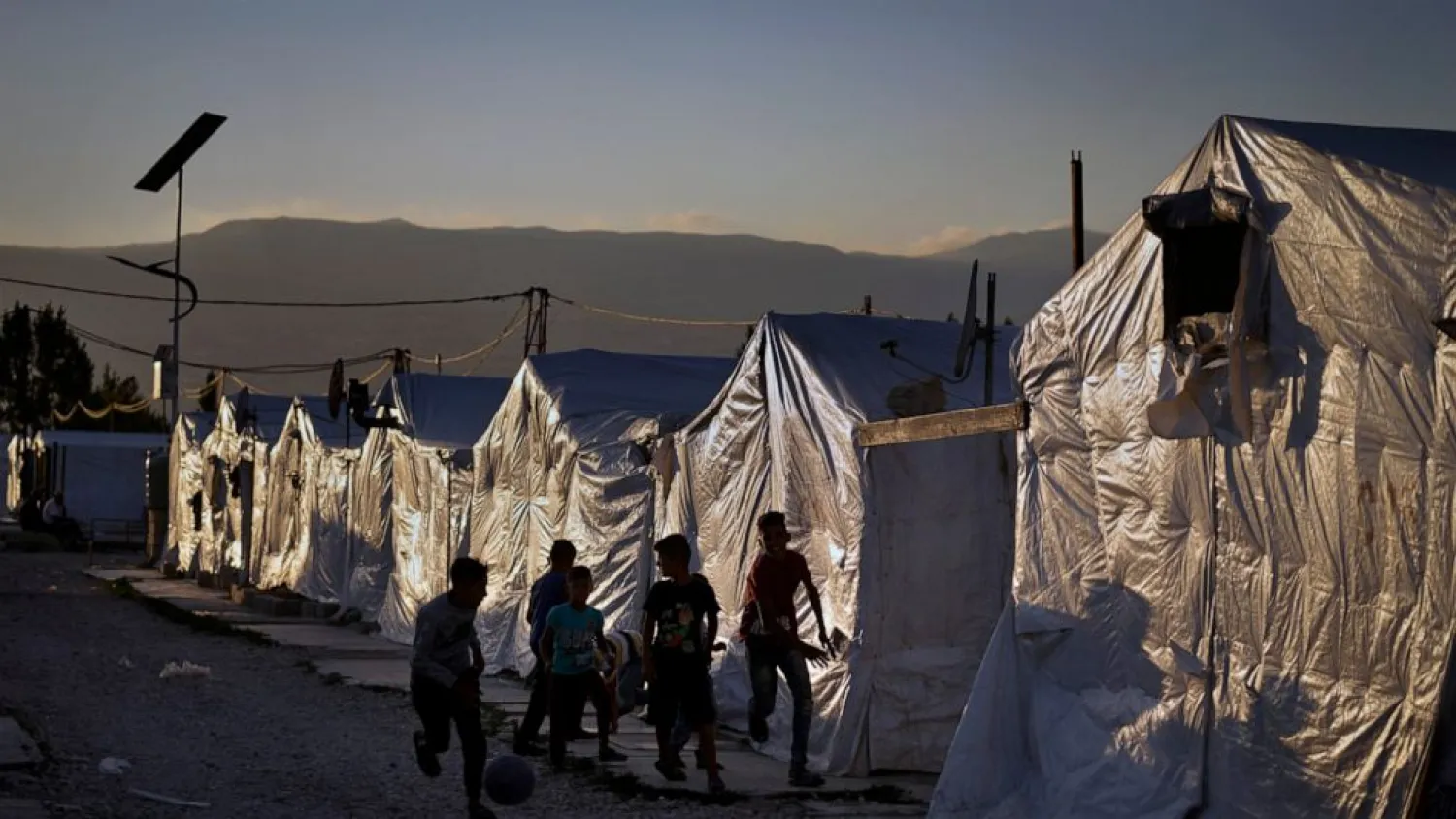
Syrian children play soccer by their tents at a refugee camp in the town of Bar Elias in the Bekaa Valley, Lebanon, July 7, 2022. (AP Photo/Bilal Hussein)
TT

Syrian Refugees Anxious over Lebanon's Plans to Deport Them

Syrian children play soccer by their tents at a refugee camp in the town of Bar Elias in the Bekaa Valley, Lebanon, July 7, 2022. (AP Photo/Bilal Hussein)

Sitting outside her tent in a camp in eastern Lebanon, a 30-year-old Syrian refugee contemplated the sunset and her worsening options.

Umm Jawad fled to Lebanon in 2011 to escape a Syrian government siege of her hometown of Homs. She managed to survive over the past decade, despite Lebanon’s devastating economic meltdown and souring attitudes toward Syrian refugees, AFP said.

But now Lebanon wants to send her and a million other refugees back to Syria, claiming that much of the war-shattered country is safe. She is terrified. Life in Lebanon is difficult, but she fears returning to Syria could be fatal.

She’s considering a risky escape to Europe by sea with her husband and their children, ages 11 and six. There, she could complete her accounting degree, put the children back in school and secure a steady supply of medication for her epilepsy.

“They (the Europeans) live a better quality of life,” said Umm Jawad, who asked to be identified by her nickname, which means mother of Jawad in reference to her older son's first name, to speak freely about her family and plans. “But here, my children, husband, and I live in a tent.”

Lebanon’s economic meltdown -– one of the worst in modern history -- has pushed a growing number of Lebanese and Syrians to attempt the perilous journey by sea to Europe.

The Lebanese government’s recently announced plan to deport 15,000 refugees per month to Syria appears set to push more people to make that journey, at a time when Europe is struggling with millions of Ukrainian refugees fleeing the months-long war in their country.

The Lebanese Army and other security agencies report foiled migration attempts off the coast of the northern coasts on a weekly basis. At least seven migrants drowned following a confrontation between a boat of Lebanese and Syrian migrants and the Lebanese Army in April.

“The Lebanese are not happy with their life here and are trying to leave, so what does that mean for Syrians?” said Umm Jawad. “May God help both the Lebanese and Syrians out of this crisis.”

Umm Jawad lives in a Syrian refugee camp near Lebanon’s eastern border crossing with Syria, On a recent day, children played soccer in the camp’s labyrinth of alleys, while some residents bartered with a street vendor who passed by with his cart carrying produce. One man set up a makeshift barbershop inside a tent.

Life in the camp has been getting harder. Donor fatigue, the COVID-19 pandemic, and Lebanon’s crippling economic crisis have forced more refugees to go into debt to afford food, medicine, and rent.

Lebanon, a country of five million people, says it can no longer afford to host more than a million Syrian refugees, and is adamant to start deporting them within months, despite opposition from the United Nations and rights groups.

The Lebanese authorities have supported forced refugee returns for years but had not come up with a comprehensive plan until recently. In justifying such measures, they say Syrian officials have assured them there are now many safe areas refugees can return to.

In a Lebanese government document obtained by The Associated Press, Damascus assured Beirut in April that returnees would be able to secure identification cards, birth certificates, social services, temporary housing, and a viable infrastructure. Syrian officials also wrote that returnees would benefit from Syrian President Bashar Assad’s pardons of political opponents and military draft evaders.

In reality, the Assad government has struggled to rebuild areas it has reclaimed through devastating sieges and air raids, and Syria’s economy, like that of Lebanon, is in tatters. Western-led sanctions on Damascus following the government’s brutal crackdown on political opposition in 2011 have further exacerbated the economic downturn.
Many Syrian refugees fear for their safety if forced to return, including the oppressive omnipresence of their country’s notorious security services.

Human Rights Watch has documented cases of Syrian refugees facing detention, torture, and a host of human rights violations upon their return, even with security clearances from the Syrian government, said Lama Fakih, the Middle East and North Africa director at the watchdog group.

Umm Jawad worries her husband could be forced to return to the military. “You have checkpoints every few hundred meters, between every neighborhood, and crime is rampant. You just can’t feel safe even in your own home,” she said.

Hassan Al-Mohammed, who works in the fields of Lebanon’s lush Bekaa Valley, along with several of his 12 children, said he dreams of going home, but that now is not the time. He said his hometown southwest of the city of Aleppo is still a frontline. “Should I flee an economic crisis just to have my family slaughtered?” he said, sitting in his tent.

At the same time, many Lebanese feel that sending the Syrians home would ease the economic crisis in Lebanon, where three out of four people now live in poverty.
Tensions between Lebanese and Syrians are increasingly palpable.

Al-Mohammed says bakeries would sometimes prioritize Lebanese nationals for their bundle of bread and make Syrians and non-Lebanese wait for hours. He is frustrated by claims that refugees have been benefitting economically at the expense of Lebanese. “They reduced aid, so we’re working to eat. The money we make is to buy bread,” he said.

Lebanese ministers in recent months have proposed that the UN High Commissioner for Refugees redirect refugee aid to Syria, as a way of improving the situation there and encouraging returns.

But those calls have so far fallen on deaf ears. The UN refugee agency, along with Europe, the United States and several rights groups, say that Syria simply isn’t safe yet.

Lebanese officials expressed their frustration.

The UN’s refusal to redirect aid deters refugees from returning, Issam Charafeddine, the Cabinet minister dealing with refugee issues, said in an interview earlier this month. He also said reports of an imminent start of deportations amount to an unfounded “fear campaign.”

Maj. Gen. Abbas Ibrahim, a member of the Lebanese government’s refugee returns committee, told reporters last week that “it seems the international community doesn’t want the Syrians to return to their country.”



Eight Killed in Israeli Strike on Lebanon’s Tyre

Smoke rises following an Israeli airstrike in the southern city of Tyre on June 9, 2026. (AFP)
TT

Eight Killed in Israeli Strike on Lebanon’s Tyre

Smoke rises following an Israeli airstrike in the southern city of Tyre on June 9, 2026. (AFP)

Israel struck the historic port city of Tyre in southern Lebanon on Tuesday, killing at least eight people, in an escalation that adds strain to efforts to broker a peace deal to end the wider Middle East war.

On Monday, Israel and Iran halted direct attacks on each other after an appeal by US President Donald Trump, but Tehran warned it would resume hostilities if Israel continued to attack its ally Hezbollah in Lebanon.

The raids were the deadliest on Tyre since fighting erupted in Lebanon in early March, when Hezbollah launched rockets at Israel in support of Tehran after Israel and the United States began their war against Iran.

Israel had issued an evacuation order for the city earlier on Tuesday.

Residents fled and civil defense teams transported elderly residents into temporary shelters, state media reported.

The eight victims were killed in a ‌single strike on ‌the city's eastern edge, Lebanon's health ministry said.

A video verified by Reuters showed debris strewn ‌across ⁠a road at the ⁠site of the attack.

Israel's refusal to end its campaign in Lebanon, as Iran demands, has hindered Trump's efforts to extend a tenuous ceasefire in the wider US-Israeli war with Iran into a durable settlement.

US and Israeli officials said Trump and Israeli Prime Minister Benjamin Netanyahu had spoken on Monday.

In an interview with Axios, Trump said he had warned the Israeli leader not to return to war with Iran: "I said, 'Bibi, you better be careful, or you will be on your own very soon.'"

Tehran has long said any peace deal with the US depends in part on an end to fighting in Lebanon, which Israel invaded in March in pursuit of Hezbollah fighters who had fired across the border.

In northern Israel on Tuesday, Israeli troops operating in the Ramim Ridge area close to Lebanon's border killed one person in an incident in which they returned fire, the military said.

Israel has never halted its Lebanon campaign, which has killed thousands of people, saying the conflict should be treated separately from any US-Iranian ceasefire. Hezbollah has also continued its attacks.


First War Crimes Complaint Against Sudan’s RSF Filed in Kenya

 Lawyers Antonio Mulvay, left, and Willis Otieno, center, who are part of the legal team filing a law suit against Sudan's Rapid Support Forces (RSF) on behalf of Sudanese torture victims, speak to the media in Nairobi, Tuesday June 9, 2026. (AP)
Lawyers Antonio Mulvay, left, and Willis Otieno, center, who are part of the legal team filing a law suit against Sudan's Rapid Support Forces (RSF) on behalf of Sudanese torture victims, speak to the media in Nairobi, Tuesday June 9, 2026. (AP)
TT

First War Crimes Complaint Against Sudan’s RSF Filed in Kenya

 Lawyers Antonio Mulvay, left, and Willis Otieno, center, who are part of the legal team filing a law suit against Sudan's Rapid Support Forces (RSF) on behalf of Sudanese torture victims, speak to the media in Nairobi, Tuesday June 9, 2026. (AP)
Lawyers Antonio Mulvay, left, and Willis Otieno, center, who are part of the legal team filing a law suit against Sudan's Rapid Support Forces (RSF) on behalf of Sudanese torture victims, speak to the media in Nairobi, Tuesday June 9, 2026. (AP)

Victims of alleged atrocities linked to the war in Sudan on Tuesday asked prosecutors in Kenya to investigate allegations of torture and sexual violence by members of a notorious paramilitary group.

It is the first attempt to prosecute members of the Rapid Support Forces, or RSF, the paramilitary group fighting against the Sudanese military for over three years, outside Sudan.

The group, which has been accused by rights organizations of committing atrocities amounting to war crimes and crimes against humanity, has ties with Kenya’s government, while Kenyan President William Ruto has previously hosted RSF leader Gen. Mohamed Hamdan Dagalo for talks that he said were aimed at advancing peace efforts in Sudan, a move that sparked diplomatic tensions.

The complaint filed by the Switzerland-based global legal organization Legal Action Worldwide details torture and sexual violence committed by RSF members at various locations in and around Khartoum between April 2023 and March 2025 when the Sudanese capital was controlled by the paramilitaries.

The 12 victims are urging Kenya’s Director of Public Prosecutions to approve charges against 10 members of the RSF, some of whom are believed to be residing in Kenya.

The Associated Press has contacted the RSF for a comment.

According to this latest complaint, the victims were held in inhumane conditions, with little or no food, limited access to water, and inadequate sanitation facilities. They allege that they were beaten, burned, suffocated, subjected to electric shocks, and sexually abused, including through rape. Some were reportedly forced to transport dead bodies from detention facilities.

Legal Action Worldwide founder Antonia Mulvey said Kenya should consider prosecuting the alleged crimes under the country’s International Crimes Act of 2008.

“For Kenya, despite the sensitivity of the matter, it is an opportunity to lead in the fight against impunity. Authorities can now demonstrate the strength of the country’s investigative, prosecutorial, and judicial institutions in addressing the most serious international crimes, regardless of where they are committed,” she said.

The RSF has been at war with the Sudanese military since April 2023, when tensions between the two sides erupted into open conflict in Khartoum and other parts of the country.

The group emerged from the notorious Janjaweed militias, which were accused of widespread atrocities in the early 2000s against communities identifying as East or Central African in Sudan’s western Darfur region.

The RSF has been accused by human rights organizations and the United Nations of committing atrocities during the conflict that may amount to war crimes and crimes against humanity, particularly in Darfur, where the group maintains a strong presence.

Mulvey argued that the victims are unlikely to obtain justice in Sudan because the country’s justice system is currently “inaccessible, unavailable, and ineffective.”

She said the International Criminal Court’s jurisdiction is limited to Darfur and does not extend to crimes committed in or around Khartoum.

Willis Otieno, a lawyer in Kenya who filed the complaint locally, said there was information suggesting that some of the persons of interest have links to Kenya and that the country possesses the legal framework necessary to investigate and prosecute such crimes.

Otieno described Kenya’s Office of the Director of Public Prosecutions as competent, adding: “We have faith that the office will act. For now, let’s treat them with that goodwill.”

The RSF has in the past been accused of mass killing, gang rape, and ethnicity-motivated crimes, most recently in October during an assault on the Darfur city of el-Fashir, in which over 6,000 people were killed in three days. UN-commissioned experts have described the offensive as bearing the “hallmarks of genocide.”

In one of its last decisions, the Biden administration accused the group of genocide and imposed sanctions of its commanders, including Dagalo.

The war killed at least 59,000 people over the course of three years, according to the Armed Conflict Location & Event Data Project, a US-based war tracking group which said the toll was almost certainly undercut given the difficulties in reporting.

The conflict has created the world’s largest humanitarian crisis, with about 34 million people — almost two out of every three Sudanese — need assistance, according to the UN.


Rival Palestinian Factions Discuss Gaza Disarmament

A Palestinian woman stands amid debris at the site of an Israeli airstrike in Khan Younis, southern Gaza Strip, on June 7, 2026. (AFP)
TT

Rival Palestinian Factions Discuss Gaza Disarmament

A Palestinian woman stands amid debris at the site of an Israeli airstrike in Khan Younis, southern Gaza Strip, on June 7, 2026. (AFP)

Members of Palestinian factions including Hamas agreed in principle for Gaza's armed groups to hand over parts of their arsenals to a yet-to-be-created, ad hoc Palestinian entity during talks in Cairo, Palestinian sources told AFP on Tuesday.

Such a proposal has almost no chance of being accepted by Israel, which demands a complete demilitarization of the Gaza Strip, starting with Palestinian movement Hamas.

Several of those who attended the Cairo talks that began on Saturday expressed hope the proposal would break a months-long deadlock on negotiations over Gaza's future.

The talks are being attended by most major factions, including Hamas and its ally Islamic Jihad, but not the Fatah party that dominates the Palestinian Authority.

On Tuesday, the factions discussed the details of the weapons handover to a new entity with representation from various Palestinian political currents, according to a source close to negotiations.

They rejected the idea of a full disarmament, as demanded by Israel, several sources who asked for anonymity said.

"Egypt and the mediators are working to formulate a new, acceptable formula that takes into account the factions' agreement," one of the participants told AFP.

Another Palestinian taking part in the talks told AFP that Egyptian and Qatari mediators welcomed this approach.

"Hamas is linking the weapons question to a full Israeli withdrawal from Gaza and to Gaza's reconstruction," one Palestinian political official said.

Senior Hamas official Taher al-Nunu told AFP that recent days had brought "significant progress", adding that the factions aimed to implement US President Donald Trump's peace plan for Gaza.

Israeli strikes have continued at an almost daily pace despite the ceasefire announced in October 2025 after two years of war, under Trump's phased peace plan.

Hamas and Israel blame each other for the current impasse, each accusing the other almost daily of violating the ceasefire.

Hamas accuses Israel of failing to honor its commitments, particularly on allowing humanitarian aid into Gaza, while Israel insists on the complete disarmament of the movement before any further implementation of the plan.

Hamas has repeatedly stated that it is not opposed to handing over some of its arsenal, but only as part of a Palestinian political process.

Former Hamas chief Khaled Meshaal also suggested a weapons "freeze" or "storage", which Israel rejected.