


2 Israeli Soldiers Killed in South Lebanon as Talks Underway in Rome

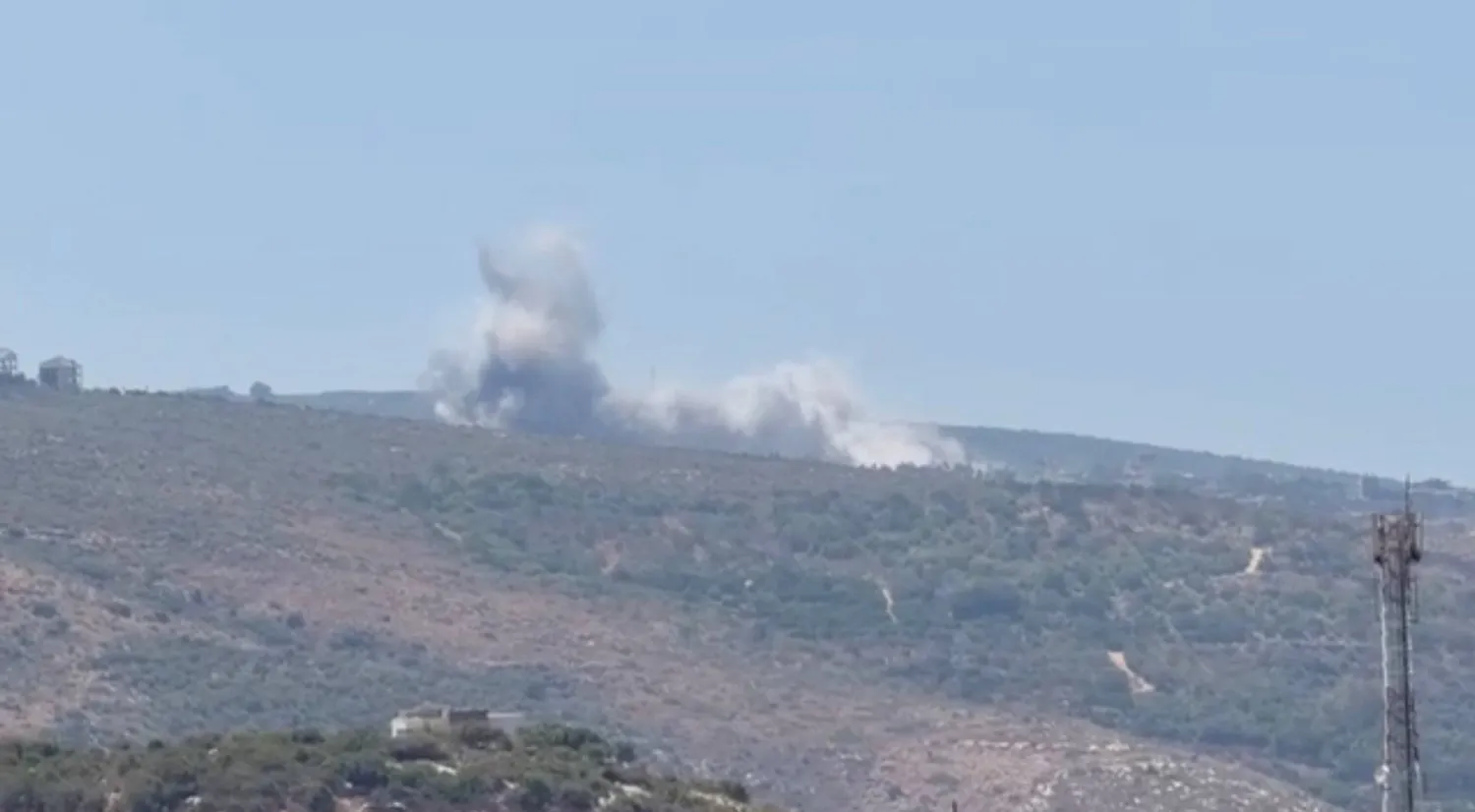
Smoke rises from a hill following Israeli air strikes, after the Israeli military issued an evacuation warning to the village of Mansouri, Lebanon, August 5, 2026 in this screengrab obtained from social media. Social Media/via REUTERS
TT

2 Israeli Soldiers Killed in South Lebanon as Talks Underway in Rome

Smoke rises from a hill following Israeli air strikes, after the Israeli military issued an evacuation warning to the village of Mansouri, Lebanon, August 5, 2026 in this screengrab obtained from social media. Social Media/via REUTERS

Israel reported on Thursday its first military fatalities in southern Lebanon in more than a month, after carrying out fresh strikes despite ongoing US-backed talks in Rome aimed at ending hostilities.

The military identified the two reservists, who were killed in combat on Wednesday, as Major Harel Birenstock, 34, and Sergeant Major Tamir Vaknin, 33, of the 2855th Battalion, 55th Brigade.

The deaths were the first Israeli fatalities reported in southern Lebanon since June 28.

The Israeli strikes, accompanied by the first evacuation warning in weeks, came as the United States led diplomacy between Israel and Lebanon in Rome aimed at putting an end to hostilities, with Beirut seeking Israel's phased withdrawal from the south.
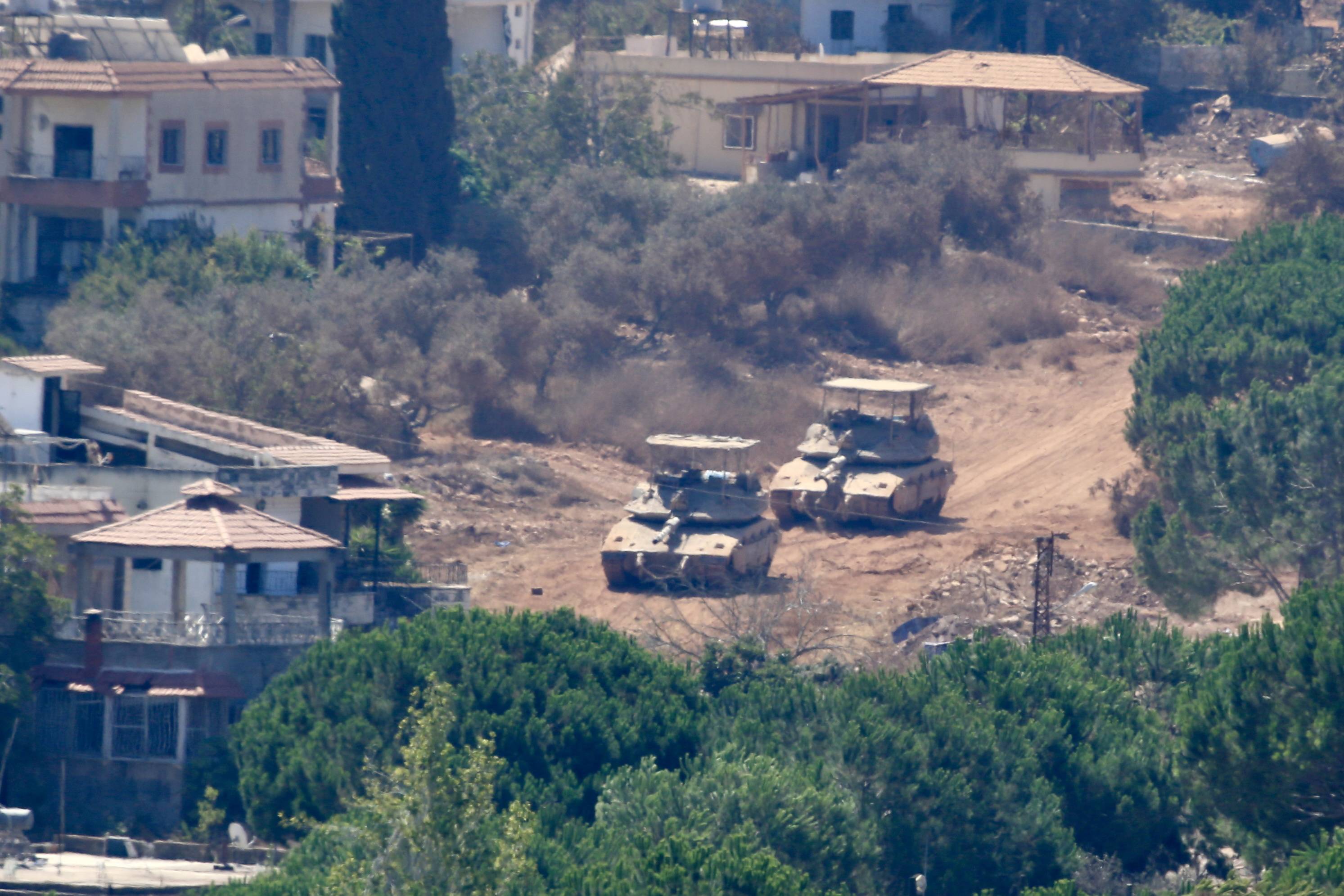
Israeli tanks in Zawtar al Sharqiyah as seen from Zawtar al Gharbiya, southern Lebanon, 05 August 2026. EPA

"In response to a blatant violation of the ceasefire by the Hezbollah terrorist organization, the IDF has begun conducting precise strikes in southern Lebanon," the military said in a statement, shortly after telling residents to evacuate the town of Mansouri in the south.

Lebanese state media said one person died and 11 were wounded in a separate strike.

In Rome, Israel requested that the day's talks with Lebanon end three hours early, a source in the negotiations told AFP, saying the head of the Israeli delegation, US ambassador Yechiel Leiter, had blamed alleged "misleading leaks" by the Lebanese side.

But the talks were expected to resume on Thursday for a third and final day.

In previous US-sponsored talks in June, Israel and Lebanon agreed to a framework deal that involves the disarmament of Hezbollah, a gradual withdrawal of Israeli forces from Lebanon's south and the deployment of the Lebanese army to the region, starting in test areas known as "pilot zones.”

This week's negotiations are the seventh round since Hezbollah drew Lebanon into the Middle East war in March with rocket fire at Israel in support of its backer Iran.

Israel responded with heavy airstrikes and a ground invasion that Lebanon says have killed more than 4,300 people.

In its first such warning since June, the Israeli military on Wednesday told the residents of Mansouri: "In light of Hezbollah's violations of the ceasefire agreement, the Israel Defense Forces are compelled to act against it with force."

"For your safety, you must evacuate your homes immediately and move north," the military's Arabic-language spokeswoman, Ella Waweya, posted on X.

The UN's humanitarian agency had said just the night before that more than 800,000 people displaced by earlier fighting in Lebanon had begun heading back home following the recent lull in violence, though more than 360,000 remained displaced.
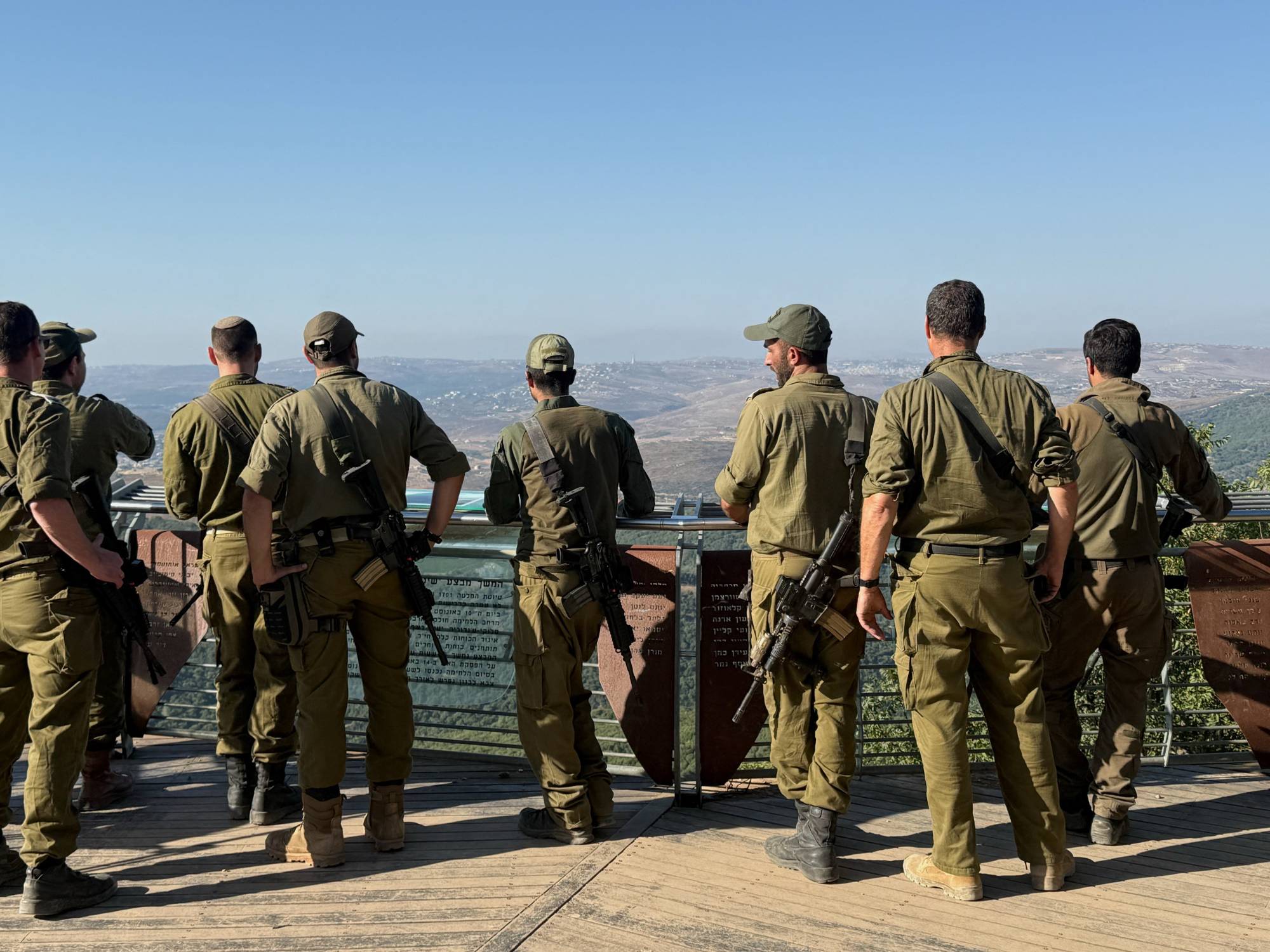
Israeli soldiers look towards Lebanon, from the Israeli side of the Israel-Lebanon border in northern Israel, August 5, 2026. REUTERS/Avi Ohayon

The town of Mansouri, located around nine kilometers (six miles) south of Tyre and 10 kilometers north of Israel, and its surroundings were subjected to several Israeli strikes and artillery shelling in recent weeks despite the ceasefire between Hezbollah and Israel that took hold in June.

The town's municipality told residents on June 22 that they could return, but asked them to avoid the part of the town that fell within Israel's so-called "security zone" in southern Lebanon.

The "security zone" designates a strip of territory where Israeli forces continue to operate that runs around 10 kilometers deep inside southern Lebanon along its border with Israel.

A US State Department official had told AFP that this week's discussions would "include expanding the pilot zone process, resolving all outstanding border issues, and working on a comprehensive peace and security agreement."

As the delegations met in Rome, Italian Foreign Minister Antonio Tajani spoke with his counterpart from Iran, Hezbollah's main patron, and called on Tehran to halt the group's operations.

Tajani, in a post shortly before the Israeli strikes, voiced hope that the talks would "yield concrete results.”



Khaddam: Syria’s $12 Billion Reserve Was Registered Under Hafez Al-Assad's Name

Late Syrian President Hafez al-Assad during a visit to Moscow in 1999. (AFP)
TT

Khaddam: Syria’s $12 Billion Reserve Was Registered Under Hafez Al-Assad's Name

Late Syrian President Hafez al-Assad during a visit to Moscow in 1999. (AFP)

Former Syrian Vice President Abdul Halim Khaddam’s recent memoirs revealed sensitive information about wealth and power in the country, notably that the Syrian state reserve, which according to the late official amounted to twelve billion dollars at the time, was registered under the name of late President Hafez al-Assad, rather than state institutions.

The memoirs, edited and introduced by Ibrahim Hamidi, are due to be published in early September by Raff Publishing, a subsidiary of the Saudi Research and Media Group (SRMG).

"No one imagined that an amount of this magnitude would be placed under the personal name of the head of state, given that it belongs to the Syrian state, not him," Khaddam wrote.

The memoirs are due to be published in early September by Raff Publishing, a subsidiary of the Saudi Research and Media Group (SRMG).

According to Khaddam, the issue did not remain a mere formality, but turned into an internal crisis when the president received a document indicating that a sum of money had been withdrawn from the account registered in his name abroad.

Assad found the issue strange and requested the transfer document from the bank. Days later, a copy of the request arrived, and upon reviewing the signature, it turned out to be forged.

When the bank was questioned about the recipient of the transferred amount, $65 million, it was revealed to belong to Prime Minister Mahmoud Al-Zoubi.

Khaddam recalled that Assad was infuriated and ordered a security chief to summon Al-Zoubi, warning him to return the money or face execution. The funds were returned to the bank.

Al-Zoubi remained prime minister from November 1987 until March 2000, marking the longest premiership since the Syrian state’s establishment in 1918.

Khaddam painted a harsh picture of the man who "not only into facilitated corruption, but also practiced it."

Hafez al-Assad and late Prime Minister Mahmoud Al-Zoubi. (AFP)

He recounted how he built his network of trust upward toward the office of Bassel al-Assad and Mohammad Makhlouf, while Khaddam himself had been overseeing the corruption file with Hafez al-Assad since 1989.

Khaddam recalled how Al-Zoubi's political career came to an end. In mid-May 2000, Assad, who was showing "signs of death," invited a number of members of the ruling Baath Party leadership to his home and told them: "Mahmoud Al-Zoubi has betrayed me. Investigate him and hold him accountable." Assad did not disclose more details.

Al-Zoubi was expelled from the party and a decision was made to refer him for investigation. Upon being informed of the decision, he repeatedly asked: "What did I do?"

He warned Khaddam: "If they call me for investigation, I will commit suicide."

On May 24, 2000, when the Damascus police chief and two officers arrived to escort him to interrogation, Al-Zoubi went up to the second floor of his house and shot himself in the head.

Khaddam wrote that he learned about the forgery incident and the reserve "shortly after" the suicide.

Hafez al-Assad with Vice President Abdul Halim Khaddam to his left in 1999. (Getty)

The memoirs include other incidents related to Al-Zoubi's tenure, most notably a contract to purchase Airbus aircraft in the early 1990s: a committee headed by the PM, a transport minister who was excluded from the deal after contacting the French company "to obtain a commission," and a contract approved by the government despite objections "after Al-Zoubi insinuated that the President had approved it."

Khaddam noted that a few days after Al-Zoubi's suicide, Deputy Prime Minister Salim Yasin and Minister of Transport Mufid Abdel Karim, both of whom had objected to the contract, were "unjustly" arrested and sentenced to 15 years in prison alongside a fine exceeding the total value of the aircraft.

He also recalled that an economic reform study prepared by experts commissioned by late Lebanese Prime Minister Rafik al-Hariri, with Assad’s approval, and costing three million dollars, "was read by no one other than myself among the members of the government and leadership."

Independent verification of the referenced banking documents was not possible and the account remains the sole responsibility of its author. The details of the incident and corruption files appear in the book's chapter titled "The Suicide of Mahmoud Al-Zoubi."


Israeli Officials Fuel Tensions in West Bank ahead of October Elections

Israeli forces detain a Palestinian man during a raid on the UNRWA Vocational Training Center, located between the Kafr Aqab neighborhood and the Qalandiya refugee camp, south of the West Bank city of Ramallah, on August 25, 2026. (AFP)
TT

Israeli Officials Fuel Tensions in West Bank ahead of October Elections

Israeli forces detain a Palestinian man during a raid on the UNRWA Vocational Training Center, located between the Kafr Aqab neighborhood and the Qalandiya refugee camp, south of the West Bank city of Ramallah, on August 25, 2026. (AFP)

Israeli politicians are increasingly turning to the West Bank as a stage for electoral maneuvering amid fierce competition two months before elections scheduled for October.

As the campaign heats up and the government loses ground in opinion polls, far-right National Security Minister Itamar Ben-Gvir entered a UN Relief and Works Agency for Palestine Refugees (UNRWA) compound in Qalandiya, between Jerusalem and Ramallah, accompanied by Israeli forces and media, and declared that Israel had “taken control” of the site.

At the same time, Religious Zionism lawmaker Zvi Sukkot entered the village of Madama near Nablus under military protection and began demolishing a memorial to Palestinian fighters.

Ben-Gvir arrived at the UNRWA compound with Israeli police and coverage from the right-wing Channel 14, declaring that he was “making history.”

He later posted a photograph of an Israeli flag raised over the site with the caption, “UNRWA is in our hands.”

UNRWA condemned the “unauthorized and deeply disturbing incursion” into its Qalandiya Training Center.

The Palestinian Authority, Palestinian factions and institutions also denounced the raid, while the Palestinian presidency called on the UN Security Council to convene urgently and take binding measures to halt Israeli actions against UN facilities in Jerusalem and Qalandiya.

Israel closed UNRWA’s headquarters in East Jerusalem’s Sheikh Jarrah neighborhood in early 2025 over its alleged ties to Hamas and later announced its seizure after the Knesset voted to ban the agency from operating in Israel.

The Qalandiya center, whose employees were expelled before the takeover, provides free vocational training in 16 fields to Palestinian refugee students. The 80-dunam site was provided to the UN by Jordan in 1952.

In Madama, Sukkot said he had personally come to demolish the memorial after the Israeli military failed to act on his request to remove such monuments across the West Bank.

Video showing Sukkot tearing down the structure as Israeli soldiers looked on sparked an uproar and sharp criticism of both the lawmaker and the military.

The Israeli military accused Sukkot of “manipulation and deception,” acting without authority and violating agreed arrangements. It said troops eventually halted the demolition.

Prime Minister Benjamin Netanyahu backed Ben-Gvir, saying the minister had acted on his instructions and that further measures would be taken against UNRWA. He did not, however, endorse Sukkot’s actions.

“The army is the sovereign authority in Judea and Samaria,” Netanyahu said, using Israel’s term for the West Bank. “Taking the law into one’s own hands, particularly by public figures, is unacceptable.”

Foreign Minister Gideon Saar similarly stressed that Sukkot “is not the sovereign” in the West Bank.

Opposition leaders sharply condemned the incident. Democrats leader Yair Golan accused Sukkot of trying to ignite another war, while Naftali Bennett, leader of the Together party, accused the government of damaging Israel’s security and international standing “for TikTok views.” Yashar party leader Gadi Eisenkot called Sukkot’s conduct “disgraceful.”

Senior military officials told Maariv that Ben-Gvir and Sukkot were seeking to inflame tensions and trigger a third intifada ahead of the elections.

Security officials issued a similar warning Tuesday, telling Israel’s Kan public broadcaster that the West Bank was close to erupting, accusing political figures of deliberately aggravating tensions.

“It is an arena that could explode at any moment,” a security source said. “Instead of calming it, ministers and Knesset members are making matters worse.”


Abdelatty Receives Al-Sheikh as Egypt Steps Up Efforts for Palestinian Reconciliation

Egyptian Foreign Minister Badr Abdelatty receives Palestinian Vice President Hussein al-Sheikh on Tuesday. (Egyptian Foreign Ministry)
TT

Abdelatty Receives Al-Sheikh as Egypt Steps Up Efforts for Palestinian Reconciliation

Egyptian Foreign Minister Badr Abdelatty receives Palestinian Vice President Hussein al-Sheikh on Tuesday. (Egyptian Foreign Ministry)

Egypt is pressing ahead with intensive diplomatic efforts to achieve Palestinian reconciliation through a series of meetings with the Palestinian Authority (PA) in the Egyptian city of El Alamein, a day after an Egyptian source told Asharq Al-Awsat that preparations were underway for a Palestinian national dialogue.

Egyptian Foreign Minister Badr Abdelatty received Palestinian Vice President Hussein al-Sheikh in El Alamein, Palestinian National Council President Rawhi Fattouh and Fatah Central Committee member and Palestinian intelligence chief Majed Faraj as part of continuing consultations on developments in the Palestinian Territories and efforts to support the legitimate rights of the Palestinian people, Egypt’s Foreign Ministry said Tuesday.

The meeting addressed efforts to achieve Palestinian reconciliation, restore Palestinian unity and continue the ongoing political reform process.

The officials also discussed the “catastrophic situation in the Gaza Strip resulting from the inhumane Israeli practices”, as well as the need for the international community to pressure Israel to fulfill its obligations under US President Donald Trump’s peace plan.

These include allowing humanitarian aid to flow unhindered and carrying out withdrawals from Gaza to pave the way for the PA to resume full responsibility for the enclave.

The Egyptian statement quoted al-Sheikh as praising Cairo’s efforts and contacts to halt escalation, advance implementation of the peace plan and support the PA.

He stressed the importance of maintaining close coordination and consultations with Egypt in the coming period.

On Sunday evening, Egyptian General Intelligence Service chief Hassan Rashad received a PA delegation headed by al-Sheikh and including Fattouh and Faraj as part of Cairo’s efforts to promote Palestinian unity.

The talks covered developments in the West Bank and upcoming Palestinian elections. They agreed to coordinate national efforts to confront the challenges facing the Palestinian cause, according to Egypt’s official news agency.

In a related development, an informed Palestinian source told Asharq Al-Awsat on Tuesday that Egypt was engaged in intensive contacts with the PA and factions aimed at unifying Palestinian ranks.

The source stressed that Cairo’s efforts to arrange a meeting between Fatah and Hamas in Egypt were continuing.

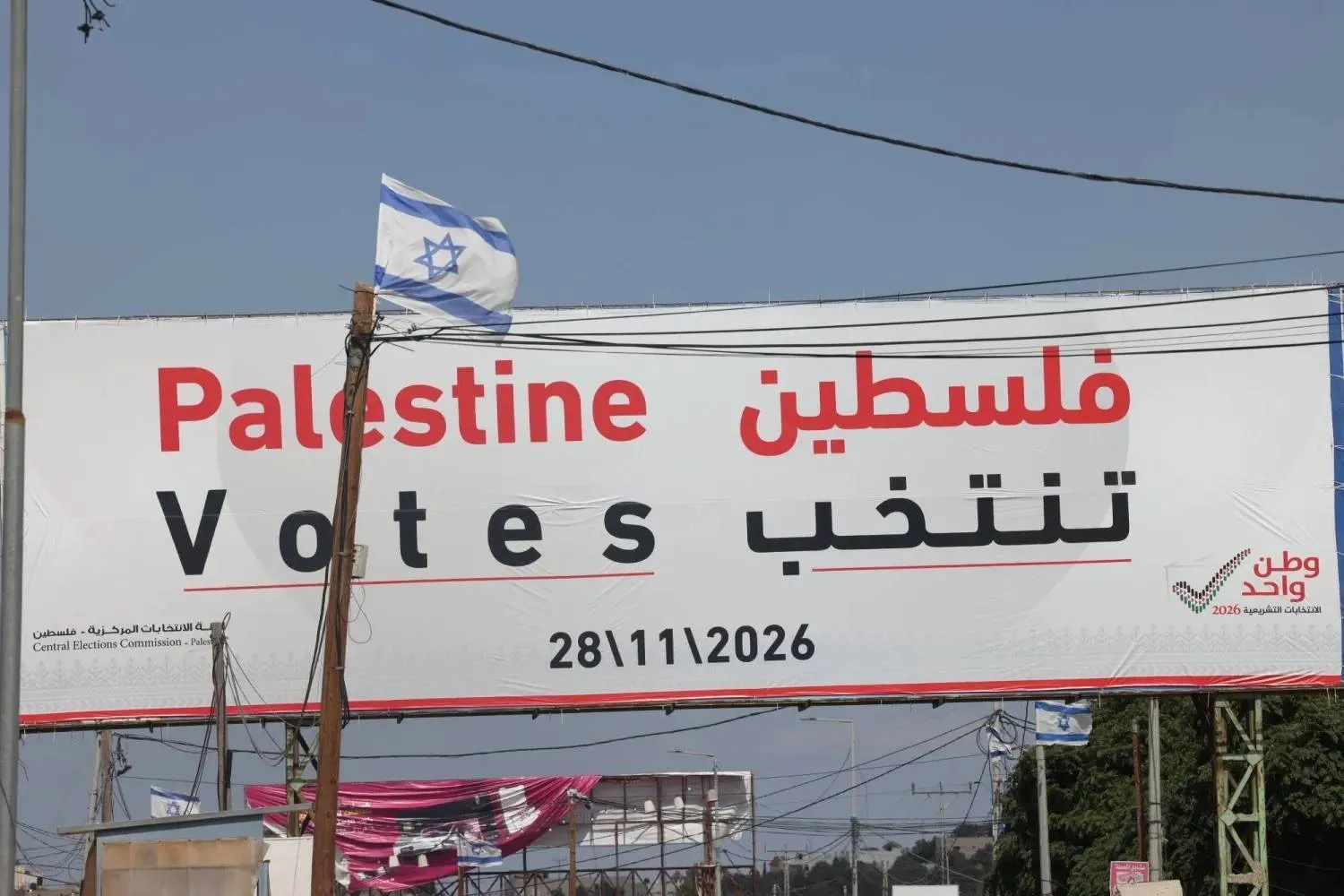
Three Hamas sources said Monday that the movement had been informed that Fatah had canceled a meeting scheduled to take place in El Alamein to discuss several issues, foremost among them legislative elections set for November 28.

The three sources separately told Asharq Al-Awsat that Egypt had arranged the bilateral meeting for Monday, but it was canceled at Fatah’s request. They offered no explanation for the cancellation.

Efforts to reconcile the Palestinian factions have been pursued for years, with Cairo sponsoring several rounds of talks that failed to produce a final agreement.

Hamas is now moving toward an alliance with Palestinian politician Mohammed Dahlan, who previously broke with Fatah, ahead of the elections.

On Monday, an informed Egyptian source told Asharq Al-Awsat that Egypt was preparing for an intra-Palestinian dialogue that Palestinian President Mahmoud Abbas could attend.