


Erdogan’s Plan to Manage Türkiye's Economic Crisis Gets Summer Reprieve

A man walks past a currency exchange office in Istanbul, Türkiye, June 10, 2022. REUTERS/Dilara Senkaya/File Photo
TT

Erdogan’s Plan to Manage Türkiye's Economic Crisis Gets Summer Reprieve

A man walks past a currency exchange office in Istanbul, Türkiye, June 10, 2022. REUTERS/Dilara Senkaya/File Photo

A windfall of foreign funds arriving in Türkiye and sustained interest in a state-backed deposit scheme have brought some relief for President Tayyip Erdogan's economic plan less than a year before tight elections.

Erdogan's program stressing monetary stimulus, exports and economic growth sent inflation soaring when the central bank slashed interest rates by 500 basis points late last year, setting off a historic currency crash in December.

Even as annual inflation reached 80% last month, straining households and sapping earnings, the government has stuck to its unorthodox plan which it expects will eventually help flip the country's chronic current account deficits to surpluses. Strong exports and tourism have helped to finance a current account deficit which narrowed in June, despite heavy energy costs, according to the latest data.

Relief began in July when foreign visitors jumped by more than 50%, exceeding pre-pandemic levels thanks partly to Russians with nowhere else to go given sanctions over the war, Reuters reported.

The central bank's foreign reserves - badly depleted from nine months of supporting the lira - have nearly tripled since early July to $15.7 billion on a net basis. Bankers say inflows of some $5 billion from Russia provided a boost, though authorities have not commented and do not publish such data.

Adding to relief for Erdogan, a lira-protection scheme unveiled during the December crisis cleared a big hurdle in July and August when $30 billion in deposits were rolled over without issue, according to data calculated by bankers.

Only a further $3 billion in deposits need to be rolled over next month, and little more until next year, locking many companies in for another six months to the scheme known as KKM.

The scheme seeks to curb demand for foreign currency by compensating depositors for lira losses against foreign currencies.

Given the lira has shed 27% to the dollar this year, KKM costs are rising for the Treasury and the central bank, which pay depositors the difference.

But most companies and individuals have stuck with KKM, avoiding another rush to foreign currencies and a potential repeat lira crash with less than a year before Erdogan faces tight elections.

"The cost is high but if this amount was being kept in forex then we would face bigger problems," a source with knowledge of the matter said.

"If there was any other alternative it would have been used but it looks like this will continue, at least until the beginning of next year," the source said of the scheme, requesting anonymity given sensitivities of the government plan.

Depositors are lured to KKM by cheaper credit and tax incentives, bankers, companies and officials told Reuters. In total, protected deposits are worth 1.2 trillion lira ($66.23 billion), data shows.

The central bank does not disclose its KKM-related costs.

But since it was introduced on Dec. 20 - the day the lira hit an all-time low of 18.4 to the dollar - KKM has cost the Treasury 60 billion lira, 20 billion lira more than this year's budget allocation for the scheme.

The scheme, along with big forex interventions by the central bank, helped rescue the lira at the time.

But the currency has since tumbled back to near its record low, hitting 18.15 to the dollar after the central bank shocked markets last week by cutting its benchmark interest rate by another 100 basis points.



Third ‘Mirkaz AlBalad AlAmeen Platform’ to Open in Makkah on Sunday 

A street in the holy city of Makkah is decorated with Ramadan lights. (SPA)
TT

Third ‘Mirkaz AlBalad AlAmeen Platform’ to Open in Makkah on Sunday 

A street in the holy city of Makkah is decorated with Ramadan lights. (SPA)

The third edition of the “Mirkaz ABalad AlAmeen”, a leading platform for exchanging opportunities in Makkah, will kick off on Sunday, under the theme “Makkah Inspires the World.”

The platform, organized by the Holy Makkah Municipality, will feature 15 exceptional Ramadan evenings focused on dialogue, knowledge exchange, and cross-sector engagement.

Makkah Mayor Musad Aldaood said the platform redefines development from Makkah, where faith meets inspiration and values are transformed into a comprehensive civilizational experience.

He noted that the initiative reflects the ambitions of Saudi Vision 2030 and showcases Makkah to the world as a living model of creativity, leadership, and innovation.

The upcoming edition will host more than 65 speakers, including executive leaders and decision-makers from across all three sectors, alongside futurists, entrepreneurs, and leading voices in culture and inspiration from artists, writers, media professionals, and innovators.

The program targets 12 key sectors: technology and digital transformation, financial investment, communications and media, real estate development, transport and logistics, banking services, youth and sports, tourism and culture, hospitality and catering, Hajj and Umrah, the third sector, and healthcare.


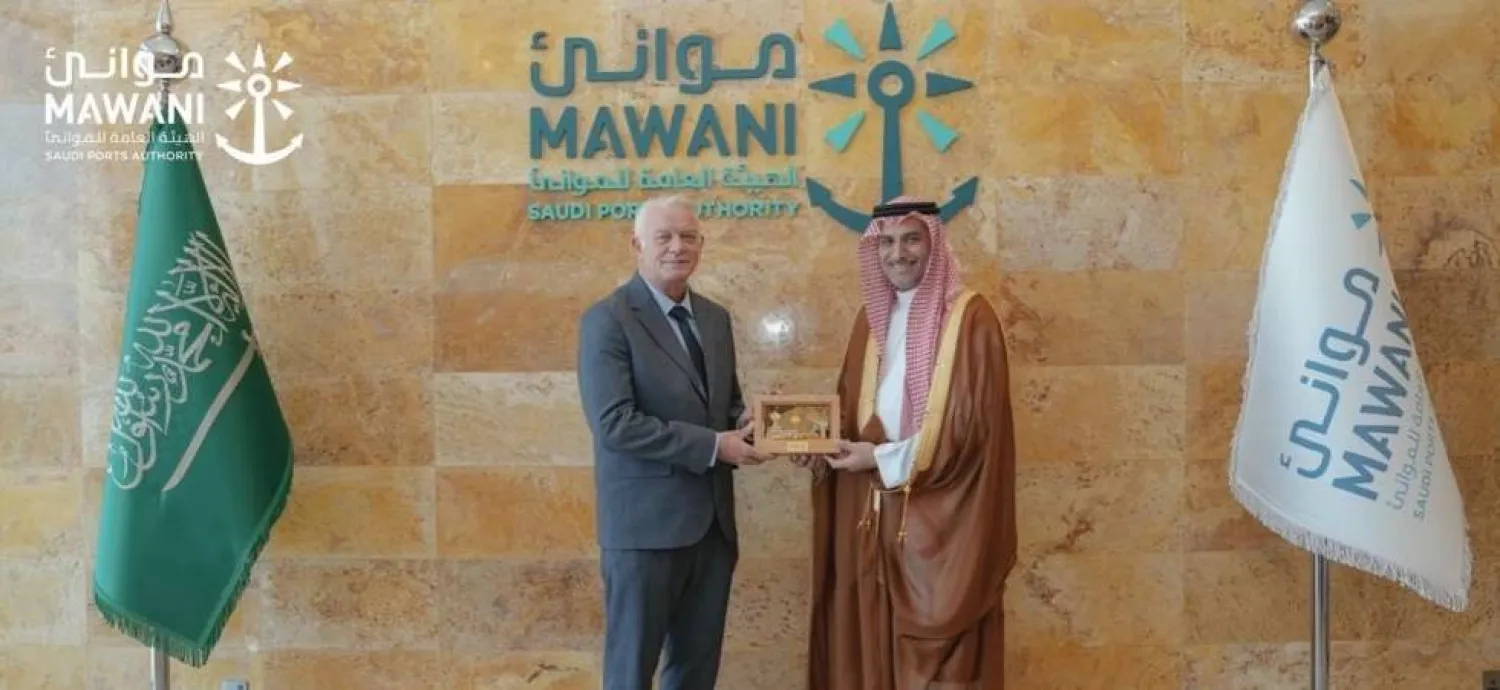
Saudi Arabia’s Mawani Grants Unified License to Global Shipping Line 

The initiative is part of Mawani's ongoing efforts to develop the maritime business environment, enable international companies to invest in the Saudi market, and increase competitiveness within the maritime sector. (Mawani)
TT

Saudi Arabia’s Mawani Grants Unified License to Global Shipping Line 

The initiative is part of Mawani's ongoing efforts to develop the maritime business environment, enable international companies to invest in the Saudi market, and increase competitiveness within the maritime sector. (Mawani)

The Saudi Ports Authority (Mawani) granted on Thursday a unified license to international shipping line Global Shipping Line (PIL), officially recognizing it as an authorized foreign investor to operate maritime agencies in the Kingdom's ports, reported the Saudi Press Agency.

The license is issued in accordance with the regulations outlined in the Maritime Agency Services, reflecting Mawani's commitment to boosting the efficiency of the maritime sector and improving the quality of operational services provided at ports.

It aims to attract global expertise and facilitate knowledge transfer within the Kingdom, aligning with international best practices in the maritime transport industry.

The initiative is part of Mawani's ongoing efforts to develop the maritime business environment, enable international companies to invest in the Saudi market, and increase competitiveness within the maritime sector.

PIL, which operates from its regional headquarters in Riyadh, manages operations in 29 countries.

The move strengthens the Kingdom's position as a crucial logistics hub, in line with the National Transport and Logistics Strategy, while attracting more international shipping lines. It reinforces Saudi Arabia's role as a key link among three continents.


IMF: Restoring Lebanon's Economic Growth Will Require Comprehensive Reforms

FILE PHOTO: A view of the International Monetary Fund (IMF) logo at its headquarters in Washington, D.C., US, November 24, 2024. REUTERS/Benoit Tessier//File Photo
TT

IMF: Restoring Lebanon's Economic Growth Will Require Comprehensive Reforms

FILE PHOTO: A view of the International Monetary Fund (IMF) logo at its headquarters in Washington, D.C., US, November 24, 2024. REUTERS/Benoit Tessier//File Photo

Lebanon's economy has shown resilience despite conflicts in the region, with tourism fueling a bit of a rebound, but restoring growth will require comprehensive reforms, the International Monetary Fund said on Thursday.

IMF spokeswoman Julie Kozack said the global lender remains engaged in complex discussions with Lebanese ‌authorities following their ‌request for an IMF-supported ‌program ⁠in March 2025. The ⁠IMF sent a staff mission to Beirut earlier this month, said Reuters.

The talks have been focused on two big issues, she said, citing the need for banking sector restructuring and a medium-term fiscal ⁠strategy. "The economy has shown resilience ‌despite the impact ‌of conflicts in the region. It has had ‌a bit of a rebound ‌on the back of tourism from the strong diaspora," Kozack said.

"But at the same time, really restoring strong and sustainable growth will ‌require a comprehensive set of reforms to tackle some of the ⁠structural ⁠weaknesses that have really hampered Lebanon's economic performance for many years," she said. Reforms also are needed to attract international support to help Lebanon address its substantial reconstruction needs.

Kozack said Lebanon needs an updated medium-term fiscal framework that includes concrete measures to mobilize additional revenues for much-needed capital spending, as well as a sovereign debt restructuring to restore debt sustainability.