


OPEC+ Member States Support Saudi Arabia’s Stance on Balancing Oil Markets

Oil prices rose with the growing support for the Saudi vision of market balance. (EPA)
TT

OPEC+ Member States Support Saudi Arabia’s Stance on Balancing Oil Markets

Oil prices rose with the growing support for the Saudi vision of market balance. (EPA)

A statement by Saudi Arabia's Energy Minister Prince Abdulaziz bin Salman on balancing oil markets has been met by a flurry of support by OPEC+ member states.

The United Arab Emirates is aligned with Saudi Arabia’s thinking on crude oil markets, a source with knowledge of the matter told Reuters on Friday.

The Minister on Monday flagged the possibility of introducing production cuts to balance the oil market.

Sudan Energy and Petroleum Minister Mohamed Abdallah on Friday expressed support for comments made by his Saudi counterpart.

He said in a statement that his country supports OPEC+ efforts to maintain market stability in the face of distortions and volatility.

He also underlined the importance of the statement “that was made... by the Saudi Energy Minister about market instability and volatility of prices.”

Sudan, which is a member of OPEC+, also expressed its full support for the mechanism formulated under OPEC+ alliance “which provided the necessary tools, inducing adjusting oil production, to attend to all market challenges”, the statement added.

Iraq, Algeria, Libya, Kazakhstan, Azerbaijan, Venezuela, Congo and Equatorial Guinea have all made similar statements ahead of a September 5 meeting of OPEC+, which unites members of the Organization of the Petroleum Exporting Countries and other producers including Russia.

Oil prices rose as much as $1 on Friday on signs of improving fuel demand, though an upcoming speech from the US Federal Reserve chairman capped further gains.

Brent crude futures climbed $1.53, or 1.54%, to $100.87 a barrel by 10:51 GMT. US West Texas Intermediate (WTI) crude futures rose $1.20 cents, or 1.3%, to $93.72.

Both contracts slumped by about $2 on Thursday but are on track for a weekly gain of around 4% for Brent and 3% for WTI.

Better than expected figures concerning the US economy helped to dispel recession fears.

The US economy contracted at a more moderate pace than initially thought in the second quarter as consumer spending blunted some of the drag from a sharp slowdown in inventory accumulation.

Additional price support came from the Kingdom on Monday flagging the possibility of production cuts to balance the oil market and offset the return of Iranian barrels to oil markets should Tehran clinch a nuclear deal with the West.

“Speculators could view this as an invitation to bet on further price rises without the need to fear any more pronounced price declines,” Commerzbank said in a note.


Oil Rises on Concern Over Escalating Middle East Tensions

HUNTINGTON BEACH, CALIFORNIA - APRIL 23: A pumpjack stands idle in the Huntington Beach oil field on April 23, 2026 in Huntington Beach, California. Mario Tama/Getty Images/AFP
TT

Oil Rises on Concern Over Escalating Middle East Tensions

HUNTINGTON BEACH, CALIFORNIA - APRIL 23: A pumpjack stands idle in the Huntington Beach oil field on April 23, 2026 in Huntington Beach, California. Mario Tama/Getty Images/AFP

Oil rose on Friday on concerns of a renewed military escalation in the Middle East after Iran released footage of commandos boarding a cargo ship in the Strait of Hormuz, and a lack of progress in re-opening the key waterway.

Navigation through the strait, which before the war carried about a fifth of global oil output, remains effectively blocked. Iran's capture of two cargo ships highlighted Washington's difficulties in trying to control the passage.

Brent crude futures were up $1.93, ⁠or 1.8%, to $107 a ⁠barrel at 0805 GMT, while US West Texas Intermediate futures were up 76 cents, or 0.8%, at $96.61, Reuters reported.

For the week, Brent is up 18% and WTI 15%, the second-largest weekly gains since the war began.

Both contracts settled more than 3% higher on Thursday after reports that air defenses were engaging targets over Tehran and of a ⁠power struggle between Iran's hardliners and moderates.

"There is no de-escalation in sight," said Tamas Varga of oil broker PVM.

US President Donald Trump said Iran may have loaded up its weaponry "a little bit" during a two-week ceasefire, but added that the US military could eliminate it in a single day. On Wednesday, he said he would indefinitely extend the ceasefire to allow for further peace talks.

The ceasefire is increasingly looking like a preparatory phase for more war, Haitong Futures said in a report. If peace talks fail to make ⁠progress by ⁠the end of April and fighting resumes, oil prices could climb to new highs for the year, it added.

"There's set to be fresh financial pain ahead as key shipments from the region remain blocked," said Susannah Streeter, chief investment strategist at UK investment service Wealth Club. "That is set to keep costs elevated for a vast array of commodities."

As investors and governments around the world look for a lasting peace, Trump said he would not set a "timetable" for ending the conflict and that he wanted to make "a great deal."

"Don't rush me," he said when asked how long he was willing to wait for a long-term deal.


Saudi Arabia, Switzerland Sign Agreement on Reciprocal Protection of Investments

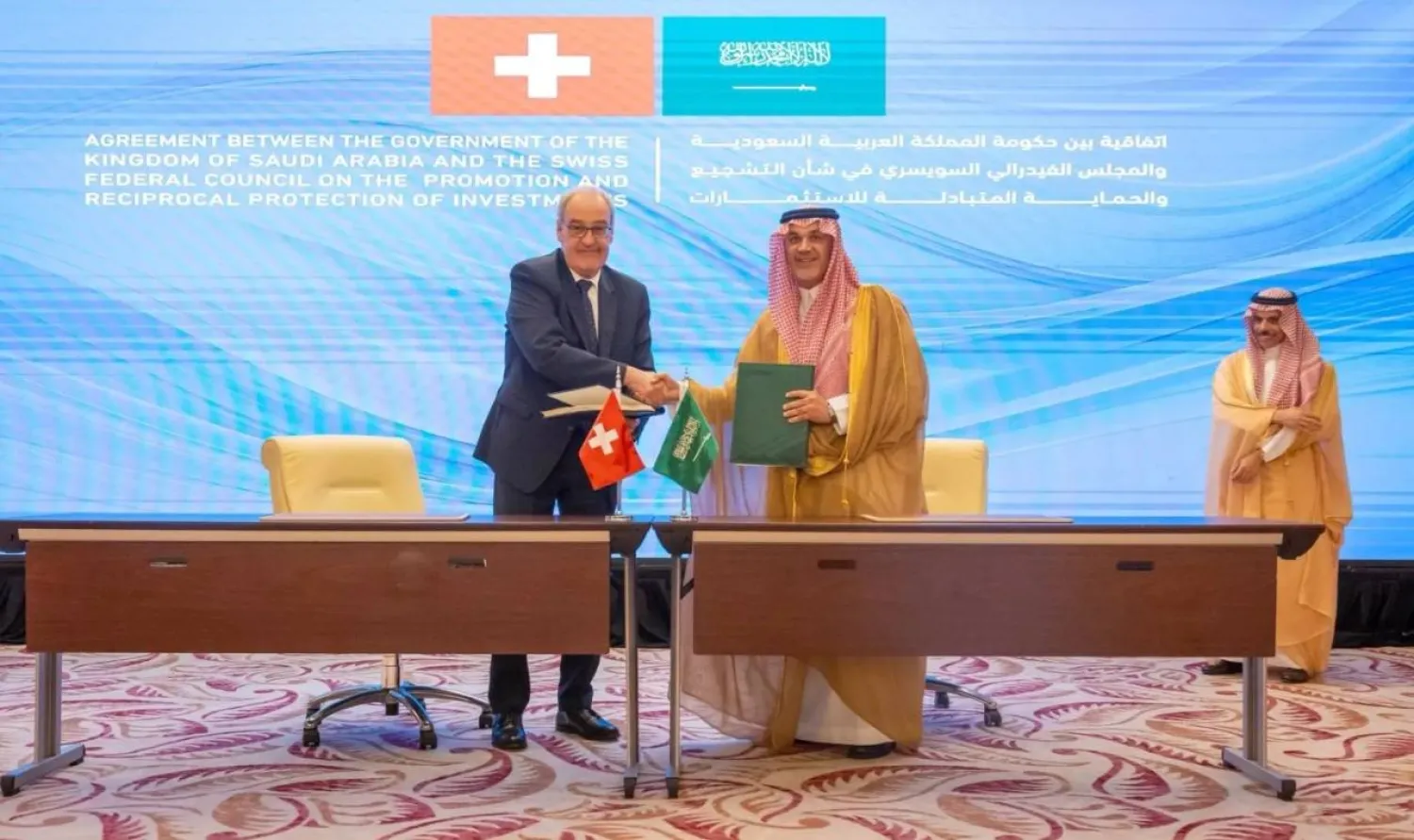
The agreement aims to strengthen and stabilize the investment environment, protect investors’ rights, and support the flow of mutual investments between the two countries. SPA
TT

Saudi Arabia, Switzerland Sign Agreement on Reciprocal Protection of Investments

The agreement aims to strengthen and stabilize the investment environment, protect investors’ rights, and support the flow of mutual investments between the two countries. SPA

Saudi Minister of Foreign Affairs Prince Faisal bin Farhan bin Abdullah and Minister of Investment Fahad Al-Saif have participated in the Saudi-Swiss Investment Roundtable Meeting in Jeddah, which was followed by the signing of an investment agreement between the two countries.

The meeting took place in the presence of Swiss President Guy Parmelin, with the participation of State Secretary for Economic Affairs Helene Budliger Artieda, along with a large number of officials and business leaders from both sides.

During the meeting, the conferees reviewed joint investment opportunities, discussed ways to strengthen economic cooperation between the two countries, and explored the development of partnerships in priority sectors in a manner that supports economic growth and enhances relations.

The meeting was held on the sidelines of the Swiss President’s official visit to the Kingdom, as the two countries mark 70 years of diplomatic relations that have, from the outset, helped lay the foundations of cooperation and build a partnership based on mutual respect and the development of shared interests between the two states.

After the meeting, an agreement was signed between the Saudi government and the Swiss Federal Council on the promotion and reciprocal protection of investments.

It was signed on the Saudi side by Al-Saif, and on the Swiss side by Parmelin.

The agreement aims to strengthen and stabilize the investment environment, protect investors’ rights, and support the flow of mutual investments between the two countries.

The meeting was attended by Saudi Ambassador to Switzerland and the Principality of Liechtenstein Abdulrahman Aldawood.


US Stocks Dip on Mixed Earnings as Markets Monitor Iran

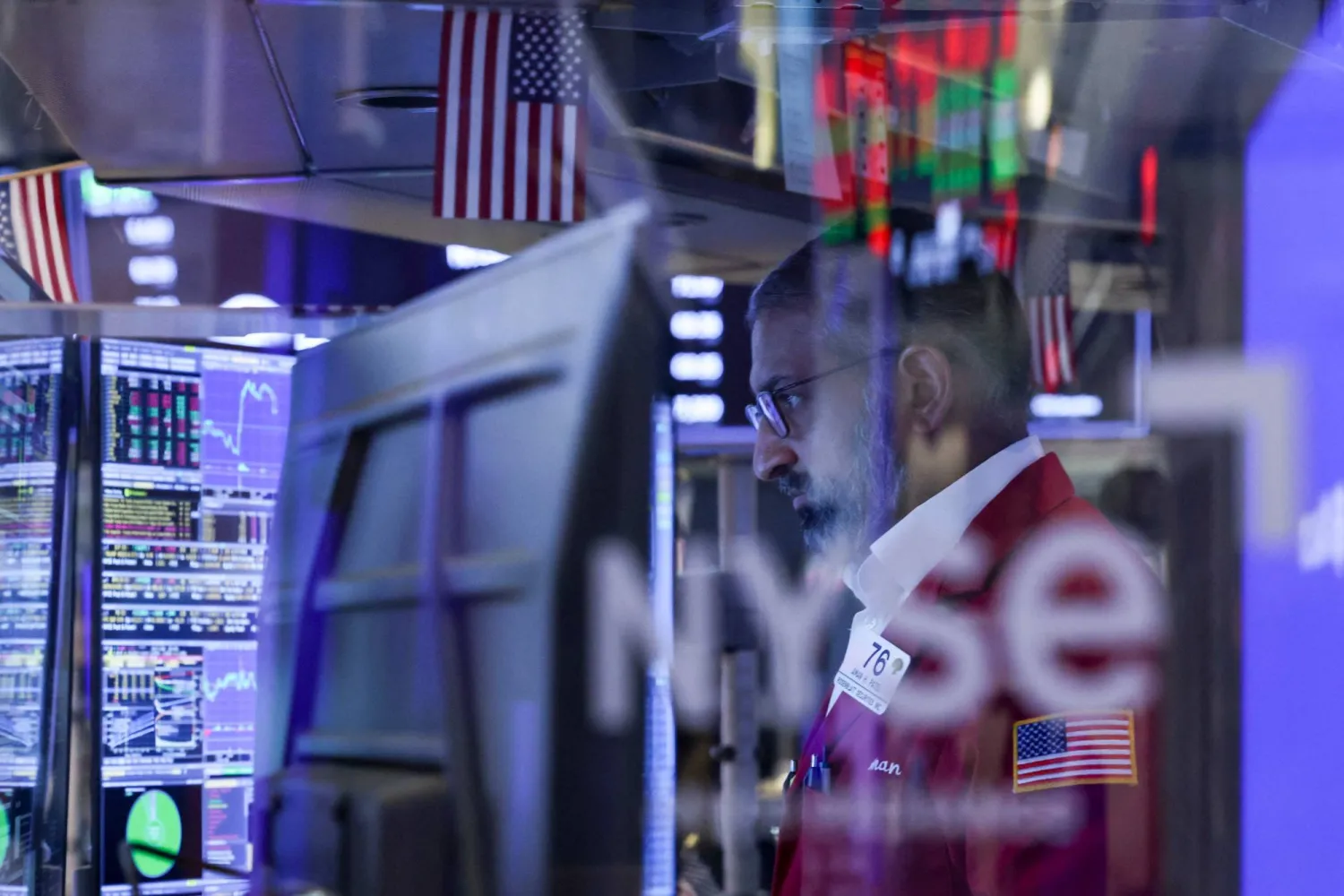
A trader works on the floor of the New York Stock Exchange (NYSE) at the opening bell in New York on March 24, 2026.  (Photo by ANGELA WEISS / AFP)
A trader works on the floor of the New York Stock Exchange (NYSE) at the opening bell in New York on March 24, 2026. (Photo by ANGELA WEISS / AFP)
TT

US Stocks Dip on Mixed Earnings as Markets Monitor Iran

A trader works on the floor of the New York Stock Exchange (NYSE) at the opening bell in New York on March 24, 2026.  (Photo by ANGELA WEISS / AFP)
A trader works on the floor of the New York Stock Exchange (NYSE) at the opening bell in New York on March 24, 2026. (Photo by ANGELA WEISS / AFP)

Wall Street stocks retreated from records early Thursday as markets digested a trove of mixed earnings reports and monitored the latest dynamics between the United States and Iran.

Analysts cited profit-taking after both the S&P 500 and Nasdaq shrugged off a jump in oil prices to finish at records on Wednesday.

About 10 minutes into trading, the Dow Jones Industrial Average was down 0.4 percent at 49,311.39, AFP reported.

The broad-based S&P 500 dipped 0.2 percent to 7,126.19, while the tech-rich Nasdaq Composite Index declined 0.3 percent to 24,588.07.

David Morrison, senior market analyst at FCA, called Thursday's early trading action "a mild bout of profit-taking triggered by some worrying reports of hostile action between the US and Iran," according to a note.

The US Defense Department said its forces boarded a vessel in the Indian Ocean that was transporting oil from Iran, while President Donald Trump announced on social media that he ordered the Navy to "shoot and kill" boats placing mines in the Strait of Hormuz.

Iran vowed it would keep the strait closed to all but a trickle of approved vessels for as long as the United States blockaded its ports.

Among companies reporting results, Tesla fell 1.7 percent and Lockheed Martin dropped 3.7 percent, while American Airlines jumped 4.9 percent.