

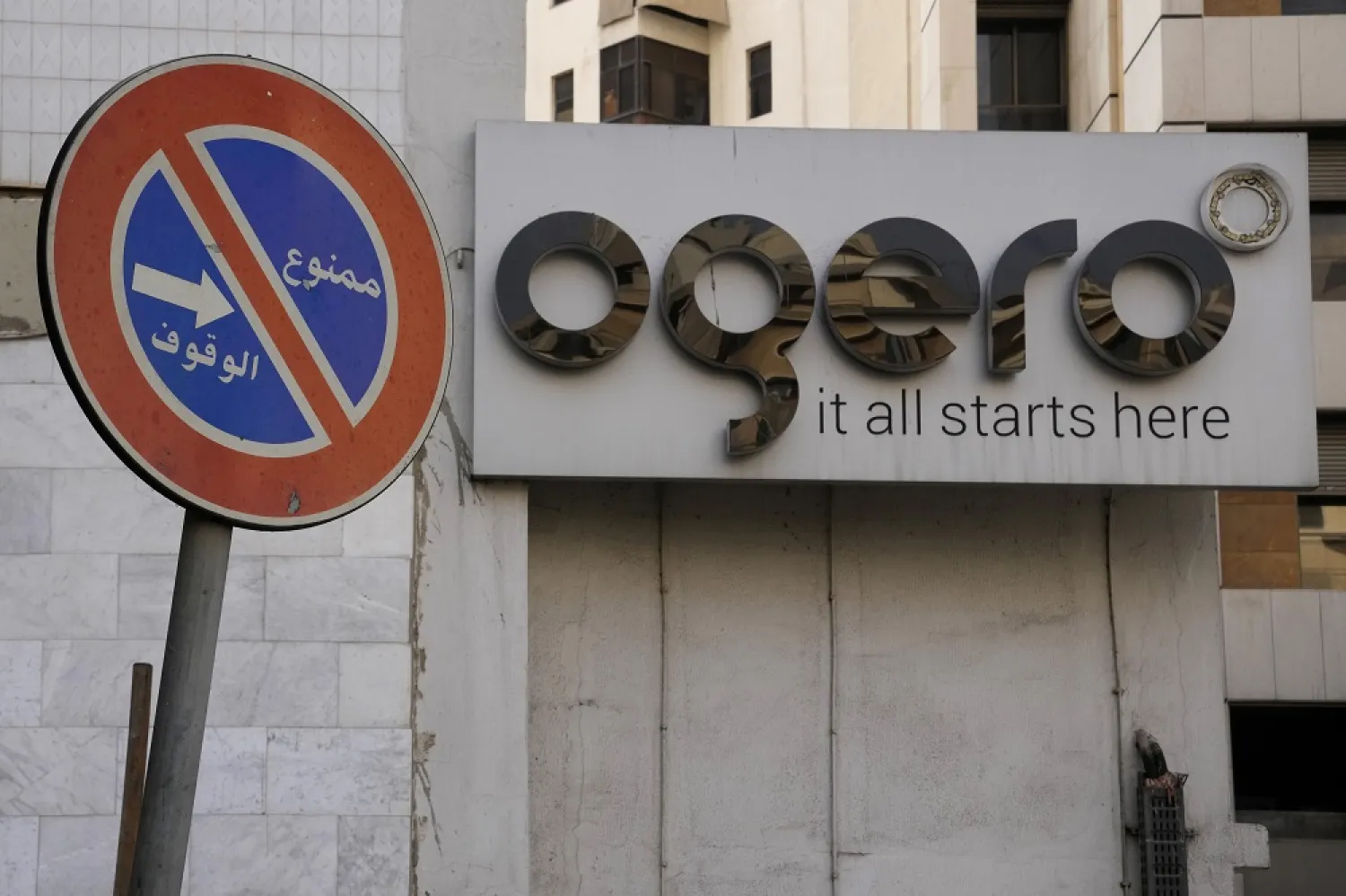

Internet Shutdowns Hit Cash-Strapped Lebanon Due to Strike

A sign of the state-owned telecom and internet company, Ogero, is displayed on one of their buildings, in Beirut, Lebanon, Wednesday, Aug. 31, 2022. (AP)
TT

Internet Shutdowns Hit Cash-Strapped Lebanon Due to Strike

A sign of the state-owned telecom and internet company, Ogero, is displayed on one of their buildings, in Beirut, Lebanon, Wednesday, Aug. 31, 2022. (AP)

Internet shutdowns rippled through cash-strapped Lebanon on Tuesday after employees of the country's state-owned telecom company went on strike, demanding higher wages.

It was the latest reflection of one of the world's worst economic disasters, which has pulled three quarters of Lebanon's 6 million people into poverty. The Lebanese pound in three years has lost over 90 percent of its value against the US dollar.

Employees of Ogero and other public sector institutions have not had their wages adjusted to accommodate the pound’s depreciation and skyrocketing inflation.

Striking Ogero employees told The Associated Press that they want their salaries raised after the government's recent hike on telecom fees and internet subscriptions. They say some of the salaries are now worth about $125.

“At first we were able to tolerate the inflation just like everyone else, but then people started to sell their cars, jewelry, and personal belongings to get by,” one employee told the AP on condition of anonymity, because they fear they may lose their job. “All we have left is to sell our homes, but then we would end up on the streets.”

Ogero Chairman Imad Kreidieh urged the Lebanese government to take swift action to resolve the situation.

“Unfortunately, at my level there is very little to do,” Kreidieh told the AP. “Ogero does not have the funds to deal with the matter.”

According to Lebanon’s state-run National News Agency, internet shutdowns have hit several towns across the country, including in several neighborhoods of Beirut.

Caretaker Telecommunications Minister Johnny Corm did not immediately respond to the AP when asked if the government is working to resolve the internet shutdowns. Another Ogero employee said they would not break the strike until they hold negotiations with Corm and reach a settlement.

Internet shutdowns are expected to reach more parts of the country as electricity generators run out of fuel.

Legislator Paula Yacoubian told the AP that Parliament's telecommunications committee will meet Monday next week to discuss the issue.

Parliament meanwhile has yet to pass a 2022 state budget, as the country scrambles to reform its corrupt and unproductive economy.

Thousands of public sector workers have already been on strike for almost two months, demanding higher wages and transportation stipends.

The Lebanese government in May approved raising internet and telephone subscription prices, saying the hikes are crucial for the survival of the country’s ailing telecom sector, which is struggling to maintain its infrastructure and afford diesel fuel for its generators.

Lebanon's already frail infrastructure further deteriorated after the massive Beirut port blast on Aug. 4, 2020, that killed over 200 people, wounded thousands, and destroyed several neighborhoods in the Lebanese capital.

Lebanon’s economic crisis continues to pulverize public life. The cash-strapped country already struggles with soaring gasoline, electricity, and food prices, as well as rampant power cuts and water shortages. Residents rely almost entirely on expensive private diesel generator subscriptions, as the country’s indebted and bloated state electricity company provides no more than about two hours of power daily.

Ogero over the past two years has struggled with upkeeping its infrastructure, affording fuel for its generators, and to prevent theft of copper and metal wires. In January, about 26,000 subscribers in Beirut went offline due to diesel fuel shortages, including the Internal Security Forces’ operations room.



Palestinian President, again Denied a Visa to Speak at UN, Addresses Leaders on Prerecorded Video

Palestinian President Mahmoud Abbas delivers a video address to the UN General Assembly in September 2025 (EPA)
TT

Palestinian President, again Denied a Visa to Speak at UN, Addresses Leaders on Prerecorded Video

Palestinian President Mahmoud Abbas delivers a video address to the UN General Assembly in September 2025 (EPA)

Palestinian President Mahmoud Abbas addressed the UN General Assembly on Thursday, delivering prerecorded remarks from his office in Ramallah after the United States denied him and other top Palestinian officials visas to attend the gathering for the second year in a row.

Israeli Prime Minister Benjamin Netanyahu was scheduled to speak in person early in the afternoon.

Since 2005, the now-90-year-old Abbas has led the Palestinian Authority, which is the internationally recognized representative of the Palestinian people. But his support among Palestinians has withered during years of corruption and the sometimes violent advance of Israeli settlers in the occupied West Bank, according to The AP news.

Under Abbas, Palestine has been recognized as a country by a majority of UN member states. But on the ground in the West Bank, the mostly symbolic moves have not affected Israel’s decades long military occupation. Throughout the war in Gaza, Abbas and the authority have been largely sidelined from negotiations over its future in favor of a transition process shepherded by President Donald Trump’s Board of Peace.

The Palestinian Authority was created under a series of peace agreements with Israel in the 1990s and administers semiautonomous areas of the West Bank, while relying heavily on foreign aid. It is the internationally recognized representative of the Palestinian people.

It was ousted from Gaza after Hamas won parliamentary elections in 2006 and violently seized control. Abbas was elected to what was supposed to be a four-year term in 2005. The authority has not held presidential or legislative elections since 2006.

Israel captured the West Bank and east Jerusalem in the 1967 war, and the Palestinians want both as part of their future state. The Palestinians and much of the international community view the settlements as illegal and as an obstacle to creating a viable, contiguous Palestinian state.

Abbas recorded the video on Wednesday.


Türkiye will Hand Over Key Base in Iraq in a Gradual Troop Withdrawal Deal

Iraqi border security force personnel patrol in their armoured vehicles along the border with Syria, in Sinjar district, northern Iraq on January 22, 2026, following recent situation in Syria.  (Photo by Zaid AL-OBEIDI / AFP)
Iraqi border security force personnel patrol in their armoured vehicles along the border with Syria, in Sinjar district, northern Iraq on January 22, 2026, following recent situation in Syria. (Photo by Zaid AL-OBEIDI / AFP)
TT

Türkiye will Hand Over Key Base in Iraq in a Gradual Troop Withdrawal Deal

Iraqi border security force personnel patrol in their armoured vehicles along the border with Syria, in Sinjar district, northern Iraq on January 22, 2026, following recent situation in Syria.  (Photo by Zaid AL-OBEIDI / AFP)
Iraqi border security force personnel patrol in their armoured vehicles along the border with Syria, in Sinjar district, northern Iraq on January 22, 2026, following recent situation in Syria. (Photo by Zaid AL-OBEIDI / AFP)

Türkiye has agreed to gradually withdraw forces from a strategic military base in northern Iraq and hand over its control to the Iraqi government, following a meeting between the two countries’ leaders on the sidelines of the UN General Assembly in New York.

Iraq, meanwhile, pledged to remove armed groups that Türkiye considers security threats from the region of Sinjar, in northwestern Iraq, according to a joint statement issued after the meeting late Wednesday between Turkish President Recep Tayyip Erdogan and Iraqi Prime Minister Ali al-Zaidi.

“In light of the progress Iraq has achieved through security measures, Turkish forces will gradually hand over the Bashiqa-Zelikan camp to the Iraqi federal government, in accordance with the agreed-upon mechanism and timeline,” according to the joint statement released by Erdogan and al-Zaidi’s offices.

Türkiye and Iraq also agreed to “fully extend the authority of the Iraqi state in Sinjar and to end the presence of banned foreign armed elements,” the statement read.

The strategically-located Bashiqa base has long been an issue of contention between Türkiye and Iraq, with Türkiye failing to fully withdraw forces, despite previous discussions for their removal. Türkiye established a military presence there in 2015 to support operations against the ISIS group and help secure the region.

Although Türkiye maintains several bases in northern Iraq for operations against the militant Kurdistan Workers’ Party, or PKK, the Bashiqa camp is Türkiye's furthest base from its border.

Türkiye, for its part, has long been pressing Iraq to curb groups with links to the PKK and other non-state armed groups from operating in Sinjar.

The Iraqi government announced earlier this month that the Sinjar Resistance Units, a Yazidi militia affiliated with the PKK, had agreed to disarm and eligible fighters would be integrated into the Iraqi security forces. The group played a significant role in the fight against ISIS, but was seen by Türkiye as a threat because of its PKK affiliation.

The agreement came as the US is ending its decades-long military presence in Iraq, with officials saying the hundreds of troops remaining in northern Iraq will be out by a Sept. 30 deadline.

Türkiye, meanwhile, is engaged in peace efforts with the PKK aimed at ending a decades-long conflict. The group, whose fighters have launched attacks on Turkish targets from bases in northern Iraq, has agreed to disband and lay down arms as part of the effort.


PAM Party Wins Most Seats in Morocco's Parliamentary Election

A man arrives to vote during parliamentary elections in Rabat, Morocco September 23, 2026. REUTERS/Ahmed El Jechtimi
TT

PAM Party Wins Most Seats in Morocco's Parliamentary Election

A man arrives to vote during parliamentary elections in Rabat, Morocco September 23, 2026. REUTERS/Ahmed El Jechtimi

The Authenticity and Modernity Party (PAM) won the largest number of seats in Morocco's legislative election, followed by its partners in the outgoing government, RNI, and the Istiqlal party, according to official preliminary results on Thursday.

Liberal-centrist PAM took 97 seats in the 395-seat parliament, ahead of the RNI with 66, while the Istiqlal Party secured 65 seats, the Interior Minister Abdelouafi Laftit said in a news briefing on Thursday.

The Justice and Development Party rebounded to 54 seats, from only 13 in the previous election, buoyed by the return of its former prime minister Abdelilah Benkirane.

Leftist parties such as USFP, PPS and FGD took 26, 19 and 8 seats respectively.

Turnout stood at 38.02%, down from 50% in the 2021 election, according to official data. About 27 million Moroccans are of voting age, but only 15.8 million are registered to vote, a drop of about 12% from 2021 election.

Turnout is seen as a barometer for citizens' engagement and trust in elected institutions.

The parliamentary poll is not expected to fundamentally alter the balance of power in Morocco, where the king retains sweeping powers over policy direction, defense and foreign affairs.

Under a constitution adopted in 2011, the king appoints the prime minister from the party that wins the most seats.

If King Mohammed VI appoints PAM’s current leader, Fatima Ezzahra El Mansouri, as head of government, she would become the second woman to hold such a position in the Arab region, after Tunisia’s Najla Bouden.

PAM will have to negotiate a coalition even as its leaders have ruled out partnering again with RNI as the two parties trade accusations over failed policies.

PAM campaigned on a $37 billion platform promising 1 million new jobs and continued investment in healthcare, social protection and better wages.