UNSMIL Calls for Addressing Enforced Disappearances in Libya

Siham Sergewa, the abducted Libyan MP (right) and former UN Special Advisor on Libya Stephanie Williams. (United Nations)
TT

UNSMIL Calls for Addressing Enforced Disappearances in Libya

Siham Sergewa, the abducted Libyan MP (right) and former UN Special Advisor on Libya Stephanie Williams. (United Nations)

The United National Support Mission in Libya (UNSMIL) has called on relevant authorities to address enforced disappearances in the country as part of a rights-based national reconciliation process.

“Families have the right to know the fate of their loved ones and the right justice,” it said in a statement on Wednesday, marking International Day of the Victims of Enforced Disappearances.

It expressed its solidarity with the countless victims of enforced disappearances and missing persons in Libya.

Libya knew cases of enforced disappearance immediately after the revolution’s outbreak on February 17, 2011 and the subsequent security chaos.

But these crimes intensified against the backdrop of political tension between areas and cities supporting the revolution, which toppled Muammar Gaddafi’s regime, and opposing it.

This phenomenon exacerbated after the political division in 2014 to “settle political scores between opponents.”

According to the statement, UNSMIL has documented disappearances of perceived political opponents, politically active women and men, human rights defenders, members of parliament, lawyers, and judges as well as migrants and asylum-seekers.

“Over the years, the whereabouts of thousands of women, men and children remain unknown.”

Acting Head of Mission Raisedon Zenenga said: “The Mission reiterates that the enforced disappearance of any person, even if they are released, is a serious violation of international human rights and humanitarian law and may amount to a crime against humanity.”

One of the most prominent victims of the phenomenon is Libyan House of Representatives (HoR) member Siham Sergewa, who was abducted in 2019 from her home in Benghazi by an armed militia that shot her husband and destroyed the surveillance cameras around her house.


Yemen’s Ibb Becomes Houthis’ Main Source for Recruits

Houthi supporters during a rally in Sanaa. (EPA)
TT

Yemen’s Ibb Becomes Houthis’ Main Source for Recruits

Houthi supporters during a rally in Sanaa. (EPA)

The terrorist Houthi militia is depleting the population in Yemen's Ibb governorate by thrusting them onto the Taiz fronts, while expanding its use of local military sites and mountain ridges as ballistic missile launchpads, deepening the risks facing residents.

Local sources told Asharq Al-Awsat that the group has dispatched new military reinforcements from Ibb toward the Taiz fronts for the third time in less than a month. This reflects its ongoing reliance on recruiting the residents to offset human losses and replenish frontlines with new fighters as it faces mounting difficulties in mobilizing more residents and tribes across its territories.

Meanwhile, thousands of families are left to endure the loss of their sons and breadwinners, alongside the broader economic and social fallout of the continuous deployment of young men into combat.

Informed sources said that Ibb has become the primary source of fighters relied upon by Houthis to reinforce the Taiz fronts, followed by Dhamar, the Houthi-held capital Sanaa and its countryside, and the Amran governorate.

A young man from Ibb city, who escaped from a Taiz combat front days ago, recounted the recruitment tactics used by the militia to enlist youth and deploy them into battle under misleading slogans.

He revealed that he joined a military training course after being misled into believing it was preparation to confront Israel, only to find himself dispatched to Taiz to fight residents of a neighboring governorate who share fraternal bonds with the people of Ibb.

“They told us that the fighting in Taiz was part of the training and that we would later head to Palestine. Days passed and none of that happened,” he recalled.

Ibb has also been used as a launchpad for attacks on Taiz and other regions, said residents and local sources.

Activists warned that persisting with these policies threatens to spill the conflict's repercussions from the battlefields into the social fabric of both Ibb and Taiz, whose populations are bound by proximity, history, and shared interests.

Transforming these organic bonds into channels for mobilization and combat compounds local suffering, exposes more families to bereavement, and stokes divisions within communities, they said.

The activists called on notables and families in Ibb to resist Houthi recruitment drives and protect their sons from being lured to the frontlines, warning against the exploitation of ideological slogans to enlist youth and thrust them into clashes where families and local communities ultimately bear the human and social toll.

They also stressed the need of preventing residential areas and their vicinities from being transformed into military installations and ballistic missile launch sites, given the potential dangers such actions pose to civilians and their property.


Iraq PM Dismisses Shatri as Head of Intelligence

Iraqi Prime Minister Ali al-Zaidi. (INA)
TT

Iraq PM Dismisses Shatri as Head of Intelligence

Iraqi Prime Minister Ali al-Zaidi. (INA)

Iraqi Prime Minister Ali al-Zaidi dismissed on Monday Hamid al-Shatri as chief of national intelligence.

The PM will assume the position in an acting role until a replacement is appointed.

Al-Shatri was appointed to his position on December 19, 2024, by then PM Mohammed Shia al-Sudani.

Al-Shatri was born in Dhi Qar in southern Iraq. He held several positions, including Director General of Intelligence and Counter-Terrorism at the Iraqi Ministry of Interior, a role he assumed in January 2021.

In November 2021, he was appointed deputy head of the National Security service, later becoming its head - a position he held until July 2023, when he was transferred to the National Security advisory.


Syria Says at Least Six Dead in Jordan Strikes, Closes Nasib Crossing

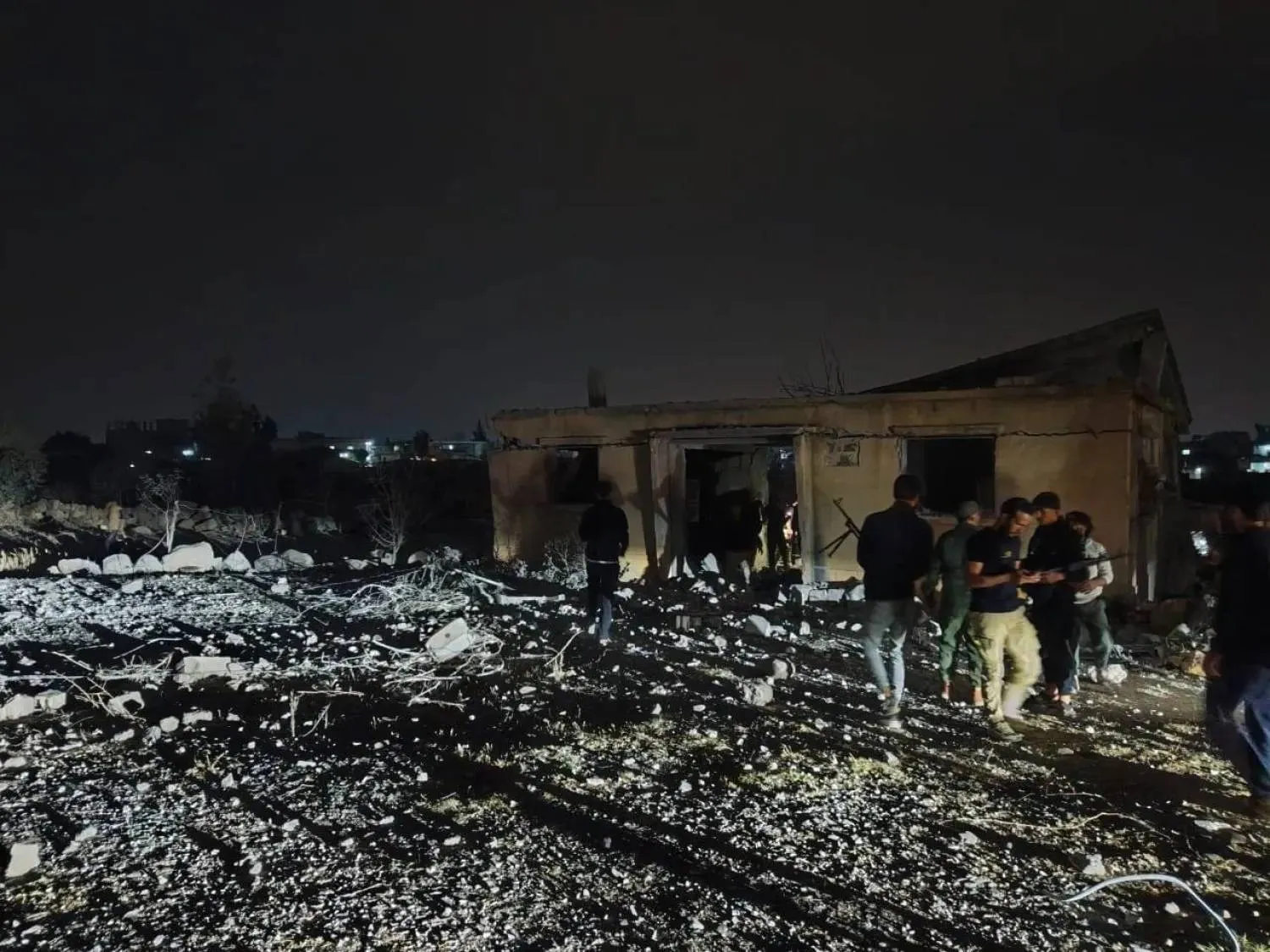
Destruction is seen at the site of the Jordanian strike on Daraa, Syria.
TT

Syria Says at Least Six Dead in Jordan Strikes, Closes Nasib Crossing

Destruction is seen at the site of the Jordanian strike on Daraa, Syria.

Syrian authorities said at least six people were killed in strikes on Monday in the country's south, as Jordan said it had targeted "terrorist organizations" after a deadly attack on a church.

In a statement on Tuesday, the government stressed that the military operation was conducted without prior coordination or notification with the Syrian side.

In an updated statement, health authorities in Daraa province reported "six martyrs, including three children and a woman", after earlier reporting eight victims.

The government “expressed its full solidarity with the affected Syrian families and extended its heartfelt condolences to the martyrs’ families, wishing a speedy recovery for the injured.”

It confirmed that relevant national authorities are closely monitoring the situation to assess the needs of the affected population and provide immediate required support and humanitarian relief.

The statement noted that competent authorities have launched comprehensive investigations to establish the full circumstances of the targeting.

Simultaneously, Syria has opened direct channels of communication with officials in Jordan to review the incident.

The Syrian government “underscored the imperative of joint field and security coordination regarding any actions along the border region, underlining the need to uphold the sovereignty of Syria and preserve the security and stability of both brotherly nations.”

Syrian authorities later shut the Nasib border crossing with Jordan in wake of the strikes.

On Friday, gunmen killed nine people during a funeral service at the Greek Orthodox St George's Church in the village of Hammoud in Karak governorate, southern Jordan.

Major General Abdullah al-Maaytah, Jordan's director of public security, on Monday named the three detained suspects as Hazza Zaidan Mohammed, Meshal Zaidan Mohammed and Ahmad Sami Hussein.

The trio, two of them brothers and the other related by marriage, were cornered at an abandoned house where they had barricaded themselves inside and opened fire on security forces.

"All three terrorists have been injured. They have been taken to hospital and are still receiving treatment," Maaytah told a press conference.

One of the suspects was in critical condition, Jordan's state broadcaster Al-Mamlaka reported. There were no casualties among the security forces, it added.

Jordan's King Abdullah II said in a post on X that security forces "chased them to the very end".

"We vowed the terrorists would not escape punishment, and no proponent of dark ideologies that divide Jordanians will be tolerated," he wrote.

Earlier, the king visited wounded victims of the church attack in hospital.