


Serena’s Style Changed the Game in Fashion, Business

Tennis - US Open - Flushing Meadows, New York, United States - September 2, 2022 Serena Williams of the US before her third round match against Australia's Ajla Tomljanovic REUTERS/Mike Segar
TT

Serena’s Style Changed the Game in Fashion, Business

Tennis - US Open - Flushing Meadows, New York, United States - September 2, 2022 Serena Williams of the US before her third round match against Australia's Ajla Tomljanovic REUTERS/Mike Segar

From glossy magazine covers to generation-defining on-court styles, Serena Williams took a bow at the US Open on Friday, having rewritten the fashion playbook for female athletes while building an empire of her own.

The 23-times Grand Slam winner chose the bible of women's fashion, Vogue, to announce she was "evolving away from tennis," before taking to the court in her bedazzling Nike sneakers at the US Open this week under the watchful eyes of the magazine's grand dame, Anna Wintour.

The fiercely competitive queen of Queens put on a gritty performance in what is widely expected to be her final tournament, losing in the third round 7-5 6-7 (4) 6-1 to Ajla Tomljanovic with her legacy as a cultural icon firmly in place.

"Style and sport have always been closely intertwined, but no athlete embraced the power of fashion like Serena Williams," Katie Abel, executive editor of Footwear News, told Reuters.

"She’s never shied away from boundary-breaking looks, on or off the court, and always knows how to send a message, even if it’s controversial."

She famously competed in Flushing Meadows in a denim skirt in 2004 and ruffled feathers at Roland-Garros in 2018, when she wore a black catsuit to keep her circulation going after developing blood clots in the days after giving birth.

After organisers said they would ban the catsuit from their clay courts, Williams' supporters cried foul. Williams quipped to the Associated Press: "When it comes to fashion, you don’t want to be a repeat offender."

The moment was an instant classic and showed she could harness fashion to disrupt the status quo, said Katie Lebel, a researcher of gender equity in sport and assistant professor at University of Guelph.

"Sexism has been pretty pervasive when it comes to women’s clothing... The expectations around what women athletes should look like that been particularly steeped in that," she said.

"Enter Serena and she pushed back against all this. I think she really rethought (the) uniform standards for women in tennis."

Serena and her sister Venus brought Black style to the overwhelmingly white sport when they first took the court as professionals in the 1990s, facing criticism for wearing beaded braids in competition.

Williams wore the style when she won her inaugural Grand Slam in New York. Photos of daughter Olympia in identical plaits in the stands at Flushing Meadows this year were an instant sensation.

"From the moment Serena and her sister Venus stepped onto the court in their signature braids... they have been role models for Black women and aspiring female athletes everywhere," said Abel.

Williams' friendship with late Louis Vuitton artistic director Virgil Abloh resulted in one of her most memorable US. Open ensembles, a ballerina-inspired Nike kit in 2018, when she got tantalisingly close to clinching a record-equalling 24th major title but came up short in the final.

While her run at the US Open is over, her work in New York has just begun, with a "Glam Slam" preview of new looks from her S by Serena brand planned for Sept. 12 to coincide with New York Fashion Week.

And her retirement from competitive sport is expected to have little to no impact on her brand value - with Nike planning to continue its partnership with the 40-year-old. read more

"Williams may be retiring from tennis, but I’m guessing her influence on fashion is just getting started. Without her gruelling training schedule, I’d think she would have even more time and energy to focus on this category," said W Magazine Fashion Director Nora Milch.

A bona fide fashion tycoon off the court, Serena was named to the board of shopping app Poshmark in 2019, opening her own closet alongside pieces from Olympia to customers on the fashion marketplace.

Manish Chandra, founder and CEO at Poshmark, said Williams has inspired several other female entrepreneurs to sell on the app by way of her unique voice and perspective.

"As a champion of female empowerment, Serena always leads with love and helps to ensure that our Poshmark community is front and centre in everything we do," Chandra told Reuters.

"Her achievements and vision across the worlds of business, fashion and entrepreneurship made her a perfect fit for our board... She leads with humility, kindness and authenticity."



Fashion Commission, Saudi Retail Academy to Develop National Talent 

Fashion Commission, Saudi Retail Academy to Develop National Talent 
TT

Fashion Commission, Saudi Retail Academy to Develop National Talent 

Fashion Commission, Saudi Retail Academy to Develop National Talent 

The Saudi Fashion Commission signed a memorandum of understanding (MoU) with the Saudi Retail Academy to develop national capabilities and boosting specialized skills in the fashion and retail sectors, reported the Saudi Press Agency on Monday.

The MoU aims to support local talent and the creation of sustainable employment opportunities in this vital industry. It stems from the two sides’ keenness to cooperate in the fields of training and professional development.

The agreement was signed on the sidelines of the graduation ceremony of the academy’s first cohort.

The Fashion Commission focuses on developing local talent, transferring global expertise, and advancing the fashion sector in the Kingdom, while the Saudi Retail Academy is a non-profit institute and a specialized entity in training and development in the retail field and in building professional competencies and skills related to retail and sales.

The MoU aims to establish a framework for cooperation to design and implement specialized training programs that boost the readiness of national cadres and qualify them according to the highest professional standards, with a focus on developing skills in sales, customer experience, and store management to meet labor market requirement and the needs of the growing fashion sector.

Fashion Commission chief executive Burak Cakmak said that developing human capital is a fundamental pillar for the long-term growth of the Kingdom’s fashion sector.

The partnership reflects the commitment to strengthening the capabilities that form the foundation of a competitive and sustainable industry through investment in specialized skills within retail and customer experience, enabling brands to grow and supporting the sector’s confident evolution, he added.

Saudi Retail Academy chief executive Hend Al-Dhaban stressed that the partnership embodies a shared vision to empower national talent and elevate professionalism in the retail sector.

The agreement will help channel training expertise to meet the specialized needs of the fashion sector and equip young men and women with the practical skills required to succeed in the labor market, thereby boosting service quality and supporting localization targets and economic growth, she explained.

This cooperation is part of the Fashion Commission’s ongoing efforts to develop the fashion value chain through building strategic partnerships with specialized training and education entities, expanding professional opportunities for national talent, and linking education and training outputs with labor-market needs.

Through their partnership, the commission and the academy will help in building an integrated ecosystem that connects education, vocational qualification, and employment, bolstering the competitiveness of the fashion and retail sectors and supporting the objectives of Saudi Vision 2030 in empowering national cadres, localizing jobs, and improving quality of life.


Saudi 100 Brands Debuts Landmark Fashion Presentation at Saudi Cup 2026

The experience introduced global audiences to Saudi Arabia’s dynamic and growing fashion ecosystem - SPA
TT

Saudi 100 Brands Debuts Landmark Fashion Presentation at Saudi Cup 2026

The experience introduced global audiences to Saudi Arabia’s dynamic and growing fashion ecosystem - SPA

The Fashion Commission launched its Saudi 100 Brands showcase at the Saudi Cup 2026, marking a historic milestone for the world-renowned equestrian event at King Abdulaziz Racecourse in Riyadh.
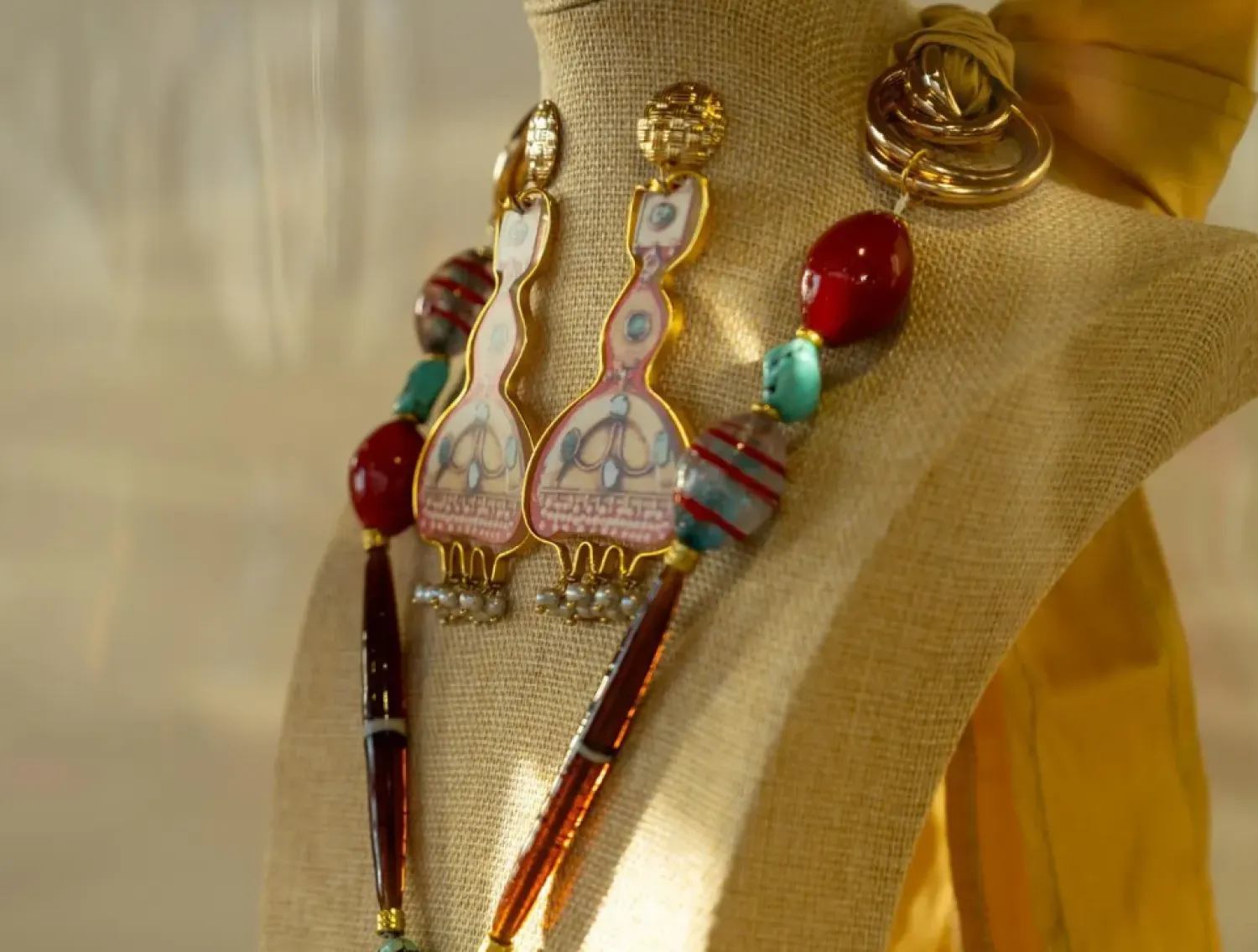
The collections celebrate Saudi heritage by blending traditional and contemporary design. Jewelry and accessory brands also exhibited throughout, providing Saudi designers with a platform to reach a broader global audience. These showcases emphasize the fusion of heritage and modern design, offering a new perspective on the Kingdom's creative identity.
The Saudi 100 Brands program, a flagship initiative of the Fashion Commission, supports emerging designers by providing tools, expertise, and platforms to grow their global presence. This collaboration with the Saudi Cup underscores the importance of celebrating cultural heritage while advancing design innovation.

Each piece in the exhibition incorporates heritage motifs, textiles, and storytelling, reimagined through innovative design to appeal to modern and international audiences.

The exhibition aims to celebrate national identity, highlight local creative talent, and present the evolving direction of Saudi fashion, SPA reported.

Visitors explored the intersection of craftsmanship and cultural expression, discovering how designers honor tradition while advancing fashion design.

The experience also introduced global audiences to Saudi Arabia’s dynamic and growing fashion ecosystem.

This participation reflects the Fashion Commission’s vision to develop a thriving fashion sector rooted in cultural heritage and global ambition. By combining cultural narratives with innovative design, the commission enables Saudi fashion to contribute to global creative industries, nurture talent, and position Saudi brands for sustained success.


L’Oreal Shares Sink as Sales Miss Forecasts 

This photo taken on February 16, 2018 shows a board with the L'Oreal logo outside of the L'Oreal plant, in Lassigny. (AFP)
TT

L’Oreal Shares Sink as Sales Miss Forecasts 

This photo taken on February 16, 2018 shows a board with the L'Oreal logo outside of the L'Oreal plant, in Lassigny. (AFP)

L'Oreal shares fell heavily on the Paris stock market on Friday after the cosmetics giant posted sales that fell short of analyst expectations, stoking fears of weakness for its luxury brands and in the key Chinese market.

While revenues rose seven percent in the fourth quarter in Europe -- still the company's biggest market -- they edged up just 0.7 percent in North America and fell five percent in North Asia, which includes China.

Overall, sales were up 1.5 percent to 11.2 billion euros ($13.3 billion) in the final quarter of 2025 -- usually when the company benefits from strong holiday-fueled buying.

This was a marked slowdown from the 4.5-percent growth seen the previous year.

On a like-for-like comparison that excludes the impact of currency fluctuations, sales rose six percent, whereas the consensus forecast was around eight percent, analysts said.

The luxury division (Luxe) in particular, which includes high-end perfumes and make-up and is L'Oreal's biggest by revenue, saw a 0.5-percent sales slide in the fourth quarter, to 4.2 billion euros.

"We think the miss, led by North Asia and Luxe, will be a concern amid a vague outlook," said David Hayes, an analyst at investment bank Jefferies.

L'Oreal's stock was down 3.2 percent in morning trading, partly recovering from a drop of more than six percent at the open.

Net profit for the full year was down 4.4 percent to 6.1 billion euros.

Chief executive Nicolas Hieronimus said when he presented the results on Thursday that L'Oreal had achieved a "solid" performance "despite a context that was at the very least volatile and unfavorable".

For 2026, he said the company had to be "cautious and humble", although he expected "the beauty market to continue its acceleration" unless there was "a new surprise".

"We're going to have to intensify our efforts in terms of innovation to energize the market and win over customers," he added.