


Saudi Arabia Tops Hydrocarbon Producers in Oil, Gas Emissions

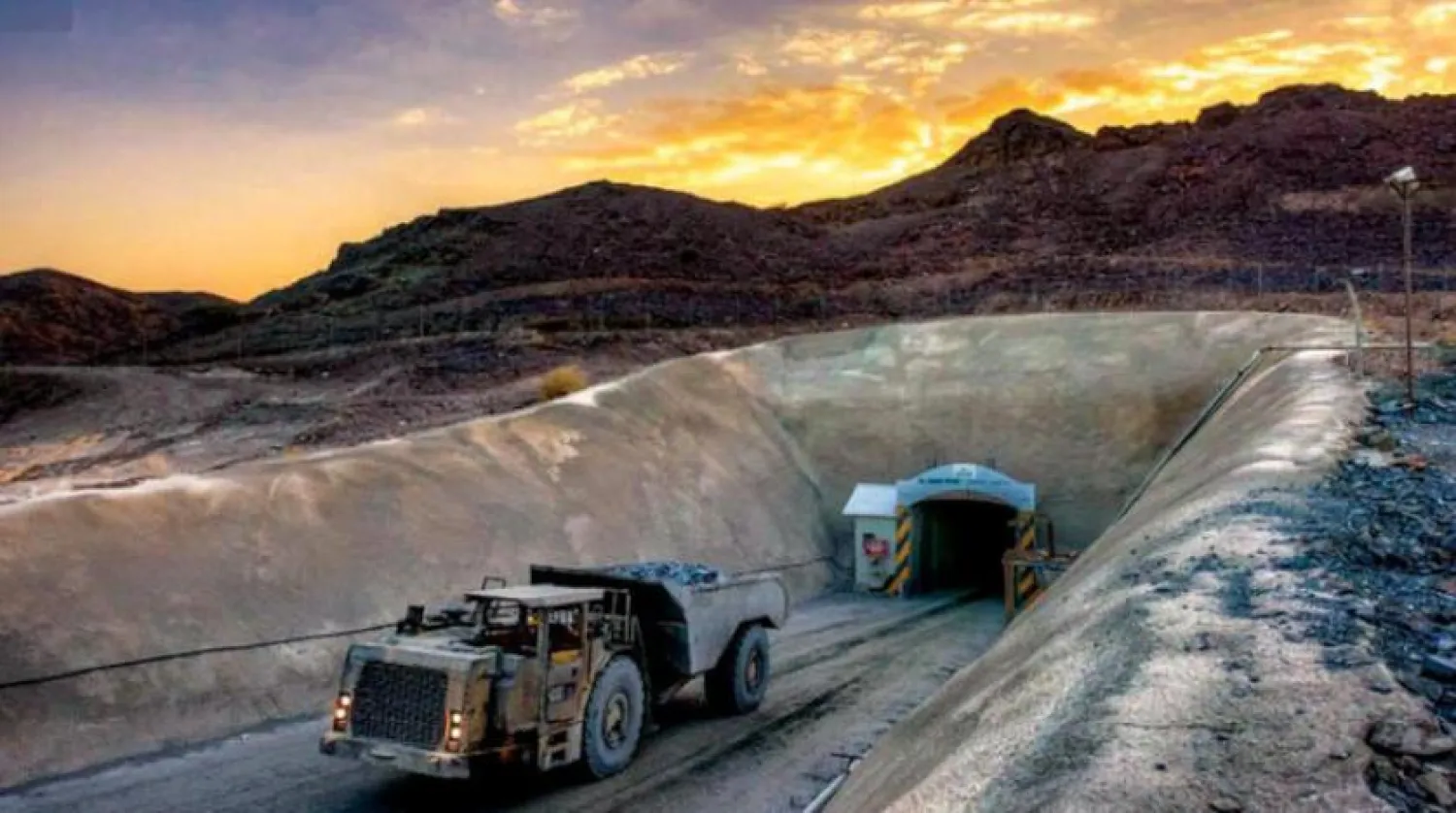
Mining is one of the sectors targeted to attract investments and diversify sources of income in Saudi Arabia (Asharq Al-Awsat)
TT

Saudi Arabia Tops Hydrocarbon Producers in Oil, Gas Emissions

Mining is one of the sectors targeted to attract investments and diversify sources of income in Saudi Arabia (Asharq Al-Awsat)

Saudi Arabia has been able to score higher than other hydrocarbon producers in many indicators related to the emissions performance of the oil and gas sector.

Over the past year, the six Gulf Cooperation Council (GCC) countries have updated their medium-term greenhouse gas emissions targets by submitting revised nationally determined contributions (NDCs) under the Paris Agreement.

The Kingdom, the UAE, and Bahrain announced their targets for zero-emissions neutrality in the middle of the century.

A recent study issued by the King Abdullah Petroleum Studies and Research Center (KAPSARC) focused on how the GCC countries manage their energy and emissions and how they are in a position to advance towards circular economies of carbon or zero neutrality.

The study indicated that the first version of the Circular Carbon Economy Index (CCE) showed that the GCC countries’ ranks range from the twelfth to the twenty-seventh, with the UAE ranking the highest and Oman the lowest.

The study found that although each country will have its unique pathway to net-zero and CCEs, the GCC countries share several structural and other similarities, which create opportunities for both sharing lessons and cooperating on the road to net-zero emissions.

The paper found that, although as a group, the GCC countries outperform their non-OECD peers and neighbors in the Middle East and Africa region in most areas measured by the CCE Index, they should undertake further efforts if they wish to improve their position in the global CCE transition.

A Fellow II in the Climate and Sustainability Program, and a co-author of the paper, Mari Luomi, said that using the circular carbon economy concept can help countries increase their ambition in their climate goals and targeted actions.

Luomi noted that it broadens the scope of the available technology options.

She indicated that the circular carbon economy in the Gulf region could help achieve buy-ins from many industries with limited and cost-effective options to decarbonize without using fossil fuels.

Fatih Yilmaz, another co-author, noted that a critical enabler of circular carbon economies, the GCC countries’ average is higher than their non-industrialized peers but lower than those of the world’s top 20 oil producers.

The third co-author, Thamir al-Shehri, stressed that Saudi Arabia achieves higher scores than other hydrocarbon producers in many indicators of the oil and gas sector’s emissions performance.

The Kingdom’s exports of hydrocarbons will enjoy a competitive advantage as the country pursues full circularity, or net-zero emissions, according to Shehri.

Meanwhile, Saudi Industrial Production Index (IPI) increased by 17.7 percent compared to July 2021 in light of favorable growth rates due to the high production in mining & quarrying, manufacturing activity, and electricity and gas supply.

The General Authority for Statistics (GASTAT) issued Sunday its monthly bulletin for July, showing that mining and quarrying grew by 14.1 percent compared to July 2021 as Saudi Arabia increased its oil production to its highest level by more than 10 million barrels per day in July 2022.

The manufacturing activity increased by 32.6 percent compared to the same month of the previous year. The electricity and gas supplies rose by 5 percent.

Compared to June 2022, the overall IPI increased by 1.6 percent mining and quarrying showed a month-on-month growth rate of 1.6 percent, while the manufacturing sector grew 0.3 percent, and electricity and gas supplies saw a 14.6 rise.

The impact of growth in the electricity and gas supplies index on the IPI was limited due to its small weight in the index.

The General Authority for Statistics issues several statistical products related to the industry, including the Industrial Production Index (IPI).

The IPI is an economic indicator that reflects the relative changes in the volume of industrial output. It is calculated based on the industrial production survey.

The IPI data is based on the International Standard Industrial Classification of Economic Activities (ISIC 4), and the index is published monthly.

Mawani Signs 3 MoUs with Global Shipping Lines to Support Saudi Exports

Mawani Signs 3 MoUs with Global Shipping Lines to Support Saudi Exports
TT

Mawani Signs 3 MoUs with Global Shipping Lines to Support Saudi Exports

Mawani Signs 3 MoUs with Global Shipping Lines to Support Saudi Exports

The Saudi Ports Authority (Mawani) signed on Tuesday three memoranda of understanding (MoUs) with major international shipping lines: MSC, Maersk, and CMA CGM.

The agreements were signed on the sidelines of the Made in Saudi Expo 2025 and in partnership with the Saudi Export Development Authority (Saudi Exports).

The memoranda aim to support national exports and Saudi exporters by boosting access to global markets through an integrated logistics services ecosystem that connects the Kingdom’s ports with international destinations via leading global shipping lines.

The initiative provides exporters with broader opportunities for expansion and growth, while reinforcing international confidence in the quality of Saudi products by ensuring fast, efficient, and reliable delivery.

The MoUs establish a strategic framework for cooperation among the signatories to deliver innovative and integrated logistics solutions, facilitate the export of Saudi products, and boost the availability of empty containers at the Kingdom’s ports to ensure sufficient inventory levels that meet exporters’ needs.

They aim to expand joint initiatives that contribute to increasing Saudi exports in line with the goals of Saudi Vision 2030. This includes organizing workshops, conferences, and exhibitions to raise awareness, bolster exporters’ capabilities, measure satisfaction with logistics services, and promote national exports globally.

The MoUs seek to improve Saudi exporters’ access to new markets by providing advanced and efficient logistics solutions through Jeddah Islamic Port, King Abdulaziz Port in Dammam, and Jubail Commercial Port, alongside efforts to further automate port operations.


Saudi Arabia, Syria Discuss Industrial Investment Partnerships

Saudi Minister of Industry and Mineral Resources Bandar Alkhorayef during Tuesday's meeting. (SPA)
TT

Saudi Arabia, Syria Discuss Industrial Investment Partnerships

Saudi Minister of Industry and Mineral Resources Bandar Alkhorayef during Tuesday's meeting. (SPA)

Saudi Minister of Industry and Mineral Resources Bandar Alkhorayef held talks in Riyadh on Tuesday with Syrian Minister of Economy and Industry Nedal Al-Shaar on ways to strengthen economic relations and develop industrial investment partnerships between their countries.

Alkhorayef praised Syria’s participation as Guest of Honor in the third edition of the Made in Saudi Expo, noting that this reflects the depth of fraternal relations and the shared economic ties between the two countries.

The officials discussed aspects of industrial cooperation and the opportunities for Syria to benefit from the Kingdom’s expertise and successful experience in developing its industrial sector.

They addressed prominent export opportunities that can support trade growth, strengthen industrial and economic integration between Saudi Arabia and Syria, and advance their developmental goals and shared interests.

Separately, Alkhorayef revealed that the Kingdom’s non-oil exports reached SAR307 billion in the first half of this year, marking the highest semiannual growth on record. 

He made the announcement during his participation in a dialogue session with Al-Shaar on the sidelines of the Made in Saudi Expo 2025. 

Alkhorayef explained that Saudi Vision 2030, through its initiatives, has driven record performance and sustained growth in non-oil exports over the past few years by unlocking national industrial capabilities, boosting the quality of Saudi products, and expanding their access to global markets. 

He highlighted opportunities for cooperation between Saudi Arabia and Syria in developing industrial cities, enabling Damascus to benefit from the Kingdom’s successful experience in export development and local content support, thereby contributing to its economic growth. 

Alkhorayef underlined the level of efficiency, skill, and craftsmanship demonstrated by Syrian investors in the Kingdom’s industrial sector, hoping that the industrial sector would become a key pillar of Syria’s economic advancement. 

He also addressed trade development between the two countries, noting that Saudi non-oil exports to Syria totaled SAR1.2 billion in the first nine months of 2025. 


Saudi Inflation Slows to Nine-Month Low in November

 People enjoy sitting outdoors as the summer heat eases in Riyadh (AFP). 
 People enjoy sitting outdoors as the summer heat eases in Riyadh (AFP). 
TT

Saudi Inflation Slows to Nine-Month Low in November

 People enjoy sitting outdoors as the summer heat eases in Riyadh (AFP). 
 People enjoy sitting outdoors as the summer heat eases in Riyadh (AFP). 

Saudi Arabia’s annual inflation rate slowed to 1.9 percent in November 2025, its lowest level in nine months, down from 2.2 percent in October, driven by easing housing costs and lower prices for food and beverages.

On a monthly basis, inflation remained broadly stable, edging up 0.1 percent compared with October.

According to data released on Monday by the Saudi General Authority for Statistics (GASTAT), the housing, water, electricity, gas and other fuels category rose 4.3 percent year on year in November, down from 4.5 percent in October. Within that category, actual housing rents increased 5.4 percent, slowing from 5.7 percent a month earlier.

Prices in the food and beverages category rose 1.3 percent, reflecting a 1.6 percent increase in the prices of fresh, chilled and frozen meat. The transport category climbed 1.5 percent, driven by a 6.4 percent rise in passenger transport services.

The personal care, social protection and miscellaneous goods and services category recorded the largest annual increase, up 6.6 percent, supported by a 19.9 percent surge in prices of other personal products, influenced by a 21.6 percent rise in jewelry and watch prices.

Prices for insurance and financial services increased 5.1 percent, led by an 8.4 percent rise in insurance costs. The recreation, sports and culture category rose 1.3 percent, reflecting a 2.1 percent increase in holiday package prices.

In contrast, prices for furniture, household equipment and routine household maintenance declined 0.3 percent. The restaurants and accommodation services category also fell 0.5 percent, as accommodation service prices decreased 2.3 percent.

GASTAT noted that the Consumer Price Index (CPI) measures changes in prices paid by consumers for a fixed basket of 582 items, while the Wholesale Price Index (WPI) tracks price movements of goods at the pre-retail stage for a fixed basket of 343 items.
