

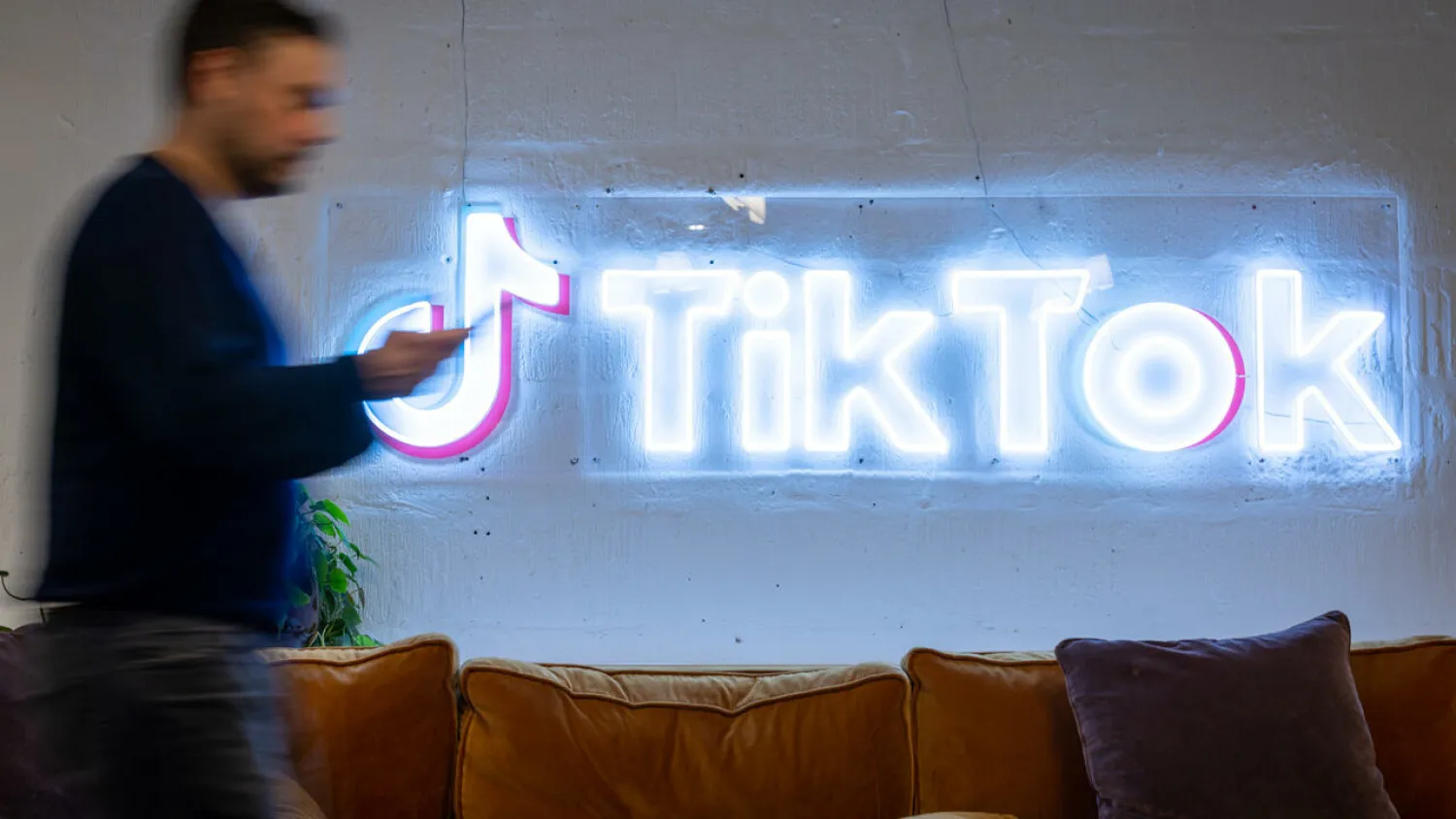

TikTok Search Results Rife with Misinformation

Bogus Covid-19 remedies and debunked conspiracy theories are among the misinformation NewsGuard researchers say they found in top search results at TikTok. Tolga Akmen AFP
TT

TikTok Search Results Rife with Misinformation

Bogus Covid-19 remedies and debunked conspiracy theories are among the misinformation NewsGuard researchers say they found in top search results at TikTok. Tolga Akmen AFP

TikTok is serving up misinformation to users searching for news about politics, climate change, Covid-19, the war in Ukraine and more, according to a report released Wednesday.

Toxicity and false claims are a "significant threat" at TikTok, which is becoming a go-to online venue for young people to search for information, according to a study by NewsGuard, a media watchdog, AFP said.

NewsGuard describes itself as a "journalism and technology tool" that rates the credibility of websites and online information.

"Even when TikTok's search results yielded little to no misinformation, the results were often more polarizing than Google's," NewsGuard said of its findings.

NewsGuard in September analyzed the top 20 results from 27 TikTok searches on news topics, finding that 19.5 percent of the videos suggested contained false or misleading claims, the report stated.

Researchers said that they compared TikTok and Google results from searches for information about school shootings, abortion, Covid-19, US elections, Russia's war on the Ukraine and other news.

False or misleading claims in results included conspiracy theories promoted by QAnon and supposed home recipes for hydroxychloroquine, a prescription drug used to treat malaria and lupus, according to NewsGuard.

TikTok says the methodology used in the analysis is flawed, and that it makes a priority of fighting misinformation.

"Our Community Guidelines make clear that we do not allow harmful misinformation, including medical misinformation, and we will remove it from the platform," a TikTok spokesperson said in response to an AFP inquiry.

"We partner with credible voices to elevate authoritative content on topics related to public health, and partner with independent fact-checkers who help us to assess the accuracy of content."

While testifying Wednesday at a Senate hearing on social media's impact on national security, Twitter former senior vice president of engineering Alex Roetter said that the Chinese government is an investor in TikTok parent company Bytedance, and that it has incentives to maximize profit and user engagement.

"The TikTok algorithm pushes educational science, engineering, and math content on Chinese youth while pushing a feed containing twerking videos, misinformation, and other destructive content to US children," Roetter told Senators.

Social media companies stand to benefit from attention-grabbing online content despite harmful effects it may have on society, Roetter said in opening remarks.

"Our terms of service and community guidelines are built to help ensure our vision of a safe and authentic experience," TikTok chief operating officer Vanessa Pappas said at the hearing.

"Our policies have zero tolerance for disinformation, violent extremism and hateful behavior."


Musk Launches 'Terafab' Project to Make Own AI Chips

(FILES) CEO of SpaceX and Tesla, South African-Canadian-US businessman Elon Musk speaks during the World Economic Forum (WEF) annual meeting in Davos on January 22, 2026. (Photo by Fabrice COFFRINI / AFP)
TT

Musk Launches 'Terafab' Project to Make Own AI Chips

(FILES) CEO of SpaceX and Tesla, South African-Canadian-US businessman Elon Musk speaks during the World Economic Forum (WEF) annual meeting in Davos on January 22, 2026. (Photo by Fabrice COFFRINI / AFP)

Elon Musk announced Saturday a plan to make chips for artificial intelligence, robotics and data centers in space, in the latest bold project by the world's richest person.

The "Terafab", a manufacturing facility based near Austin, Texas, will aim to produce one terawatt of computing power per year, Musk said.

A terawatt is equivalent to one trillion watts. That is slightly less than the total power generation capacity of the United States, according to an industry group.

Musk said the project would be run jointly by his electric-vehicle firm Tesla and his rocket company SpaceX.

He did not disclose the initial investment. Previous US media reports have put the figure between $20 billion and $25 billion, AFP said.

Musk, who has no prior experience in semiconductors, said the Terafab was necessary because Tesla and SpaceX's demand for computing power was expected to far exceed that of global chip suppliers.

"We're very grateful to our existing supply chain, to Samsung, TSMC, Micron, and others... but there's a maximum rate at which they're comfortable expanding," Musk said.

"That rate is much less than we would like... and we need the chips, so we're going to build the Terafab."

An "advanced technology fab" in Austin will have the facilities to design, manufacture, test and improve each chip, Musk said.

Eventually, the project aims to make chips to support 100 to 200 gigawatts of computing power on Earth, and a terawatt in space.

Musk did not give a timeline for the Terafab's output, and has previously promised grand results from other projects on compressed time scales.

He said the Terafab would ultimately help humanity become a "galactic civilization" capable of harnessing the resources of other planets and stars.


Tencent Integrates WeChat with OpenClaw AI Agent Amid China Tech Battle

FILE PHOTO: Tencent's logo is displayed at its booth at the China International Fair for Trade in Services (CIFTIS) in Beijing, China, September 11, 2025. REUTERS/Maxim Shemetov/File Photo
TT

Tencent Integrates WeChat with OpenClaw AI Agent Amid China Tech Battle

FILE PHOTO: Tencent's logo is displayed at its booth at the China International Fair for Trade in Services (CIFTIS) in Beijing, China, September 11, 2025. REUTERS/Maxim Shemetov/File Photo

Tencent launched a tool on Sunday to integrate its WeChat messaging platform with the OpenClaw agent, deepening its push into AI agents that have become a key battleground among China's technology companies.

The software, called ClawBot, will appear as a contact within WeChat, allowing users of China's most popular app with over 1 billion monthly active users to connect directly ⁠with OpenClaw, Reuters reported.

Users can send ⁠and receive commands to interact with the AI agent through the messaging interface.

The integration comes as OpenClaw, an open-source AI agent that can perform tasks such as transferring files and ⁠sending emails on users' behalf, has gained traction in recent weeks.

Users have rushed to install and experiment with agent products, prompting tech firms to explore business opportunities even as authorities warn of security risks.

Tencent's WeChat integration follows the company's launch earlier this month of its own AI agent suite, comprising QClaw for individual ⁠users, ⁠Lighthouse for developers and WorkBuddy for enterprises.

Last week, Alibaba launched Wukong, an artificial intelligence platform for enterprises that coordinates multiple AI agents to handle complex business tasks including document editing and meeting transcription within a single interface.

Baidu quickly followed with a series of AI agents built on OpenClaw, spanning desktop software, cloud services, mobile tools and smart-home devices.


OpenAI to Introduce Ads to All ChatGPT Free and Go Users in US

The ChatGPT app icon on a smartphone in this illustration taken October 27, 2025. (Reuters)
TT

OpenAI to Introduce Ads to All ChatGPT Free and Go Users in US

The ChatGPT app icon on a smartphone in this illustration taken October 27, 2025. (Reuters)

OpenAI will begin showing ads to all users of the free and Go versions of ChatGPT in the United States in the coming weeks, a company spokesperson said in an emailed statement to Reuters.

The move was ‌first reported ‌by The Information.

OpenAI has ‌recently ⁠integrated Criteo, an ⁠advertising technology firm that provides an interface for buying ads and improving targeting, into its advertising pilot for the free and Go versions of ChatGPT in ⁠the US, Criteo said in ‌a statement earlier ‌this month.

Criteo has been pitching advertisers ‌on committing between $50,000 and $100,000 ‌in spending, according to The Information.

OpenAI has also advised advertisers that supplying more variations of ad text and ‌visuals can increase how often ads are shown and improve ⁠performance, ⁠the Information added.

OpenAI has been exploring advertising as a new revenue stream as usage of ChatGPT has surged, Reuters has reported.

The company is seeking to diversify revenue as it faces rising costs for computing infrastructure amid intensifying competition in generative AI.
