World's 1st Space Tourist Signs Up for Flight Around Moon


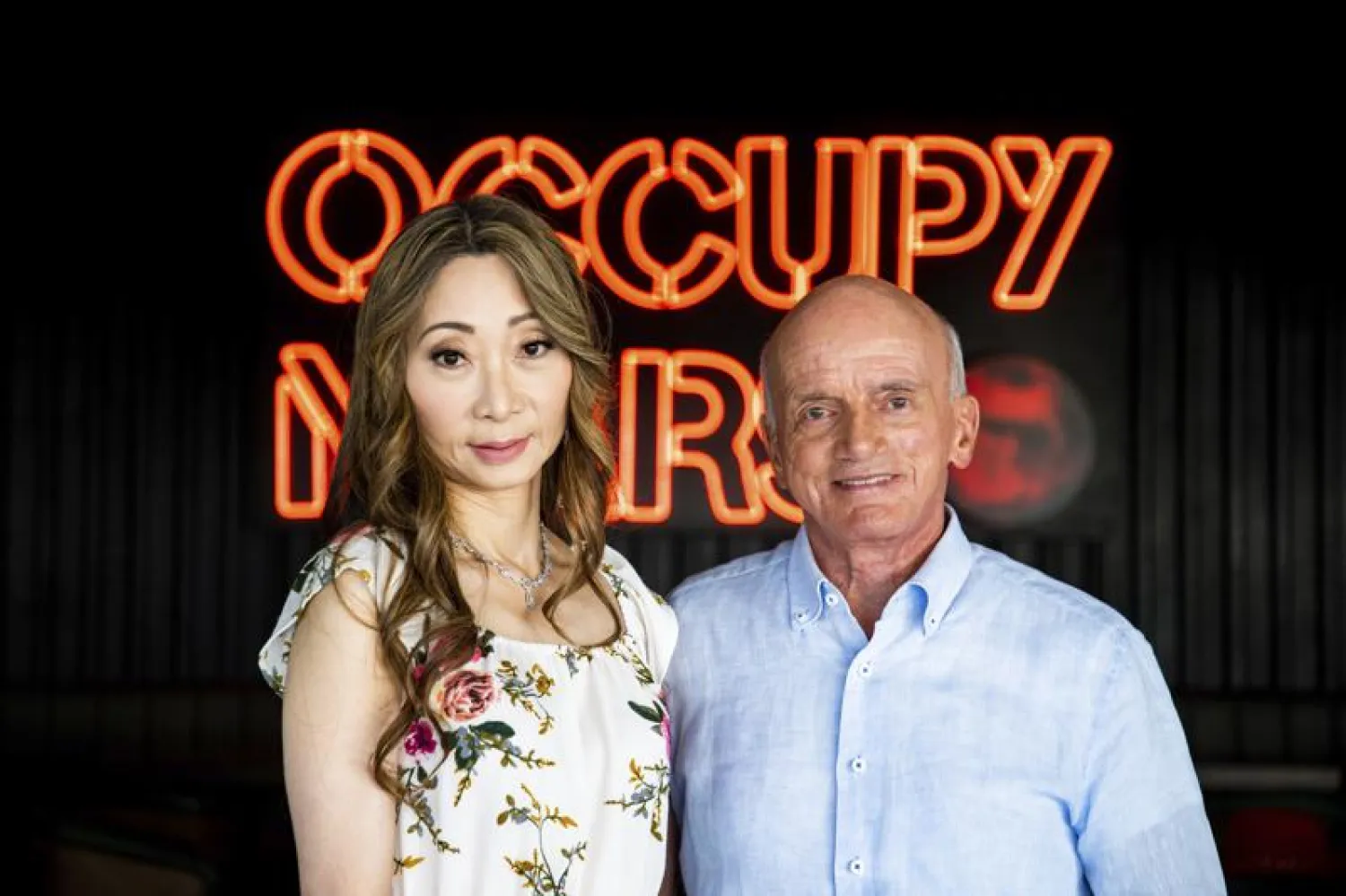
This photo provided by SpaceX photo shows Dennis Tito and his wife, Akiko, at the company’s Starship rocket base near Boca Chica, Texas, on Monday, Oct. 10, 2022. The couple has booked a flight to the moon on SpaceX’s Starship. (SpaceX via AP)
TT

World's 1st Space Tourist Signs Up for Flight Around Moon


This photo provided by SpaceX photo shows Dennis Tito and his wife, Akiko, at the company’s Starship rocket base near Boca Chica, Texas, on Monday, Oct. 10, 2022. The couple has booked a flight to the moon on SpaceX’s Starship. (SpaceX via AP)

The world's first space tourist wants to go back — only this time, he’s signed up for a spin around the moon aboard Elon Musk’s Starship.

For Dennis Tito, 82, it’s a chance to relive the joy of his trip to the International Space Station, now that he's retired with time on his hands. He isn't interested in hopping on a 10-minute flight to the edge of space or repeating what he did 21 years ago. “Been there, done that.”

His weeklong moonshot — its date to be determined and years in the future — will bring him within 125 miles (200 kilometers) of the lunar far side. He'll have company: his wife, Akiko, and 10 others willing to shell out big bucks for the ride.

Tito won’t say how much he’s paying; his Russian station flight cost $20 million.

The couple recognize there's a lot of testing and development still ahead for Starship, a shiny, bullet-shaped behemoth that's yet to even attempt to reach space.

“We have to keep healthy for as many years as it’s going to take for SpaceX to complete this vehicle,” Tito said in an interview this week with The Associated Press. “I might be sitting in a rocking chair, not doing any good exercise, if it wasn’t for this mission.”

Tito is actually the second billionaire to make a Starship reservation for a flight around the moon. Japanese fashion tycoon Yusaku Maezawa announced in 2018 he was buying an entire flight so he could take eight or so others with him, preferably artists. The two men both flew to the space station, from Kazakhstan atop Russian rockets, 20 years apart.

Tito kicked off space tourism in 2001, becoming the first person to pay his own way to space and antagonizing NASA in the process. The U.S. space agency didn’t want a sightseer hanging around while the station was being built. But the Russian Space Agency needed the cash and, with the help of US-based Space Adventures, launched a string of wealthy clients to the station through the 2000s and, just a year ago, Maezawa.

Well-heeled customers are sampling briefer tastes of space with Jeff Bezos’ Blue Origin rocket company. Richard Branson’s Virgin Galactic expects to take paying passengers next year.

Starship has yet to launch atop a Super Heavy booster from the southern tip of Texas, near the Mexican border. At 394 feet (120 meters) and 17 million pounds (7.7 million kilograms) of liftoff thrust, it’s the biggest and most powerful rocket ever built. NASA already has contracted for a Starship to land its astronauts on the moon in 2025 or so, in the first lunar touchdown since Apollo.


Saudi Reef: Coffee Production Reaches 7,400 Tons in 2026

The program also provides specialized training in organic farming, pest control, modern irrigation, and coffee cultivation - SPA
TT

Saudi Reef: Coffee Production Reaches 7,400 Tons in 2026

The program also provides specialized training in organic farming, pest control, modern irrigation, and coffee cultivation - SPA

The Sustainable Agricultural Rural Development Program (Saudi Reef) reported that Saudi coffee production rose from 800 tons annually in 2020 to approximately 7,400 tons in 2026, an increase of more than 825%, supporting Saudi Vision 2030 objectives.

Saudi Reef spokesperson Majed Al-Buraikan said the number of beneficiaries in the coffee sector exceeded 6,200 in 2026, up 207% from 2021, while total support surpassed SAR 185 million, SPA reported.

The funding supports small-scale producers, agricultural investment, and coffee value chains.

Al-Buraikan said approximately 4.4 million coffee seedlings are expected to raise production to more than 20,000 tons at full capacity.

The program also provides specialized training in organic farming, pest control, modern irrigation, and coffee cultivation.

Development efforts included producing 1,000 improved cuttings to enhance varieties and productivity, agricultural projects involving 8,000 coffee seedlings, and cultivation trials at 12 sites to expand cultivation and improve yields, quality, and sustainability.

The program’s 2026 targets included increasing annual production to 7,000 tons and raising self-sufficiency from 0.5% to 4.4%. Actual production exceeded the target, reaching 7,400 tons.


KAUST Unveils Landmark Coral Facility on Red Sea, Advancing Saudi Scientific Expertise and Marine Conservation

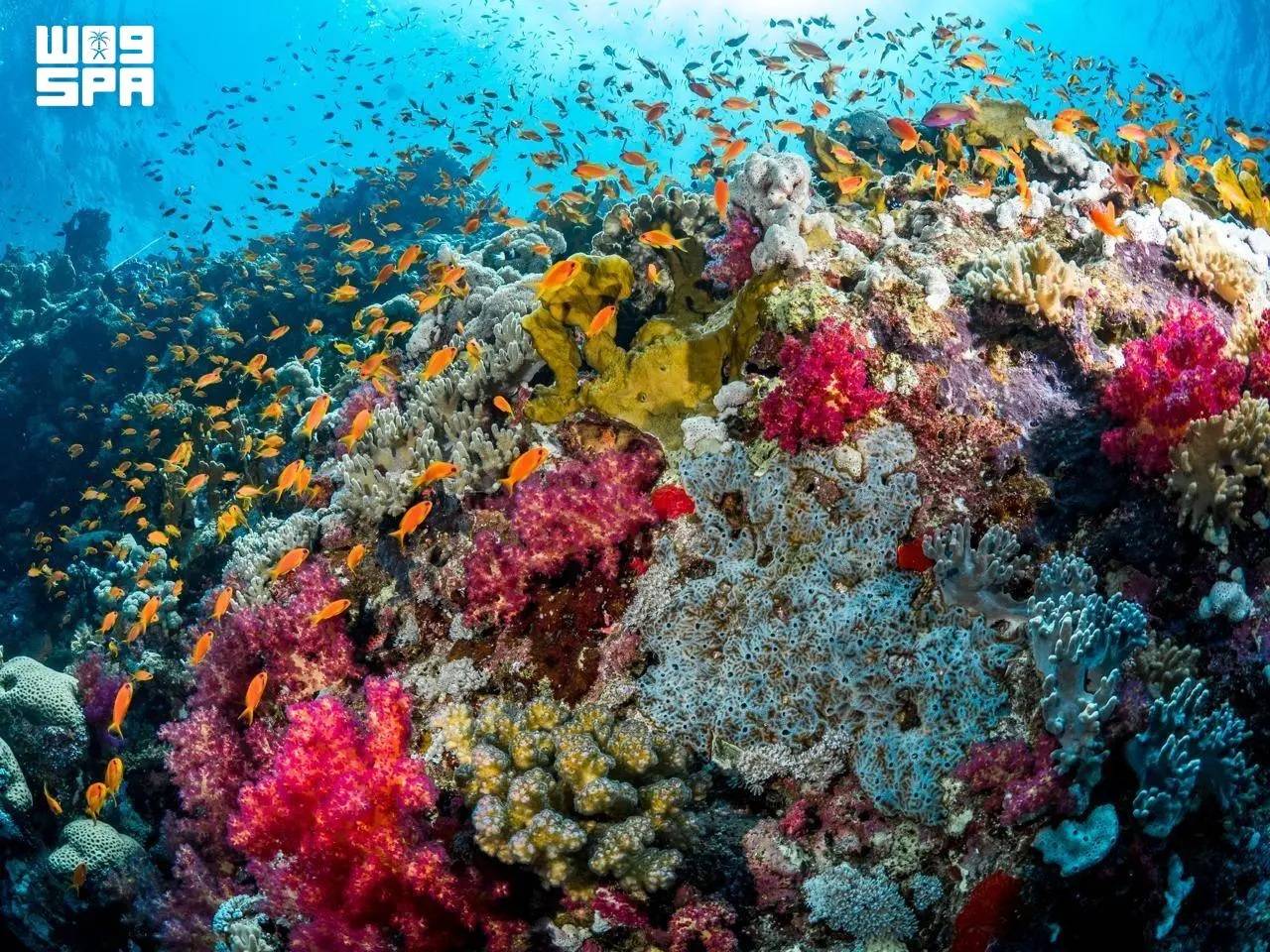
KCRI is designed to restore the Red Sea reefscape and offer a framework that coral restoration programs worldwide can adopt. (SPA)
TT

KAUST Unveils Landmark Coral Facility on Red Sea, Advancing Saudi Scientific Expertise and Marine Conservation

KCRI is designed to restore the Red Sea reefscape and offer a framework that coral restoration programs worldwide can adopt. (SPA)

The King Abdullah University of Science and Technology (KAUST) launched the KAUST Coral Restoration Initiative’s large-scale coral facility, restoring and advancing one of Saudi Arabia’s most precious natural assets, reported the Saudi Press Agency on Wednesday.

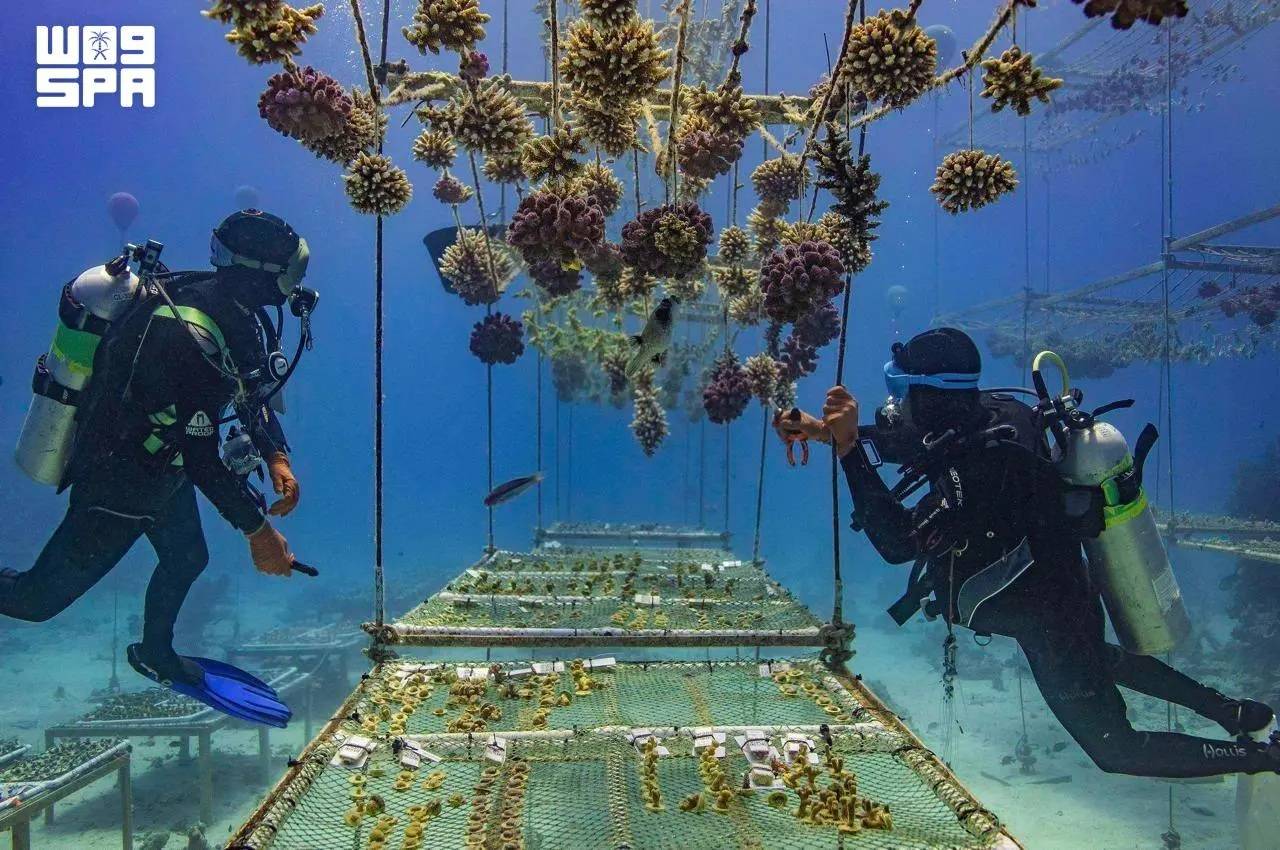
On Saudi Arabia’s Red Sea coast, the KAUST Coral Restoration Initiative (KCRI) land-based nursery and research campus is now growing corals at scale. It is designed to produce up to 360,000 corals a year, to outplant more than two million corals across 100 hectares of reef at Shushah Island by 2030, and to establish a resilient reef ecosystem by 2040.

This opening of the world’s largest coral restoration facility, announced at COP31 in Antalya, arrives at a moment of acute urgency for the world’s reefs. The fourth global coral bleaching event, confirmed by NOAA as the most severe in recorded history, affected more than 84% of the world’s reef area between 2023 and 2025.

Coral reefs support around a quarter of all marine species, protect coastlines from storms and sustain the livelihoods of more than 500 million people. (SPA)

The Red Sea is the right place to start. Its corals live in some of the warmest, saltiest waters on Earth, and they hold lessons about resilience that reefs everywhere will need. KCRI combines the Red Sea’s unique corals with KAUST’s world-class marine science to learn how corals can be grown at scale and conditioned to withstand warmer water before they return to the reef.

The initiative also draws on the expertise of the Coral Research and Development Accelerator Platform (CORDAP), which works internationally to accelerate scientific and technological solutions for coral reef conservation and restoration.

KCRI brings four components together in a single restoration system, including a large-scale land-based coral nursery, sea-based nurseries, more than 50 research programs spanning coral probiotics, heat-resilient corals, robotics and AI-driven modelling and eCoral, an AI-driven digital twin of the reefscape that guides where and how every coral is planted and monitored.

Saudi scientists, divers and aquarists are playing an important role in KCRI’s restoration efforts, developing specialist expertise in coral cultivation, marine science and reef restoration. (SPA)

Saudi scientists, divers and aquarists are playing an important role in KCRI’s restoration efforts, developing specialist expertise in coral cultivation, marine science and reef restoration. Beyond its restoration activities, KCRI represents a long-term investment in Saudi Arabia’s marine science capabilities.

Coral reefs support around a quarter of all marine species, protect coastlines from storms and sustain the livelihoods of more than 500 million people. KCRI is designed to restore the Red Sea reefscape and offer a framework that coral restoration programs worldwide can adopt.

KAUST is also working with international partners on how coral diversity can be safeguarded for future generations.


Portugal Closes All Schools and Non-Essential Services Ahead of a Major Atlantic Storm

Heavy machinery clears the debris from a landslide along the Marocos road in Machico municipality, on the Portuguese island of Madeira, due to severe weather caused by the passage of Storm Charles, 11 November 2026. (EPA)
TT

Portugal Closes All Schools and Non-Essential Services Ahead of a Major Atlantic Storm

Heavy machinery clears the debris from a landslide along the Marocos road in Machico municipality, on the Portuguese island of Madeira, due to severe weather caused by the passage of Storm Charles, 11 November 2026. (EPA)

Portugal closed all schools and shuttered non-essential public services on Wednesday as a major Atlantic storm headed for the country's mainland.

Streets remained largely deserted ahead of the arrival of Storm Charles after the government told people to stay at home as heavy rain and rough seas were expected to batter the Portuguese coast, with wind gusts of up to 140 kph (85 mph).

It was the first time in living memory that Portugal’s roughly 8,000 schools had canceled classes nationwide over a storm forecast.

Buses without passengers drove through the country's capital, Lisbon, where some streets flooded due to clogged drains. A national supermarket chain closed its stores, while an international technology conference in Lisbon attended by around 70,000 people called off the day's events.

In January, the country's center-right government faced harsh criticism for its weak response when Storm Kristin hit central Portugal, felling thousands of trees and causing widespread property damage that is still being repaired.

The brunt of Storm Charles was expected to hit the Atlantic coast on Wednesday afternoon and evening, coming from the southwest after it had struck the Portuguese island of Madeira on Tuesday with 130 kph (81 mph) winds.