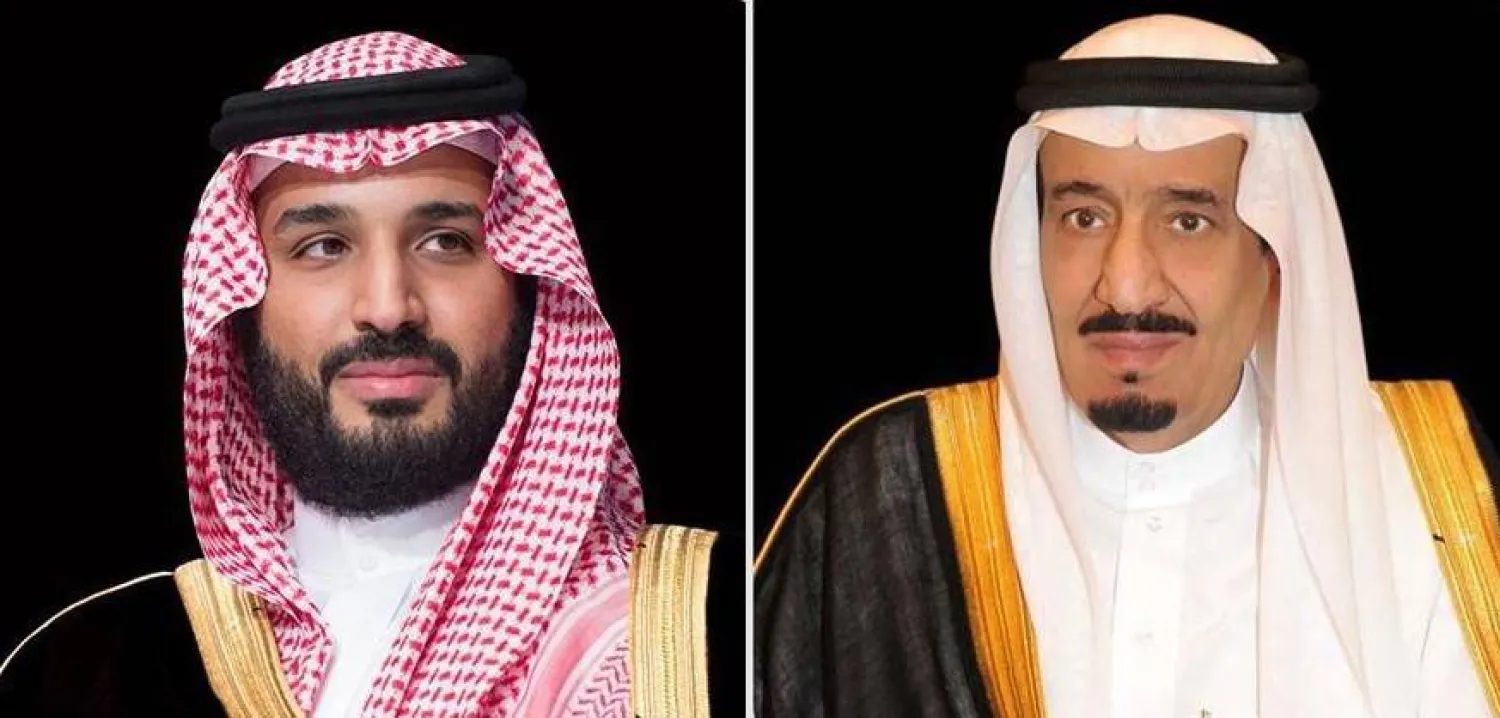
Saudi Crown Prince Announces 2nd Edition of Middle East Green Initiative at COP27

Family photo of participants at the first Middle East Green Initiative (KUNA)
TT

Saudi Crown Prince Announces 2nd Edition of Middle East Green Initiative at COP27

Family photo of participants at the first Middle East Green Initiative (KUNA)

Saudi Crown Prince Mohammad bin Salman bin Abdulaziz announced the second edition of the Middle East Green Initiative (MGI) Summit on Nov. 7 and the Saudi Green Initiative (SGI) Forum on Nov. 11 and 12, under the theme "From Ambition to Action," at the COP 27 in Sharm El-Sheikh in Egypt.

Crown Prince Mohammed bin Salman thanked Egyptian President Abdel Fattah el-Sisi and his country's government for hosting the two events, coinciding with the UN Climate Change Conference (COP27).

He said COP27 is an event bringing nations from around the world together under one roof to advance global climate ambitions by inspiring joint activity at the local, regional, and international levels.

He indicated that Saudi Arabia and Egypt believe in the importance of collaborative action to address the environmental and climate challenges facing the region and the world.

After the success of the first edition of the MGI, which was hosted by the Saudi capital, Riyadh, last October, the second edition shed light on the vital climate challenges facing the Middle East and North Africa Region, ensuring regional priorities are placed on the global stage.

The MGI Summit is a strategic regional platform that promotes cross-border cooperation, knowledge exchange, and discussion between Heads of State, relevant government ministers, and policymakers. The first-of-its-kind summit contributes to accelerating the transition towards a green economy and building a more sustainable future for future generations.

This year's event will also bring together a group of speakers, experts, and thought leaders to discuss the progress in implementing the initiatives previously announced by Saudi Arabia to confront climate change.

The Crown Prince launched the two initiatives last year to enhance Saudi environmental challenges facing the country and the region, including high temperatures, low rainfall, dust storms, and desertification.

The launch of MGI and SGI also reflects the Kingdom's commitment to advancing public health and improving the standard of living for its citizens and residents.

The Saudi Green Initiative is an ambitious national initiative to improve the quality of life and protect future generations by accelerating green transformation, reducing and eliminating emissions, and addressing climate change.

The initiative is a natural extension of Vision 2030, as it works on including all segments of society in drawing a green future by activating the role of the public and private sectors and enabling citizens to contribute to achieving ambitious national goals.

Specialists believe that the inclusion of all the society will accelerate the expansion of climate action in Saudi Arabia and create a positive impact, based on three ambitious goals derived from the country's national ambition of achieving net zero emissions by 2060 through a Carbon Circular Economy model.

In light of rising temperatures, the Kingdom is facing a set of negative impacts, such as desertification, dust storms, and the scarcity of fresh water.

As a global energy producer, Saudi Arabia affirmed its commitment to expanding climate action while maintaining economic and social development and its keenness to be an active partner in international efforts to address climate change.

Saudi Arabia has also indicated on many occasions that it rejects the "misguided" choice between preserving the economy or protecting the environment, stressing that the transition to net zero emissions is taking place in a way that keeps its leading role in enhancing the security and stability of global energy markets.

Under the Saudi Green Initiative, the Kingdom aims to plant ten billion trees across Saudi Arabia in the coming decades, raising the percentage of protected areas to 30 percent of the total areas of Saudi Arabia and reducing carbon emissions by 278 million tons annually 2030.

The national goals contribute to achieving regional targets set out by the Kingdom at the MGI Summit. These focus on reducing regional carbon emissions by more than 10% of global contributions and planting 50 billion trees across the region as part of the world's most extensive afforestation program.

Environmental expert and head of the Friends of the Environment Association, Professor Abdullah al-Fahd, considered that through the adoption of MGI and SGI and the diversity of its internal and regional projects, Saudi Arabia leads environmental extreme and climate action globally.

Speaking to Asharq Al-Awsat, Fahd stated that the two initiatives are among the most extensive environmental projects in the world, especially with their impact on local, regional, and international levels.

He praised the involvement of all public and private sectors and civil society in addition to schools and universities, which indicates their understanding of the importance of the environmental and climate action strategy and its repercussions on many levels.

Fahd revealed that since Vision 2030, vegetation cover and protected areas have increased, considering the rise in awareness among the most significant gains of the two initiatives and the previously implemented vision programs.

He explained that their impact is continuous and widespread, which is reflected in the regrowth of vegetation cover in many areas across the country, including extinct trees, adding that it was possible with the support of environmental associations, the Ministry of Environment, Water, and Agriculture, and the National Center for Vegetation Cover Development and Combating Desertification.

The second editions of the Middle East Green Initiative Summit and the Saudi Green Initiative Forum are receiving unparalleled attention from regional leaders, international organizations, and bodies specialized in environment and climate affairs.

Several leaders and top officials participated in the first edition.


Saudi, Omani FMs Discuss Regional Developments

Saudi Minister of Foreign Affairs Prince Faisal bin Farhan bin Abdullah meets with his Omani counterpart Badr bin Hamad bin Hamood Albusaidi in Riyadh on Wednesday. (SPA)
TT

Saudi, Omani FMs Discuss Regional Developments

Saudi Minister of Foreign Affairs Prince Faisal bin Farhan bin Abdullah meets with his Omani counterpart Badr bin Hamad bin Hamood Albusaidi in Riyadh on Wednesday. (SPA)

Saudi Minister of Foreign Affairs Prince Faisal bin Farhan bin Abdullah received in Riyadh on Wednesday his Omani counterpart Badr bin Hamad bin Hamood Albusaidi.

They reviewed the strong bilateral relations between their countries and ways to boost them across various fields.

They also addressed the latest developments in the region and the importance of continuing efforts to achieve security and stability.


OIC Condemns Israeli Decision to Ban 37 Aid Groups from Operating in Gaza

 The sun sets over a tent camp sheltering Palestinians displaced by the Israeli offensive, on New Year’ Eve in Khan Younis, southern Gaza Strip, December 31, 2025. (Reuters)
The sun sets over a tent camp sheltering Palestinians displaced by the Israeli offensive, on New Year’ Eve in Khan Younis, southern Gaza Strip, December 31, 2025. (Reuters)
TT

OIC Condemns Israeli Decision to Ban 37 Aid Groups from Operating in Gaza

 The sun sets over a tent camp sheltering Palestinians displaced by the Israeli offensive, on New Year’ Eve in Khan Younis, southern Gaza Strip, December 31, 2025. (Reuters)
The sun sets over a tent camp sheltering Palestinians displaced by the Israeli offensive, on New Year’ Eve in Khan Younis, southern Gaza Strip, December 31, 2025. (Reuters)

The General Secretariat of the Organization of Islamic Cooperation (OIC) strongly condemned on Wednesday Israel’s decision to prevent 37 international non-governmental organizations operating in the humanitarian and health sectors from carrying out their activities in Gaza.

The Secretariat stressed that these organizations “play an indispensable role in alleviating humanitarian suffering in Gaza.”

The OIC General Secretariat “warned of the grave consequences of this arbitrary measure, which is likely to dangerously exacerbate the catastrophic humanitarian situation in the Gaza Strip due to Israeli restrictions that hinder the entry of sufficient humanitarian and medical aid.”

It deemed the Israeli decision as “illegal and a “blatant violation of the principles of international humanitarian law and the advisory opinion of the International Court of Justice, which obliges the Israel to facilitate the work of international and humanitarian organizations and to allow the adequate and unhindered delivery of humanitarian assistance to the Gaza Strip.”

The OIC General Secretariat called on the international community “to take the necessary measures and exert effective pressure on Israeli authorities to reverse this decision, ensure the protection of humanitarian workers, and guarantee the freedom of humanitarian organizations to operate without restriction throughout the occupied Palestinian territory.”


Gulf Countries, OIC Say Security of Saudi Arabia and GCC States Integral to Region

A general view of Kuwait City buildings, Kuwait, December 23, 2024. (Reuters)
TT

Gulf Countries, OIC Say Security of Saudi Arabia and GCC States Integral to Region

A general view of Kuwait City buildings, Kuwait, December 23, 2024. (Reuters)

Qatar announced that it is following with great interest the ongoing developments and events in Yemen, reiterating its full support for the legitimate Yemeni government and the importance of preserving Yemen’s unity and territorial integrity, safeguarding the interests of the brotherly Yemeni people, and achieving their aspirations for security, stability, and development.

In a statement, the Qatari Ministry of Foreign Affairs stressed that the security of Saudi Arabia and the Gulf Cooperation Council states is integral to the security of Qatar, stemming from the deep-rooted brotherly ties and shared destiny that unite the GCC countries.

The ministry commended the statements issued by Saudi Arabia and the United Arab Emirates, noting that they reflect a commitment to prioritizing the region’s interests, boosting the principles of good neighborliness, and adhering to the foundations and principles enshrined in the Charter of the Gulf Cooperation Council.

Qatar will remain at the forefront of countries supporting efforts to promote dialogue and diplomacy as the optimal path to achieving prosperity, security, and stability for the region and its peoples, stressed the ministry.

Kuwait's foreign ministry issued a similar statement, saying the security of Saudi Arabia and GCC states is a fundamental pillar of Gulf collective security, rooted in the bonds of brotherhood and shared destiny among them.

It expressed continued support for regional and international efforts aimed at promoting dialogue and peace, emphasizing diplomacy as the most effective path to achieving security, stability, and lasting peace in the region.

Bahrain, chair of the current session of the GCC, praised the “pivotal role played by Saudi Arabia and the United Arab Emirates in supporting the security and stability of Yemen, stemming from their brotherly responsibilities and shared commitment to the security and stability of the Gulf region within the GCC framework.” 

The Bahraini Ministry of Foreign Affairs stressed its “confidence in the wisdom of the leaderships of Saudi Arabia and the UAE, and in their ability to contain any differences within the framework of the GCC, in line with the principles of the GCC based on solidarity, mutual understanding, and unity, serving the shared aspirations to instill security, stability, peace, and prosperity for the benefit of the region and its peoples.” 

The ministry reiterated Bahrain’s “firm and supportive stance toward all regional and international initiatives and efforts aimed at reaching a comprehensive and lasting political solution in Yemen, in accordance with the GCC initiative and its executive mechanism, the outcomes of the Comprehensive National Dialogue Conference, and relevant UN Security Council resolutions.” 

Jordan also praised Saudi Arabia and the UAE's roles in supporting Yemen.

OIC

Secretary-General of the Organization of Islamic Cooperation (OIC) Hissein Brahim Taha underlined the organization’s firm stance in support of Yemen, its sovereignty, unity, and territorial integrity.  

He reiterated the OIC’s categorical rejection of any actions or attempts that would undermine Yemen’s unity or compromise its constitutional legitimacy and national institutions, in light of recent developments in the country. 

He renewed the OIC’s full support for the legitimate Yemeni government, represented by the President of the Presidential Leadership Council. He stressed the importance of preserving and strengthening state institutions in order to realize the Yemeni people’s aspirations for security, stability, and development. 

Taha condemned any actions or practices by the Southern Transitional Council that pose a direct threat to Yemen’s unity, undermine peace efforts, and prolong the conflict.  

“Any disruption to Yemen’s security and stability also threatens peace and security across the region,” he warned. 

He welcomed the announcement of the UAE’s withdrawal of forces from Yemen, describing it as a “constructive step that supports de-escalation efforts and spares the blood of the Yemeni people.” 

He further stressed that the security, sovereignty and territorial integrity of Saudi Arabia “constitute inviolable red lines.” 

“Any threat to the Kingdom’s security is a direct threat to the security of the entire region and the Islamic world,” Taha added, underscoring the OIC’s “full solidarity with Saudi Arabia in all measures taken to safeguard its national security.” 

He stressed “the need to continue supporting political and diplomatic efforts aimed at reaching a comprehensive and lasting solution to the Yemeni crisis.” 

He called on all Yemeni parties “to uphold legitimacy, renounce violence, and prioritize dialogue and the higher interests of Yemen and its people, in order to achieve security, stability, and development while preserving the country’s unity, sovereignty, and territorial integrity.”