


Elon Musk Takes over Twitter but Where Will He Go from Here?

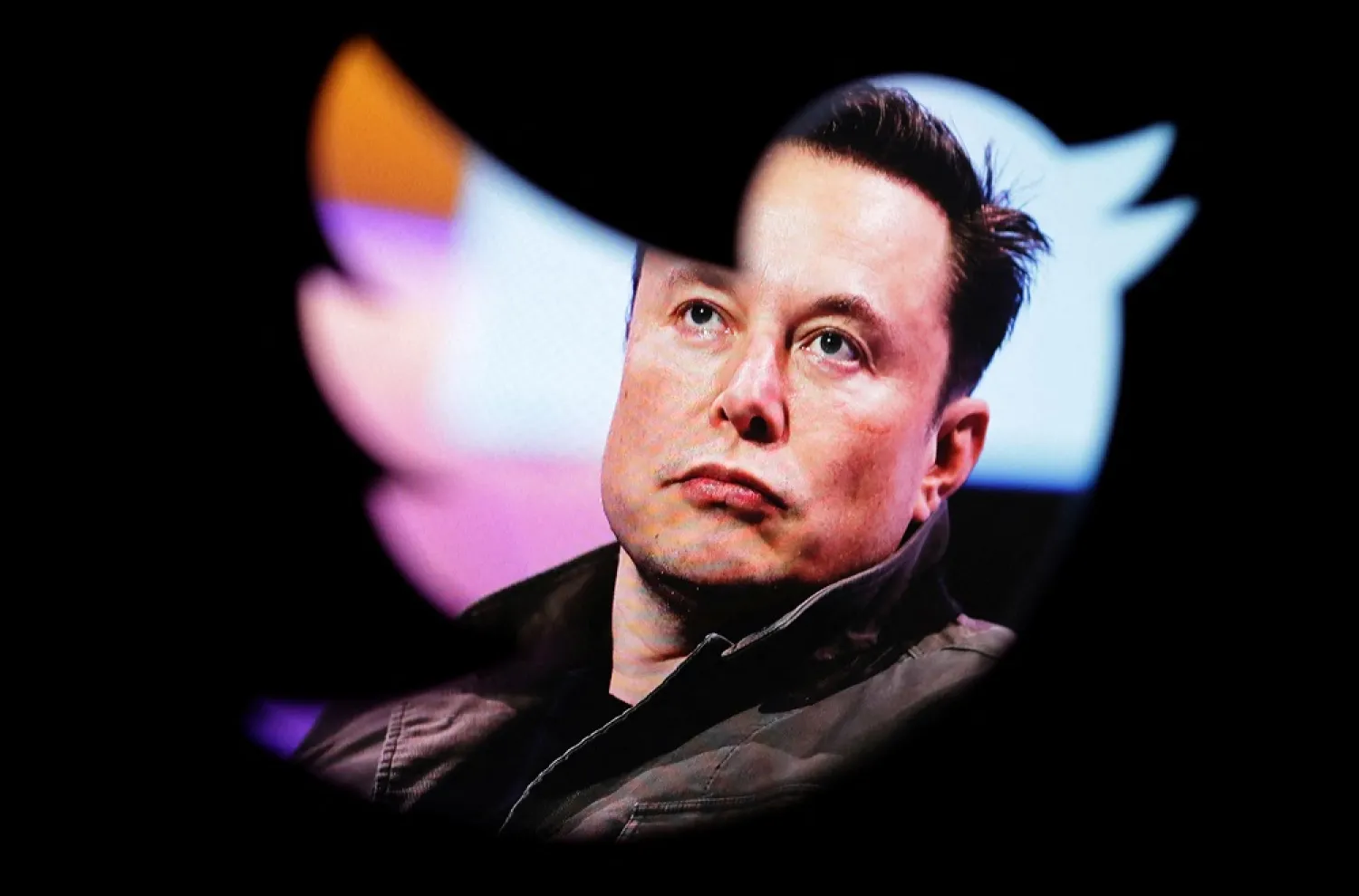
Elon Musk's photo is seen through a Twitter logo in this illustration taken October 28, 2022. (Reuters)
TT

Elon Musk Takes over Twitter but Where Will He Go from Here?

Elon Musk's photo is seen through a Twitter logo in this illustration taken October 28, 2022. (Reuters)

Elon Musk has taken control of Twitter after a protracted legal battle and months of uncertainty. The question now is what the billionaire Tesla CEO will actually do with the social media platform.

The $44 billion takeover means Twitter is becoming a private company that everyday investors will no longer be able to buy shares in. The New York Stock Exchange suspended trading in the company’s stock on Friday, and the shares will be delisted on Nov. 8, according to a filing with securities regulators.

Major personnel shakeups are widely expected — and Musk ousted three top Twitter executives on Thursday, according to two people familiar with the deal. But the tech guru and self-proclaimed “Chief Twit” has otherwise made contradictory statements about his vision for the company — and shared few concrete plans for how he will run it.

That has left Twitter's users, advertisers and employees to parse his every move in an effort to guess where he might take the company. Many are looking to see if he will welcome back a number of influential conservative figures banned for violating Twitter’s rules — speculation that is only heightened by upcoming elections in Brazil, the US and elsewhere.

“I will be digging in more today,” he tweeted early Friday, in response to a conservative political podcaster who has complained that the platform favors liberals and secretively downgrades conservative voices.

Former President Donald Trump, an avid tweeter before he was banned, said Friday he was “very happy that Twitter is now in sane hands” but promoted his own social media site, Truth Social, that he launched after being blocked from the more widely used platform.

Trump was banned two days after the Jan. 6 attacks for a pair of tweets that the company said continued to cast doubts on the legitimacy of the presidential election and raised risks for the presidential inauguration that Trump said he would not be attending.

Trump has repeatedly said that he will not return to Twitter even if his account is reinstated, though some allies wonder if he’ll be able to resist as he moves closer to announcing another expected presidential campaign. His Twitter account remained suspended Friday.

Meanwhile, conservative personalities on the site began recirculating long-debunked conspiracy theories, including about COVID-19 and the 2020 election, in a tongue-in-cheek attempt to “test” whether Twitter’s policies on misinformation were still being enforced.

The mercurial Musk has not made it easy to anticipate him.

He has criticized Twitter’s dependence on advertisers, but made a statement Thursday that seemed aimed at soothing their fears. He has complained about restrictions on speech on the platform — but then vowed he wouldn’t let it become a “hellscape.” And for months it wasn’t even clear if he wanted to control the company at all.

After Musk signed a deal to acquire Twitter in April, he tried to back out of it, leading the company to sue him to force him to go through with the acquisition. A Delaware judge had ordered that the deal be finalized by Friday.

Wedbush analyst Dan Ives estimated that Musk and his investors overpaid. Even Musk has said the $44 billion price tag for Twitter was too high but that the company had great potential.

The payment “will go down as one of the most overpaid tech acquisitions in the history of M&A deals on the Street, in our opinion,” Ives wrote in a note to investors. “With fair value that we would peg at roughly $25 billion, Musk buying Twitter remains a major head scratcher that ultimately he could not get out of once the Delaware Courts got involved.”

After months of uncertainty, a series of moves by Musk this week signaled that the deal would in fact go through.

On Wednesday, he strolled into the company’s San Francisco headquarters carrying a porcelain sink and tweeted “Entering Twitter HQ — let that sink in!” Then on Thursday, he tweeted, “the bird is freed,” a reference to Twitter’s logo.

That same day, the people familiar with the deal said Musk had fired CEO Parag Agrawal, CFO Ned Segal and Chief Legal Counsel Vijaya Gadde. Both people insisted on anonymity because of the sensitive nature of the deal. Segal confirmed his departure in a series of tweets Friday.

At the same time, Musk sought to assuage advertisers — Twitter’s chief source of revenue — that he didn’t want the platform to become a “free-for-all hellscape.” His letter was an attempt to address concerns that his plans to promote free speech by cutting back on moderating content will open the floodgates to more online toxicity and drive away users.

Musk has previously expressed distaste for advertising and Twitter’s dependence on it, suggesting more emphasis on other business models such as paid subscriptions that won’t allow big corporations to dictate policy on how social media operates. But on Thursday, he assured advertisers he wants Twitter to be “the most respected advertising platform in the world.”

As concerns rise about the direction of Twitter’s content moderation, European Union Internal Market Commissioner Thierry Breton tweeted to Musk on Friday that “In Europe, the bird will fly by our rules.”

Breton and Musk met in May and appeared in a video together in which Musk said he agreed with the 27-nation bloc’s strict new online regulations. Its Digital Services Act threatens big tech companies with billions in fines if they don’t police their platforms more strictly for illegal or harmful content such as hate speech and disinformation.

Musk has also spent months deriding Twitter’s “spam bots” and making sometimes conflicting pronouncements about Twitter’s problems and how to fix them.

Thursday’s note to advertisers shows a newfound emphasis on advertising revenue, especially a need for Twitter to provide more “relevant ads” — which typically means targeted ads that rely on collecting and analyzing users’ personal information.

Musk is expected to speak to Twitter employees directly Friday, according to an internal memo cited in several media outlets, amid internal confusion and low morale tied to fears of layoffs or a dismantling of the company's culture and operations.

AI Robot Cleaners Leave the Lab for China's Living Rooms

The service is a baby step towards a future in which robots increasingly take over manual labor from humans. WANG Zhao / AFP
TT

AI Robot Cleaners Leave the Lab for China's Living Rooms

The service is a baby step towards a future in which robots increasingly take over manual labor from humans. WANG Zhao / AFP

Beijing cleaner Lin Meiqiong found her work a little easier the day she was paired with an unlikely new colleague -- a tall, wheeled robot with AI-powered tidying skills.

The 56-year-old and her white-and-silver partner, fitted with cameras and two mechanical claws, are part of a new human-robot cleaning service offered by Chinese household help platform 58.com.

It's a baby step towards a future espoused by tech evangelists in which robots increasingly take over manual labor from humans -- though at the moment, such services are largely a data-gathering exercise for companies and a novelty for curious customers.

"It's definitely different," Lin told AFP in between cleaning the kitchen and wiping down windows.

"I used to have to do everything myself," she said. "It's reduced the workload a bit."

The cleaning service, a collaboration between 58.com and Chinese robotics company X Square, costs 149 yuan ($22) for three hours and is available in Beijing and tech hub Shenzhen.

Helped into the apartment by an X Square engineer, the AI-operated Quanta X1 Pro robot uses its cameras to identify areas it could spruce up.

As Lin scrubbed the floor on her knees, it picked up rubbish and folded clothes strewn across a sofa.

Grasping a pair of dark grey trousers, it raised its upper body to stretch the fabric taut, before laying it flat and arranging it into neat halves.

The process took several minutes and resembled a child learning to fold clothes for the first time.

Future iterations of the robot will respond to voice commands and even be able to chat, said the engineer, Hu Bowen.

- 'Better than a lab' -

Around 200 households have booked the service since it was rolled out in March.

Tan Pei, who works in advertising and booked the robot to clean her Beijing flat, said she had chosen the service because she was interested to "see what it could do".

"Even though it's not that perfect, there are still parts of it that surprised me," such as folding a pair of trousers "quite well", she said.

China's robots have wowed audiences with fluid dancing and set-piece martial arts displays onstage, but their application and performance in real-life settings remains limited.

For companies like X Square, the logic of launching an imperfect service lies in data collection for so-called embodied artificial intelligence.

Unlike large language models trained on vast quantities of internet content, robots lack comparable real-world datasets.

"We don't have a robot internet yet," Christoforos Mavrogiannis from the University of Michigan told AFP.

"It is much more informative to put the robot out there and study what happens than staying forever in the lab."

X Square engineer Hu said he sends his robots to work in a "completely unfamiliar environment".

"That is very challenging, but this unfamiliar data is also very helpful for the robot's growth."

As investment into embodied AI booms, similar trials in China include robots directing traffic in cities like Hangzhou or working on factory floors.

On the domestic help front, firm GigaAI also plans to deploy 100 humanoid robots into households in central Wuhan this autumn for free home-service trials.

Investors have poured more than 57.7 billion yuan ($8.5 billion) into China's embodied AI industry so far this year, already soaring past the total for last year as a whole, according to business database ITjuzi.

- 'Very elementary stage' -

But a myriad of hurdles stand in the way of widespread deployment.

As the Quanta X1 Pro's clothes folding demonstrated, robots still can't match human dexterity.

"Even though many companies are working on building better hands and building autonomy for hands, we don't have that yet," the University of Michigan's Mavrogiannis said.

There are multiple regulatory issues even once the physical capability is there.

Privacy will become a big issue, as robots would have access to huge amounts of personal data.

"We don't know where that data is going, where it's located... who is looking at that information," said Valeria Alessandra Macalupu Chira from Queensland University of Technology.

The safety of clients and their homes is another unresolved issue.

"I think we are still at a very elementary stage," said Yang Jianfei from Singapore's Nanyang Technological University.

Robots currently require supervision by humans who can activate emergency stop functions, he noted, and there are not yet recognized industry-wide safety standards.

Experts agree broad adoption seems a long way off.

Asked whether she thought robots would revolutionize her industry, cleaner Lin did not seem too concerned.

"Compared with people, it's obviously still not quite there," she said. "After all, it's a robot."


Saudi Arabia Participates in GPAI Paris Meeting for First Time as Member

Saudi Arabia Participates in GPAI Paris Meeting for First Time as Member
TT

Saudi Arabia Participates in GPAI Paris Meeting for First Time as Member

Saudi Arabia Participates in GPAI Paris Meeting for First Time as Member

Saudi Arabia, represented by the Saudi Data and Artificial Intelligence Authority (SDAIA), participated for the first time as a member of the Global Partnership on Artificial Intelligence (GPAI) during the partnership’s fifth plenary meeting, held at the Organization for Economic Co-operation and Development (OECD) headquarters in Paris from June 9–11, the Saudi Press Agency said on Thursday.

The event brought together member countries, experts, and AI policymakers from around the world to discuss the future of artificial intelligence and international cooperation in the field.

The Kingdom was represented at the meeting by Rehab Alarfaj, General Manager of Strategic Partnerships and Indices at SDAIA, who participated in sessions and discussions focused on AI governance, the implementation of the OECD AI Principles, and the future direction of the GPAI’s work.

Alarfaj stressed the importance of developing practical tools to translate AI principles into actionable, real-world applications. These tools should account for differences in national priorities and levels of institutional maturity among countries, while ensuring the principles remain globally consistent and locally applicable.


Meta Taps Reliance for 1st AI-enabled Data Center in India

The Meta logo is displayed on a mobile phone over a stock market graph displayed on a laptop screen in Liverpool, Britain, 09 June 2026. EPA/ADAM VAUGHAN
TT

Meta Taps Reliance for 1st AI-enabled Data Center in India

The Meta logo is displayed on a mobile phone over a stock market graph displayed on a laptop screen in Liverpool, Britain, 09 June 2026. EPA/ADAM VAUGHAN

Facebook-parent Meta and Indian conglomerate Reliance Industries on Wednesday announced a deal to develop an AI-enabled data center in the state of Gujarat, as the US tech giant scales its digital footprint globally.

The project, to be built in Jamnagar district, comes as technology giants race to expand computing capacity needed to support generative AI services in the world's fastest-growing major economy.

Reliance will develop a 168-megawatt data center to be delivered within two years, while Meta will lease capacity from the facility, the companies said in a joint statement.

According to AFP, the financial details of the agreement were not disclosed.

Meta chief Mark Zuckerberg said it was "proud" to partner with Reliance on its "first AI-enabled data center in India.”

"This world-class facility in Jamnagar will help us scale our AI infrastructure globally while deepening our long-term investment in India's economy," Zuckerberg said.

Reliance chairman Mukesh Ambani described the announcement as India's "first built-to-suit data center for a global technology leader of Meta's scale.”

India, home to more than a billion internet users, has seen a wave of investment announcements from global and domestic firms seeking to tap rising demand for cloud computing, artificial intelligence and data storage.

Google and Amazon have expanded their cloud infrastructure footprint in the country, while Indian conglomerates including Adani Group and Reliance have unveiled large-scale data center plans.

Last week, Australian data center operator AirTrunk said it would invest US$30 billion in India by 2030 to develop five gigawatts of data center capacity.

Reliance is India's biggest privately held conglomerate and its Jamnagar refinery is billed as the world's largest.

Jamnagar is also home to what Reliance says is "one of the world's largest wildlife rescue, care and conservation centers.”