Red Sea Global CEO: We Look Forward to Implementing Int’l Projects

Part of the giant Red Sea tourism project in western Saudi Arabia, and in the framework, John Pagano, CEO of Red Sea Global (Asharq Al-Awsat)
TT

Red Sea Global CEO: We Look Forward to Implementing Int’l Projects

Part of the giant Red Sea tourism project in western Saudi Arabia, and in the framework, John Pagano, CEO of Red Sea Global (Asharq Al-Awsat)

The Red Sea Development Co. CEO John Pagano has affirmed that his company has the capabilities and ambition needed to implement its vision on a global scale. He revealed that the new company’s strategy focuses on developments in Saudi Arabia and plans for projects in Europe and North America.

Over the past five years, the company’s strategy has concentrated on leading the narrative transition toward regenerative development to make the planet and people’s lives better, Pagano explained.

“Currently, we focus on tourism, hospitality, and housing. Still, nothing prevents us from taking on commercial development because we already have all the required skill sets and have built a large team of more than 2000 employees,” Pagano told Asharq Al-Awsat.

“We cover all the skills required to deliver real estate projects, whatever the asset class,” he affirmed, adding that his company intends to become a national pride and champion for Saudi Arabia.

Regarding projects outside Saudi Arabia, Pagano said: “We will look abroad. Our focus will always remain on Saudi Arabia and the Red Sea and Amaala projects, which receive 100% of our interest, but we are also looking to the future.”

“We want to make a difference and help revive the world,” Pagano asserted about the company’s approach on pushing the boundaries of development and doing things differently.

Taking pride in the support received from the Saudi leadership, government and people, Pagano said that this support had given the company a solid platform to implement its unique ideas.

When asked about the Red Sea and Amaala projects, Pagano said: “Both projects are under construction, and we will open the first three resorts next year in late spring.”

The resorts set to open are St. Regis and the Ritz Carlton Reserve and Six Senses.

“We will also open 21 resorts and 13 more resorts in the Red Sea and Amaala by the end of 2024,” revealed Pagano.

“There is a massive boost in the volume of hospitality. We focus on providing entertainment and will put Saudi Arabia on the global tourism map, a crucial aspect of Vision 2030,” he noted.

“We will create thousands of new jobs, many of which will go to Saudi youth eager to be part of this vision,” added Pagano.

Pagano stressed that the company is working to optimally implement the concept of sustainability through innovative development.

The Red Sea Development Co. has recently rebranded itself to “Red Sea Global.”


Saudi Aramco: Oil Refining Has Been Underinvested

FILE PHOTO: Saudi Aramco logo and stock graph are seen through a magnifier displayed in this illustration taken September 4, 2022. REUTERS/Dado Ruvic/Illustration/File Photo
TT

Saudi Aramco: Oil Refining Has Been Underinvested

FILE PHOTO: Saudi Aramco logo and stock graph are seen through a magnifier displayed in this illustration taken September 4, 2022. REUTERS/Dado Ruvic/Illustration/File Photo

The current oil supply crisis shows there is underinvestment in oil refining as demand holds resilient, Saudi state-owned Aramco's vice president of market analysis and sustainability, Musaab Al Mulla, said on Tuesday.

Around 3 ⁠million barrels per ⁠day of refining capacity closed between 2020 and 2023, Al Mulla said at the S&P Global Energy Middle East ⁠Petroleum and Gas Conference in London.

"Now we realize if you have those refineries you may have definitely mitigated the impacts of the crisis today," he said.

The war in Iran, attacks on energy infrastructure and ⁠Iran's effective ⁠closure of the Strait of Hormuz followed by a US naval blockade, have removed around 14 million bpd of oil supply from Middle East producers to the global market.


OECD Cuts 2026 Global Growth Forecasts Over Mideast War Fallout

A drone view of vessels anchored in the Strait of Hormuz as seen from Musandam, Oman, June 3, 2026. (Reuters)
TT

OECD Cuts 2026 Global Growth Forecasts Over Mideast War Fallout

A drone view of vessels anchored in the Strait of Hormuz as seen from Musandam, Oman, June 3, 2026. (Reuters)

The war in the Middle East has dented economic growth prospects worldwide, with a more severe shock likely if no effective ceasefire is agreed before 2027, the OECD warned Wednesday.

Global economic growth is now forecast to slip to 2.8 percent for 2026 if Gulf exports of oil and gas return to pre-conflict levels in the third quarter, the group of 38 industrialized countries said in its quarterly update.

Previously the OECD had forecast full-year global growth of 2.9 percent.

But if the Middle East war continues into next year, however, global growth could slow to 2.1 percent, the OECD said -- well below the average annual growth of 3.4 percent seen from 2013 to 2019, before the Covid pandemic.

"The longer the disruptions last, the larger the economic and social costs become," the group's chief economist Stefano Scarpetta said in the report.

Many countries would risk falling into recession, he noted, and a drop in investment spending -- "including in energy-intensive AI" -- would likely push up unemployment.

Sustained high prices for energy as well as fertilizer and other key products from hydrocarbon production in the Gulf would weigh especially hard on developing countries that have "higher shares of energy and food in household consumption".

Even if the war sparked by US and Israeli strikes on Iran in late February ends in the coming weeks, the OECD forecast global inflation rising to 4.0 percent this year from 3.4 percent in 2025.

In this "time-limited disruption scenario", the group expects US growth to slow to 2.0 percent this year and 1.8 percent in 2027, after growing 2.1 percent last year.

In the eurozone, where many countries are highly dependent on energy imports, GDP growth will slump to 0.8 percent this year after 1.4 percent last year, assuming a Mideast ceasefire is secured in the coming weeks.


Saudi Non-oil Private Sector Activity Hits 3-month High in May

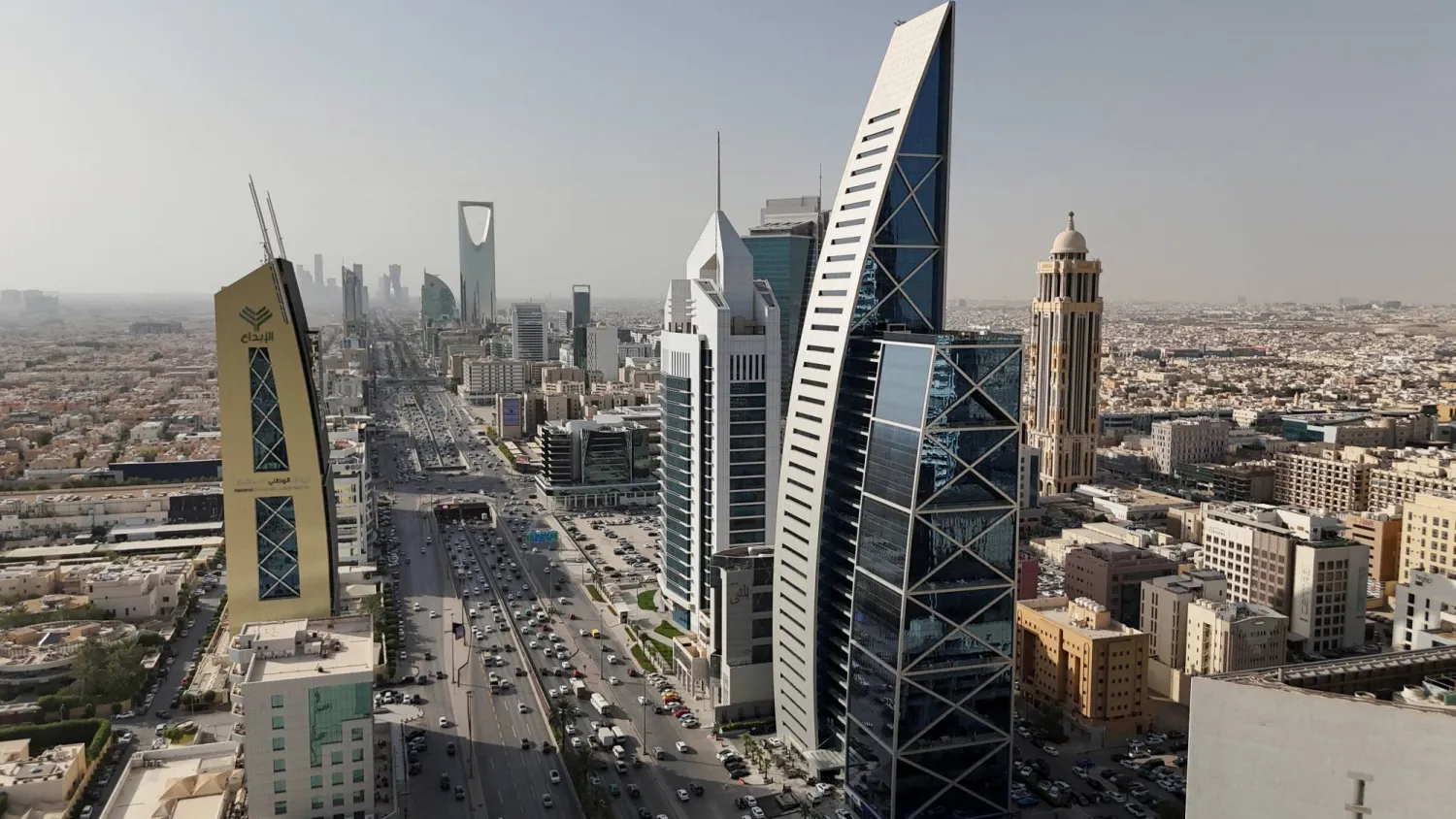
The Saudi capital, Riyadh (Reuters)
TT

Saudi Non-oil Private Sector Activity Hits 3-month High in May

The Saudi capital, Riyadh (Reuters)

Saudi Arabia's non-oil private sector expanded at the fastest pace in three months in May as domestic demand improved and supply chains stabilized, while business optimism remained subdued amid conflict in the region, a survey showed on Wednesday.

The seasonally adjusted Riyad Bank Saudi Arabia Purchasing Managers' Index, compiled by S&P Global, rose to 52.8 in May from 51.5 in April. The 50 mark separates growth from contraction, Reuters reported.

Output accelerated at the ⁠fastest pace in ⁠three months after March's downturn following the start of the Iran war, as firms cited normalizing working conditions, revived contracts and stronger local demand.

Export sales fell for a third straight month, hit by shipping disruption, higher freight and fuel costs, geopolitical tensions and stronger competition. The pace of decline eased only modestly from April's survey-record contraction.

However, supply chains improved, with suppliers' delivery times shortening for the first time in three months as ⁠firms relied ⁠more on local vendors. Backlogs of work rose for an 11th consecutive month, albeit moderately.

“Overall, the latest PMI reading supports the expectation that Saudi Arabia’s non-oil economy will continue its upward trend during the remainder of 2026," said Naif Al-Ghaith, Riyad Bank's chief economist.