


Emirate of Sharjah Provides Grant to Renovate Gibran Khalil Gibran Museum

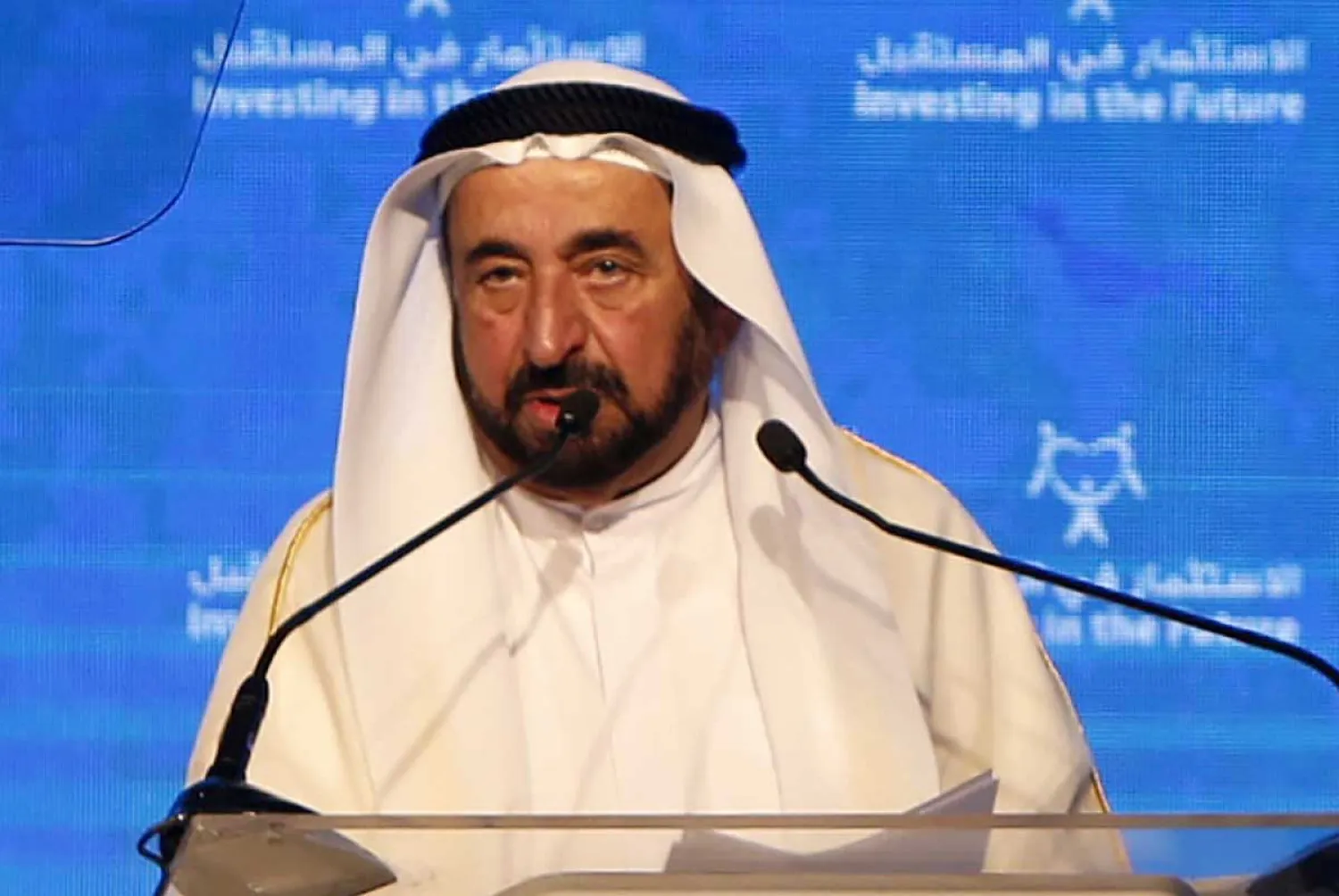
Sheikh Sultan bin Mohammed al-Qasimi, ruler of Sharjah. (Karim Sahib/AFP/Getty Images)
TT

Emirate of Sharjah Provides Grant to Renovate Gibran Khalil Gibran Museum

Sheikh Sultan bin Mohammed al-Qasimi, ruler of Sharjah. (Karim Sahib/AFP/Getty Images)

The Gibran Khalil Gibran Museum, located in the Lebanese town of Bsharri, is celebrating a grant provided by Sheikh Sultan bin Muhammad Al Qasimi, ruler of Sharjah, to restore and renovate the museum.

The grant will be used to preserve the museum’s possessions, and restore artifacts including photos, manuscripts, tools, books, and paintings, as well as equipping it with the latest museum display technologies.

The grant was announced after talks and negotiations that ran over the past year between Lebanon and Sharjah to determine the works that will be implemented, and the projects in which this grant will be invested amid the hard circumstances that the country and the museum are living following the pandemic’s lockdowns and the economic collapse that heavily affected the cultural life in Lebanon.

The agreement was signed last week, on the sidelines of the opening of the Sharjah International Book Fair, by Joseph Fenianos, head of the museum’s committee, and Marwa Obaid Al Aqroubi, director of the House of Wisdom affiliated with the Sharjah Investment and Development Authority, to implement renovation, restoration, and development projects at the Gibran Khalil Gibran Museum within five years.

The agreement consists of developing the museum, and printing Gibran Khalil Gibran’s books.
Attending the Sharjah book fair, Joseph Fenianos met with Sheikh Sultan bin Muhammad Al Qasimi, ruler of Sharjah, and gifted him a figurine of the late Lebanese writer sculpted by Artist Rudy Rahme.

Joseph Geagea, manager of the Gibran Museum in Bsharri, told Asharq Al-Awsat: “The contact between the two parties is not new. An esteemed exhibition about Gibran was held in Sharjah in 2015. Another one took place on the occasion of the House of Wisdom opening from September 2021 till January 2022, for which we shipped many paintings, the atelier of Gibran and his brushes, and an important collection of manuscripts that we displayed there.

“The opening was supposed to be attended by Sheikha Bodour Al Qasimi, but later, we knew that the Ruler of Sharjah would attend too. First, we thought the ruler would pass by for a few minutes, but surprisingly, our meeting with him lasted for 55 minutes, during which he seemed so interested in Gibran and his literature. As a tribute, the Ruler of Sharjah directed to provide a grant for the Gibran Museum.”

Few days ago, the head of the museum’s committee traveled to Sharjah to sign the agreement.

“We knew a grant has been provided to the museum, so we set a list of the works we need, including printing Gibran’s books, in addition to improving, developing, and mechanizing the information center dedicated for the visitors. The most important project is probably changing some of the old presentations that visitors have seen for many years. We have 440 paintings drawn by Gibran with water colors, charcoal, and pastels, but only 150 works are currently displayed, which means there are around 300 paintings hidden because we are not able to display them. What we want is to improve the work at the museum, so visitors keep coming and see new works every time. At our museum, we have the world’s largest collection of Gibran’s paintings,” Geagea told Asharq Al-Awsat.

The Gibran Museum team presented five projects to develop the museum in Bsharri, and they were all approved.

“Hopefully, we will manage to preserve the heritage of Gibran, and present it to the Arab people and the world in the best way. We will protect this unique history for humanity. Gibran is not an Arabic writer, he’s international,” added Geagea.

Gibran Khalil Gibran is still the third most read novelist in the world, following Shakespeare, and the Chinese philosopher Laozi. His book, “The Prophet” was translated into 130 languages with several translations in each language; it has 17 different translations into German, 20 into French, and around six into Chinese.

Foreign embassies have always shown special interest in the Gibran Museum. The Japanese embassy in Beirut has recently provided a grant, and the Bulgarian embassy restored the personal library of the late novelist. However, the Arabic interest in the museum of a Lebanese, Arabic novelist remains the most special, and has a unique significance.


Shark Mauls Surfer in Sydney, 3rd Attack in Two Days

People stand next to warning signs in place, and beaches are closed after a surfer suffered a shark attack at Dee Why Beach in Sydney, Australia, January 19, 2026. REUTERS/Jeremy Piper
TT

Shark Mauls Surfer in Sydney, 3rd Attack in Two Days

People stand next to warning signs in place, and beaches are closed after a surfer suffered a shark attack at Dee Why Beach in Sydney, Australia, January 19, 2026. REUTERS/Jeremy Piper

A shark mauled a surfer off an ocean beach in Sydney on Monday in the Australian city's third shark attack in two days, authorities said.

The surfer, believed to be in his 20s, was in a critical condition in hospital with serious leg injuries after the attack at a northern Sydney beach, police said.

"The man was pulled from the water by members of the public who commenced first aid before the arrival of emergency services," New South Wales state police said in a statement.

All of Sydney's northern beaches were closed until further notice.

The attack at North Steyne Beach in the suburb of Manly came hours after a shark bit a large chunk out of a young surfer's board about 4 kilometers (2.5 miles) north along the coast at Dee Why Point.

That surfer, reportedly a boy aged about 11, was uninjured but the beach was closed immediately, AFP reported.

On Sunday, a large shark bit a 12-year-old boy in the legs as he played with friends at a beach in Sydney harbor, leaving him fighting for survival in hospital.

The boy and his friends were jumping from a six-meter (20-foot) rock into the water off Shark Beach in the eastern suburb of Vaucluse when the predator struck, police said.

"It was a horrendous scene at the time when police attended. We believe it was something like a bull shark that attacked the lower limbs of that boy," said Superintendent Joseph McNulty, New South Wales marine area police commander.

"That boy is fighting for his life now," he told reporters on Monday.

Recent heavy rain had drained into the harbor, and authorities believed the combination of the brackish seawater and the children's splashing created a "perfect storm" for a shark attack, McNulty said.

He warned people not to go swimming in the harbor or other river systems in New South Wales because of the risks.

He praised the boy's "brave" young friends for pulling him out of the water on Sunday.

Officers put the unconscious child in a police boat and gave him first aid, applying two tourniquets to stem the bleeding from his legs, McNulty said.

They tried to resuscitate the boy as they sped across the harbor to a wharf where ambulance paramedics were waiting.

The child, confirmed by police to be 12 years old, was in intensive care at Sydney Children's Hospital surrounded by family and friends, McNulty said.


China’s Population Falls Again as Births Drop to Lowest Rate Since 1949 Communist Revolution

 Women push baby strollers as they walk along a street in Beijing on January 4, 2026. (AFP)
Women push baby strollers as they walk along a street in Beijing on January 4, 2026. (AFP)
TT

China’s Population Falls Again as Births Drop to Lowest Rate Since 1949 Communist Revolution

 Women push baby strollers as they walk along a street in Beijing on January 4, 2026. (AFP)
Women push baby strollers as they walk along a street in Beijing on January 4, 2026. (AFP)

How do you persuade a population to have more babies after generations of limiting families to just one?

A decade after ending China's longtime one-child policy, authorities are pushing a range of ideas and policies to try and encourage more births — tactics that range from cash subsidies to taxing condoms to eliminating a tax on matchmakers and day care centers.

The efforts haven't paid off yet. At least, that's what population figures released Monday show for what is now the world's second-most populous nation. China's population of 1.4 billion continued to shrink, marking the fourth straight year of decrease, new government statistics show. The total population in 2025 stood at 1.404 billion, which was 3 million less than the previous year.

Measured another way, the birth rate in 2025 is the lowest on record since 1949, the year that Mao Zedong’s Communists overthrew the Nationalists and began running China. Figures before that, under the previous Nationalist government, were not available. The rate of 5.63% is the number of births per 1,000 people.

China was long the world’s most populous nation until 2023, when it was surpassed by regional neighbor and sometime rival India. Monday's statistics illustrate the stark demographic pressures faced by the country as it tries to pivot from a problem it is working hard to overcome: status as a nation with a growing but transitional economy that, as is often said, is “getting old before it gets rich.”

Is a snake involved? The number of new babies born was just 7.92 million in 2025, a decline of 1.62 million, or 17%. The latest birth numbers show that the slight tick upwards in 2024 was not a lasting trend. Births declined for seven years in a row through 2023.

Most families cite the costs and pressure of raising a child in a highly competitive society as significant hurdles that now loom larger in the face of an economic downturn that has impacted households struggling to meet their living costs. Another potential factor in the numbers: last year in China was the year of the snake, considered one of the least favored years for having a child under the Chinese zodiac.

Like many other countries in Asia, China has faced a declining fertility rate, or the average number of babies a woman is expected to have in her lifetime. While the government does not regularly publish a fertility rate, last saying it was 1.3 in 2020, experts have estimated it is now around 1. Both figures are far below the 2.1 rate that would maintain the size of China's population.

For decades, the Chinese government barred people from having more than one baby and often sanctioned those who did — a policy that produced more than two generations of only children. In 2015, the government raised the permitted amount of offspring to two and then, facing demographic pressure, further revised the limit to three kids in 2021.

The push for more births is about the economy. China now has 323 million people over 60, or 23% of the entire population. That number has continued to rise, while the working-age population is shrinking, meaning there are fewer workers to support the older population.

This demographic shift is happening while China is in the process of trying to transition away from labor-intensive industries like farming and manufacturing into a consumer-driven economy built with high-tech manufacturing. The difficulty is in trying to get richer as a country, while this population shift likely means a slowing economy.

Officials have had limited success with policy changes to incentivize families to have more children. In July, the government announced cash subsidies of 3,600 yuan ($500) per child to families.


UK, France Mull Social Media Bans for Youth as Debate Rages

Some experts worry a blanket ban on social media could have unintended consequences. Saeed KHAN / AFP/File
TT

UK, France Mull Social Media Bans for Youth as Debate Rages

Some experts worry a blanket ban on social media could have unintended consequences. Saeed KHAN / AFP/File

Countries including France and Britain are considering following Australia's lead by banning children and some teenagers from using social media, but experts are still locked in a debate over the effectiveness of the move.

Supporters of a ban warn that action needs to be taken to tackle deteriorating mental health among young people, but others say the evidence is inconclusive and want a more nuanced approach.

Australia last month became the first nation to prohibit people under-16s from using immensely popular and profitable social media platforms such as Instagram, Facebook, Tiktok and YouTube.

France is currently debating bills for a similar ban for under-15s, including one championed by President Emmanuel Macron.

The Guardian reported last week that Jonathan Haidt, an American psychologist and supporter of the Australian ban, had been asked to speak to UK government officials.

Haidt argued in his bestselling 2024 book "The Anxious Generation" that too much time looking at screens -- particularly social media -- was rewiring children's brains and "causing an epidemic of mental illness".

While influential among politicians, the book has proven controversial in academic circles.

Canadian psychologist Candice Odgers wrote in a review of the book that the "scary story" Haidt was telling was "not supported by science".

One of the main areas of disagreement has been determining exactly how much effect using social media has on young people's mental health.

Michael Noetel, a researcher at the University of Queensland in Australia, told AFP that "small effects across billions of users add up".

There is "plenty of evidence" that social media does harm to teens, he said, adding that some were demanding an unrealistic level of proof.

"My read is that Haidt is more right than his harshest critics admit, and less right than his book implies," Noetel said.

Given the potential benefit of a ban, he considered it "a bet worth making".

After reviewing the evidence, France's public health watchdog ANSES ruled last week that social media had numerous detrimental effects for adolescents -- particularly girls -- while not being the sole reason for their declining mental health.

Everything in moderation?

Noetel led research published in Psychological Bulletin last year that reviewed more than 100 studies worldwide on the links between screens and the psychological and emotional problems suffered by children and adolescents.

The findings suggested a vicious cycle.

Excessive screen time -- particularly using social media and playing video games -- was associated with problems. This distress then drove youngsters to look at their screens even more.

However, other researchers are wary of a blanket ban.

Ben Singh from the University of Adelaide tracked more than 100,000 young Australians over three years for a study published in JAMA Pediatrics.

The study found that the young people with the worst wellbeing were those who used social media heavily -- more than two hours a day -- or not at all. It was teens who used social networks moderately that fared the best.

"The findings suggest that both excessive restriction and excessive use can be problematic," Singh told AFP.

Again, girls suffered the most from excessive use. Being entirely deprived of social media was found to be most detrimental for boys in their later teens.

'Appallingly toxic'

French psychiatrist Serge Tisseron is among those who have long warned about the huge threat that screens pose to health.

"Social media is appallingly toxic," he told AFP.

But he feared a ban would easily be overcome by tech-savvy teens, at the same time absolving parents of responsibility.

"In recent years, the debate has become extremely polarized between an outright ban or nothing at all," he said, calling for regulation that walks a finer line.

Another option could be to wait and see how the Australian experiment pans out.

"Within a year, we should know much more about how effective the Australian social media ban has been and whether it led to any unintended consequences," Cambridge University researcher Amy Orben said.

Last week, Australia's online safety watchdog said that tech companies have already blocked 4.7 million accounts for under 16s.
