Abbas Calls on Palestinians to Prepare to Thwart Annexation of West Bank Lands https://english.aawsat.com/home/article/3981066/abbas-calls-palestinians-prepare-thwart-annexation-west-bank-lands
Abbas Calls on Palestinians to Prepare to Thwart Annexation of West Bank Lands
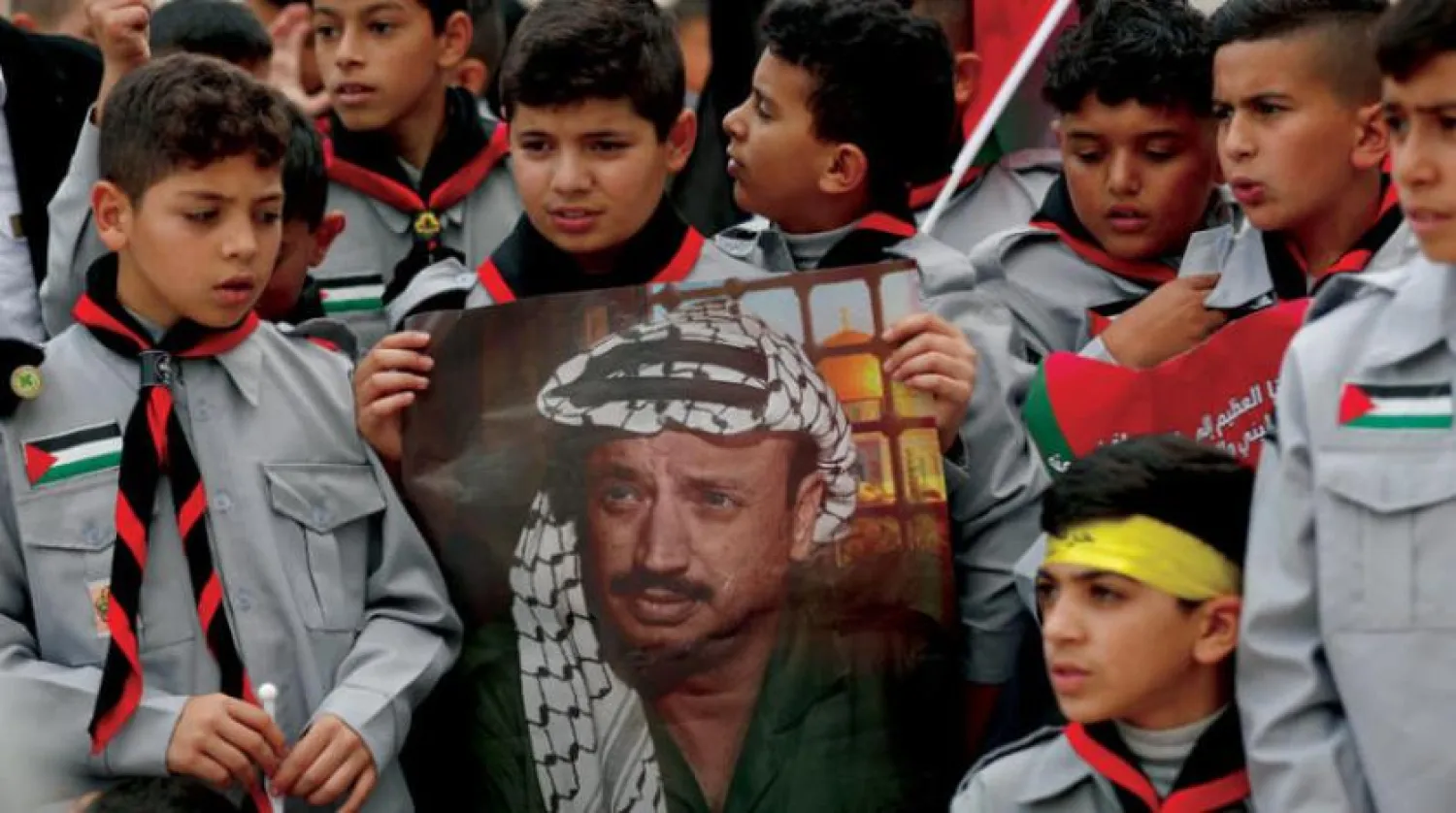
Palestinian scouts hold a picture of the late Palestinian leader Yasser Arafat on the 18th anniversary of his death next to his tomb in the the West Bank city of Ramallah, 10 November 2022, during a rally of Fatah movement supporters to commemorate his memory. EPA/ATEF SAFADI
Asharq A-Awsat
TT
TT
Abbas Calls on Palestinians to Prepare to Thwart Annexation of West Bank Lands
Palestinian scouts hold a picture of the late Palestinian leader Yasser Arafat on the 18th anniversary of his death next to his tomb in the the West Bank city of Ramallah, 10 November 2022, during a rally of Fatah movement supporters to commemorate his memory. EPA/ATEF SAFADI
Palestinian President Mahmoud Abbas urged Palestinians on Thursday to prepare to thwart plans to annex parts of the West Bank to Israel, after the victory of Israel’s far-right in the Nov.1 ballot.
In a speech broadcast on state television, Abbas addressed Palestinians who gathered in the central Gaza Strip to commemorate the 18th anniversary of the death of President Yasser Arafat.
“We have to be ready for the next phase,” Abbas stressed. He called for thwarting again the annexation scheme and attempts to prevent the establishment of a Palestinian state in Gaza, the West Bank and Jerusalem.
“Israelis realize that the will of the Palestinian people cannot be broken, and we tell them that we are here and we will not leave.”
He pledged to preserve Arafat’s “legacy” and reiterated that there is no state in the West Bank without Gaza, and there is no state in Gaza without the West Bank and Jerusalem.
Arafat died in a Paris military hospital on November 11, 2004, a month after being flown, seriously ill, from his battered headquarters in Ramallah, where he had been effectively confined by Israel for several years.
Palestinians accused Israel of being the reason behind his illness, which later caused death.
Dozens of Palestinian students, employees and citizens took part in a rally in Ramallah, during which they raised the Palestinian flag and pictures of Arafat and chanted national slogans.
Some of them headed to the city’s northern entrance and threw stones at Israeli soldiers.
According to the Palestinian Red Crescent, live ammunition injured two Palestinians during clashes with soldiers.
Abbas called for ending the division between the West Bank and the Gaza Strip, which has been controlled by Hamas Movement since 2007.
Addressing the enclave’s citizens, Abbas said: “We will remain united until we end the division and defeat the occupation.”
US Ambassador to Israel Tom Nides warned in an interviews that the White House would push back against any attempts by the expected incoming Israeli government to annex all or parts of the West Bank.
“Our position is quite clear: We do not support annexation. We will fight any attempt to do so,” Nides told Israeli media on Thursday, adding that “most of the Arab countries” feel the same way.
Just ahead of the Abraham Accords in 2020, then-prime minister Benjamin Netanyahu announced an intention to move ahead with annexing portions of the West Bank with the support of then-president Donald Trump.
However, his plan was met with a US reservation related to the timing, a massive international rejection, and a threat by Palestine to regard agreements with Israel and the United States “completely cancelled.”
There are concerns in Palestine and Israel that Netanyahu, who is close to forming a right-wing government, will revive his plan.
“I’m not going to make draconian statements that I’m not ever going to talk to anyone — it doesn’t matter left or right,” said Nides. “We’ll see who gets to be in these positions… I want to see rhetorically what they say and how they act.”
The US envoy told Kan that he intends to work closely with the expected future right-wing government.
“I want to start with a relationship with this government that is strong, that is enduring. I want to work closely with prime minister Netanyahu,” said Nides.
“That said, we have to stand up for the things that we believe in — that’s what American values are about… There will be times that we will articulate what we believe our differences are.”
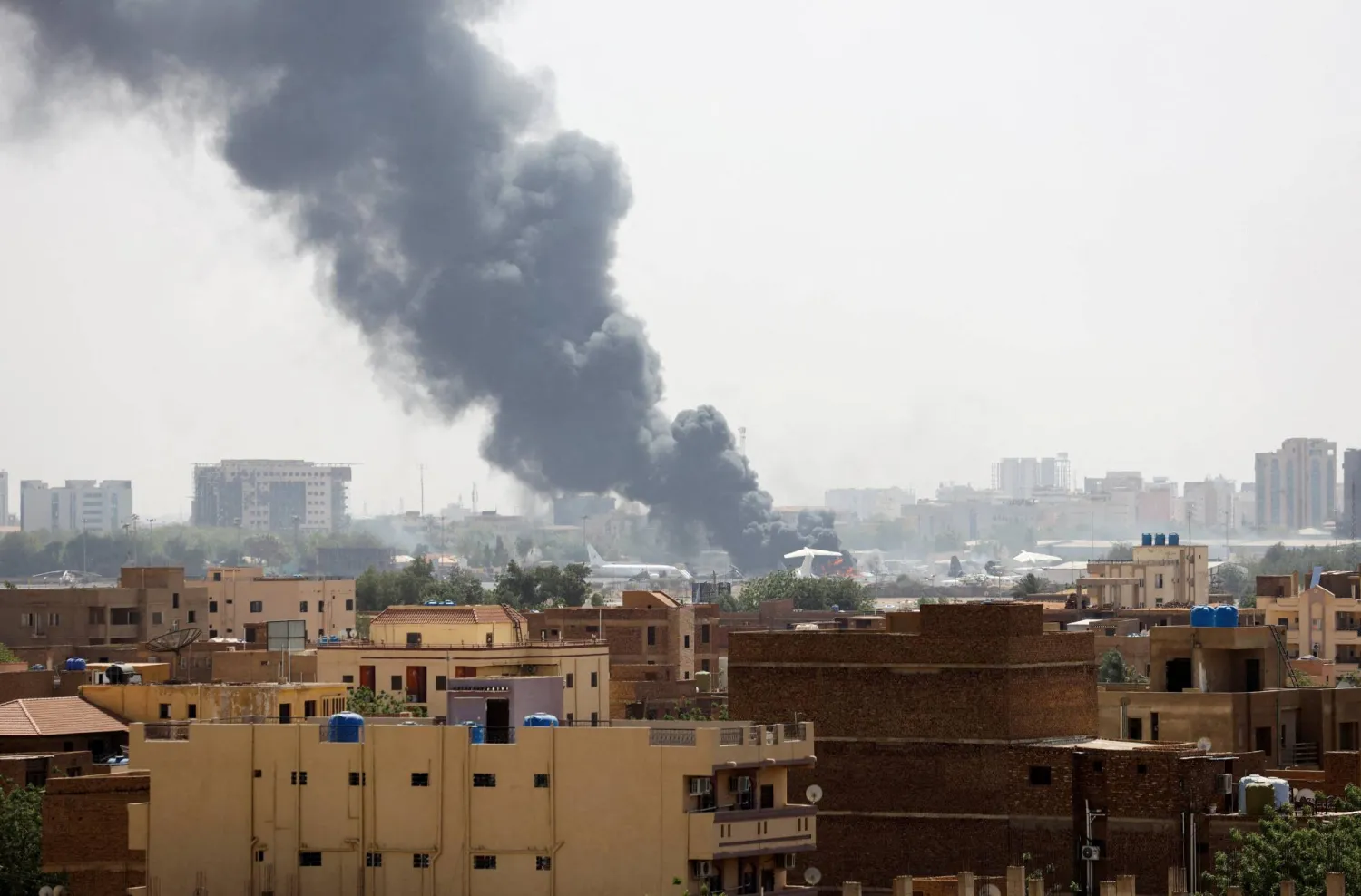
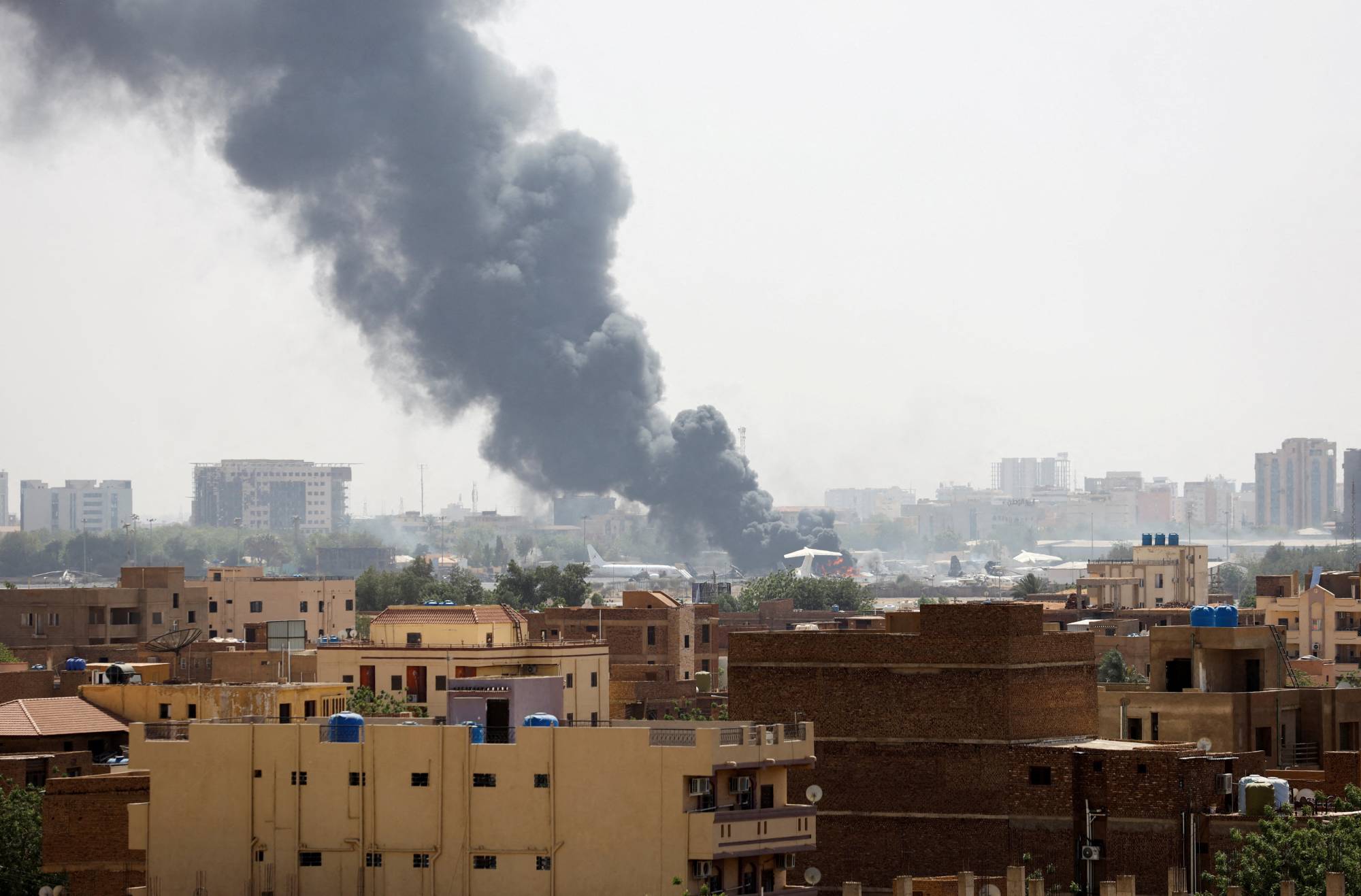
Smoke rises from inside Khartoum Airport during previous clashes between the Rapid Support Forces and the Sudanese army (file photo – Reuters)
Khartoum Airport came under drone attack on Monday, with Sudanese army air defenses intercepting the aircraft, a military source told AFP
The incident follows attacks by the Rapid Support Forces on the Sudanese capital two days earlier that left five people dead.
Smoke rises from inside Khartoum Airport during previous clashes between the Rapid Support Forces and the Sudanese army (file photo – Reuters)
The military source said: “Our air defenses successfully shot down drones targeting the eastern perimeter of Khartoum Airport.”
Witnesses reported hearing explosions and seeing plumes of smoke rising from the Safa neighborhood, located east of the airport.
‘Freshly Dug Graves’ as Hezbollah Pays Steep Price in Battle to Reverse its Fortuneshttps://english.aawsat.com/arab-world/5269392-%E2%80%98freshly-dug-graves%E2%80%99-hezbollah-pays-steep-price-battle-reverse-its-fortunes
FILE PHOTO: Mourners carry coffins during the funeral of four Hezbollah fighters and two civilians, amid a temporary ceasefire between Lebanon and Israel, in the village of Maaroub, southern Lebanon, April 26, 2026. REUTERS/Marko Djurica/File Photo
‘Freshly Dug Graves’ as Hezbollah Pays Steep Price in Battle to Reverse its Fortunes
FILE PHOTO: Mourners carry coffins during the funeral of four Hezbollah fighters and two civilians, amid a temporary ceasefire between Lebanon and Israel, in the village of Maaroub, southern Lebanon, April 26, 2026. REUTERS/Marko Djurica/File Photo
Hezbollah has paid a heavy price for going to war with Israel on March 2: Israel has occupied a chunk of southern Lebanon, displaced hundreds of thousands of its Shiite constituents and killed as many as several thousand of its fighters, according to previously unreported casualty estimates from within the group.
The move has brought severe political consequences, too. In Beirut, opposition has hardened to its status as an armed group, which domestic rivals see as exposing Lebanon to repeated wars with Israel.
In April, Lebanon's government held face-to-face talks with Israel for the first time in decades, a decision Hezbollah firmly opposed. However, more than a dozen Hezbollah officials told Reuters they see a chance to reverse deteriorating fortunes by aligning with Tehran in its war with Israel and the United States.
The group, founded by Iran's Revolutionary Guard Corps in 1982, opened fire two days into the conflict, which began with US and Israeli strikes on Iran on February 28.
The group's calculations are based on the assessment that its participation would force Lebanon onto the agenda of US-Iranian negotiations, and that Iranian pressure can secure a more robust ceasefire than one that took effect in November 2024 following a conflict sparked by the war in Gaza, the officials said.
Hezbollah was mauled in the last war, which killed its leader, Hassan Nasrallah, along with some 5,000 fighters, and weakened its long-dominant hold over the Lebanese state.
Rearmed with Iranian help, it has used new tactics and drones, surprising many with its capabilities after a fragile 15-month truce during which Hezbollah held fire, even as Israel continued to kill its members.
Hezbollah lawmaker Ibrahim al-Moussawi denied the group was acting on Iran's behalf when it resumed hostilities, as alleged by opponents. He told Reuters Hezbollah saw a window to "break this vicious cycle ... where the Israelis can target, assassinate, bombard, kill, without any revenge."
He acknowledged losses and damage in southern Lebanon but said "you don't go into making calculations of how many are going to be killed" when "pride and sovereignty and independence" are at stake.
Hezbollah’s media office said the figure of several thousand fighters killed in the present war was false.
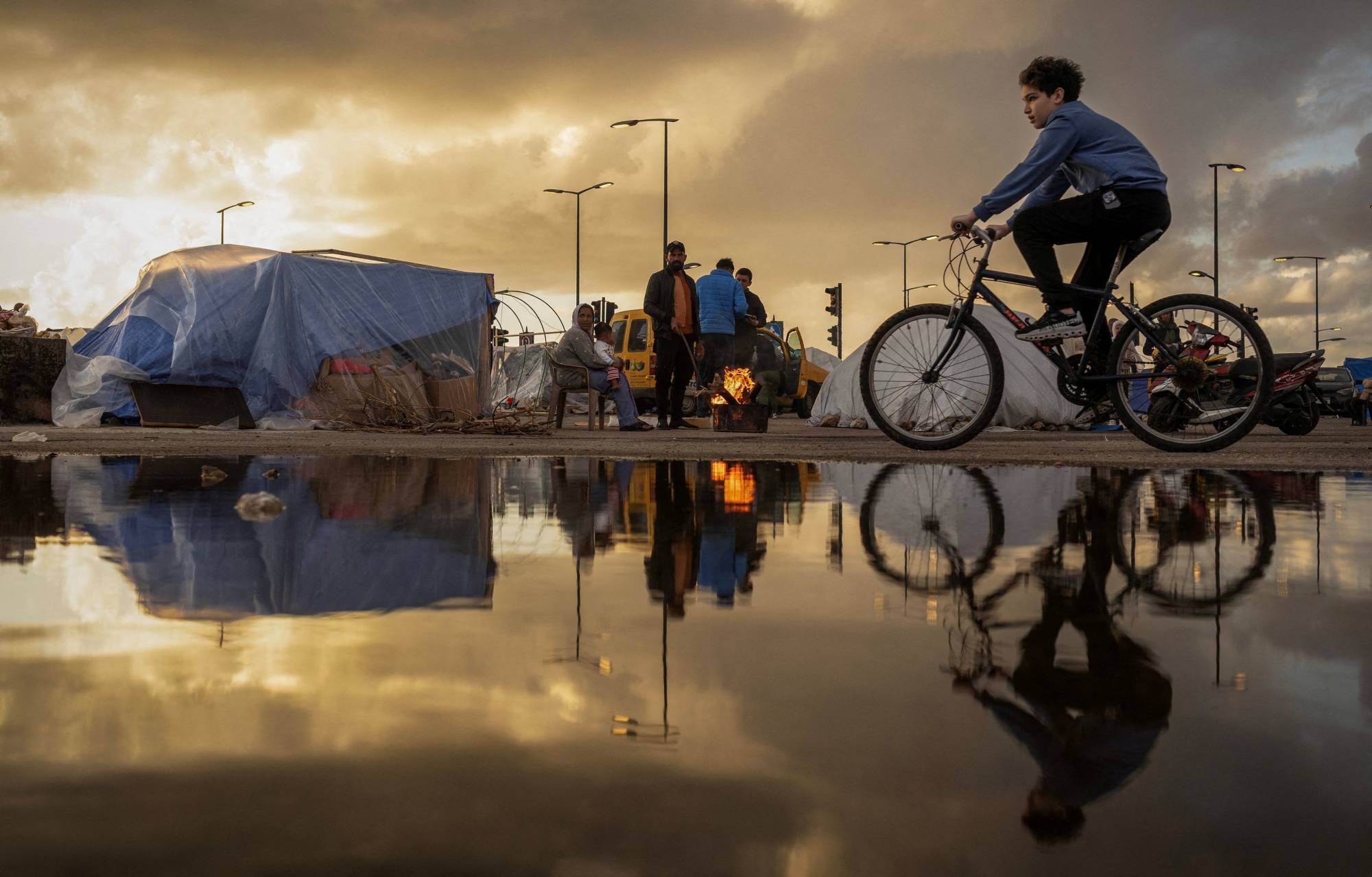
FILE PHOTO: A family stand next to a fire outside their tent at a temporary encampment for displaced people, amid escalating hostilities between Israel and Hezbollah, in Beirut, Lebanon, March 30, 2026. REUTERS/Adnan Abidi/File Photo
While a US-mediated ceasefire that took effect on April 16 has led to a significant reduction in hostilities, Israel and Hezbollah have continued to trade blows in the south, where Israel maintains troops in a self-declared "buffer zone".
Yezid Sayigh, a senior fellow at the Carnegie Middle East Center in Beirut, said Hezbollah had "shown more resilience than many thought possible, but that was not a strategic gain in itself".
"The only thing that will contain Israel is a comprehensive US-Iran deal," he said. "Without a deal, there's going to be a lot of pain for everyone. At best, a hurting stalemate."
More than 2,600 people have been killed since March 2, around a fifth of them women, children and medics, Lebanon's health ministry has reported. Its toll does not distinguish between civilians and combatants.
Three sources, two of them Hezbollah officials, said the ministry's figures do not include many of the group's casualties. They said several thousand Hezbollah fighters have been killed, though the group does not have the full picture yet.
In a statement to Reuters, Hezbollah’s media office denied the figures cited by the sources, and that the numbers published by Lebanon’s health ministry included its members killed in Israeli strikes.
One source, a Hezbollah commander, said scores of fighters had gone to the frontline towns of Bint Jbeil and Khiyam intending to fight to the death. Their bodies have yet to be recovered.
In the Hezbollah-controlled southern suburbs of Beirut, more than two dozen freshly dug graves were quickly filled with fighters' bodies in the days after the ceasefire took hold. Simple marble tombstones identify some as commanders, others as fighters.
In one southern village alone, Yater, the council recorded the deaths of 34 Hezbollah fighters.
Lebanon's Shiite community has borne the brunt of Israel's attacks, forced to flee into Christian, Druze and other areas, where many blame Hezbollah for starting the war.
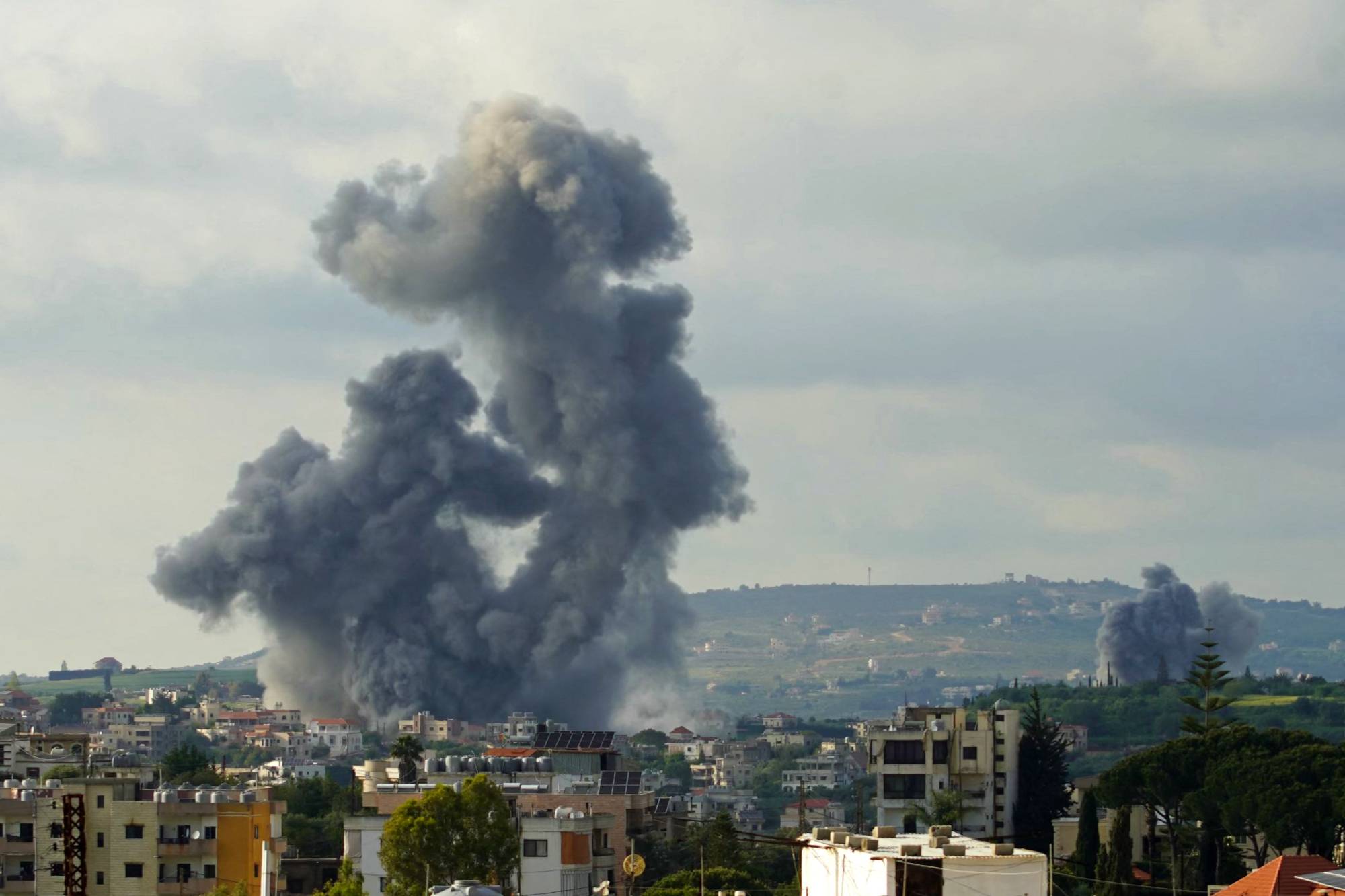
Smoke rises from the site of Israeli airstrikes that targeted the southern Lebanese village of Habbouch on May 1, 2026. (Photo by Abbas FAKIH / AFP)
Israel has been entrenching its hold over a security zone stretching as far as 10 km (6 miles) into Lebanon and demolishing villages, saying it aims to shield northern Israel from attacks by Hezbollah militants embedded in civilian areas.
An Israeli government official said Hezbollah had abrogated the November 2024 ceasefire by firing on Israeli citizens on March 2. The threat to northern Israel would be eradicated, the official said, adding thousands of Hezbollah militants had been killed, and Israel was steadily destroying the group's infrastructure.
The Israeli military says Hezbollah has fired hundreds of rockets and drones at Israel since March 2. Israel has announced 17 soldiers killed in southern Lebanon, along with two civilians in northern Israel.
Citing ongoing Israeli strikes, Hezbollah has called the April ceasefire meaningless and continued to attack.
A diplomat who has contact with Hezbollah described its decision to enter the war as a big gamble and a survival strategy, saying it felt it needed to be part of the problem so it could be part of an eventual regional solution.
It has yet to be seen if the gamble will pay off.
Tehran has demanded that Israel's campaign against Hezbollah be included in any deal on the wider war. But US President Donald Trump said last month that any deal Washington reaches with Tehran "is in no way subject to Lebanon".
A spokesperson for Pakistan's Foreign Ministry, Tahir Andrabi, referred Reuters to an April 16 statement in which he said peace in Lebanon was essential to the talks it is mediating between the US and Iran.
A Western official said they saw a possibility the US and Iran might eventually reach a settlement that does not address the war in Lebanon.
Asked about this, the US State Department, Iran's mission to the United Nations in Geneva and Lebanon's government did not immediately comment.
Hezbollah's Moussawi said a ceasefire in Lebanon continues to be a top priority for Iran, adding Tehran shares Lebanon's objectives, including that Israel halt attacks and withdraw from Lebanon. Hezbollah has "full trust in Iran - that the Iranians will not sell their own friends", he said.
The State Department referred Reuters to an April 27 interview Secretary of State Marco Rubio did with Fox News, in which he said Israel had a right to defend itself against Hezbollah's attacks, and that he didn't think Israel wanted to maintain its buffer zone in Lebanon indefinitely.
The United States has urged Israel "to make sure their responses are proportional and targeted," he said.
When the April 16 ceasefire was announced, Israeli Prime Minister Benjamin Netanyahu said Hezbollah's disarmament would be a fundamental demand in peace talks with Lebanon.
Hezbollah has ruled out disarmament, saying the matter of its weapons is a topic for a national dialogue. Any move by Lebanon to disarm the group by force would risk igniting conflict in a country shattered by civil war from 1975 to 1990.
Lebanon's President Joseph Aoun and Prime Minister Nawaf Salam have sought Hezbollah's peaceful disarmament since last year. On March 2, the government banned the group's military activities.
Hezbollah has demanded the government cancel that decision and end its direct talks with Israel.
Lebanese officials have told Reuters they believe direct talks with Israel under the auspices of the US are the best way to secure a lasting ceasefire and the withdrawal of Israeli troops, as only Washington has enough leverage with Israel to achieve those aims.
Scramble for Ministries Threatens 'Honeymoon' between Al-Zaidi, Iraq's Political Blocshttps://english.aawsat.com/arab-world/5269361-scramble-ministries-threatens-honeymoon-between-al-zaidi-iraqs-political-blocs
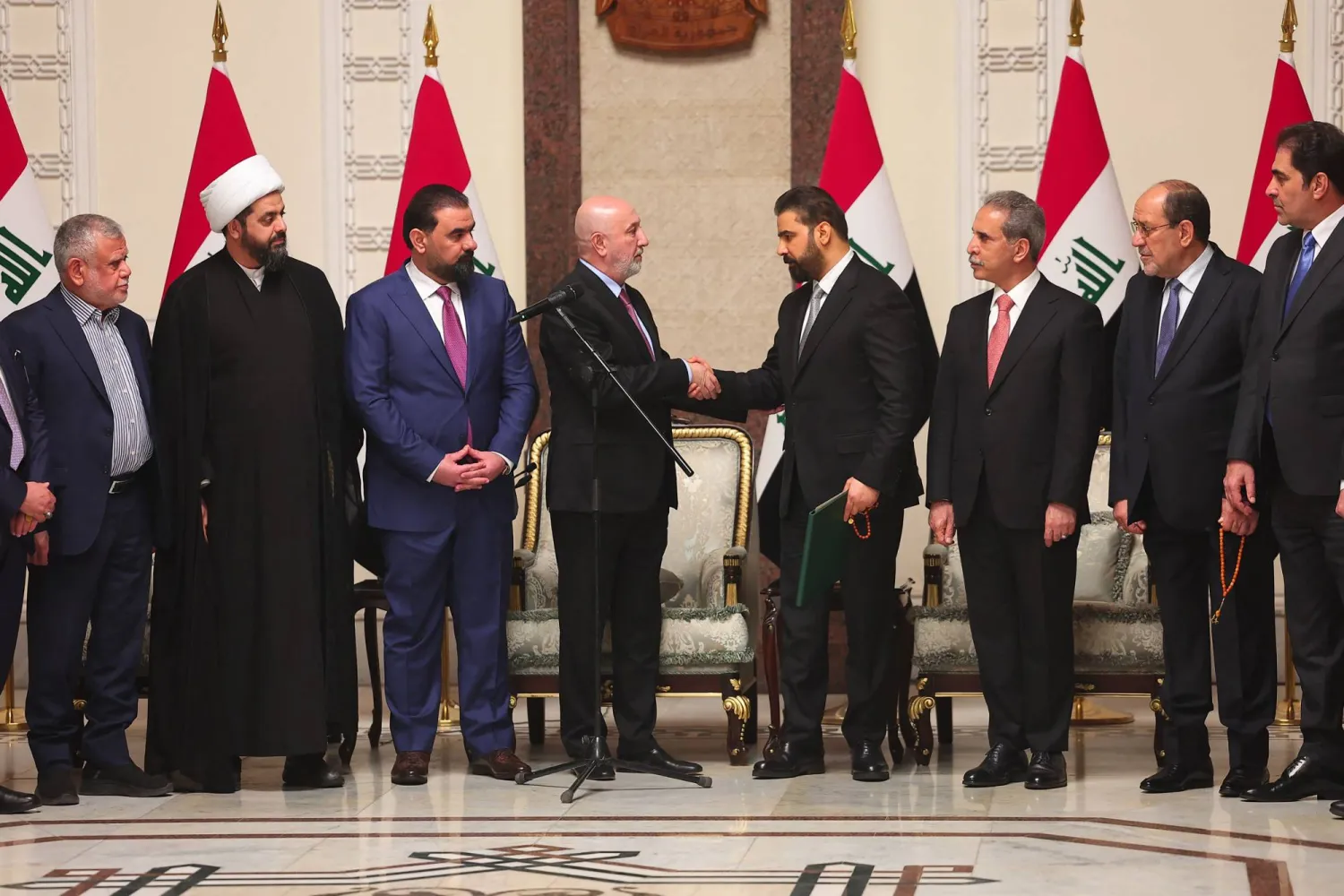
This handout photograph released by the Iraqi Presidency Press Office on April 27, 2026 shows Iraq's President Nizar Amedi (4th L) shaking hands with newly Iraq's Prime Minister designated Ali al-Zaidi (4th R), surrounded by Iraqi political leaders, in Bagdad. (Iraqi Presidency / AFP)
Scramble for Ministries Threatens 'Honeymoon' between Al-Zaidi, Iraq's Political Blocs
This handout photograph released by the Iraqi Presidency Press Office on April 27, 2026 shows Iraq's President Nizar Amedi (4th L) shaking hands with newly Iraq's Prime Minister designated Ali al-Zaidi (4th R), surrounded by Iraqi political leaders, in Bagdad. (Iraqi Presidency / AFP)
Iraq’s Prime Minister-designate Ali al-Zaidi is facing an early test in forming a government as disputes over cabinet posts risk straining ties with political blocs, despite what observers describe as unprecedented US backing.
Al-Zaidi concluded a visit Saturday to the Kurdistan Region, where he met head of the Kurdistan Democratic Party Masoud Barzani in Erbil and lader of the Patriotic Union of Kurdistan Bafel Talabani in Sulaymaniyah. He said he had secured strong Kurdish support.
Deep divisions persist between the two main Kurdish parties, particularly over the presidency — traditionally held by the PUK — and over the delayed formation of the regional government, stalled for more than a year. Those disputes could spill into Baghdad as parties negotiate ministries based on electoral representation.
Al-Zaidi’s reported breakthrough includes persuading the KDP to return its lawmakers to the federal parliament, paving the way for participation in government. But bargaining over ministries is expected to be the first major hurdle, as blocs seek to retain key portfolios or demand additional ones reflecting their gains in the elections.
Concerns have also emerged among Shiite factions, particularly within the ruling Coordination Framework, over al-Zaidi’s perceived US backing. US President Donald Trump was cited as saying al-Zaidi came “with American help,” heightening unease, especially among groups with armed branches.
US factor
A senior Iraqi source told Asharq Al-Awsat that Coordination Framework leaders, who had remained publicly silent about what appeared to be a lengthy call between Trump and al-Zaidi last week, later pressed him in a private meeting to disclose its details.
The source said al-Zaidi outlined the conversation clearly, prompting the bloc to encourage him to maintain balanced ties with Washington — avoiding provoking discontent while not fully yielding to US demands — and to leave contentious issues to be resolved over time.
The source added that this position followed briefings on the broad outlines of a US message, after which an initial shipment of US dollars was sent, seen as an incentive. Washington is said to be insisting on a government “free of terrorism,” referring to pro-Iran armed Iraqi factions.
At the same time, al-Zaidi has drawn backing from civil and political groups. A meeting hosted by former Prime Minister Iyad Allawi discussed political developments and endorsed efforts to form a government based on competence, integrity and broad representation.
Participants urged political forces to prioritize national interests, overcome divisions and meet constitutional deadlines.
However, pressure is mounting. Political blocs are pressing for specific ministries, seeking to rotate portfolios, or proposing new posts, including deputy prime ministers, to accommodate party figures, even in roles with limited authority.
Political observers in Baghdad warned that if these demands persist, the current “honeymoon” between al-Zaidi and the blocs could unravel.
The prime minister-designate is seeking to form a government free of armed factions, bureaucratic bloat and partisan dictates, buoyed by broad regional and international support that gives him room to maneuver.
لم تشترك بعد
انشئ حساباً خاصاً بك لتحصل على أخبار مخصصة لك ولتتمتع بخاصية حفظ المقالات وتتلقى نشراتنا البريدية المتنوعة