Yemen Presidential Council: Iran Involved in Dhaba Port Attacks https://english.aawsat.com/home/article/4007221/yemen-presidential-council-iran-involved-dhaba-port-attacks
Yemen Presidential Council: Iran Involved in Dhaba Port Attacks
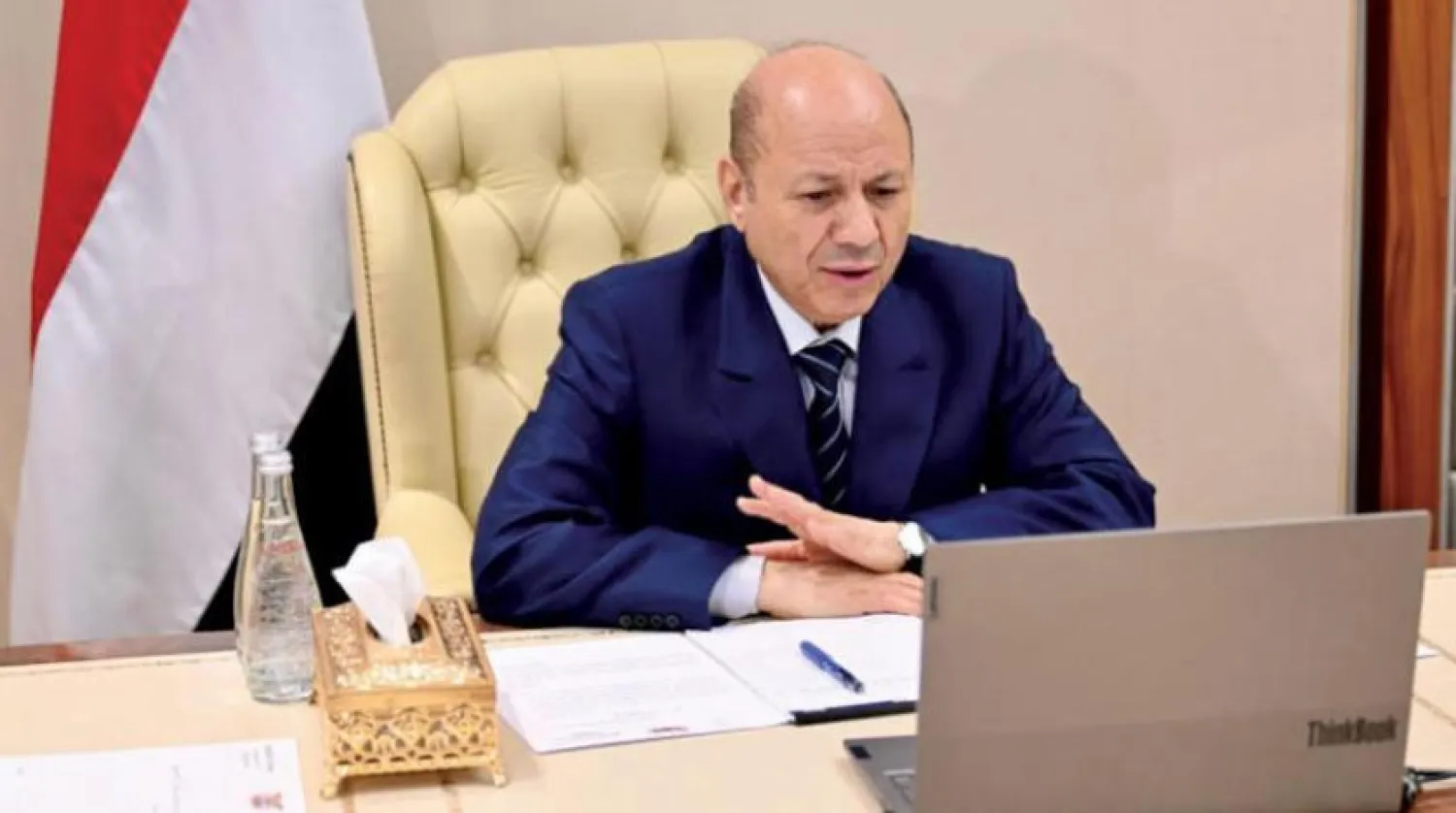
Presidential Leadership Council Chairman Dr. Rashad al-Alimi convenes the virtual meeting on Thursday. (Saba)
Yemen’s Presidential Leadership Council (PLC) accused on Thursday Iran of being involved in the recent attacks on oil ports in the Hadramawt and Shabwa provinces.
It revealed that the debris of the drones used in the attacks match aircraft manufactured by Iran.
The Iran-backed Houthi militias had in the past month carried out a number of attacks against Yemeni oil ports in the two provinces.
The latest attack, on Monday, targeted Dhaba port, leaving damage at the facility that authorities said would take a month to repair. The attack forced operations at the port to stop.
The PLC convened a virtual meeting on Thursday to tackle the latest attacks, said official sources. Head of the PLC, Dr. Rashad al-Alimi chaired the meeting that was also attended by Prime Minister Maeen Abdulmalik.
The PLC said such repeated terrorist attacks not only target the remaining economic lifelines of millions of Yemeni people, but are a threat to the stability of the region, global energy supplies and trade routes, and international peace and security.
The council accused Iran of being involved in the attacks, citing the drone debris that matches aircraft made by Tehran.
It stressed the need for the international community to realize the danger of the continuation of such threats, urging it against overlooking Iran’s role in supplying the Houthis with ballistic missile technology and drones.
It cited the interception of weapons shipments in recent weeks as evidence of Tehran’s complicity.
It called on the international community to assume its responsibilities towards this dangerous terrorist threat that the Houthis and their backers boast about.
The attacks on Yemen are “war crimes that demand firm punishment and the international designation of the Houthis as a terrorist group,” urged the council.
It lauded the vigilance of the armed forces and air defenses in countering the systematic sabotage attacks against civilian installations that are flagrant violation of international law and norms.
The attacks demonstrate the extent to which the Houthis disregard all United Nations, regional and international efforts to end the war in Yemen and the suffering of the people. They also demonstrate how beholden they are to the Iranian regime and its destructive agenda in the region.
The PLC stressed its commitment and that of the government in taking the “necessary measures to deter these threats and protect national gains that would secure the interests of the people and ease their suffering.”
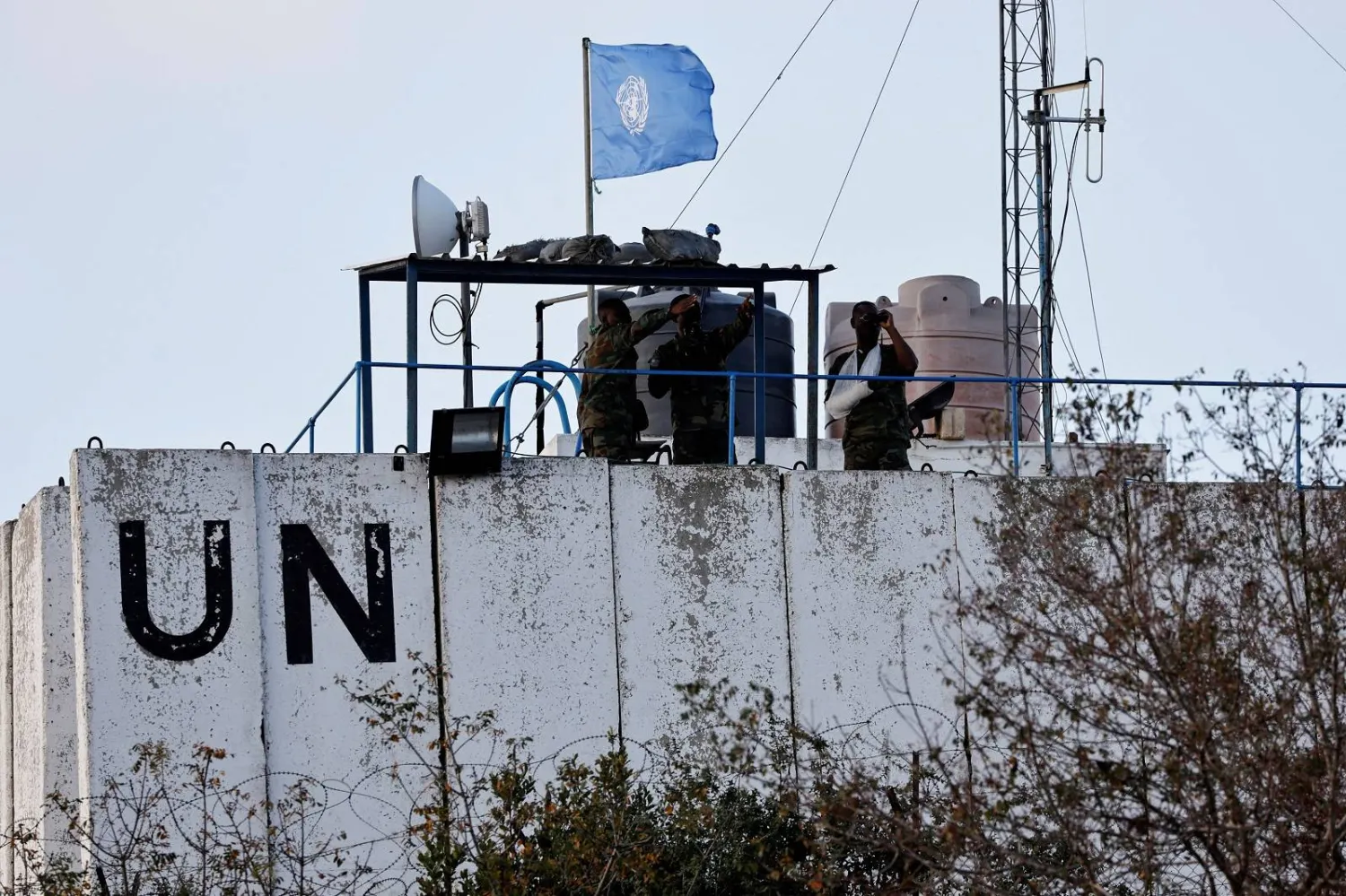
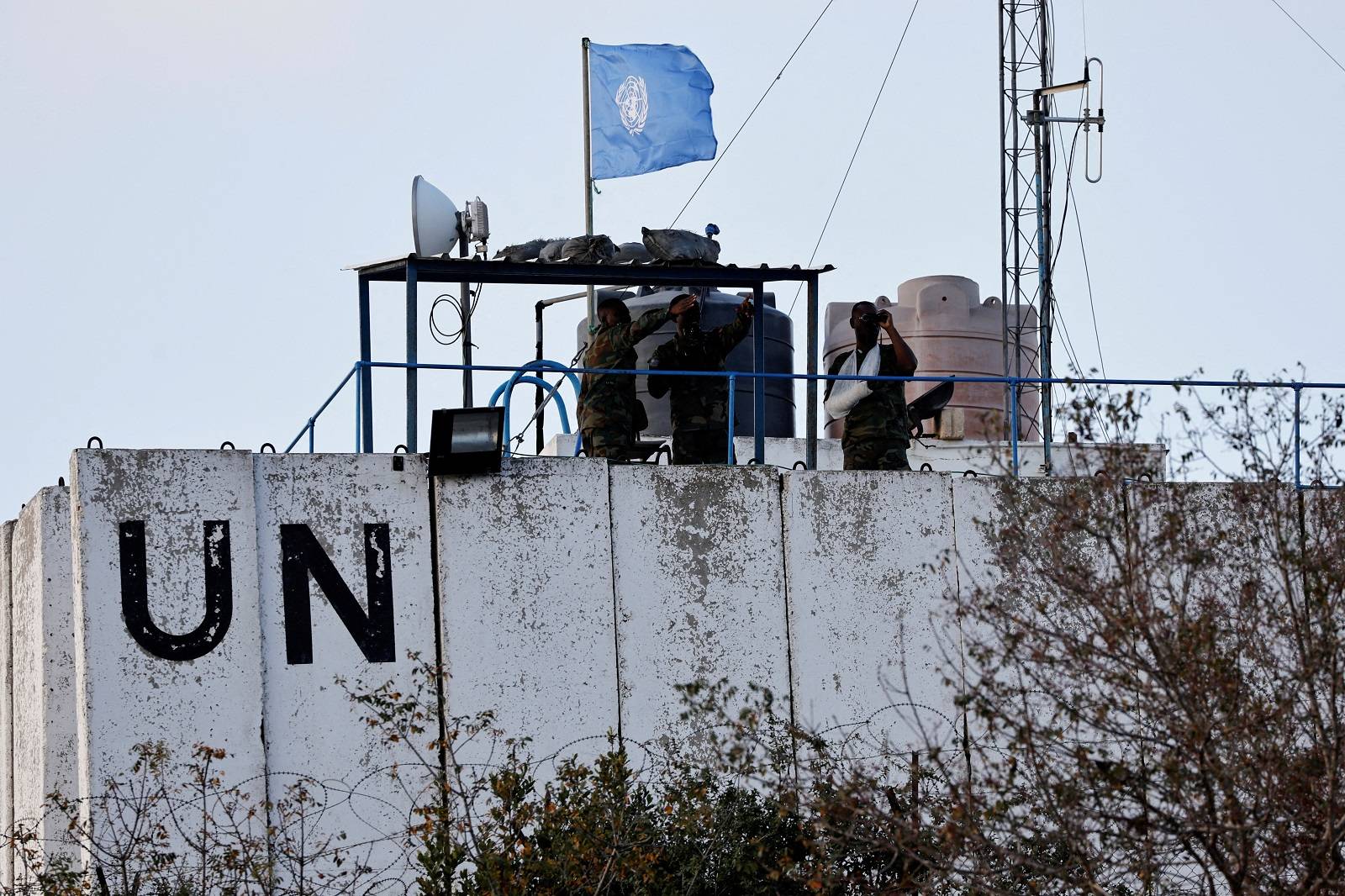
Members of the United Nations Interim Force in Lebanon (UNIFIL) in southern Lebanon (Reuters)
Lebanon is stepping up a political and diplomatic drive to maintain a UN presence in the south while rallying support for its army, as Beirut and Paris push to revisit the deadline to end UNIFIL’s mission.
Beirut is treating that issue separately from proposals for a European initiative to support the military.
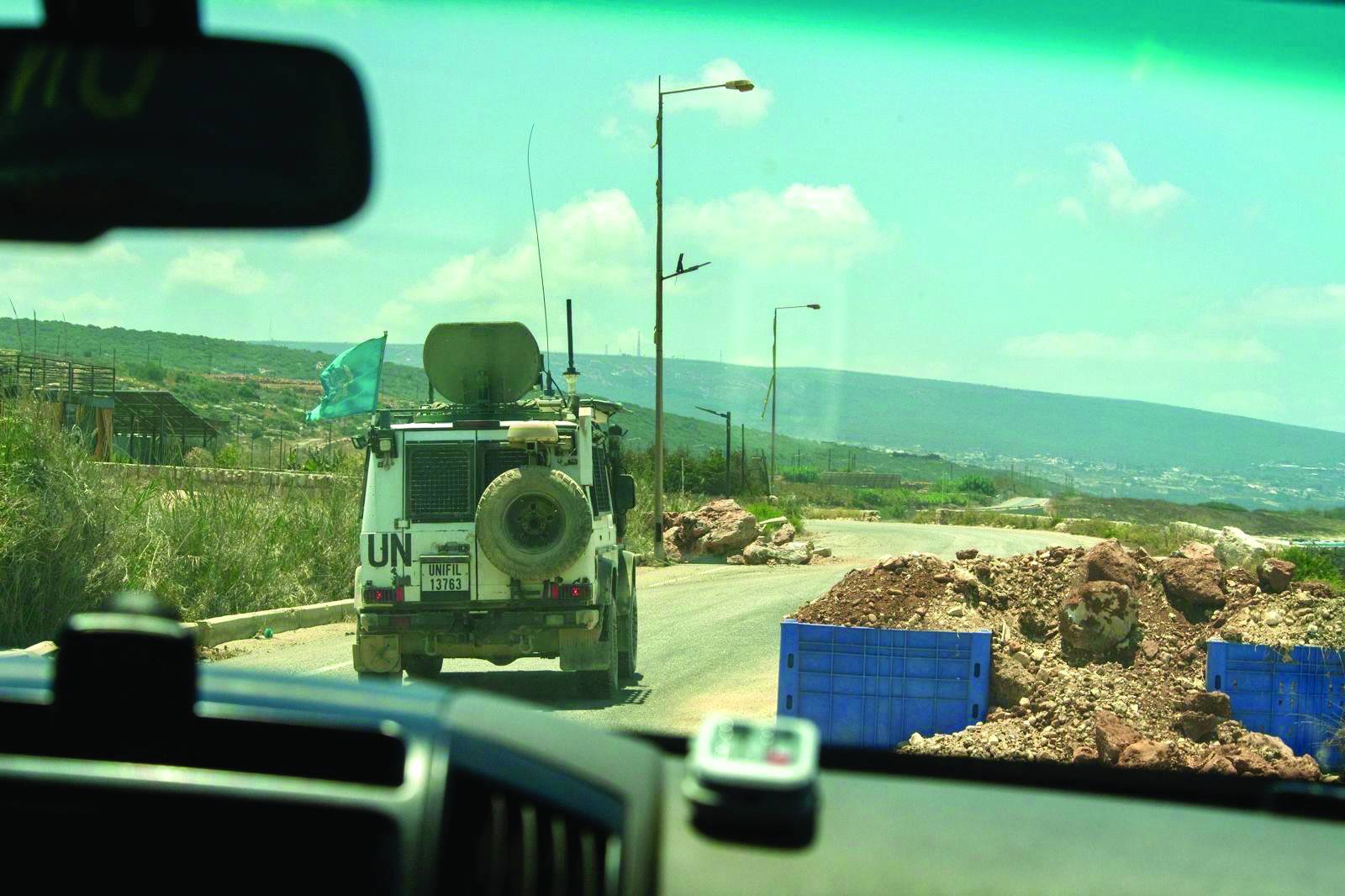
A UNIFIL peacekeeper during a patrol by the UN mission in southern Lebanon (UNIFIL)
Beirut insists on UN presence
An informed source told Asharq Al-Awsat that the proposed European force “is being discussed on a separate track from the southern Lebanon file and is not directly linked to UNIFIL’s future or to any arrangements concerning the international force in southern Lebanon.”
The European track is largely focused on supporting and training the army, as well as on domestic military and institutional matters, the source said.
“It should not be confused with the debate over the form of the international presence in the south after UNIFIL’s mission ends,” the source added.
Lebanon remains committed to keeping a UN force in the south, though discussions could cover a smaller mission or one with a different structure and mandate.
“For Lebanon, the priority is to preserve a UN framework and an international presence in the south,” the source said. “Diplomatic efforts are continuing, but the proposals remain broad ideas, with no final details.”
International discussions over the next phase are continuing alongside a Paris-launched initiative to train, support and strengthen the Lebanese army. The shape of any future international presence in the south remains undecided.
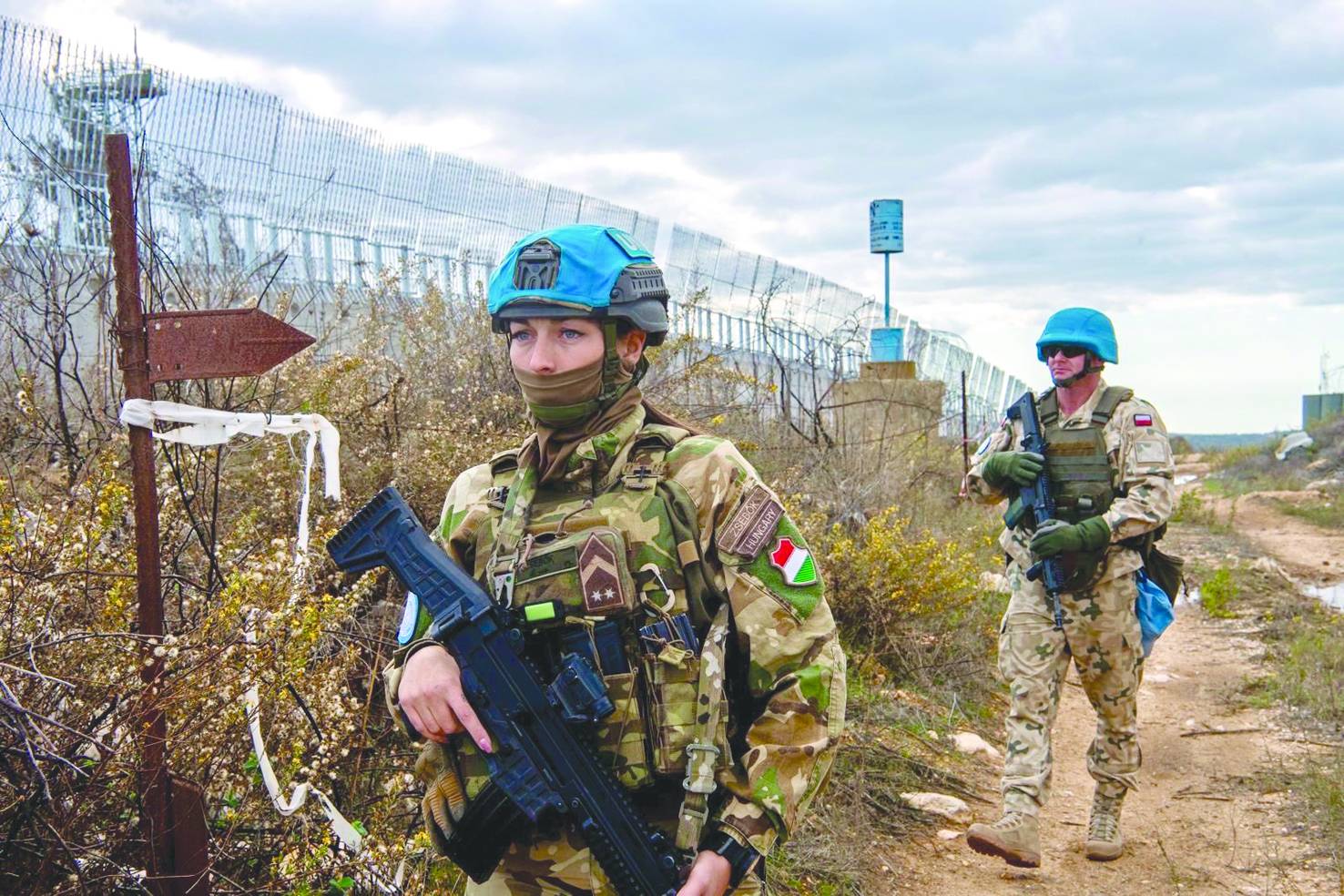
UNIFIL soldiers conducting a foot patrol near the border fence with Israel in southern Lebanon (UNIFIL)
Push for an extension
Lebanese lawmakers are also rallying support for UNIFIL’s continued presence.
MP Fadi Alame, head of the Lebanese parliament’s Foreign Affairs and Emigrants Committee, said the position presented during meetings with representatives of UN Security Council member states was “very clear: Lebanon insists on extending UNIFIL’s mandate and preserving an effective UN presence in southern Lebanon.”
Current conditions make that presence “more necessary than ever,” he told Asharq Al-Awsat.
“The committee hosted representatives of Security Council member states in the presence of the defense minister and a representative of the foreign minister,” Alame said.
“We focused clearly on the need to extend UNIFIL’s mandate. What matters to us is maintaining the UN presence and ensuring that international forces remain active and effective on the ground.”
With parts of southern Lebanon occupied and devastated, the situation increasingly recalls conditions the country faced from the late 1970s onward, he said.
“The south needs an effective UN presence more than ever,” Alame added. “We stressed that point to the ambassadors and diplomatic missions we met.”
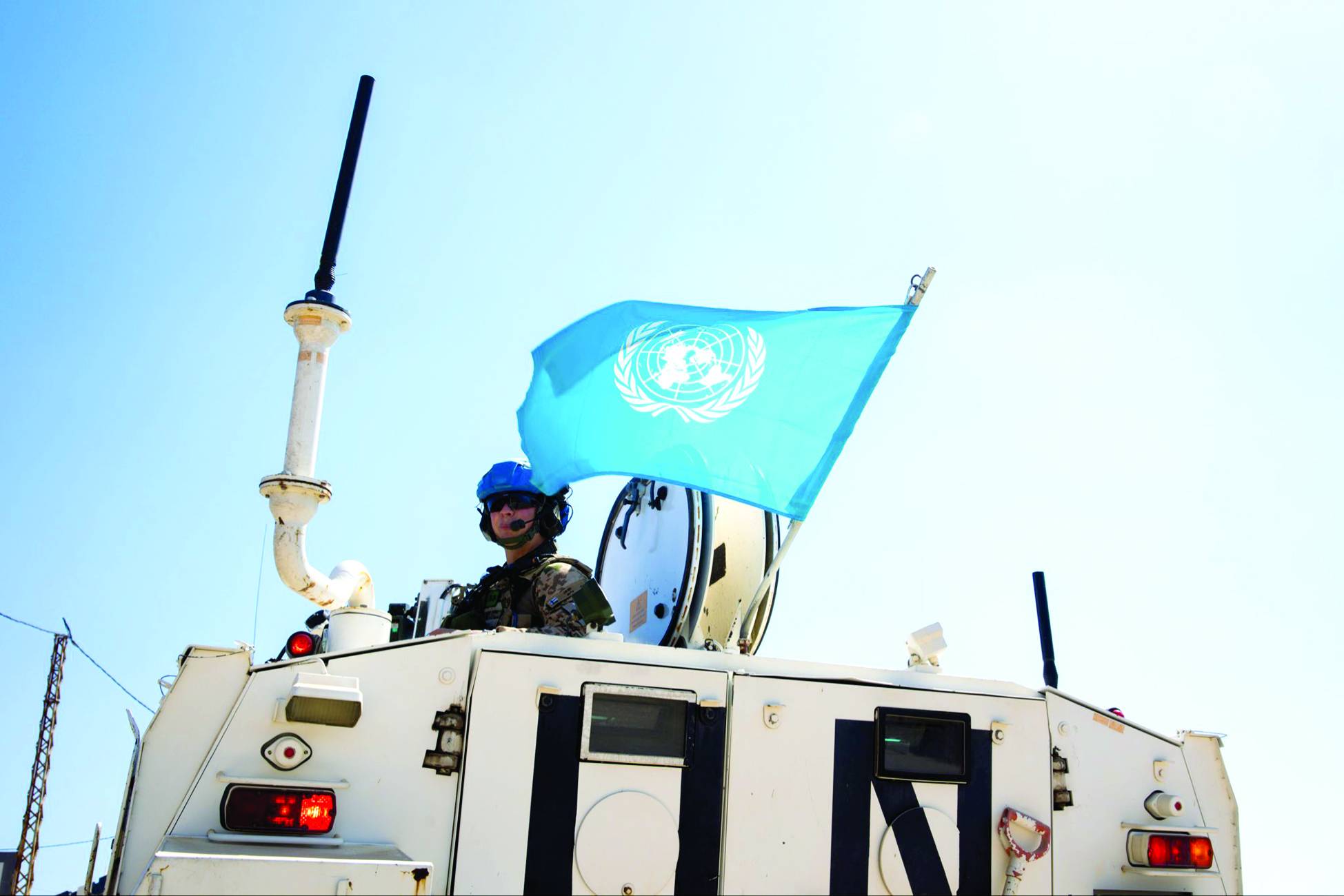
UNIFIL vehicles traveling along the coastal road towards Naqoura town in southern Lebanon (UNIFIL)
Lebanon, therefore, insists on maintaining a UN mandate and keeping Security Council Resolution 1701 as the guiding framework, he said.
“Implementing that resolution requires UN forces on the ground.”
Mission deadline under scrutiny
The Security Council decided in August 2025 to extend UNIFIL’s mandate for the final time, until Dec. 31, 2026. Operations are due to end on that date, followed by an orderly and safe drawdown and withdrawal over one year.
Alame said the decision to end the mission this year should be reconsidered.
“We, as parliament and as the Lebanese state, are working to convince the countries concerned that the current situation requires this force to remain,” he said. “It must play an effective role, continue its duties, cooperate with the Lebanese army and assist it.”
When Resolution 1701 was adopted, only limited areas remained under Israeli occupation, Alame said. Today, there are both occupied and devastated areas.
“That makes a UN force on the ground more necessary — not only to monitor and record violations, but also to help stabilize the situation and support the Lebanese army’s deployment.”
Members of the United Nations Interim Force in Lebanon (UNIFIL) in southern Lebanon (Reuters)
Diplomatic drive in New York
Lebanon and France are meanwhile pushing to keep UNIFIL in place for an additional period.
The Financial Times reported that Beirut had told the Security Council that ending the mandate under current conditions would be premature and called for a limited extension. France and most council members backed the Lebanese request, while Israel opposed it.
Foreign Minister Youssef Raggi has left for New York to attend the UN General Assembly and meet international officials and Arab and foreign counterparts.
Prime Minister Nawaf Salam will lead the Lebanese delegation. The high-level general debate begins on Tuesday, Sept. 22.
In Washington, contacts over Lebanon and negotiations with Israel are continuing after a round of talks scheduled for Rome in September was postponed until October.
A Lebanese presidency statement gave no details about the planned meeting or its participants.
Iraq Reopens Airspace to Civilian Flights After Years of Military Restrictionshttps://english.aawsat.com/arab-world/5319904-iraq-reopens-airspace-civilian-flights-after-years-military-restrictions
Iraq Reopens Airspace to Civilian Flights After Years of Military Restrictions
The exterior of Baghdad International Airport (Reuters)
Iraq said on Friday it had reopened parts of its airspace that had been reserved for military operations against ISIS to civilian aviation after a 10-year closure.
The areas are now available to civilian aircraft, including flights transiting Iraqi airspace, in a move economists said could lower aviation operating costs.
Iraq’s airport management company said areas designated for military operations within the country’s airspace were no longer being used for that purpose and were now ready for civilian air traffic.
The state news agency quoted the company’s director, Ehab Karim, as saying that airspace previously reserved across western Iraq, from north to south, had been handed over to the General Company for Airports and Air Navigation Management for civilian aviation use.
The areas, stretching from the northernmost reaches of Nineveh province to the southern Anbar desert, had largely been reserved for sorties by the international coalition fighting ISIS and the Iraqi Air Force. Iraq began closing them in late 2016.
Karim said procedures to reopen the areas to civilian aviation would pave the way for Iraq’s Aeronautical Information Publication to be updated and made available to international airlines.
Returning the areas to civilian use would provide greater flexibility to establish new air routes, increase revenue, streamline civilian air traffic and support the national economy, Karim said.
He added that Iraqi airports were ready to provide services to all domestic and foreign airlines once the routes opened.
Iraq’s recovery
The Office of the Commander-in-Chief of the Armed Forces said it was ready to support the General Company for Airports and Air Navigation Management following the formal closure of the file on restricted zones in Iraqi airspace.
“This announcement represents an important step towards restoring Iraq’s regional and international standing in air navigation and confirms the country’s recovery and security stability,” the office said in a statement.
It said the move would help improve the management of Iraqi airspace, increase national revenue from aircraft transit fees and facilitate civilian air traffic between continents.
Iraq’s Transport Ministry said in a statement that an airspace management team at the Air Operations Center had established on a technical basis that the military air zones listed in Iraq’s Aeronautical Information Publication were no longer being used for military operations.
The development would pave the way for the completion of technical and regulatory procedures to remove the zones from the publication in coordination with the relevant authorities, the ministry added.
Security expert Fadel Abu Raghif told Asharq Al-Awsat that Iraq was capable of efficiently managing and securing its airspace after the routes were opened.
He also noted the importance of the decision coinciding with the withdrawal of international coalition forces from Iraq by Sept. 30, 2026.
Major shift
Economic expert Ziad al-Hashimi described the decision as a “major shift” for Iraq’s aviation sector, saying it would allow greater traffic and flexibility in the movement and management of air routes through Iraqi airspace.
Al-Hashimi said the decision was likely to shorten flight times and reduce operating costs for airlines transiting Iraqi airspace, particularly those arriving from Europe and Asia.
He added that it would help attract more airlines that had previously regarded alternative or restricted routes as costly to operate.
“The more flights that transit Iraqi airspace, the greater the revenue received by the Iraqi government,” he said.
Al-Hashimi cautioned, however, that European restrictions continued to impede the effective use of Iraqi airspace, with a warning remaining in effect until the end of this month.
After that, he said, the Iraqi government would need to persuade the European Union Aviation Safety Agency to allow European airlines to resume using Iraqi airspace and provide the necessary assurances, particularly regarding the safety of new and existing air routes.
Diplomatic, Military Push for Lebanon in Parishttps://english.aawsat.com/arab-world/5319718-diplomatic-military-push-lebanon-paris
Group photo of participants in a meeting to support the Lebanese Armed Forces in Paris on Thursday (French president’s account)
Senior officials and military officers gathered in Paris on Thursday to discuss support for the Lebanese Armed Forces and security services.
French President Emmanuel Macron first met Lebanese President Joseph Aoun at the Elysee Palace before the two joined Jordan’s King Abdullah II for a trilateral summit at Les Invalides.
The three leaders later opened a technical-military meeting attended by military commanders, chiefs of staff and senior officers from 17 countries and organizations.
“Paris is today the place where our partners are coming together to strengthen Lebanon’s sovereignty and enable it to fully ensure its own security,” Macron wrote on X.
“A Lebanon at peace offers renewed hope for the entire Middle East. A sovereign and stable Lebanon is a decisive step toward peace and stability across the region.”
“Together with the Lebanese president and the king of Jordan, and in close coordination with the United States, Saudi Arabia and our international partners, we support the Lebanese Armed Forces, which are indispensable to asserting the authority of the Lebanese state throughout its territory,” he added.
Turning to wider regional tensions, Macron argued that “diplomacy and dialogue alone” could end an escalation with no prospect of resolution.
He reiterated France’s solidarity with Jordan and condemnation of Iranian attacks, while stressing the importance of freedom of navigation through the Strait of Hormuz, the Red Sea and the Bab al-Mandab Strait.
Regional Dimension
Aoun revealed measures taken by the state and urged support for its armed forces as an investment in regional security and stability.
King Abdullah’s participation, within the framework of the Aqaba Process, gave the meeting a broader regional dimension.
According to Lebanon’s National News Agency (NNA), citing presidential sources, the three leaders discussed the “dangerous regional situation” and stressed the need to intensify international efforts toward comprehensive and sustainable de-escalation. They also discussed developments in Gaza, the West Bank and Jerusalem.
Aoun stressed the interconnected nature of regional security and called for a common regional security strategy based on joint energy projects and economic, security and political cooperation.
The Lebanese president also sought to put behind him a period of strained relations with France, thanking Macron for France’s support for Lebanon and its efforts to strengthen state authority, sovereignty and official institutions.
He praised Macron’s efforts, in cooperation with the Italian prime minister, to find an alternative to UNIFIL to prevent a security vacuum in South Lebanon, and called for broader economic and energy cooperation, including the resumption of oil and gas exploration in Lebanese blocks.
‘A Moment for Decision’
Aoun painted a bleak picture of conditions in South Lebanon because of Israeli attacks and practices, but said the country now had an opportunity based on “a clear determination to rebuild the state and its institutions and move forward with the reforms the country needs.”
He said the goal was to establish “a strong state and effective institutions,” with the army and security services playing a central role.
While emphasizing the importance of the state’s monopoly on weapons, Aoun insisted that this was “first and foremost a Lebanese choice and a Lebanese interest.”
He also defended negotiations with Israel, warning that agreements succeed not merely by being signed but by being respected and implemented by all parties.
He called on Lebanon’s “friends and partners” to help ensure the full implementation of what had been agreed and to treat Lebanon’s sovereignty and territorial integrity as a principle “not subject to selectivity.”
Aoun detailed the army’s responsibilities, including extending state authority, maintaining security and stability, preventing border violations and combating smuggling. He also highlighted the role it would be expected to assume after UNIFIL’s mission ends to prevent a security vacuum.
“There can be no strengthening of state authority without strong, effective military and security institutions present throughout Lebanese territory,” he underlined.
The Lebanese president called for concrete results from the preparatory meeting, including a roadmap and clear timetable for an international conference to support the army and Internal Security Forces, as well as a long-term approach to assisting Lebanon’s security institutions.
He pledged “full transparency and accountability” and said the Lebanese state would assume a growing share of financing its security institutions.
“Invest in the success of the Lebanese state and in the stability of the region,” Aoun concluded. “This is a moment for decision, not a moment for waiting.”
لم تشترك بعد
انشئ حساباً خاصاً بك لتحصل على أخبار مخصصة لك ولتتمتع بخاصية حفظ المقالات وتتلقى نشراتنا البريدية المتنوعة