


Ukrainian Woman Accused of Helping Lebanon’s Central Bank Governor Fund Embezzlement

An file photo of Lebanese Central Bank Governor Riad Salameh in his office. (AFP) 
TT

Ukrainian Woman Accused of Helping Lebanon’s Central Bank Governor Fund Embezzlement

An file photo of Lebanese Central Bank Governor Riad Salameh in his office. (AFP) 

The French Judiciary indicted a Ukrainian woman, who was said to be close to the governor of Lebanon’s Central Bank, Riad Salameh, as part of its investigation into the latter’s wealth in France.  

AFP quoted a French judicial source as confirming that the charges against Ukrainian Anna Kozakova, 46, include “criminal conspiracy,” “laundering in organized gang” and “laundering of aggravated tax fraud”. 

France, Germany and Luxembourg announced last March that they had frozen 120 million euros of Lebanese assets following an investigation into embezzlement, in a move targeting Salameh and four of his relatives.  

A number of properties in France suspected of belonging to Salameh were also confiscated, including apartments in the 16th arrondissement, which are among the most expensive in the French capital, and spaces located on the Champs-Elysees Avenue, in addition to bank accounts.  

French investigators took over the case in July 2021 following complaints filed in April of the same year by the Group of Victims of Fraudulent and Criminal Practices in Lebanon and the French association Sherpa, an NGO that defends victims of economic crimes.  

Lawyers for the complainants, William Bourdon and Amelie Lefebvre, said the filing of charges was important given Kozakova’s relationship with Salameh. However, they added that this step was only a first stage, noting that the size of the (asset) confiscation measures portended other developments, beyond Salameh’s circle.  

The French judiciary has not yet brought charges against Salameh, who has repeatedly defended himself, saying that he is was a “scapegoat” for the economic crisis in Lebanon.  

Salameh is facing many complaints against him in several countries. Last year, Lebanese authorities opened a case at the request of the Swiss Public Prosecution over whether he and his brother Raja had transferred sums exceeding $300 million.  

Despite the complaints, summons, investigations, and travel ban issued against him last January, Salameh remains in the position he has held since 1993, making him one of the longest-serving central bank governors in the world.  

The man, who has been described for years as being behind the stability of the Lebanese pound, also faces criticism about the monetary policies he adopted for decades, which led to the accumulation of debts. 

In Beirut, the recent French decision on Kozakova, who is believed to have a relationship with Salameh, did not shock Lebanese authorities.  

The Lebanese judiciary had previously charged the woman, along with Salameh and his brother with similar crimes, but a judicial source told Asharq Al-Awsat that the file “involved internal and external complications that are impossible to resolve within the legal framework, and through judicial prosecution procedures.”  

The sources noted that the case “has other dimensions” amid the ongoing political disputes in Lebanon and external interference.


ISIS Lashes Out at Syria's Sharaa, Announces ‘New Phase of Operations’

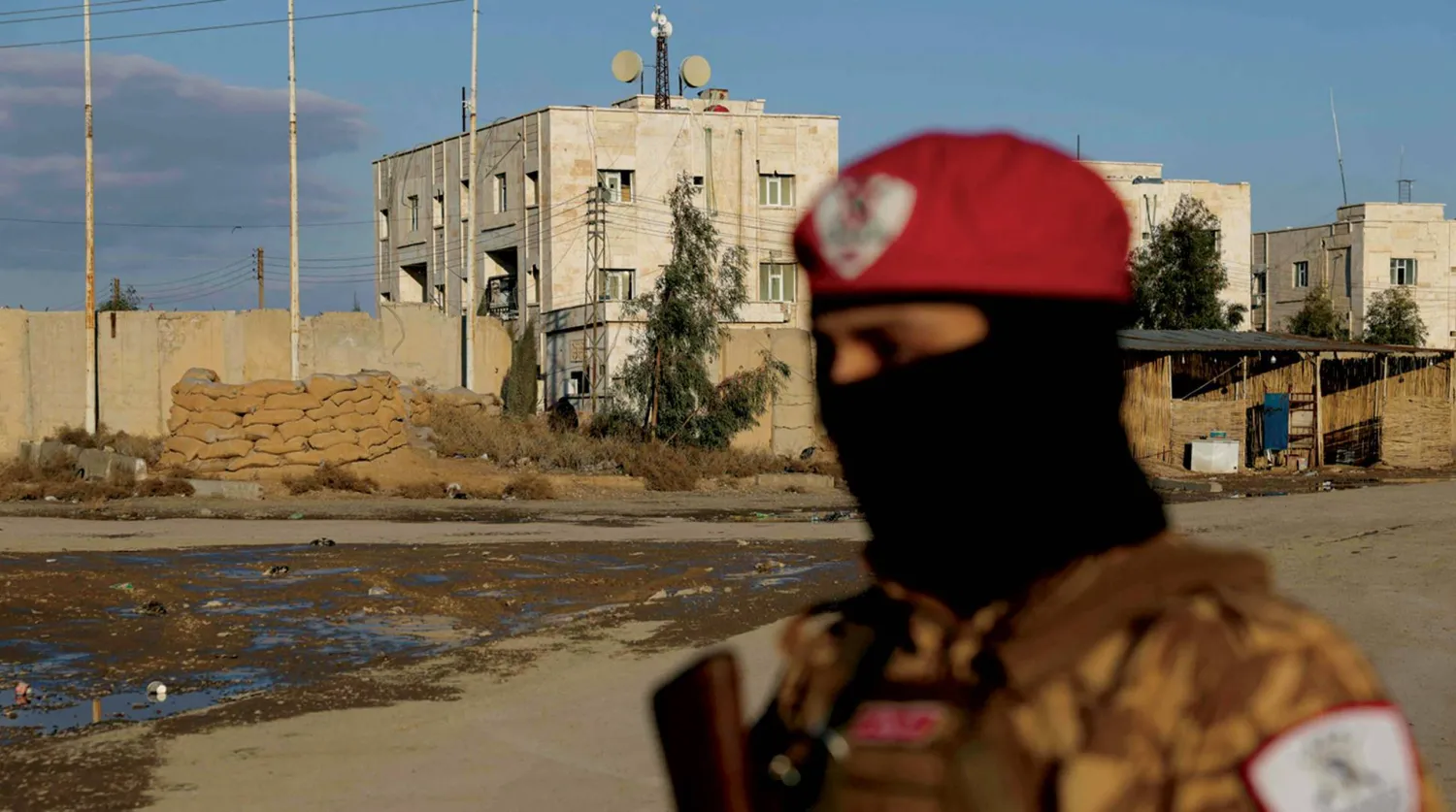
A Syrian government soldier outside Al-Aqtan prison in Raqqa, which holds ISIS detainees (AFP)
TT

ISIS Lashes Out at Syria's Sharaa, Announces ‘New Phase of Operations’

A Syrian government soldier outside Al-Aqtan prison in Raqqa, which holds ISIS detainees (AFP)

Syria’s Defense Ministry said on Sunday that a Syrian army soldier and a ‌civilian were killed a day earlier by “unknown assailants” in the northern city of Raqqa.

ISIS claimed ‌responsibility for two attacks targeting Syrian army personnel in northern and eastern Syria.

The militant group said on its Dabiq news agency that it had targeted “an individual of the apostate Syrian regime” in the city of Mayadin in Deir Ezzor province using a pistol, and attacked two other personnel with machine guns in Raqqa.

The attacks came after ISIS blasted Syria’s interim president, Ahmad al-Sharaa, calling him a “puppet without a soul” controlled by Western countries, adding that his fate eventually will be similar to that of ousted leader Bashar Assad.

In an audio message released late Saturday by the group’s spokesman, who identifies himself as Abu Huzaifa al-Ansari, he called on ISIS followers around the world to attack Jewish and Western targets as they have in past years.

The ‌group also said it had begun a “new phase of operations” in Syria.

Al-Ansari sent greetings to ISIS militants from the group’s leader Abu Hafs al-Hashemi al-Qurayshi who was named as the head of the group three years ago.

The audio is the first to be released by the group in months and comes after ISIS was blamed for attacks that left dozens dead or wounded in recent months in Syria, Iraq, Pakistan and other parts of the world.

The latest incidents come two days after ISIS claimed responsibility for another attack in Deir Ezzor that killed a member of the Interior Ministry’s internal security forces and wounded another.

In December, the group was blamed for an attack in central Syria that left three Americans dead and triggered intense US airstrikes on the extremists’ suspected hideouts in the country.


Hamas Official Says Group in Final Stage of Choosing New Chief

Tents are erected to house displaced Palestinian families in the al-Zahara neighborhood, north of the Nuseirat refugee camp in the central of Gaza Strip on February 21, 2026. (Photo by Eyad Baba / AFP)
TT

Hamas Official Says Group in Final Stage of Choosing New Chief

Tents are erected to house displaced Palestinian families in the al-Zahara neighborhood, north of the Nuseirat refugee camp in the central of Gaza Strip on February 21, 2026. (Photo by Eyad Baba / AFP)

A senior Hamas official told AFP on Sunday that the Palestinian movement was in the final phase of selecting a new leader, with two prominent figures competing for the position.

Hamas recently completed the formation of a new Shura Council of more than 80 members, a consultative body largely composed of religious scholars, as well as a new 18-member political bureau, the official said.

Since the war in Gaza began after Hamas's October 7, 2023 attack on Israel, Israeli forces have killed several Hamas leaders, including two former chiefs.

"The movement has completed its internal elections in the three regions and has reached the final stage of selecting the head of the political bureau," the official said, speaking on condition of anonymity as he was not authorized to speak publicly.

According to AFP, he said the race for the group's leadership was now between Khaled Meshaal and Khalil al-Hayya.

A second Hamas source confirmed the development, while a third source said the new leader would lead the movement only "for one year.”

Despite a US-brokered ceasefire that entered its second phase last month, violence has continued in Gaza, with Israel and Hamas blaming each other for violating the agreement.

Members of the council are elected every four years by representatives from Hamas's three branches: the Gaza Strip, the occupied West Bank and the movement's external leadership.

Hamas prisoners in Israeli jails are also eligible to vote.

The council subsequently elects the political bureau, which in turn selects the head of the movement.


Berri to Asharq Al-Awsat: Parliamentary Elections Will Be Held on Time 

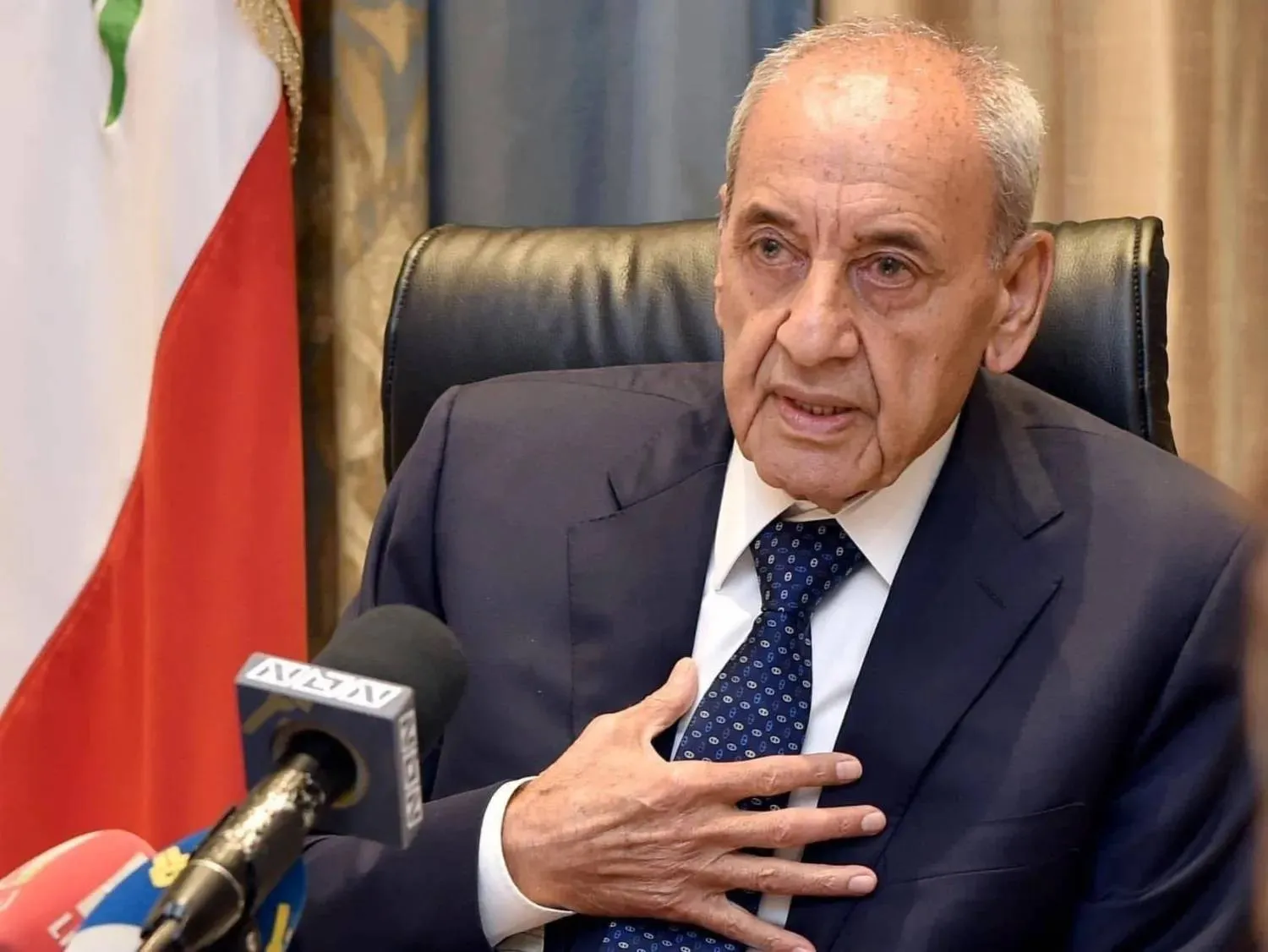
Parliament Speaker Nabih Berri. (Lebanese parliament)
TT

Berri to Asharq Al-Awsat: Parliamentary Elections Will Be Held on Time 

Parliament Speaker Nabih Berri. (Lebanese parliament)

Lebanon continues to come under pressure to postpone the parliamentary elections in May with international powers believing that priority in the country lies in disarming Hezbollah and granting Prime Minister Nawaf Salam’s government more time to approve financial, economic and administrative reforms.

Israel also continues to apply pressure on Lebanon as it maintains its attacks against Hezbollah, targeting its members and fighters across the country and delivering a message that it has no choice but to disarm.

Despite the pressure, parliament Speaker Nabih Berri stressed that the elections will be held on time.

In remarks to Asharq Al-Awsat, he said he had conveyed this position to the ambassadors of the quintet committee countries, who want to delay the polls.

“I do not support the postponement or the extension of parliament’s term,” he added.

“I was the first to announce my nomination,” he noted, explaining that he did so to block claims that he wanted to delay the elections and extend the term of parliament.

“This is a message to whom it may concern inside Lebanon and beyond: I am committed to seeing the elections through to the end,” Berri declared, saying he had advised several members of his Amal movement to submit their candidacies.

Moreover, the speaker said the postponement “was not justified.”

The elections will be held on time and according to the current electoral law, he vowed. “Those who want to postpone them should assume responsibility for their position and not blame it on others.”

Commenting on the latest Israeli strikes on Lebanon that targeted the central and northern Bekaa in the east, he described them as a “new war aimed at pressuring the country to surrender to Tel Aviv’s conditions.”

A prominent military source told Asharq Al-Awsat that the raids sought to deliver a message to Hezbollah members and fighters that they no longer had a safe place to hide.

Israel can pursue them and assassinate them anywhere, it added.

The success of these attacks means that the Iran-backed party has been breached, something that has been acknowledged by several of its MPs, who have vowed to investigate the issue, it said.