


Tunisia Awaits Languid Election for Powerless Parliament

Tunisian opposition parties have urged a boycott of Saturday's poll, which they say is part of a 'coup' against the only democracy to have emerged from the Arab Spring. FETHI BELAID / AFP
TT

Tunisia Awaits Languid Election for Powerless Parliament

Tunisian opposition parties have urged a boycott of Saturday's poll, which they say is part of a 'coup' against the only democracy to have emerged from the Arab Spring. FETHI BELAID / AFP

Tunisians go to the polls Saturday to elect a parliament largely stripped of its powers, under a hyper-presidential system installed by the head of state Kais Saied after his power grab last year.

Over a decade since Tunisia's popular revolution unseated Zine El Abidine Ben Ali, opposition parties have urged a boycott of the vote, which they say is part of a "coup" against the only democracy to have emerged from the 2011 Arab Spring uprisings.

The election for the new 161-seat assembly comes after President Saied froze the previous legislature on July 25 last year, following months of political crisis exacerbated by the coronavirus pandemic.

He later dissolved the parliament, which had long been dominated by the Ennahdha party.

Saied on Wednesday defended his decision, saying that the "Tunisian people, wherever I went, were all asking to dissolve the parliament".

"The country was on the brink of civil war," he told US Secretary of State Antony Blinken in Washington.

The previous legislature had far-reaching powers, in the mixed presidential-parliamentary system enshrined in the North African country's post-revolution constitution.

Last July, Saied used a widely shunned referendum to push through a new constitution, stripping parliament of any real clout and giving his own office almost unlimited powers.

- 'Rump parliament' -
Analyst Hamadi Redissi said the aim of Saturday's polls was "to complete the process that started on July 25" last year.

The resulting parliament "won't have many powers -- it won't be able to appoint a government or censure it, except under draconian conditions that are almost impossible to meet".

Saied's new system essentially does away with political parties and electoral lists, meaning candidates will be elected as individuals with no declared affiliation.

The assembly's final make-up is not expected to be determined until March next year, after any second-round run-offs have been completed.

The vote aims "to increase the legitimacy of the presidency", Redissi said, adding that the result would be "a rump parliament without any powers".

Almost all the country's political parties, including Ennahdha, have said they will boycott the vote, labeling Saied's moves a "coup".

The head of the National Salvation Front, the main opposition alliance which includes Ennahdha, said the bloc would not recognize the results.

The elections "will plunge the country even further into political crisis," Ahmed Nejib Chebbi told journalists in Tunis on Thursday.

He also voiced alarm over the postponement of a critical International Monetary Fund meeting next Monday, at which the Washington-based lender was to decide on a bailout package for the deeply indebted North African country.

The delay "threatens the country's economic balance", he said.

The powerful UGTT trade union federation, which did not openly oppose the initial power grab, has called the poll meaningless.

Most of the 1,058 candidates are unknowns.

The Tunisian Observatory for Democratic Transition says some 26 percent are teachers, and a further 22 are mid-level public servants.

The election result will likely see a drop in the representation of women, with just 122 female candidates.

- 'Bad to worse' -
Few of the country's nine million registered voters are expected to turn out.

Several young people told AFP they had little interest in the election or desire to know more about the candidates.

Marwa Ben Miled, a 53-year-old shopkeeper, told AFP the country was "going from bad to worse".

"What happens on the political scene doesn't interest me anymore," she said. "I don't trust anyone."

Saied's electoral law forbids candidates from speaking to the foreign press, a stance the North Africa Foreign Correspondents' Club said would make it difficult for journalists to do their jobs.

Saied has made several public appearances, meeting market traders in the Old City of Tunis in the run-up to the vote.

Some social media users have posted satirical images ridiculing the vote.

In one video, a mock candidate appears with a cigar and smelling a posy of jasmine, before giving a donation to a pair of musicians who then shout pro-Saied slogans.



Reports: US to Withdraw All Troops from Syria

A US Army patrol in the Syrian city of Qamishli (Reuters file photo)
TT

Reports: US to Withdraw All Troops from Syria

A US Army patrol in the Syrian city of Qamishli (Reuters file photo)

The United States is planning to withdraw all of its 1,000 troops from Syria over the next two months, according to US media reports.

Washington will end its presence in the country after the Syrian government extended its control over the country and the Kurdish-led Syrian Democratic Forces once key to fighting ISIS pledged to integrate into the state, the Wall Street Journal reported.

Television network CBS also reported on the plan, citing unnamed US officials.

The decision comes after US forces recently withdrew from some bases
in Syria including Al-Tanf and Al-Shadadi, which were used in the US-led international coalition's fight against ISIS, AFP reported.

The US is building up its military capabilities near Iran, where officials have vowed to respond to any attack by laying siege to American military outposts in the region.

US media reported Wednesday that Washington will be ready to launch strikes against Iran as early as this weekend, though Trump has reportedly not made a final decision yet.

The Pentagon did not immediately respond to a request for comment.


Canada Eases Sanctions on Syria

13 February 2026, Bavaria, Munich: Anita Anand, Minister of Foreign Affairs of Canada, arrives at the Bavarian Hof for the 62nd Munich Security Conference. Photo: Felix Hörhager/dpa
TT

Canada Eases Sanctions on Syria

13 February 2026, Bavaria, Munich: Anita Anand, Minister of Foreign Affairs of Canada, arrives at the Bavarian Hof for the 62nd Munich Security Conference. Photo: Felix Hörhager/dpa

Canadian Minister of Foreign Affairs Anita Anand said on Wednesday that Canada had amended its economic sanctions on Syria ‌to ease ‌restrictions related ‌to the ⁠import and export ⁠of goods, investment activities and the provision of financial and other ⁠services, according to Reuters.

"The amendments also ‌remove ‌24 entities and ‌one individual from ‌the Syria Regulations to reduce barriers to economic activity and ‌to enable transactions with state-affiliated entities ⁠in ⁠key sectors critical to Syria’s recovery," Anand said in a statement.


Tetteh: Despite UN Engagement, No Progress in Libya Roadmap

Head of the United Nations Support Mission in Libya Hanna Tetteh Getty)
TT

Tetteh: Despite UN Engagement, No Progress in Libya Roadmap

Head of the United Nations Support Mission in Libya Hanna Tetteh Getty)

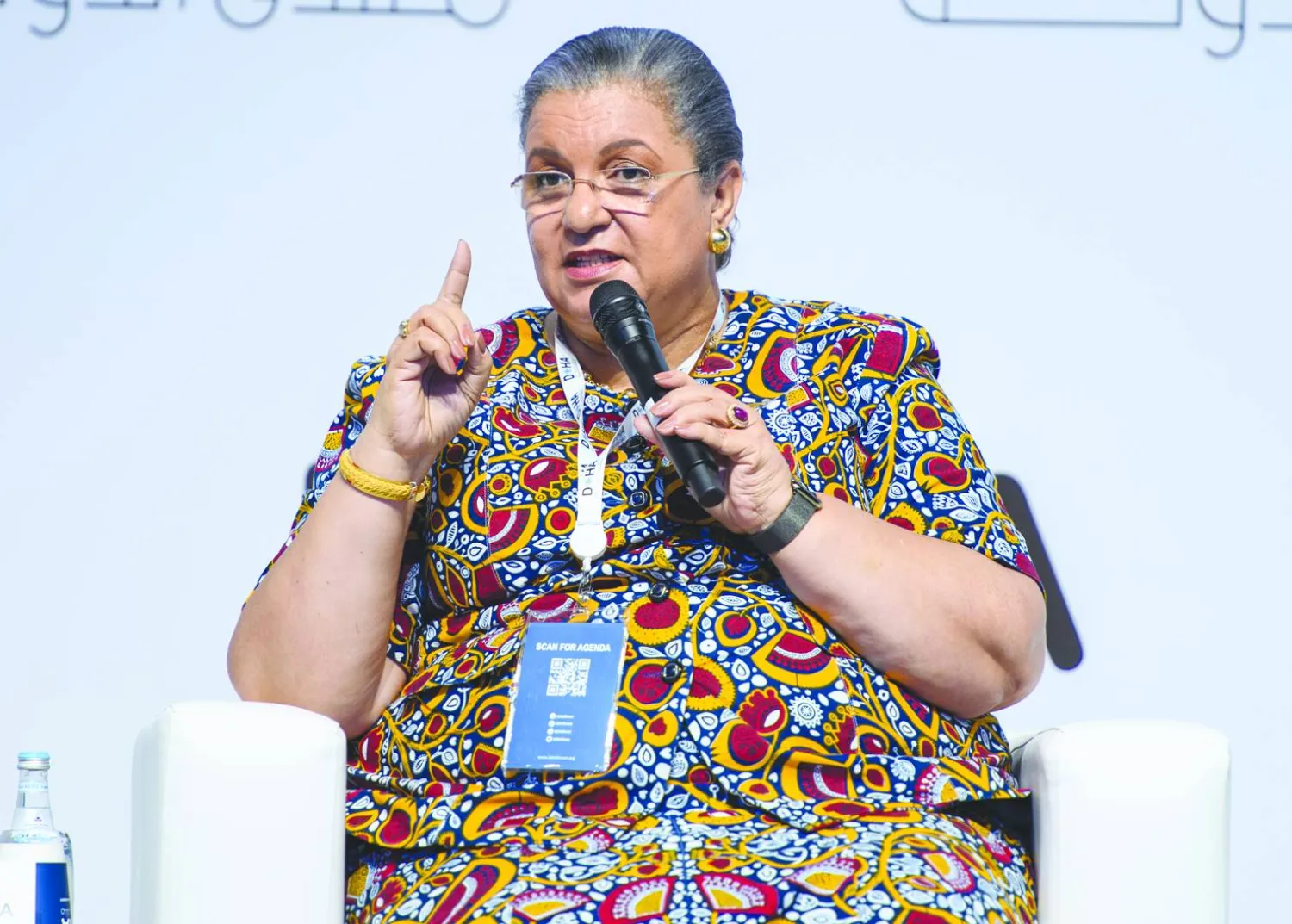
The UN’s top envoy for Libya, Hanna Tetteh, has informed the Security Council that despite active United Nations engagement, the Libyan House of Representatives and the High Council of State have failed to make progress on the first steps of the agreed political roadmap, including establishing a mechanism to select the board of the High National Elections Commission (HNEC) and advancing electoral legislation.

Briefing the Council in New York on Wednesday, the Special Representative of the Secretary-General said: “Their inability to use their agreed mechanism and follow-on unilateral actions has further eroded their credibility."

Tetteh added that Libyan public perceptions reflect a growing belief that the bodies are “unable or unwilling” to deliver.

She told Council members that she has begun consultations with key actors on an alternative two-step approach aimed at restoring momentum. Should a smaller group of Libyan representatives fail to agree on the roadmap’s milestones, she warned, a broader convening would be required. “We cannot wait indefinitely,” she emphasized.

The UN envoy also issued a stark warning about escalating tensions within Libya’s judicial system.

She said “contradictory, parallel judicial decisions put into jeopardy the unity of the legal and judicial systems,” cautioning that the situation “is a red line that if crossed can undermine the unity of the state.”

She urged Libyan leaders to refrain from further escalatory steps and called on the Council to hold accountable those taking actions that threaten to fracture the judiciary.

Tetteh also warned that transnational criminal networks continue to expand, turning Libya into a major transit hub for drug trafficking and sustaining illicit economies linked to corruption and armed groups.