


Twitter Suspends Accounts of Journalists Covering Musk

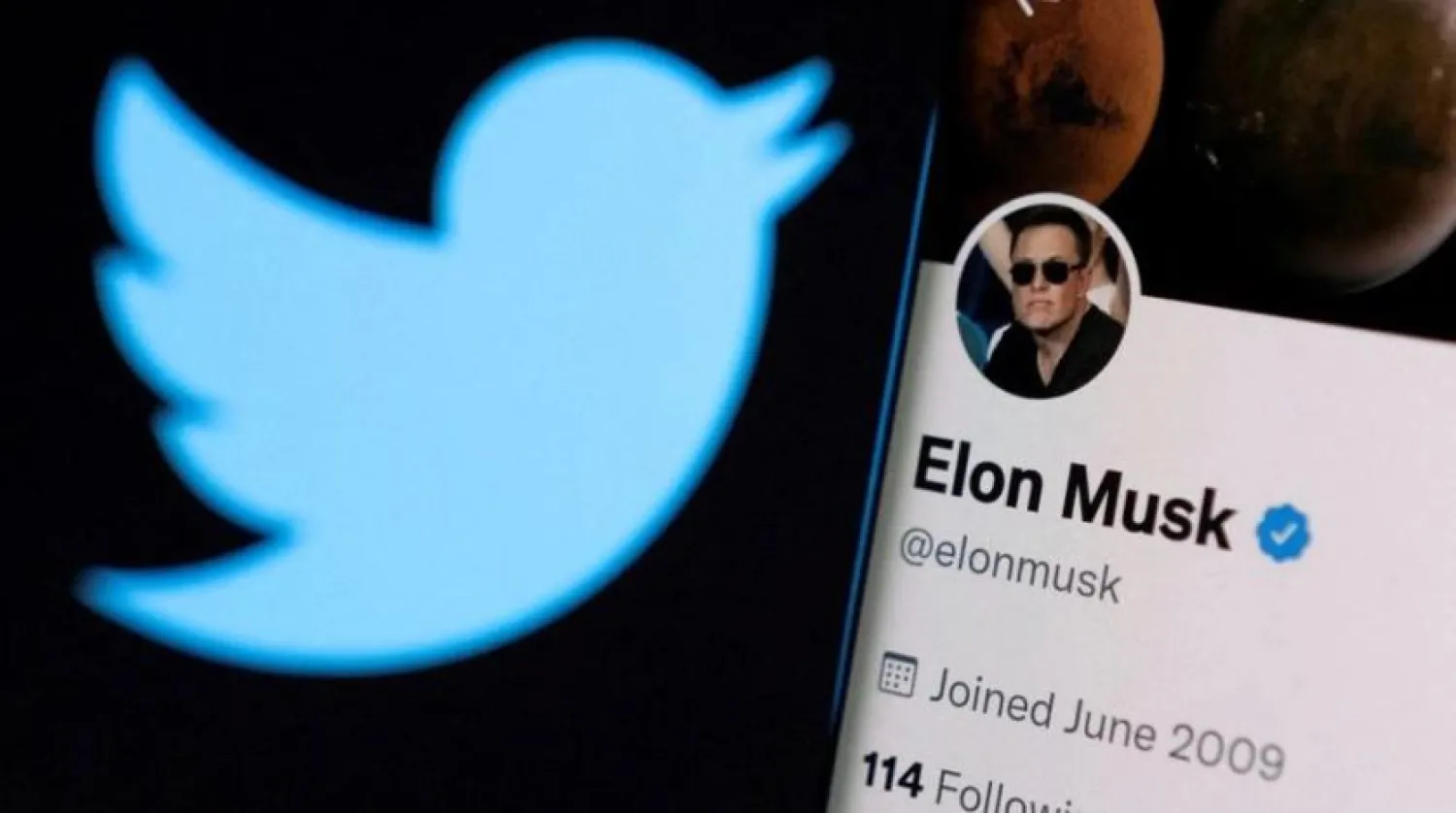
Elon Musk's Twitter account is seen on a smartphone in front of the Twitter logo in this photo illustration taken, April 15, 2022. REUTERS/Dado Ruvic/Illustration
TT

Twitter Suspends Accounts of Journalists Covering Musk

Elon Musk's Twitter account is seen on a smartphone in front of the Twitter logo in this photo illustration taken, April 15, 2022. REUTERS/Dado Ruvic/Illustration

Twitter suspended Thursday accounts of more than a half-dozen journalists who had been writing about the company and its new owner Elon Musk.

Silencing journalists at Twitter while claiming to be a free speech champion is the latest controversy provoked by Musk since he took over the company, which has seen staffing gutted and advertisers exit, AFP said.

Some of the journalists had been tweeting about Twitter shutting down an @ElonJet account that tracked flights of billionaire Musk's private jet and about versions of that account hosted at other social networks.

Twitter did not say why the reporters' accounts were suspended.

"Nothing says free speech like suspending journalists who cover you," Sarah Reese Jones of news commentary website PoliticusUSA said in a tweeted response to posts about the suspensions.

Checks at Twitter showed account suspensions included reporters from CNN, The New York Times, and The Washington Post as well as independent journalists.

"The impulsive and unjustified suspension of a number of reporters, including CNN's Donie O'Sullivan, is concerning but not surprising," the news organization said in a tweet.

"Twitter's increasing instability and volatility should be of incredible concern for everyone who uses the platform."

CNN said that it has asked Twitter for an explanation of the suspension.

In a statement, The New York Times said it also wanted answers from Twitter regarding the "questionable" suspension of journalists.

"I have no idea what rules I purportedly broke," independent journalist Aaron Rupar, whose Twitter account was suspended, wrote in a Substack post.

"I haven't heard anything from Twitter at all."

In a tweet late Thursday, Musk appeared to allude to the suspension of the reporters' accounts with this tweet: "If anyone posted real-time locations & addresses of NYT reporters, FBI would be investigating, there’d be hearings on Capitol Hill & Biden would give speeches about end of democracy!"

Musk on Wednesday tweeted that a car in Los Angeles carrying one of his children was followed by "a crazy stalker" and seemed to blame the tracking of his jet for this alleged incident. In the tweet, he said legal action is being taken against the person who ran ElonJet.

The Twitter account that tracked flights of Musk's private jet was shut down Wednesday despite the billionaire's statement that he is a free speech absolutist.

Twitter later sent out word that it updated its policy to prohibit tweets, in most cases, from giving away someone's location in real time.

Musk had gone public saying he would not touch @ElonJet after buying Twitter in a $44 billion deal as part of his commitment to free speech at the platform.

- Exodus expected -
Twitter has lurched from one controversy to the next since Musk took control in late October.

The billionaire's talk of unfettered speech scared off major advertisers and caught the attention of regulators.

Musk has reinstated the account of former US president Donald Trump and lashed out against the outgoing key advisor for the US response to the Covid-19 pandemic, Anthony Fauci, a frequent target of vitriol on right-wing media.

CNN has reported that Twitter's former head of trust and safety fled his home after baseless attacks on Twitter content moderation, endorsed by Musk.

Meanwhile, a purge initiated by Musk at Twitter left more than half of its 7,500 employees on the sidelines and now many of them are taking the SpaceX and Tesla tycoon to court.

Musk at one point signaled he was going to war with Apple over the App Store, only to later tweet that it was a "misunderstanding."

Market tracker Insider Intelligence forecast that Twitter will experience an exodus of users.

"There won’t be one catastrophic event that ends Twitter," said Insider Intelligence analyst Jasmine Enberg.

"Instead, users will start to leave the platform next year as they grow frustrated with technical issues and the proliferation of hateful or other unsavory content."



Fear and Anger Brew Inside Meta amid AI Frenzy

The word "Hack" is seen in this aerial view of Meta's corporate headquarter offices in Menlo Park, California. JOSH EDELSON / AFP
TT

Fear and Anger Brew Inside Meta amid AI Frenzy

The word "Hack" is seen in this aerial view of Meta's corporate headquarter offices in Menlo Park, California. JOSH EDELSON / AFP

A frenzied push for artificial intelligence dominance comes with a different kind of cost for Meta, where massive layoffs, employee surveillance and departures have fueled reports of a heated internal climate.

As Meta spends billions annually to build out its AI capabilities, employees at Facebook, Instagram and WhatsApp are increasingly unhappy with their Mark Zuckerberg-led parent company, AFP reported.

Meta employees have weathered frequent layoffs since early 2025, including this spring when the company cut 10 percent of its workforce -- some 8,000 jobs -- and reshuffled another 7,000 employees.

For those who remain, an internal AI training initiative has drawn accusations of surveillance.

The company also underwent a major reorganization of its AI research division, into which Zuckerberg, Meta's founder and chief executive, has poured billions of dollars.

The malaise stands in stark contrast to Meta's robust finances -- driven by advertising, which makes up nearly 98 percent of its revenue. In the first three months of 2026, Meta's net income rose to more than $26 billion.

However, the bill for its AI investments is also exploding, prompting Zuckerberg, who has near-absolute power over the company, to impose sweeping cuts and increased monitoring of employees in the name of efficiency and savings.

The cuts are funding a massive race for infrastructure: Meta plans to spend up to $145 billion on AI investments this year, nearly twice last year's figure.

Harvesting data

After thousands of employees were reassigned to Meta's AI division, some, speaking anonymously to US media, have complained of "mind-numbing" tasks designed to train machines, or even automate away their own jobs.

That controversial program, called the Model Capability Initiative, was rolled out in April and suspended on June 22. It captured clicks, keystrokes and browsing activity of US employees to train AI agents -- software capable of independently performing tasks.

Zuckerberg, who has made AI the company's North Star, defended the program during an internal meeting: "AI models learn by watching really smart people do things," he said, according to Wired.

But the tool sparked a revolt. More than 1,600 employees signed a petition calling for it to end, with some likening the company to a "data extraction factory," according to media reports.

The pause came after private conversations, and performance data inadvertently became accessible to all staff. The system risked drawing the attention of European regulators, since it captured exchanges between employees on both continents.

In a statement to AFP Tuesday, a Meta spokesperson said the program was designed with privacy safeguards.

"While we have no indication at this time that any data was improperly accessed by Meta employees, we're pausing it while we investigate," the statement said.

One employee summed up the mood with a meme from "The Office," posted on an internal company forum, reading: "0 days since our last nonsense."

'Dead end quest'

All of these efforts aim to make up for a persistent lag behind Google, OpenAI and Anthropic, which dominate the race for cutting-edge AI models. Meta's own models, repeatedly delayed, have proved disappointing even internally.

To regain ground, Zuckerberg invested over $14 billion last year into Scale AI, a San Francisco-based startup, and poached its CEO Alexandr Wang -- who was 28 years old at the time -- to run a "superintelligence" lab inside Meta.

The expensive bet has yet to win people over. Several key figures have since walked out, among them Yann LeCun, considered one of the "godfathers" of modern AI, who had led Meta's AI research since 2013.

LeCun suddenly found himself reporting to Wang, more than 35 years his junior. He left Meta at the end of 2025 to launch his own startup.

In an interview with the Financial Times, the Turing Award winner lamented that, although "he learns fast," Wang has "no experience with research" and was on "a dead end" quest.

The stakes for Meta go beyond its social networks now. The company is also doubling down on consumer electronics with smart glasses and is considering a new prediction-market app called Arena, potentially in partnership with Polymarket and Kalshi, according to The New York Times.

Lawsuits also threaten to consume time and resources.

For the first time, a Los Angeles jury in March found Meta liable for the effects of social media addiction, just one day after a separate ruling in New Mexico said Meta had failed to protect minors.

Meta has appealed, but more lawsuits are expected this year.


South Korean Trade Watchdog Alleges Google Abused Its Position in Android App Store

A pedestrian walks past the Google offices in London, Britain, August 14, 2025. (Reuters)
TT

South Korean Trade Watchdog Alleges Google Abused Its Position in Android App Store

A pedestrian walks past the Google offices in London, Britain, August 14, 2025. (Reuters)

South Korea's antitrust regulator alleged on Wednesday that Alphabet's Google abused its dominant position in the Android app marketplace to hinder competition and will recommend corrective measures and a financial penalty.

The Korea Fair Trade Commission's (KFTC) Market Surveillance Bureau found Google's alleged abuse of market dominance in the Android app marketplace affected 14.16 trillion won ($9.1 billion) in revenue, the bureau said in a media briefing where it released its examiner's report on the matter.

From July ‌2019 to March ‌2026, Google's Games/Google Velocity Program, which it ‌internally ⁠called "Project Hug", offered domestic ⁠and overseas game developers financial support for using Google services such as Cloud, Ads and YouTube, provided that they launched games on Google's app store on terms at least as favorable as rival app marketplaces, the report said.

The contracts were also structured so that Google's financial ⁠support increased progressively as developers generated more ‌revenue through Google Play, creating ‌stronger incentives to prioritize Google's marketplace.

The program significantly reduced developers' ‌incentives to distribute games through competing app stores, including South ‌Korea's OneStore, blocking rivals' business activities and forcing developers into de facto exclusive dealing with Google, according to the report.

"Google Play competes fairly with other app stores and delivers numerous benefits ‌to developers and consumers in Korea.

"We have cooperated diligently with the KFTC's investigation, and ⁠we will ⁠continue to show the Commissioners that there has been no violation of the law,” Google said in a statement to Reuters.

If the commission ultimately concludes that Google abused its market dominance, it may impose a fine of up to 6% of the relevant affected revenue of $9.1 billion.

Google has eight weeks from receiving the examiner's report to submit a written response and review the evidence.

The bureau said it plans to convene the full commission and issue a final ruling promptly once Google's due process rights have been fully observed.


US Govt Lifts Restrictions on Powerful AI Models, Anthropic Says

FILED - 06 May 2026, US, San Francisco: FILE PHOTO - The logo of the Artificial intelligence company Anthropic is on display at an event hosted by the company. Photo: Andrej Sokolow/dpa
TT

US Govt Lifts Restrictions on Powerful AI Models, Anthropic Says

FILED - 06 May 2026, US, San Francisco: FILE PHOTO - The logo of the Artificial intelligence company Anthropic is on display at an event hosted by the company. Photo: Andrej Sokolow/dpa

Anthropic will soon begin restoring access globally to its most powerful AI models, Fable 5 and Mythos 5, after the US government lifted a restriction on where they could be released, the company said Tuesday.

Over the past couple of weeks, the Trump administration has invoked national security concerns to limit the ability of major US tech companies to release advanced models, including those from Anthropic which some researchers feared could be exploited to bypass cybersecurity measures.

"We've received notice that the Department of Commerce has lifted export controls on Claude Fable 5 and Mythos 5," Anthropic posted on X. "We'll begin restoring access tomorrow."

Just four days ago, the company said it had received authorization from the government to allow a small group of American cybersecurity firms to access Mythos 5.

Secretary of Commerce Howard Lutnick said in a June 26 letter to the company that "Anthropic has worked with the US government to address risks associated with the Covered Models," Politico reported.

The government abruptly forced Anthropic to cut off access to its two cutting-edge artificial intelligence models on June 12 after discovering vulnerabilities in the safeguards put in place to prevent misuse of the tool.

On Tuesday, Lutnick told Anthropic in a letter that the Trump administration had "withdrawn" its previous restrictions on the release of the company's models, Politico reported.

The letter indicated that the Trump administration was satisfied, at least for now, that Anthropic had "taken steps in close coordination with the US government to address the risks associated with Claude Mythos 5 and Claude Fable 5."

Like Anthropic, rival AI lab OpenAI has also complied with Washington's requests to restrict its own release of a new, powerful model called GPT-5.6 to a limited set of approved partners.

"This isn't quite the process that we think is optimal," OpenAI CEO Sam Altman said Friday in a post on X, alongside an explanation of the GPT-5.6 launch.

Anthropic did not immediately respond to a request for comment Tuesday.

However, in a blog post published Tuesday evening, Anthropic called for the development of a standardized "framework" to both assess critical vulnerabilities in advanced models and respond to them.

The San Francisco-based AI lab will work with Amazon, Microsoft, Google and others on the effort.

"This problem will become more acute in the coming months, as more models with powerful cybersecurity (and other) capabilities are trained, assessed, and released," the blog post said.

- New frontiers -

The Trump administration issued an executive order on June 2 calling for the federal government to take multiple steps over the subsequent two months to take actions on AI and cybersecurity -- including creating a voluntary "framework" for private companies, such as Anthropic and OpenAI, to test and release their powerful "frontier" AI models in collaboration with the government.

Susie Wiles, the president's chief of staff, posted Tuesday on X that the Trump administration was grateful for the cooperation from tech companies, though she didn't name any.

"My gratitude to companies across industries who continue to work closely with the White House to implement the President's" executive order on AI and cybersecurity, Wiles said. "This includes excellent work around advanced model access and guardrail testing and security."

Earlier in the day, CIA Director John Ratcliffe compared the capabilities of the most advanced artificial intelligence models to nuclear weapons, in a tacit defense of the Trump administration's recent hard line on controlling the release of the most powerful AI technology.

"In conversations with many of the president's other national security and economic security advisors, we're talking about the impact of these frontier AI models," Ratcliffe said during a speech at the AWS summit in Washington.

"It would be...not misplaced to refer to their capabilities as akin to digital nuclear weapons," Ratcliffe said.