Egypt: New Bid at 12 Blocks in Mediterranean, Nile Delta on Oil and Gas Exploration

The areas shaded in red are for the new tender for oil and gas exploration in the Nile Delta and the Mediterranean Sea. (Asharq Al-Awsat)
TT

Egypt: New Bid at 12 Blocks in Mediterranean, Nile Delta on Oil and Gas Exploration

The areas shaded in red are for the new tender for oil and gas exploration in the Nile Delta and the Mediterranean Sea. (Asharq Al-Awsat)

Egypt has set a new international tender for oil and gas exploration rights in the Nile Delta and Mediterranean sea, the petroleum minister announced on Tuesday.

Tarek El-Molla said the tender was set for 12 blocks, split evenly between onshore and offshore.

According to the Egyptian digital portal for exploration and production, the deadline for offers in the bid round was set for April 30, 2023.

The portal, which was created by the ministry in 2021 to attract investments for research and exploration, provides basic information about the proposed bid, in addition to the basic terms and conditions, agreement form, and procedures for joining the tender.

The bid, put forward by the Egyptian Natural Gas Holding Company (EGAS), comes as part of the petroleum ministry’s strategy to attract more investments to explore gas and oil in promising areas, Molla said in a statement.

“The strategy provides opportunities to attract investments by new international companies, in addition to encouraging operating companies to increase their investments and expand their areas of operation.”

Molla pointed out that the efforts serve Cairo’s goal to intensify research and exploration activities for its natural gas resources in the Mediterranean, in light of the intensive efforts by other Mediterranean countries to increase gas discoveries and production.

The minister added that the tender is the third launched through the Egyptian digital portal for exploration and production.

The petroleum minister announced in mid-December the discovery of a large gas field in the Nargis block in the eastern Mediterranean.

The Middle East Economic Survey reported that the size of the new well was 3.5 trillion cubic feet of gas.

The find could provide a boost to Egypt's efforts to position itself as an energy hub in the eastern Mediterranean following the 2015 announcement of the discovery by Eni of the giant Zohr gas field.


Ashmore: Institutional Liquidity is Reshaping Saudi Market

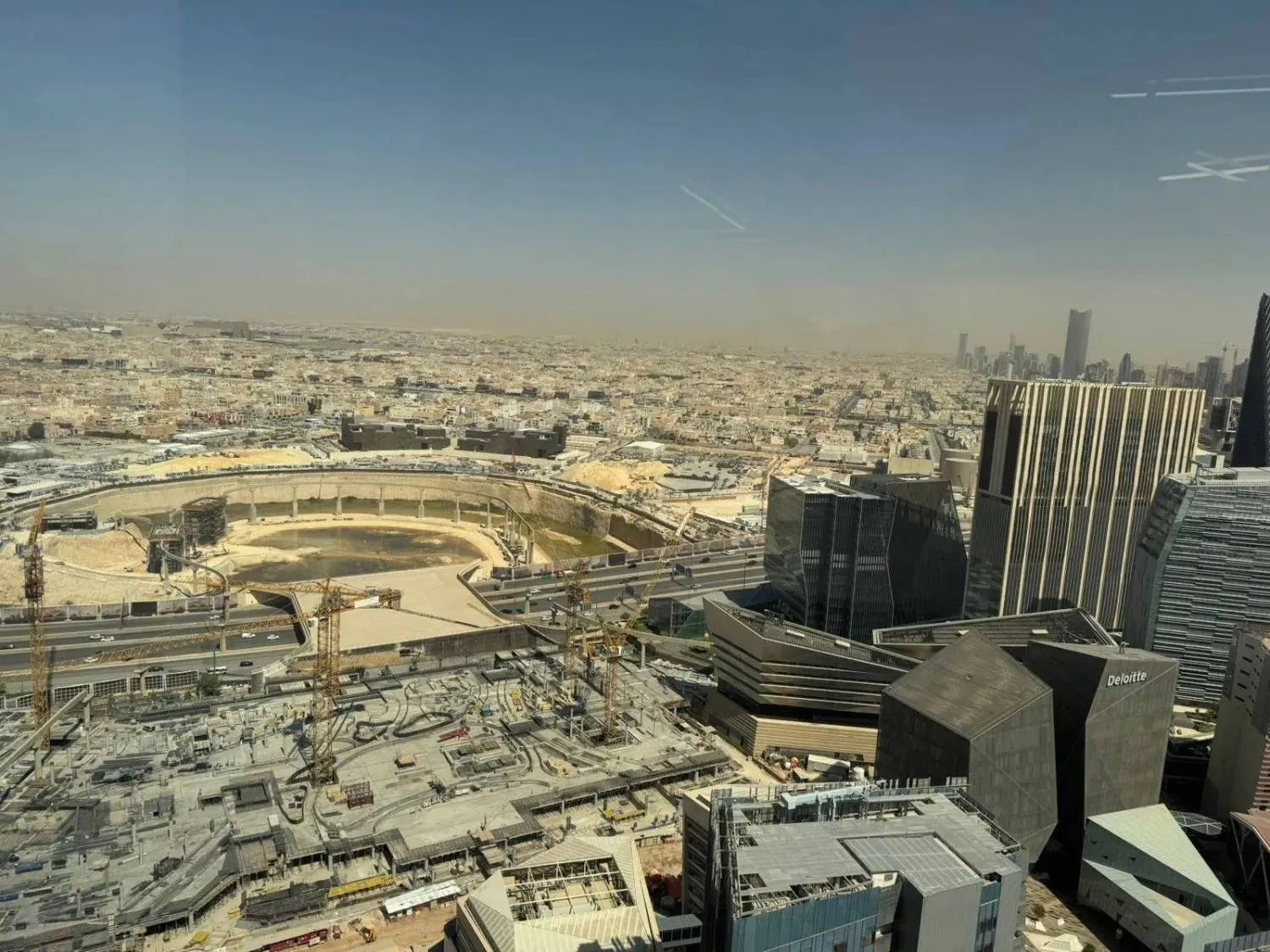
King Abdullah Financial District (KAFD) (Middle East) 
TT

Ashmore: Institutional Liquidity is Reshaping Saudi Market

King Abdullah Financial District (KAFD) (Middle East) 

Saudi Arabia’s financial market is undergoing a structural shift as short-term speculative trading gives way to institutional investment through funds, managed portfolios and sukuk, according to Ahmed Al-Mohaisen, chief executive of Ashmore Investment Saudi Arabia.

In an interview with Asharq Al-Awsat, Al-Mohaisen said the Kingdom’s economy is increasingly driven by domestic structural factors rather than oil cycles, with sectors such as education and industry offering some of the market’s most overlooked investment opportunities.

He noted that Saudi Arabia has shown resilience despite high global interest rates, geopolitical uncertainty and slowing growth, supported by a strong fiscal position and ongoing reforms under Vision 2030.

“What distinguishes the Saudi market today is that growth is increasingly driven by local structural factors, not just oil cycles,” Al-Mohaisen said, citing investment in infrastructure, industry, tourism, education and technology.

Sukuk market expansion

Al-Mohaisen stressed that the Saudi sukuk market is maturing rapidly, with issuances rising 35 percent in 2025 to around $72.5 billion. The momentum has continued into the first quarter of 2026. He explained that sukuk have become a major funding tool for Vision 2030 projects while attracting foreign investors seeking stable returns, supported by Saudi Arabia’s strong credit profile and inclusion in global debt indices.

On liquidity, Al-Mohaisen said the market is not facing a shortage but rather a more selective allocation of capital toward companies and sectors with stronger valuations and growth prospects.

He cited data released on May 1, 2026, showing monthly trading volumes of about SAR125.5 billion ($33.4 billion) and a market capitalization of nearly SAR9.94 trillion ($2.64 trillion).

Greater clarity on the path of interest-rate cuts could encourage investors to return to long-term assets, he added, pointing to growth in managed assets, expanding investment funds and rising foreign participation as signs of a maturing market.

Higher rates reshape investor appetite

According to Al-Mohaisen, high interest rates affect investor behavior in three ways. First, they raise the required return on riskier assets, making investors more selective toward equities, real estate and private investments when fixed-income instruments offer attractive yields.

Second, they pressure valuations of highly leveraged companies and firms reliant on long-term growth expectations, while favoring businesses with strong cash flow and stable dividends.

Third, higher borrowing costs weigh on companies and consumers, although the impact varies by sector. Banks may benefit from wider margins, while heavily indebted real estate firms are among the most exposed.

Education and industry seen as key opportunities

The CEO of Ashmore said several opportunities in the Saudi market remain underexploited, particularly private investment in mid-sized companies.

While investor attention has centered on mega-projects and private real estate, he noted that high-quality growth companies still lack sufficient institutional backing and operational expertise. He also identified opportunities in specialized education platforms, industrial services, logistics infrastructure and healthcare.

Al-Mohaisen was particularly upbeat on education, calling it one of the Kingdom’s most attractive long-term investment sectors due to demographic growth, rising demand for quality education and alignment with Vision 2030 goals.

He said Ashmore’s education fund has completed several deals, including the “Hikma” project, which aims to expand capacity from 3,500 to 5,500 students, and the “Oasis” project for American schools in eastern Riyadh, where capacity increased from 1,700 to 4,700 students.

The industrial sector also offers strong potential as Saudi Arabia pushes to localize production, strengthen supply chains and expand non-oil exports, he underlined. Ashmore’s education and industrial funds are jointly targeting a total size of SAR1.4 billion ($373 million).

Al-Mohaisen said the private sector’s contribution to GDP rose to around 51 percent by the end of 2025, moving toward the government’s target of 65 percent by 2030.

But he stressed that the next phase will require the private sector to move beyond benefiting from government spending and instead drive growth through investment, productivity, innovation and job creation.

He added that institutional investors and asset managers should act not only as providers of capital, but also as strategic partners in Saudi Arabia’s economic transformation.



UK Offers Cheaper Chocolate, Tickets to the Zoo to Ease Cost of Living Squeeze

Britain’s Prime Minister Keir Starmer visits a children’s activity center in Essex, Britain, Thursday, May 21, 2026. Kin Cheung/Pool via REUTERS
TT

UK Offers Cheaper Chocolate, Tickets to the Zoo to Ease Cost of Living Squeeze

Britain’s Prime Minister Keir Starmer visits a children’s activity center in Essex, Britain, Thursday, May 21, 2026. Kin Cheung/Pool via REUTERS

The British government is offering cheaper chocolate and discounted entry to theme parks as it seeks to ease a cost-of-living squeeze and win back voters.

Treasury chief Rachel Reeves on Thursday announced modest handouts to help alleviate rising costs sparked by the Iran war, including a reduction in import tax on cookies, chocolate and about 100 other supermarket products.

UK inflation fell to 2.8% in April, down from 3.3% in March, but is expected to spike again on the back of higher prices for fuel, heating gas and electricity.

To ease the impact, the government has postponed a planned increase in fuel duty and given truckers a yearlong reprieve from road tax to help offset soaring gasoline prices due to the effective closure of the Strait of Hormuz, a key oil transit route.

But Reeves did not commit to broader support for household heating bills, The Associated Press reported.

She announced measures designed to boost the summertime economy, including free bus travel for children in August. During the summer, tax on tickets for attractions including zoos, theme parks and museums will be slashed from 20% to 5%.

Reeves said she would pay for the cost-of-living support by closing tax loopholes for oil and gas companies with overseas operations.

“This summer I want every family to be able to enjoy themselves,” Reeves said. “As the war in Iran pushes prices up at home, my economic plan is the right one. I will continue to make the right choices, to protect households and businesses, and build a stronger and more secure Britain.”

The announcements came as Prime Minister Keir Starmer tries to keep calm and carry on while rivals in the governing Labour Party seek to oust him after a set of disastrous local election results.

The last two weeks have been devastating for Starmer, who led the party to a landslide victory less than two years ago. Scores of Labour lawmakers have called for him to resign, and he is widely expected to face a leadership challenge. Greater Manchester mayor Andy Burnham is aiming to win a seat in Parliament in a June 18 special election, and then challenge Starmer for the prime minister’s job.

Starmer insists he will not resign and will fight for his job. Under UK political rules, whoever took over from Starmer as party leader would also become prime minister, without the need for a national election.


Oil Gains, Stocks Slip on Uncertain Mideast Peace Prospects

A fuel storage facility at Russia's main oil export hub in the Black Sea port of Novorossiysk (Reuters)
TT

Oil Gains, Stocks Slip on Uncertain Mideast Peace Prospects

A fuel storage facility at Russia's main oil export hub in the Black Sea port of Novorossiysk (Reuters)

Oil prices jumped while stock markets mostly retreated and the dollar firmed Thursday as hopes of a Middle East peace accord faded on conflicting headlines on the state of talks.

US President Donald Trump has described the latest discussions as being on the "borderline" between a deal and renewed strikes.

Pakistan's army chief was due in Iran on Thursday, Iranian media reported, with Islamabad mediating as Tehran examines a new US proposal to end the war, AFP reported.

"Markets pulled back across Europe as the waiting game to end the Iran war rumbled on," said Dan Coatsworth, head of markets at AJ Bell.

Wall Street's main indices also dipped at the open.

There were earlier big gains for technology stocks in Asia after chip giant Nvidia posted record quarterly revenue of $81.6 billion, blowing past analyst forecasts on the voracious demand for artificial intelligence hardware.

Sentiment was also boosted by Elon Musk's filing for a public sale of SpaceX shares, which could be the largest initial public offering in history as the rocket and satellite company seeks to raise up to $75 billion.

"This could be a blockbuster summer for IPOs with OpenAI also expected to list in the coming weeks," said Kathleen Brooks, research director at XTB.

"How the market absorbs these new listings will be crucial for the future of the AI trade, as both companies are at the heart of the AI revolution," she said.

South Korea's benchmark Kospi index surged 8.4 percent, helped by Samsung Electronics shares after unions paused a 18-day strike.

Japan's Nikkei index ended with a gain of 3.1 percent.

But despite the group's profit growth, Nvidia shares failed to get a boost as they have in previous quarters, gaining 0.2 percent after trading got underway in New York.

With tech shares, whose staggering rises helped drive markets to record highs in recent months, now considered by many investors to be overvalued, investment analyst Bret Kenwell at eToro said there were worries that a pullback was in store.

"While geopolitical risks could still flare up, the more pressing issue appears to be macro-related," he said, pointing to the recent rise in sovereign bond yields and the prospect of central banks raising interest rates.

The yields demanded by investors to lend to governments by buying their bonds have peaked in recent days, indicating weakening confidence in their economies and inflation fears.

After tech gains in Asia, attention turned to US-Iran war developments and the potential fallout for economies on the continent, sending European stocks lower.

The EU warned Thursday that eurozone growth would be less than expected this year and inflation significantly higher than forecast, as the Mideast war and subsequent energy shock take their toll.

It came as a key survey revealed that business activity in the eurozone contracted further in May, weighed down by weak demand caused by a conflict.

British private-sector activity also unexpectedly contracted this month, marking the first decline in output in over a year, S&P Global added.

"The UK economy is facing a perfect storm, as rising political uncertainty adds to the growing impact from the war in the Middle East," said Chris Williamson, chief business economist at S&P Global Market Intelligence.

In other corporate news, French video game giant Ubisoft saw its shares plunge around 11 percent after it reported disappointing annual results and forecast further pain in the coming year.

The "Assassin's Creed" and "Rayman" developer had warned in January of the likely impact, with seven games cancelled and six delayed.