Israel’s New Defense Minister: Netanyahu Loyalist, Settlers’ Friend 

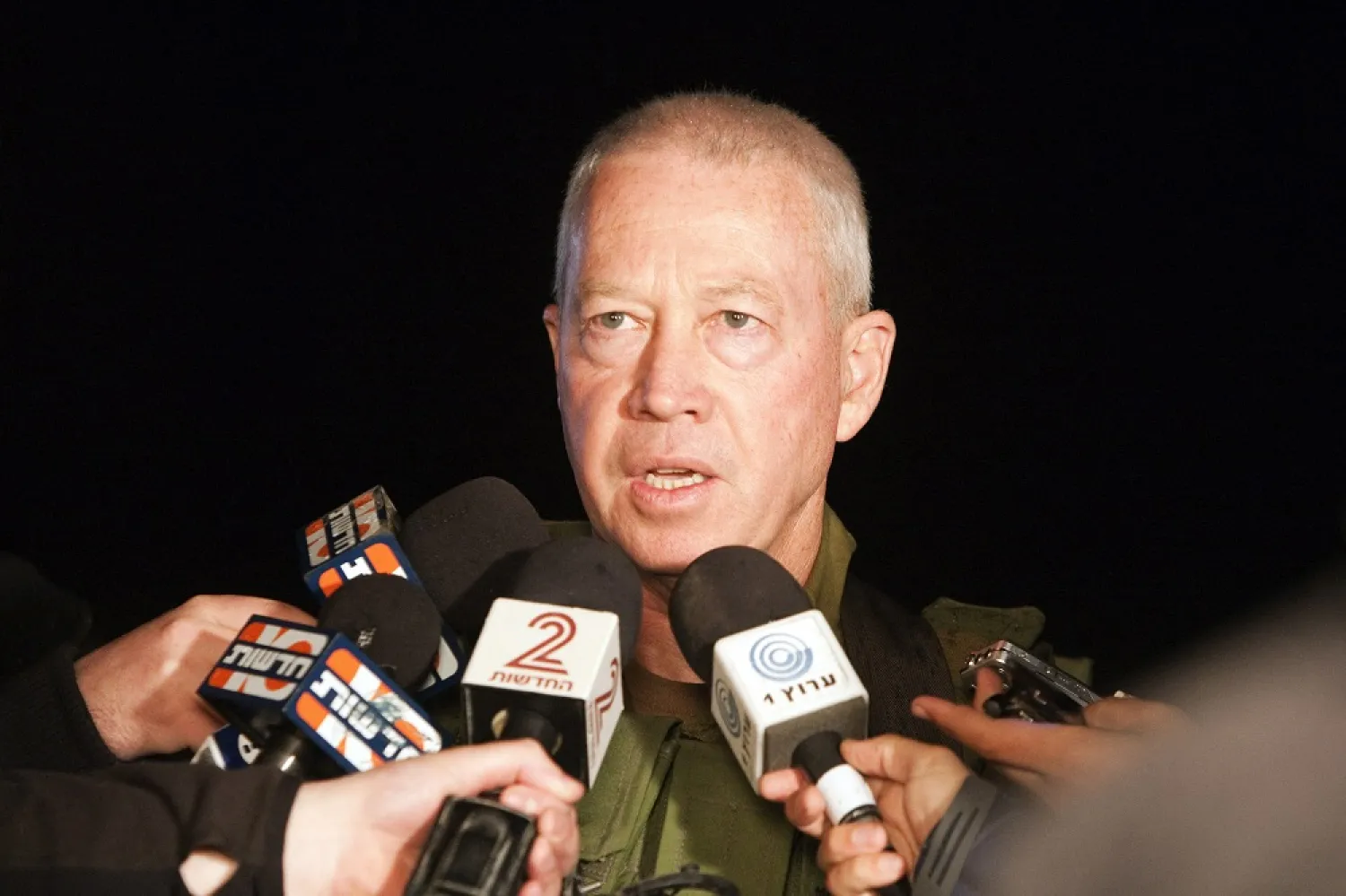
A file photo taken on March 26, 2010 shows Israeli officer general Yoav Galant, chief of the south command, during a press conference near the border with the Gaza Strip. (AFP)
TT

Israel’s New Defense Minister: Netanyahu Loyalist, Settlers’ Friend 

A file photo taken on March 26, 2010 shows Israeli officer general Yoav Galant, chief of the south command, during a press conference near the border with the Gaza Strip. (AFP)

Israel's new defense minister Yoav Galant is a former general, a staunch ally of Benjamin Netanyahu and a vocal advocate of Israeli settlements in the occupied West Bank. 

In the military, the 64-year-old oversaw Israel's 2005 withdrawal from the Gaza Strip and later commanded the "Operation Cast Lead" offensive against its Hamas rulers in 2008-2009.  

Since entering politics in 2015, he has served as minister for education, housing and immigration -- and has been a prominent backer of Israel's settlements, regarded as illegal under international law, that are today home to some 475,000 settlers. 

Some observers fear a radical change in policy on the occupied West Bank under Netanyahu's new government. 

Shlomo Neeman, who heads the Yesha Council, an umbrella group representing Israeli settlers living in the West Bank, welcomed Galant ahead of his appointment on Thursday. 

"Yoav Galant is a man who has done a lot for the settlement of Judea and Samaria," he said, using the Jewish biblical terms for the West Bank. 

Ahead of his nomination, Galant's predecessor Benny Gantz spoke with Palestinian president Mahmud Abbas, stressing "the important ties forged between the Israeli defense establishment and political echelon and the Palestinian Authority".  

Galant, born in the Mediterranean port of Jaffa in 1958 to Polish Holocaust survivors, was a career soldier.  

He was an officer in the elite marine unite known as Flotilla-13 when it carried out an operation against the Palestinian Fatah movement in Lebanon in 1978.  

The unit killed around 20 Palestinian gunmen, etching the operation into the Israeli military's history books.  

Top general  

Between 1982 and 1984, Galant took a break from the army to become a lumberjack in Alaska.  

Galant reached the rank of general in 2002, serving as former prime minister Ariel Sharon's military attaché.  

Galant would later rise to become commander of the southern military command, overseeing Israel's 2005 withdrawal from the Gaza Strip, including the evacuation of 8,000 settlers from the Palestinian enclave. 

He then commanded Israel's "Operation Cast Lead", a 22-day operation in Gaza that killed 1,440 Palestinians and 13 Israelis.  

A United Nations report accused both Israel and Hamas of war crimes during that conflict.  

Nominated as the army's chief of staff in 2010, Galant was mired in scandal over the appropriation of public land to build his house.  

An investigative report led to a petition in the supreme court which did not result in criminal charges, but posed potential legal problems to his appointment.  

Instead, Benny Gantz, whom Galant now succeeds at the defense ministry, was selected.  

After leaving the army, he became director of a drilling company owned by Franco-Israeli tycoon Beny Steinmetz, but resigned in 2014 to enter politics.  

In 2015, Galant served as housing minister as part of the center-right Kulanu party, though he later joined Netanyahu's right-wing Likud in 2019.  

Under previous Netanyahu governments, Galant served as both immigration and education minister between 2019 and 2021. 


Berlin Film Festival Director's Future in Spotlight after Gaza Furore

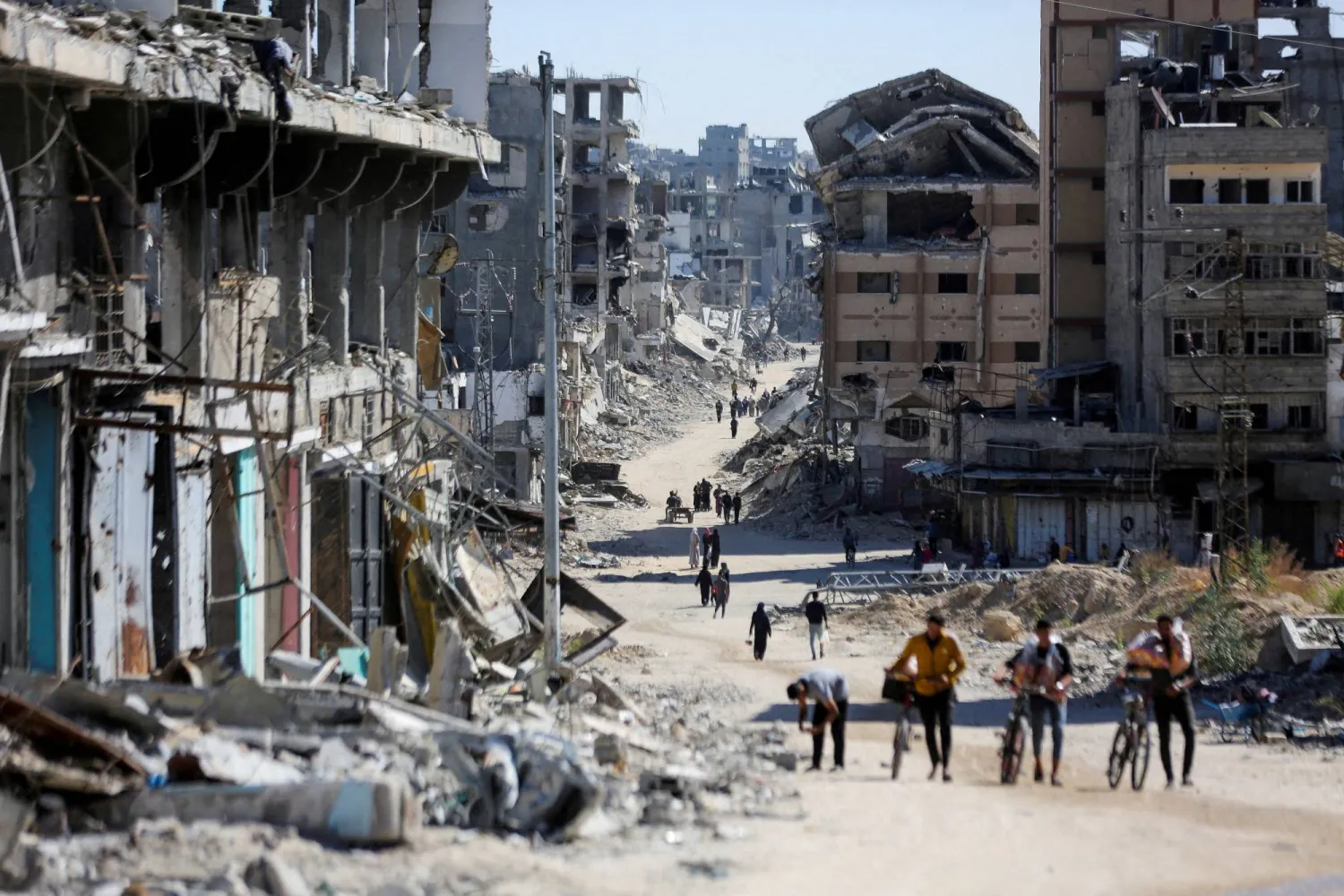
FILE PHOTO: Palestinians make their way in a devasted neighborhood, amid the ongoing Israel-Hamas conflict, in Gaza City, October 24, 2024. REUTERS/Dawoud Abu Alkas//File Photo
TT

Berlin Film Festival Director's Future in Spotlight after Gaza Furore

FILE PHOTO: Palestinians make their way in a devasted neighborhood, amid the ongoing Israel-Hamas conflict, in Gaza City, October 24, 2024. REUTERS/Dawoud Abu Alkas//File Photo

Germany's government convened an emergency meeting of the organizers of the Berlin Film Festival on Thursday, saying it wanted to discuss the event's "direction" after debate and protests over Gaza dominated the programme.

The Bild newspaper reported on Wednesday that the government's Commissioner for Culture and Media, Wolfram Weimer, was planning to sack festival director Tricia Tuttle, citing sources close to the festival's organizers, though the event's overseeing body said that was false.

In reaction to the report, the winner of this year's main prize, Turkish-German director Ilker Catak, said he would boycott the event if Tuttle went, and hundreds of signatories, including British actor Tilda Swinton and German director Tom Tykwer, sent an open letter backing her.

The furore caps a politically charged festival that has pitted anger over Israel's actions in Gaza and concerns over free speech against historical sensitivities in Germany. Berlin is one of Israel's staunchest supporters, a stance born out of guilt for the Nazi Holocaust, a policy known as the "Staatsraison".

DIRECTOR ACCUSED GERMANY OF AIDING GENOCIDE

Weimer convened a crisis meeting of the Kulturveranstaltungen des Bundes in Berlin (KBB), the body responsible for the festival known by its nickname the "Berlinale", on Thursday.

"Discussions about the direction of the Berlinale will continue in the coming days between the director, Tricia Tuttle, and the supervisory board," read identically worded statements from Weimer's office and the KBB.

After the Bild article on plans to sack Tuttle, the KBB issued a statement saying: "We consider this to be a false report." The festival's office said it would not comment on speculation.

During the festival, more than 80 actors, directors and other artists, including Swinton and Javier Bardem, signed an open letter to the organizers calling for them to take a clear stance on Israel's war in Gaza.

In a speech during the closing ceremony on Saturday, Palestinian-Syrian film director Abdallah Al-Khatib accused Germany of being "partners in the genocide in Gaza by Israel", prompting a German minister to walk out and criticism from other politicians, Reuters reported.

"Those who present themselves here as pro-Palestinian activists are not concerned with human rights," Berlin's mayor Kai Wegner told Bild in a separate article over the weekend. "They are not interested in dialogue, peace, or nuanced criticism. They are solely concerned with hatred of Israel."

Israel has strongly denied that its actions in Gaza amount to genocide and says they are justified as self-defense. The German government says Israel had a right to self-defense after the October 7, 2023, attack by Hamas militants.

SDP SAY TUTTLE 'ENCOURAGED DEBATE'

Several prize winners used their speeches to voice solidarity for Palestinians.

In her own address at the closing ceremony, Tuttle said: "If this Berlinale has been emotionally charged, that's not a failure of the Berlinale, and it's not a failure of cinema."

During the festival, Tuttle also appeared in a group photo close to a man carrying the Palestinian flag, an image that Bild said was another motivation for ousting her.

Golden Bear prize winner Catak said on Wednesday evening a move to sack Tuttle would be "short-sighted".

"Do they even realize that all of us - and I certainly include myself in that - I would never submit another film to the Berlinale," the Berliner Zeitung newspaper quoted him as saying.

Writers association PEN Berlin said statements by Al-Khatib and the use of the Palestinian flag were protected by freedom of expression. "And none of this can be blamed on Tricia Tuttle."

A spokesperson for the Social Democratic Party, which is the junior partner in the conservative-led coalition, expressed solidarity with Tuttle.

"Tuttle fostered diversity and encouraged debate. This is precisely what makes an international public festival," it said in a statement.


What to Know as Iran and US Meet for New Nuclear Talks as Americans Deploy Forces in Mideast

A woman walks past the flag and map of Iran painted on a wall in Tehran on February 25, 2026. (Photo by ATTA KENARE / AFP)
TT

What to Know as Iran and US Meet for New Nuclear Talks as Americans Deploy Forces in Mideast

A woman walks past the flag and map of Iran painted on a wall in Tehran on February 25, 2026. (Photo by ATTA KENARE / AFP)

Iran and the United States will meet Thursday in Geneva as talks over Tehran's nuclear program hang in the balance following Israel's 12-day war on the country in June and Iran carrying out a bloody crackdown on nationwide protests.

US President Donald Trump has kept up pressure on Iran, moving an aircraft carrier and other military assets to the Arabian Gulf and suggesting the US could attack Iran over the killing of peaceful demonstrators or if Tehran launches mass executions over the protests. A second aircraft carrier now is in the Mediterranean Sea.

Trump has pushed Iran's nuclear program back into the frame as well after the June war disrupted five rounds of talks held in Rome and Muscat, Oman, last year. Two rounds of talks so far have yet to reach a deal, though.

Mideast nations fear a collapse in diplomacy could spark a new regional war. US concerns also have gone beyond Iran's nuclear program to its ballistic missiles, support for proxy networks across the region and other issues.

Iran has said it wants talks to focus solely on the nuclear program. Iranian President Masoud Pezeshkian has insisted that his nation was “not seeking nuclear weapons. ... and are ready for any kind of verification.” However, the United Nations’ nuclear watchdog — the International Atomic Energy Agency — has been unable for months to inspect and verify Iran’s nuclear stockpile.

Trump began the diplomacy initially by writing a letter last year to Iran’s 86-year-old Supreme Leader Ali Khamenei to jump start these talks. Khamenei has warned Iran would respond to any attack with an attack of its own, particularly as the theocracy he commands reels following the protests.

Here’s what to know about Iran’s nuclear program and the tensions that have stalked relations between Tehran and Washington since the 1979 Iranian Revolution.

Trump writes letter to Khamenei

Trump dispatched the letter to Khamenei on March 5, 2025, then gave a television interview the next day in which he acknowledged sending it. He said: “I’ve written them a letter saying, ‘I hope you’re going to negotiate because if we have to go in militarily, it’s going to be a terrible thing.’”

Since returning to the White House, the president has been pushing for talks while ratcheting up sanctions and suggesting a military strike by Israel or the US could target Iranian nuclear sites.

A previous letter from Trump during his first term drew an angry retort from the supreme leader.

But Trump’s letters to North Korean leader Kim Jong Un in his first term led to face-to-face meetings, though no deals to limit Pyongyang’s atomic bombs and a missile program capable of reaching the continental US.

Oman mediated previous talks

Oman, a sultanate on the eastern edge of the Arabian Peninsula, has mediated talks between Araghchi and US Mideast envoy Steve Witkoff. The two men have met face to face after indirect talks, a rare occurrence due to the decades of tensions between the countries.

It hasn't been all smooth, however. Witkoff at one point made a television appearance in which he suggested 3.67% enrichment for Iran could be something the countries could agree on. But that’s exactly the terms set by the 2015 nuclear deal struck under former US President Barack Obama, from which Trump unilaterally withdrew America. Witkoff, Trump and other American officials in the time since have maintained Iran can have no enrichment under any deal, something to which Tehran insists it won't agree.

The first attempt at negotiations ended, however, with Israel launching the war in June on Iran. A new effort has seen two new rounds of talks in Oman and Geneva so far.

The 12-day war and nationwide protests Israel launched what became a 12-day war on Iran in June that included the US bombing Iranian nuclear sites. Iran later acknowledged in November that the attacks saw it halt all uranium enrichment in the country, though inspectors from the IAEA, the UN nuclear watchdog, have been unable to visit the bombed sites.

Half a year later, Iran saw protests that began in late December over the collapse of the country's rial currency. Those demonstrations soon became nationwide, sparking Tehran to launch a bloody crackdown that killed thousands and saw tens of thousands detained by authorities.

Iran’s nuclear program worries the West

Iran has insisted for decades that its nuclear program is peaceful. However, its officials increasingly threaten to pursue a nuclear weapon. Iran now enriches uranium to near weapons-grade levels of 60%, the only country in the world without a nuclear weapons program to do so.

Under the original 2015 nuclear deal, Iran was allowed to enrich uranium up to 3.67% purity and to maintain a uranium stockpile of 300 kilograms (661 pounds). The last report by the IAEA on Iran’s program put its stockpile at some 9,870 kilograms (21,760 pounds), with a fraction of it enriched to 60%. The agency for months has been unable to assess Iran's program, raising nonproliferation concerns.

US intelligence agencies assess that Iran has yet to begin a weapons program, but has “undertaken activities that better position it to produce a nuclear device, if it chooses to do so.” Iranian officials have threatened to pursue the bomb.

Israel, a close American ally, believes Iran is pursuing a weapon. It wants to see the nuclear program scrapped, as well as a halt in its ballistic missile program and support for anti-Israel militant groups such as Hezbollah in Lebanon and Hamas.

Decades of tense relations between Iran and the US

Iran was once one of the US’s top allies in the Mideast under Shah Mohammad Reza Pahlavi, who purchased American military weapons and allowed CIA technicians to run secret listening posts monitoring the neighboring Soviet Union. The CIA had fomented a 1953 coup that cemented the shah’s rule.

But in January 1979, the shah, fatally ill with cancer, fled Iran as mass demonstrations swelled against his rule. The Iranian Revolution followed, led by Grand Khomeini, and created Iran’s theocratic government.

Later that year, university students overran the US Embassy in Tehran, seeking the shah’s extradition and sparking the 444-day hostage crisis that saw diplomatic relations between Iran and the US severed. The Iran-Iraq war of the 1980s saw the US back Saddam Hussein. The “Tanker War” during that conflict saw the US launch a one-day assault that crippled Iran at sea, while the US later shot down an Iranian commercial airliner that the US military said it mistook for a warplane.

Iran and the US have seesawed between enmity and grudging diplomacy in the years since, with relations peaking when Tehran made the 2015 nuclear deal with world powers. But Trump unilaterally withdrew the US from the accord in 2018, sparking tensions in the Mideast that persist today.



Surviving Strike, Shamkhani Resumes Central Role in Iran’s War Room

Image from a video released by Iranian television shows Shamkhani talking about his assassination attempt on June 13, 2025.
TT

Surviving Strike, Shamkhani Resumes Central Role in Iran’s War Room

Image from a video released by Iranian television shows Shamkhani talking about his assassination attempt on June 13, 2025.

Ali Shamkhani, who taunted Israel after being pulled alive from the rubble of his Tehran home following a strike in June 2025, has survived at the center of Iranian policy-making during its most testing military confrontations and diplomatic endeavors.

The 70-year-old former Revolutionary Guard commander is a trusted adviser to Supreme Leader Ali Khamenei in a high-stakes standoff with the US that could determine whether the Islamic Republic, born from revolution in 1979, survives to half a century.

“Bastards, I am alive,” Shamkhani told Iranian filmmaker Javad Mogouei in an interview published in October, referring to his narrow escape from the Israeli strike that destroyed his home and evoking the 1973 Hollywood prison escape film Papillon.

This year, Khamenei confirmed Shamkhani as secretary of Iran’s newly established Defense Council, created after last year's 12-day war in which Israel and the US launched military strikes on Iran's nuclear facilities and military sites.

His appointment returns him to the core of Iran’s decision-making apparatus. The Council is tasked with coordinating Iran's wartime actions at a time when the US is threatening new air strikes from nearby warships if negotiations do not produce a new deal curtailing Tehran's nuclear program.

US President Donald Trump briefly laid out his case for a possible attack on Iran in his State of the Union speech to Congress on ‌Tuesday, saying he ‌would not allow the world's biggest sponsor of terrorism to have a nuclear weapon.

Iran denies being a sponsor ‌of ⁠terrorism and has ⁠long said it has no intention of building nuclear weapons, although Western nations and Israel believe that is the goal of what Tehran calls its peaceful nuclear program.

"A 'limited strike' is an illusion. Any military action by US - from any origin and any level - will be considered the start of war, and its response will be immediate, all out, and unprecedented, targeting heart of Tel Aviv and all those supporting the aggressor," Shamkhani said on X in January 2026.

A veteran of the 1980-1988 Iran-Iraq war when the newly created republic battled for survival, Shamkhani has served as a political adviser to Khamenei since his 2023 departure from the Supreme National Security Council (SNSC).

He led that council for a decade, including during Iran's 2015 nuclear deal with world powers and Washington's 2018 US withdrawal from the agreement, an episode that reinforced his skepticism of the ⁠accord.

The SNSC is the overarching body setting security and defense policies, and Shamkhani acted as Khamenei’s representative there during his ‌tenure.

As tensions with Washington rise and speculation grows about Iran’s fate in the event of war, ‌Shamkhani looks poised to wield influence among a politically astute cohort of former elite Revolutionary Guard Corps (IRGC) commanders.

FORGED IN WAR

Born in 1955 to an ethnic Arab family in ‌oil-rich Khuzestan province, Shamkhani rose through IRGC ranks in the Iran-Iraq war, first commanding its forces in his home province which was the main battlefront against ‌Saddam Hussein's forces.

By 1982, he was deputy to IRGC commander-in-chief Mohsen Rezaei, another Khuzestan native with whom he had participated in anti-shah activism in the 1970s. By the war’s end he had commanded the Guards’ ground forces while holding a cabinet post.

In 1989, the newly appointed Supreme Leader Ali Khamenei transferred him to the regular navy, which had been heavily damaged in clashes with US forces. Within a year, he was given simultaneous command of both the regular and IRGC navies, overseeing a shift toward asymmetric maritime tactics designed to counter ‌conventionally superior adversaries.

SECURITY OPERATOR AND DIPLOMATIC CHANNEL

Shamkhani has also been deployed in diplomatic roles. His appointments have often coincided with moments when Tehran sought to engage adversaries without appearing to concede ground.

That balancing act was visible during last decade’s nuclear negotiations. While serving under President Hassan Rouhani, Shamkhani was involved in implementing the 2015 nuclear agreement and navigating its aftermath after the US withdrew.

Rouhani later came to regret his appointment, believing Shamkhani had supported parliamentary measures that hardened Iran’s negotiating position by mandating higher uranium enrichment.

In the October 2025 interview, Shamkhani went further, saying that in hindsight Iran should have considered building nuclear weapons in the 1990s, remarks that underscored his emphasis on deterrence after Iran sustained major air strikes from both Israel and the US during the 12-day war.

SANCTIONS ECONOMY AND SCRUTINY

Shamkhani has over the years faced allegations and sanctions over his family’s own dealings. In 2020, he was sanctioned by the US Treasury, which also targeted his son Mohammad Hossein in 2025 for operating a network of vessels transporting sanctioned oil from Iran and Russia to international buyers.

According to the treasury, the Shamkhani family’s “shipping empire” allowed it to accrue massive wealth and become a key actor facilitating Iran’s circumvention of US sanctions.

Shamkhani has not publicly commented on allegations of corruption.

His daughter Fatemeh faced a backlash in 2025 over a widely shared video of her in a revealing gown at her opulent wedding, fueling accusations of elite privilege and highlighting tensions between the ruling establishment’s conservative ethos and the lifestyles of those close to power.