


Private Equity Persuades Italian Luxury Suppliers That Bigger Is Better

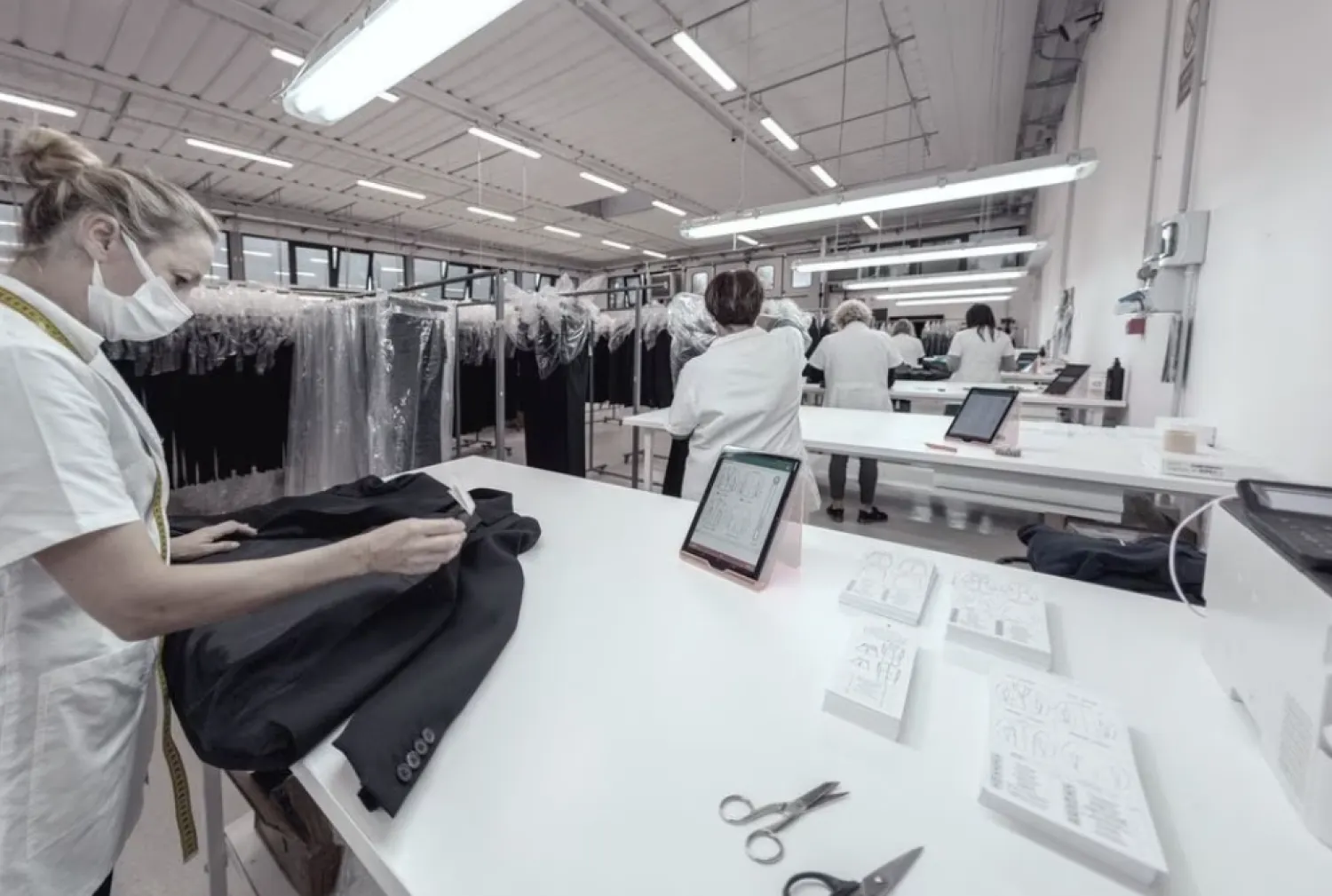
Giuntini employees work with designs of jackets that the company manufactures for luxury brands, in Peccioli, Italy, in this undated handout image obtained by Reuters on January 13, 2023. Nicola Giuntini/Handout via REUTERS
TT

Private Equity Persuades Italian Luxury Suppliers That Bigger Is Better

Giuntini employees work with designs of jackets that the company manufactures for luxury brands, in Peccioli, Italy, in this undated handout image obtained by Reuters on January 13, 2023. Nicola Giuntini/Handout via REUTERS

Italian businesses discovered the limits of their 'small is beautiful' motto when competition became global. Nudged by private equity funds, those supplying the booming luxury goods industry are now finding strength in unity.

With its tradition of sophisticated craftsmanship, Italy is home to thousands of small manufacturers that cover 50-55% of the global production of luxury clothing and leather goods, consultancy Bain calculates, against 20-25% for the rest of Europe.

Largely family-owned and small in size, these businesses often struggle to meet the changing needs of the luxury brands they work for.

To address luxury shoppers' growing sustainability concerns while also securing timely deliveries, brands are looking to establish close ties with suppliers, who in turn require hefty investments to track where they source materials and build an adequate digital backbone.

Private equity funds, after running out of big brands to buy, have now locked on to the challenges of the luxury industry's supply chain and turned to a "buy and build" strategy.

"Luxury brands have been growing exponentially: our customers needed us to grow with them," said Nicola Giuntini, whose Tuscany-based company makes luxury coats and jackets for brands including Celine, Burberry (BRBY.L) and Stella McCartney.

The Giuntinis in 2020 sold their company to VAM Investments - controlled by former Bulgari Chief Executive Francesco Trapani - and two other Italian investment firms when they became part of a hub of luxury clothing manufacturers.

"Working together we can guarantee stable production levels and undertake projects that would otherwise be too costly," said Giuntini, Reuters reported.

Private equity has had a big say in the shaping of Italy's fashion industry. It accounts for 40% of transactions over the past decade or so, including the buyouts of Moncler (MONC.MI), Versace, Roberto Cavalli and Ermenegildo Zegna (JN0.F), KPMG research showed.

The COVID-19 pandemic, with its aftermath of supply chain disruption, has been central in convincing Italian baby-boomer business owners that the time was right to let outsiders into their closely held companies.

The Giuntini business is now part of Gruppo Florence, a hub owned by the funds and the families that sold their businesses and reinvested part of the proceeds.

The group currently includes 22 companies with combined revenue of more than 500 million euros ($542.00 million) and aims to get to 30 before looking at a possible initial public offering.

Meanwhile it has started working with Bank of America and Citi to assess strategic options after drawing interest from investment firms including Carlyle and Permira, two people close to the matter said. All interested parties declined to comment.

"There are no listed assets that give investors exposure to the luxury sector's made-in-Italy supply chain," VAM CEO Marco Piana told Reuters.

"This is one of the few sectors where being Italian is a competitive advantage: there is no other geography where you have the same know-how when it comes to manufacturing soft luxury products."

Luciano Barbetta, whose clothing company in southern Italy joined Gruppo Florence last year, said hubs can help producers to make up for delays in deliveries of raw materials.

"There being several companies we can help one another fulfil orders right on schedule. And it feels good to know all the weight is not just on your shoulders," Barbetta said.

Italy's manufacturing sector has also been a hunting ground for big luxury brands keen to secure their supply chain.

Private equity investors and fashion majors could potentially be competitors, but KPMG Partner Stefano Cervo pointed to supply chain niches that are a good fit for funds and less appealing to luxury conglomerates.

"For a big brand it makes sense to buy, say, a tannery specialising in rare leather but I struggle to imagine they'd be interested, for example, in the makers of golden coating for handbag chains or buttons," he said.

"Yet there is value to be created in bringing together golden coating makers. Just from a sustainability perspective, scale makes it easier to recycle production waste or reduce the carbon footprint."

Italian private equity firm XENON International, for example, has bet on producers of materials and finishes for luxury items which it has grouped together in MinervaHub.

The seven companies in its portfolio, which include makers of metal accessories or specialising in surface finishes, have aggregate sales of 180 million euros which MinervaHub wants to grow to 300 million as it scrutinises another six companies.

MinervaHub provides support to its businesses on legal and financial matters as well as environmental, social and governance (ESG), said XENON Founding Partner and Managing Director Franco Prestigiacomo.

That is vital in an industry which KPMG's Cervo says has become "obsessed" with ESG.

"Suppliers can pose a major reputational risk for brands," VAM's Piana said.

"In the world of social media it's too dangerous not to have full visibility on your supply chain."



Fashion Commission Launches 1st Executive Master’s Program in Riyadh

Fashion Commission Launches 1st Executive Master’s Program in Riyadh
TT

Fashion Commission Launches 1st Executive Master’s Program in Riyadh

Fashion Commission Launches 1st Executive Master’s Program in Riyadh

The Fashion Commission announced the launch of the first Executive Master’s program to be delivered in Riyadh, developed in collaboration with the world-renowned Institut Français de la Mode (IFM).

The new program marks a significant leap in advancing fashion education and executive training within the Kingdom, according to SPA.

The Executive Master’s in Strategic Management of Fashion & Luxury represents a new milestone in fashion education, taking place in Riyadh for the first time. It is a 15-month hybrid executive master’s degree track designed for high-potential professionals seeking advanced executive training while continuing their careers. Delivered through a blend of in-person modules in Riyadh and Paris, alongside supervised online learning, the program equips participants with strategic, managerial, and analytical expertise tailored to the rapidly evolving fashion and luxury sector.

Designed with market needs in mind, the executive master’s curriculum covers creation and design, brand strategies, sustainability, new consumer behaviors, retail innovation, fashion media, collection management, and future industry perspectives. Participants will also complete a thesis that contributes new knowledge to the regional and global fashion landscape.

The program is taught by IFM’s internationally recognized faculty, experts in fashion history, sustainability, consumer behavior, design, and luxury management, alongside industry leaders from major global houses, fashion federations, media groups, and innovation-driven organizations.

This landmark program builds on the Fashion Commission’s ongoing partnership with IFM since June 2022. Within the first year, the collaboration introduced high-level educational initiatives, including the Advanced Management Program for Luxury Fashion and the Executive Master’s in Luxury Fashion, designed to elevate local talent and strengthen the Kingdom’s creative workforce.

These programs have contributed to developing the skills and knowledge required to support a world-class fashion ecosystem.

The launch of the Executive Master’s marks a pivotal step in establishing Riyadh as an education hub for the fashion and luxury sectors. By bringing a master’s qualification of this caliber directly to the Kingdom, the Fashion Commission reinforces its commitment to enabling professional growth, supporting innovation, and creating globally competitive talent pipelines.


Nike Shares Rise as Apple’s Cook Doubles His Bet on CEO Hill’s Overhaul Effort

A jogger wearing Nike shoes runs along the Charles River in Cambridge, Massachusetts, US, March 18, 2019. (Reuters)
TT

Nike Shares Rise as Apple’s Cook Doubles His Bet on CEO Hill’s Overhaul Effort

A jogger wearing Nike shoes runs along the Charles River in Cambridge, Massachusetts, US, March 18, 2019. (Reuters)

Nike shares rose 5% in early trading on Wednesday after Apple CEO Tim Cook doubled his personal stake in the sportswear maker, raising his bets on the margin-pinching turnaround efforts led by CEO Elliott Hill.

Cook, who has been on Nike's board since 2005, bought 50,000 shares at $58.97 ‌each, according to ‌a regulatory filing. As of December ‌22, ⁠he holds about ‌105,000 shares, which is now worth nearly $6 million.

It was the largest open market stock purchase for a Nike director or executive and possibly the largest in more than a decade, said Jonathan Komp, analyst at Baird Equity Research.

"(We see) Cook's move as a positive signal for the progress under CEO Elliott Hill and Nike's 'Win ⁠Now' actions," Komp said.

The purchase comes days after Nike reported weaker quarterly margins and weak ‌sales in China even as CEO ‍Hill tries to revive demand ‍through fresh marketing plans and innovation focused on running and sports, ‍while phasing out lagging lifestyle brands.

He has also attempted to mend Nike's ties with wholesalers such as Dicks Sporting Goods to increase visibility among shoppers amid stiff competition from newer brands.

However, the strategy has strained Nike's margins, which have been declining for over a year, while its efforts to win back its ⁠premier position in discount-friendly China appears to be faltering.

Nike's shares have slumped nearly 13% since it reported results on December 18 and are on track for the fourth straight year of declines. They were trading at $60.19 on Wednesday.

Cook has been a lead independent director of Nike since 2016 when co-founder Phil Knight stepped down as its chairman.

The Apple CEO "remains extremely close" with Knight, Komp said, adding that he has advised Nike through key strategic decisions including Hill's appointment last year.

Board director and former Intel CEO ‌Robert Swan also bought about 8,700 shares for about $500,000 this week.


Etro Founding Family Exits Group as New Investors Including Türkiye's RAMS Global Join

L Catterton, a private equity firm backed by French luxury giant LVMH, will remain Etro's majority owner. Reuters
TT

Etro Founding Family Exits Group as New Investors Including Türkiye's RAMS Global Join

L Catterton, a private equity firm backed by French luxury giant LVMH, will remain Etro's majority owner. Reuters

The founding family of Italian fashion house Etro has sold the minority stake it still owned in the brand to a group of investors including Turkish group RAMS Global, the company said on Friday.

L Catterton, a private equity firm backed by French luxury giant LVMH, will remain Etro's majority owner and "will continue to actively support the brand's long-term growth strategy," Etro added, according to Reuters.

The new investors comprise also Italian fashion group Swinger International and small private equity firm ⁠RSI.

In addition to buying the stake, they all subscribed to a capital increase that will lower L Catterton's holding in Etro to between 51% and 55% from around 65%.

When including both the acquisition and the capital increase, the deal is worth around 70 ⁠million euros ($82 million), two sources close to the matter said. Etro did not disclose financial details.

Chief Executive Fabrizio Cardinali will remain at the helm, while Faruk Bülbül, representing RAMS Global, will become chairman of the board.

L Catterton bought a 60% stake in the brand known for its paisley motif four years ago, and it slightly increased the holding over the years.

The company, founded by Gimmo Etro in 1968, has ⁠been struggling with its turnaround. Last year it posted a net loss of 23 million euros with net revenues declining to 245 million euros from 261 million euros, according to filings with the local chambers of commerce reviewed by Reuters.

Rothschild advised L Catterton and the Etro family on the deal.

Rothschild had been hired in 2024 to look for a new investor who could buy all or part of the Etro fashion group, sources had previously told Reuters.