Canada to Repatriate 23 Citizens from Syria

The Kurdish-run al-Hol camp in Syria holds thousands of foreign women and children with ties to the ISIS group who are not being repatriated by their home countries. Delil SOULEIMAN / AFP
TT

Canada to Repatriate 23 Citizens from Syria

The Kurdish-run al-Hol camp in Syria holds thousands of foreign women and children with ties to the ISIS group who are not being repatriated by their home countries. Delil SOULEIMAN / AFP

Canada will repatriate twenty-three citizens who have been detained in northeast Syria in camps for family members of ISIS group fighters, officials and a lawyer said Friday.

It would be the largest such repatriation of ISIS family members yet for Canada, and it comes after the families challenged the government in court, arguing Ottawa was obliged to repatriate the group under the Canadian Charter of Rights and Freedoms, AFP said.

Earlier Friday, the foreign ministry announced its decision to repatriate six Canadian women and 13 infants. And a court later ruled that four men seeking repatriation as part of the group must also be sent back to Canada, said lawyer Barbara Jackman, who is representing one of the men.

"I've spoken to the parents and they're really, really happy," Jackman said of the court decision, adding that the judge requested that the men be repatriated "as soon as reasonably possible."

The foreign ministry said in a statement: "The safety and security of Canadians is our government's top priority.

"We continue to evaluate the provision of extraordinary assistance on a case by case basis, including repatriation to Canada, in line with the policy framework adopted in 2021," it said.

Up until now the government of Justin Trudeau has treated the detained ISIS families on a case-by-case basis, and in four years only a handful of women and children have been repatriated.

Since the destruction of the so-called ISIS "caliphate" across Syria and Iraq in 2019, more than 42,400 foreign adults and children with alleged ties to the ISIS group have been held in camps in Syria, according to Human Rights Watch.

Repatriating them is a highly sensitive issue for many countries, but rights groups have denounced their reluctance to bring back their own nationals from the camps, controlled mostly by Syrian Kurds.

Human Rights Watch said around 30 Canadian citizens, including 10 infants, remain in the camps.

Farida Deif, the group's head in Canada, said that Global Affairs Canada has informed a number of them by letter that they fulfill the requirements for repatriation.

However, she said, "none of the men have been notified of anything or have been part of any agreements thus far."

The authorities did not say when the 19 would come to Canada or whether any of them would face legal proceedings for their association with ISIS.

Last October Canada brought back two women and two children from Syria.

In 2020, Ottawa allowed the return of a five-year-old orphan girl from Syria after her uncle initiated legal action against the Canadian government.


Tetteh Affirms ‘Broad Support' For Libyan Agreement … Warns of Disrupting Elections

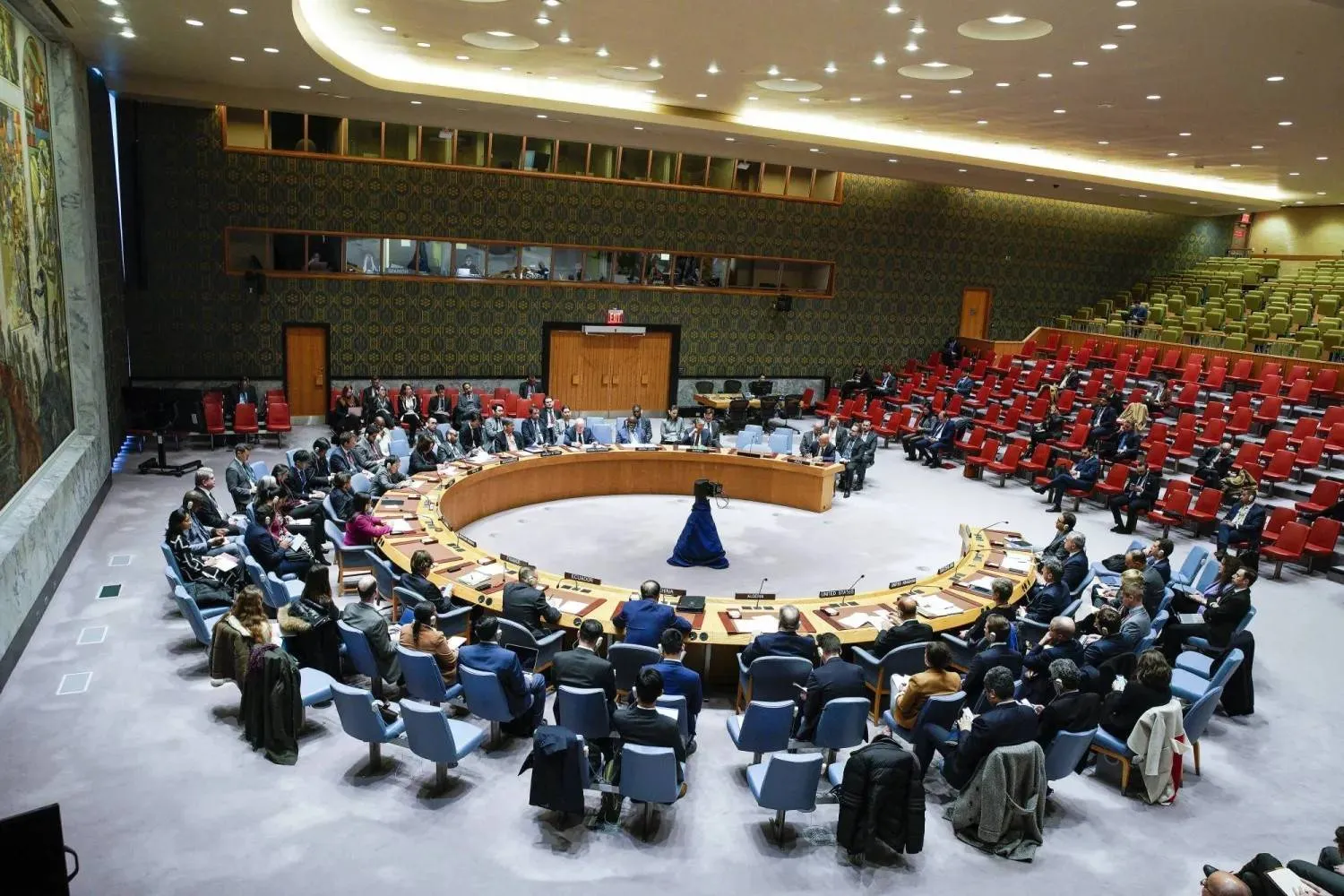
A session of the UN Security Council on Libya (UN Security Council)
TT

Tetteh Affirms ‘Broad Support' For Libyan Agreement … Warns of Disrupting Elections

A session of the UN Security Council on Libya (UN Security Council)

UN Special Representative of the Secretary-General for Libya (UNSMIL), Hanna Tetteh, told Security Council members on Wednesday that a deal she brokered to break the political deadlock in the North African country enjoys broad support. However, she warned that rejection by either of Libya’s two legislative bodies could derail elections scheduled to take place within the next two years.

‘Viable Pathway’

In a briefing to the UN Security Council in New York on Wednesday, Tetteh said that following four months of deliberations, on 30 August, the parties to the Smaller Convening signed an Agreement in Tripoli marking a break in the prolonged political and institutional deadlock.

The agreement established a viable pathway for legislative and presidential elections under a single unified executive authority within a period of 24 months.

Also, it provides for the reconstitution of the board of the High National Elections Commission (HNEC) and for resolving long-standing contentious issues in the constitutional and legal framework that could negatively impact efforts to conduct peaceful credible and inclusive elections.

According to the UN representative, the Agreement was welcomed by the Government of National Unity, the Libyan National Army, the House of Representatives, and Vice President of the Presidential Council Mousa Al-Koni, among others.

However, she said, the High Council of State rejected the Agreement on 5 October along with the laws and decisions communicated by the Speaker of the House of Representatives, citing approaches that would bypass the constitutional, legal and consensual frameworks governing the political process or undermine the prerogatives assigned to the two institutions.

“Their rejection continues to reflect the limited willingness of some of its members to engage constructively in this process, which has been a feature of the ongoing engagement with this chamber,” Tetteh warned.

In this regard, the UN representative revealed that several HCS members have indicated their willingness to engage in the Agreement and have requested additional time to consult amongst themselves on moving the process forward.

“I will further consult the parties to the Smaller Convening in our meeting later this month, including by examining the option of proceeding to a national mechanism of broad representation as provided for in Article 5 of the Agreement and in consultation with this Council,” she said.

Impact of Political Fragmentation

Tetteh said that institutional and political fragmentation have continued to impact negatively on the economic and security situation in the country.

While global oil prices should have generated a significant windfall for public revenues to benefit all, many Libyans are instead seeing their purchasing power eroded by rising food prices, a weaker dinar and inflation right now above 14%, while access to essential public services remain unreliable.

Also, food prices alone further rose by 3.8% in August, with the pressure particularly acute in the West and South, where food costs increased sharply over the summer.

Tetteh noted that between January and September 2026, fuel imports totalled 8.15 million metric tons, at a cost of $8.9 billion, of which between 30 and 50% of these imports are estimated to be lost to smuggling, worth between $2.4 and $4.4 billion.

She said the recent disruptions to oil infrastructure demonstrate the wider economic cost of political and security fragmentation to impact strategic national assets.

Petroleum Facility Guards from Zintan blocked the Hamada-Zawiya pipeline from 15 to 20 September, followed by the Sharara-Zawiya pipeline from 21 to 26 September reportedly due to disputes over appointments from within that region.

“The disruptions resulted in around one million barrels of lost production, worth approximately $100 million, and risked affecting salary payments and electricity generation,” she said.

At the security level, Tetteh said the overall situation remains fragile.

She welcomed positive steps toward enhanced military cooperation between Eastern and Western military and security institutions, adding the Mission continues to encourage confidence-building measures at the technical level between both sides.

Tetteh also referred to the follow-up meeting of the Eastern and Western maritime, air force and air defense commanders in Sirte on 9 September to discuss practical cooperation towards reunifying these sectors.

Elsewhere, the UN representative expressed concern over the execution over the last two months, in Benghazi of 58 individuals convicted of prior crimes related to terrorism offenses, including alleged membership in proscribed terrorist groups or involvement in the killing of military and civilian personnel.

She also condemned the ongoing wave of misinformation, disinformation, hate speech and incitement targeting refugees, migrants, including those with an irregular status, humanitarian actors and UN agencies and personnel in Libya, including colleagues who are Libyan nationals.

Tetteh asked the Security Council’s continued support to the UNSMIL-facilitated political roadmap and to ensure Libyan leaders promptly meet their obligations to fulfil their people’s ultimate aspirations for peace, stability, inclusive and democratic governance that they so deserve.

“The path to a stable, unified, and prosperous Libya remains long, but our destination remains within reach,” she said.



Tunisian Journalists Fear Jail Again as Freedoms Erode

Tunisian journalists participate in a rally called by the Tunisian journalists' union to demand the release of journalist Mohamed Yousfi, a vocal critic of President Kais Saied, in Tunis, Tunisia. September 8, 2026. REUTERS/ Jihed Abidellaoui
TT

Tunisian Journalists Fear Jail Again as Freedoms Erode

Tunisian journalists participate in a rally called by the Tunisian journalists' union to demand the release of journalist Mohamed Yousfi, a vocal critic of President Kais Saied, in Tunis, Tunisia. September 8, 2026. REUTERS/ Jihed Abidellaoui

In the garden of the independent outlet ‘Nawaat,’ about half a dozen journalists sit smoking, trading jokes and discussing investigations they plan to publish on subjects ranging from the quality of drinking water to conditions of prisons.

They know that any of the stories ⁠could lead to prosecution.

A Hard Test

Journalists in Tunisia who enjoyed a burst of press freedom after the 2011 Arab Spring are once again looking over their shoulders in the knowledge their work may land them in prison.

The 2011 overthrow of Zine El-Abidine Ben Ali unshackled Tunisia's media, but a decade later President Kais Saied's seizure of sweeping powers began eroding those gains.

Some 20 journalists face criminal charges over their reporting or social media posts, with four already imprisoned, according to Zied Dabbar, head of the National Syndicate of Tunisian Journalists, who called the situation unprecedented.

In return, Saied has said he is not a dictator and that journalists are free to criticize authorities and frequently do.

Authorities say prosecutions are impartial judicial matters and that no one is above the law.
The Tunisian prime minister's press office did not respond to Reuters’ requests for comment.

Now, independent media face a full-on crackdown, rights groups say, and Tunisia has tumbled more than 50 places in the past five years to 137th in Reporters Without Borders' press freedom index.

Shifting Minefield

“We are living in a grey area, as if we were in a shifting minefield, and we pay the price every day,” said Aymen Rezgui, editor-in-chief of Nawaat, reflecting on how at least limits were clear pre-2011 versus current uncertainty.

Rezgui said Nawaat regularly receives threats — anonymously or from government supporters on social media branding him a traitor — over reporting on issues ranging from prisons to power cuts and water shortages.

The outlet has also faced judicial restrictions, including a government order suspending activities for a month last year.

Journalists in Jail, Others Choose Exile

Many other journalists report similar pressures.

Last month, Mohamed Yousfi, editor-in-chief of independent news website Al-Qatiba, was arrested on his way to a private radio station for a live program. A judge has charged him with illicit enrichment, which he says is a fabrication.

Other jailed journalists and media figures include prominent broadcasters Mourad Zeghidi and Borhen Bsaies, who were first convicted of spreading false news and insulting the president, and later of tax evasion. ⁠They deny the charges and say they have been framed.

For some, leaving Tunisia has become the only option to avoid a similar fate, despite the personal cost.

In December 2025, Khaoula Boukrim, founder of independent website Tumedia and a prominent critic of the president, left for France fearing imminent arrest.

Months later, she was sentenced in absentia to four years in prison over writings critical of the judiciary and a system of governance she described as authoritarian.

Journalist Haythem Mekki has also left Tunisia after receiving a prison sentence following public comments he made denouncing conditions in a hospital morgue.

Beyond prosecutions, journalists are frequently prevented by police from working in public and are sometimes detained for hours, the journalists' syndicate says.

Most ministries no longer have press offices, while several international correspondents have been denied accreditation, further restricting independent coverage.

Political and critical programs have disappeared from many private radio stations. State media has ⁠increasingly marginalized dissenting voices, the syndicate says, though the TAP state news agency remains a rare exception, continuing to cover protests, opposition activities and civil society initiatives.


Israeli Threat to Expand Lebanon’s Occupation, Displace More Than a Million Lebanese

File photo of Israeli Defense Minister Israel Katz in the Tulkarm refugee camp in the northern West Bank (Israeli Army)
TT

Israeli Threat to Expand Lebanon’s Occupation, Displace More Than a Million Lebanese

File photo of Israeli Defense Minister Israel Katz in the Tulkarm refugee camp in the northern West Bank (Israeli Army)

Defense Minister Israel Katz has ⁠warned Hezbollah against attacking Israel, saying the Israeli army was capable of occupying more Lebanese territories and displacing more than a million Shiites.

"Hezbollah will suffer a severe blow and lose additional territories in southern Lebanon within the Nabatieh and Litani regions, which will become part of Israel's permanent security zone. The IDF (Israel Defense Forces) is prepared to carry out the maneuver," Katz said on Wednesday.

Speaking from the self-declared security zone Israeli forces are ⁠occupying in southern Lebanon, Katz said that a million Shiites would be displaced and that Hezbollah's stronghold in Beirut would not be spared.

Israel launched airstrikes and a ground invasion in southern Lebanon this year in parallel with the war in Iran, after Hezbollah fired into Israel in revenge ​for Israeli-American attacks against Tehran.

Hundreds of ​thousands of people from Lebanon's Shiite community were uprooted by the fighting.