
Samsung’s Profit Plummets amid Global Economic Woes

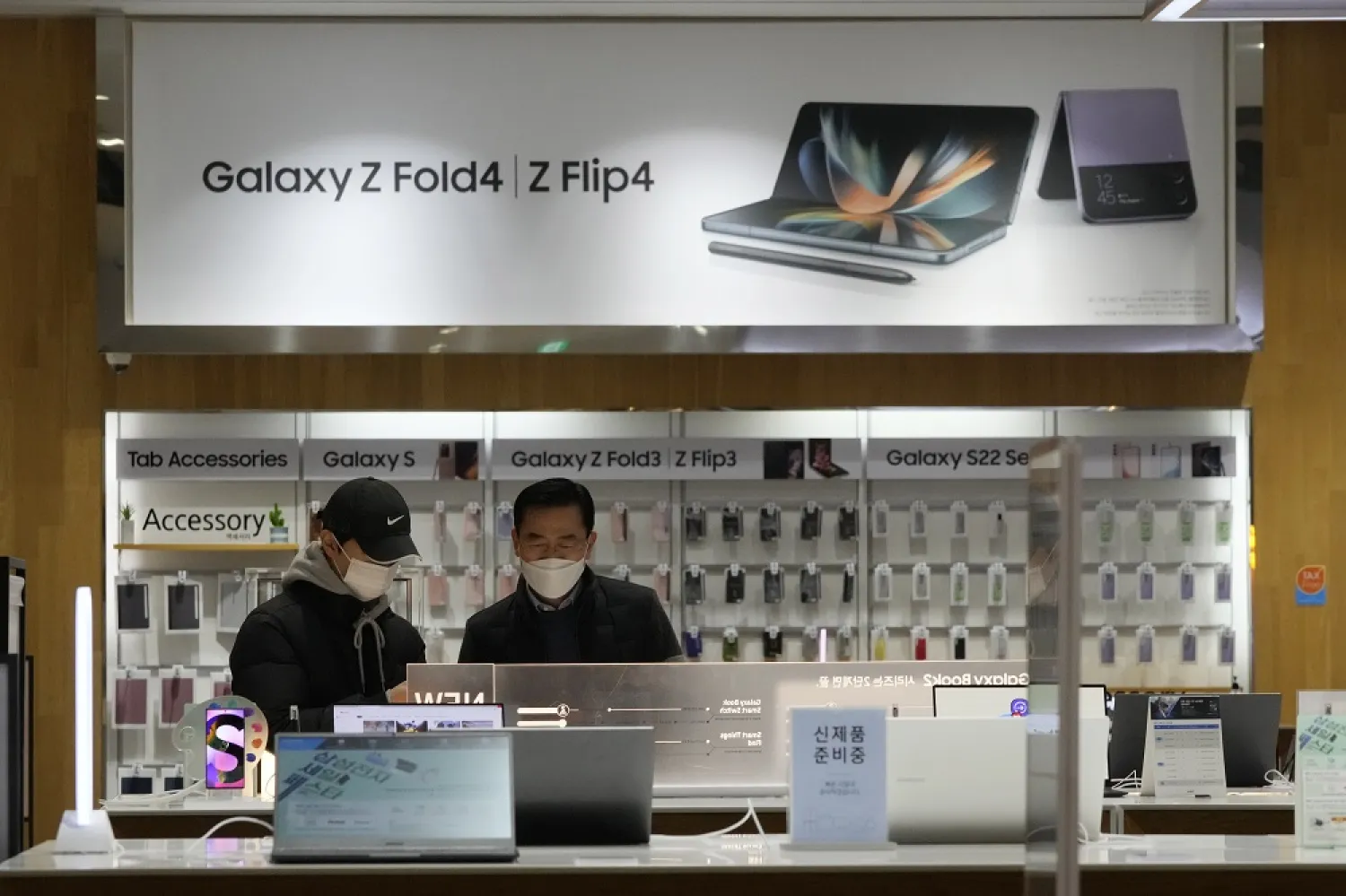
Visitors try out Samsung Electronics' Galaxy Book2 at its shop in Seoul, South Korea, Tuesday, Jan. 31, 2023. (AP)
TT

Samsung’s Profit Plummets amid Global Economic Woes

Visitors try out Samsung Electronics' Galaxy Book2 at its shop in Seoul, South Korea, Tuesday, Jan. 31, 2023. (AP)

Samsung Electronics said Tuesday its profit for the last quarter plummeted nearly 70% as a weak global economy depressed demand for its consumer electronics products and computer memory chips.

The company’s operating profit of 4.3 trillion won ($3.5 billion) for the three months through December fell 69% from a year earlier, representing its lowest quarterly profit since the third quarter of 2014. Revenue fell 8% to 70.46 trillion won ($57.2 billion).

The South Korean tech giant thrived through the first two years of the pandemic thanks to its dual strengths in parts and finished products, benefiting from robust demand for PCs, TVs and chips powering computer servers as the virus forced millions to work at home.

But it has been harder for the company to weather the economic shock unleashed by Russia’s war on Ukraine, which disrupted industrial supply chains and left major economies grappling with higher inflation and slower growth.

“The business environment deteriorated significantly in the fourth quarter due to weak demand amid a global economic slowdown,” Samsung said in a statement.

The company’s profit from its bread-and-butter semiconductor business came to 270 billion won ($219 million) for the last quarter, down significantly from the 8.83 trillion won ($7.1 billion) it got a year earlier.

Samsung said chip prices fell sharply amid weakened demand as clients adjusted their inventories in face of “deepening uncertainties” in the global economy, a problem the company says will likely extend into the first quarter of 2023.

Samsung also expects demand for its smartphones and TVs to fall further in the first quarter amid the global economic downturn.

Samsung's share price fell 3.5% on Tuesday.


Youtube Says will Flag AI-generated Content

 A picture taken on October 5, 2021 in Toulouse shows the logo of Youtube social media displayed by a by a tablet and a smartphone. (Photo by Lionel BONAVENTURE / AFP)
A picture taken on October 5, 2021 in Toulouse shows the logo of Youtube social media displayed by a by a tablet and a smartphone. (Photo by Lionel BONAVENTURE / AFP)
TT

Youtube Says will Flag AI-generated Content

 A picture taken on October 5, 2021 in Toulouse shows the logo of Youtube social media displayed by a by a tablet and a smartphone. (Photo by Lionel BONAVENTURE / AFP)
A picture taken on October 5, 2021 in Toulouse shows the logo of Youtube social media displayed by a by a tablet and a smartphone. (Photo by Lionel BONAVENTURE / AFP)

Youtube will in future automatically detect AI-generated content and flag the information to viewers on its platform, the Google-owned company said Wednesday.

The move reverses a previous policy of relying on video creators to self-report if they had used generative AI tools.

"If a creator doesn't specify whether or not they used AI, but our systems detect significant photorealistic AI use, we will now automatically apply a label," Youtube said in a blog post.

The video platform's last steps on generative AI date back to 2024, when it requested that creators flag content where they had used the technology, Reuters reported.

Since then there have been major strides in producing photorealistic images and video, with widely available AI models including Google's Veo 3.1 and Seedance from Tiktok's parent company Bytedance.

Creators will be able to challenge the new flags if they think their content has been unfairly labelled as AI, Youtube said.

The platform added that the flags would have no impact on its algorithm for recommending videos to users.

Other platforms and social networks to introduce automatic flagging of AI content recently include music streamer Spotify.

Many online spaces are flooded with AI-generated images, video or audio, which is growing increasingly difficult to tell apart from human creations as the tools become more capable.


CEO: Nvidia to Spend $150 Billion a Year in Taiwan, 'Epicenter' of AI Revolution

Nvidia CEO Jensen Huang delivers a speech during an all employee celebration at the construction site of their Taiwan headquarters "Constellation" in Taipei, Taiwan, Wednesday, May 27, 2026. (AP Photo/Chiang Ying-ying)
TT

CEO: Nvidia to Spend $150 Billion a Year in Taiwan, 'Epicenter' of AI Revolution

Nvidia CEO Jensen Huang delivers a speech during an all employee celebration at the construction site of their Taiwan headquarters "Constellation" in Taipei, Taiwan, Wednesday, May 27, 2026. (AP Photo/Chiang Ying-ying)

Nvidia's chief executive said on Wednesday the chip company plans to invest around $150 billion a year in Taiwan, terming it the "epicenter" of the AI revolution and predicting it will be the world's tech manufacturing hub for a long time.

"Four years ago, five years ago, Nvidia was spending about 10, 15 billion dollars a year in Taiwan. Now we're spending 100, going to 150 billion dollars in Taiwan each year," Reuters quoted CEO Jensen Huang as saying at a launch celebration in Taipei for the $5 trillion chipmaker's planned Taiwan headquarters.

The project will break ground this year and aims to be operational in 2030, Huang said. He did not provide a timeframe for the number of years the company plans to invest $150 billion. The Taiwan ⁠headquarters will bring ⁠Nvidia closer to TSMC , the world's largest contract chipmaker, which makes many of the advanced semiconductors powering the trend towards AI and is a major supplier to the US tech giant.

It will also help the world's most valuable company boost its alliances with other manufacturing partners including Foxconn, Wistron and Quanta Computer , which all play key roles in the build-out of AI servers and infrastructure. "Taiwan is booming," Huang said on stage to a crowd including his family, around 1,000 employees ⁠and Taipei Mayor Chiang Wan-an. He said Nvidia planned to employ 4,000 people at the new site.

"Taiwan is the epicenter of the AI revolution. This is where the chips come, packaging comes, this is where the systems are made, this is where AI supercomputers were created. The number of partners we work with here in Taiwan, incredible."

Huang was born in the southern city of Tainan, Taiwan's historic capital, and Wednesday's launch was attended by his parents, and his wife, daughter and son. He emigrated to the United States at the age of 9, and has somewhat of a rockstar status in Taiwan, where his every move is followed closely.

Earlier this month Huang was part of the delegation that accompanied US President Donald Trump on a trip ⁠to Beijing for a ⁠summit with Chinese President Xi Jinping.

Taiwan plays a pivotal role in the global AI supply chain for companies including Nvidia and Apple, and its position is anchored by TSMC.

Underscoring the significance of Taiwan, Advanced Micro Devices said last week it would invest more than $10 billion in Taiwan's AI sector to deepen strategic partnerships and expand its capacity to build and assemble advanced AI chips.

Nvidia made history late last year when it became the first company to reach $5 trillion in market value, cementing its place at the center of the global AI boom, and Huang said on Wednesday it will be worth even more in three to five years.

Last week, Nvidia aimed to assure investors that it can keep up its blockbuster growth with the help of a broad base of customers and that new products will help it beat the $1 trillion in sales it has forecast for its flagship AI chips.


OpenAI's Altman Says AI Unlikely to Lead to 'Jobs Apocalypse'

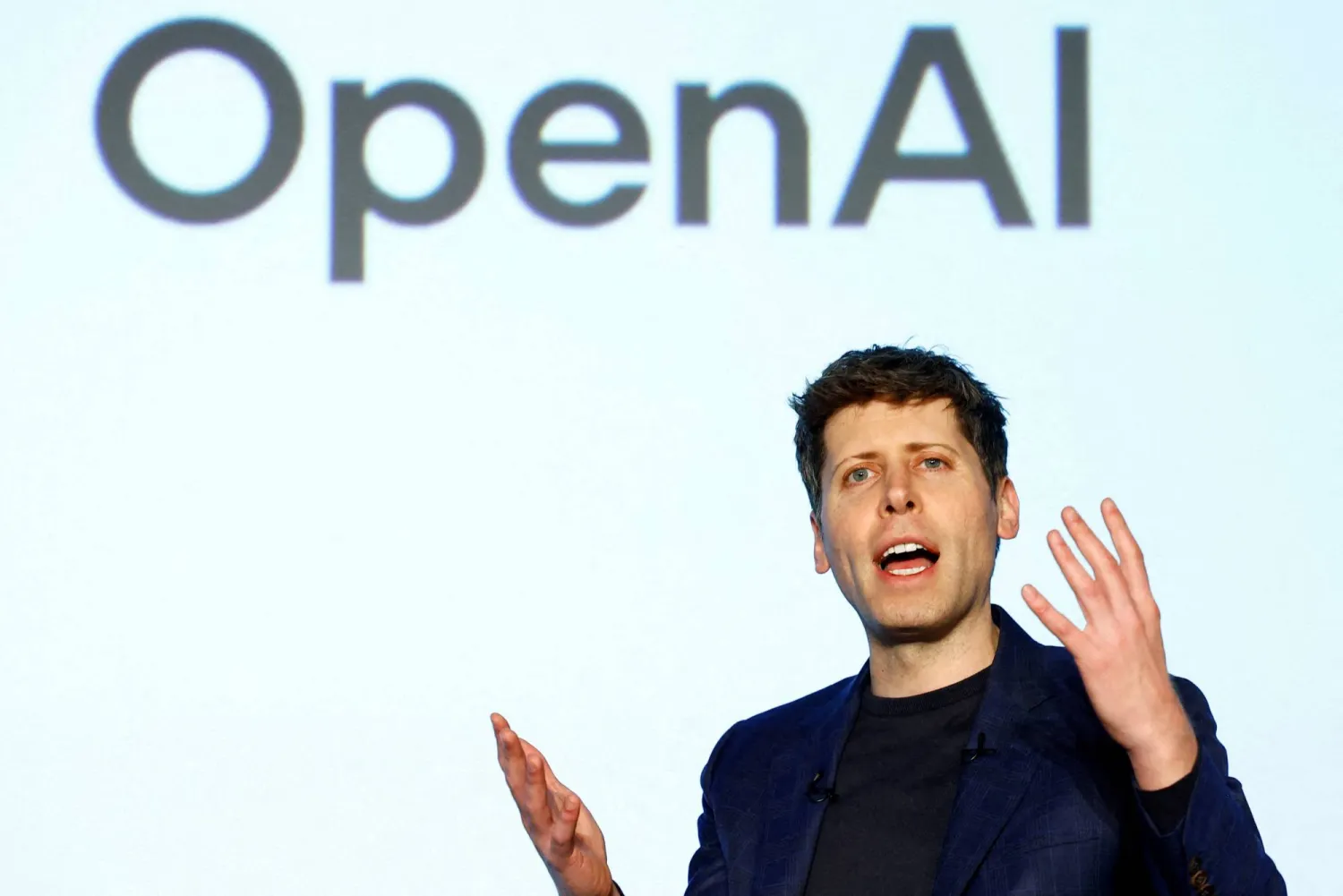
FILE PHOTO: OpenAI CEO Sam Altman attends an event in Tokyo, Japan February 3, 2025. REUTERS/Kim Kyung-Hoon/File Photo
TT

OpenAI's Altman Says AI Unlikely to Lead to 'Jobs Apocalypse'

FILE PHOTO: OpenAI CEO Sam Altman attends an event in Tokyo, Japan February 3, 2025. REUTERS/Kim Kyung-Hoon/File Photo

OpenAI CEO Sam Altman said on Tuesday the rapid development and adoption of AI would not lead to a global "jobs apocalypse" and the technology had not claimed as many white-collar jobs as he had feared.

Speaking virtually at a Commonwealth Bank of Australia (CBA) conference in Sydney, Altman said he was initially concerned about the impact AI would have on global employment levels.

He said he and his executives had been "roughly right" on the technological predictions made by OpenAI when it launched ChatGPT in 2022. But he said they were "pretty wrong" on the social and economic implications.

"I'm delighted to be wrong about this, I ⁠thought there would have ⁠been more impact on entry-level white-collar jobs being eliminated by now than has actually happened," Altman told CBA Chief Executive Matt Comyn in an interview.

"I now think I understand more about why it hasn't, and I'm obviously grateful but that is an area where my intuitions were just off.

"People are like 'oh you could have saved the world a lot of fear mongering and a lot of doom and gloom' but at the time I was like 'I see this is a ⁠real risk we should probably talk about it' and it still may."

According to Reuters, Altman did not cite any jobs numbers on Tuesday but has previously talked about potential industry-wide job cuts due to AI's advancement.

A growing number of global companies, including HSBC, Amazon, Standard Chartered and CBA have announced some jobs within their companies were being replaced by AI.

OpenAI is preparing to confidentially file for a US initial public offering in the coming weeks, Reuters reported last week, citing a source familiar with the matter. The company could be aiming for a $1 trillion valuation and raising at least $60 billion, Reuters reported in October.

Altman said he had realized that even though AI was taking on an increasingly active role in many industries ⁠and jobs, there was still ⁠a 'human part' of employment that could not be replaced.

He said he had been using AI to respond to Slack and email messages but had reverted to answering some himself.

"I had it reply to messages, saying 'this is Sam's AI' and it was an amazing example to me of we really do care about people," he said.

"We really do care about our interactions with people and this thing, which is a huge amount of my time, is not something that I can imagine myself outsourcing to an AI anytime soon."

That realization, he said, had made him believe the human interaction required in many jobs would not be replaced by AI.

"It really, in both positive and negative ways, updated me to thinking that the jobs picture is likely to be very different than we thought," he said.

"I don't think we're going to have the kind of jobs apocalypse that some of the companies in our space advocate or talk about."