


Saudi Corporate Confidence at Highest Rate in Two Years

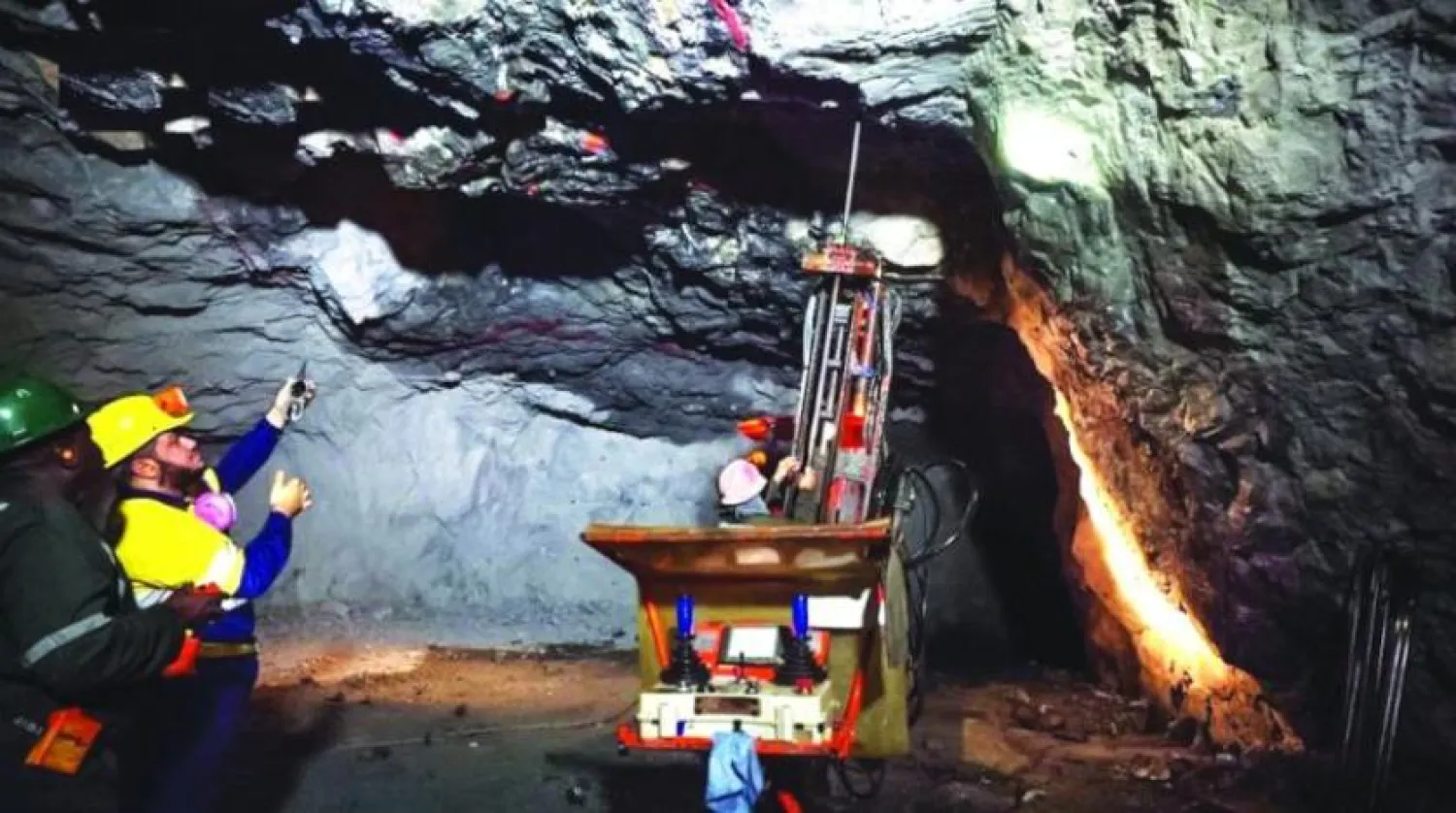
 Saudi Arabia is increasing exploration of mining sites as part of the mineral wealth exploitation project across the Kingdom. (Asharq Al-Awsat)
Saudi Arabia is increasing exploration of mining sites as part of the mineral wealth exploitation project across the Kingdom. (Asharq Al-Awsat)
TT

Saudi Corporate Confidence at Highest Rate in Two Years

 Saudi Arabia is increasing exploration of mining sites as part of the mineral wealth exploitation project across the Kingdom. (Asharq Al-Awsat)
Saudi Arabia is increasing exploration of mining sites as part of the mineral wealth exploitation project across the Kingdom. (Asharq Al-Awsat)

The level of confidence among companies in the non-oil-producing private sector in Saudi Arabia rose to its highest rate in two years during January, according to the data of the Purchasing Managers’ Index (PMI), issued by Riyad Bank.

The Kingdom’s Purchasing Managers’ Index touched 58.2 in January 2023, the second-highest since September 2021. According to the data published on Sunday, the companies presented strong expectations for the next year, supported by strong flows of new orders, high production capacity, increased activity, declining cost pressures, and accelerating production growth and new business during the month.

In December, the Kingdom’s PMI stood at 56.9, while in November, the index hit 58.5, the highest in the last 16 months.

The rise was driven by the positive effects of the sub-indicators of production, new orders, and stocks of purchases. The three indices witnessed an increase in growth rates since the previous study period. The slow rise in employment and the larger decline in delivery times led to the main indicator not growing at a greater pace.

Meanwhile, the Saudi Ministry of Industry and Mineral Resources revealed on Sunday that the number of mining complexes in the Kingdom reached 377 until the end of 2022, with a total area of ​​44,000 square kilometers distributed over 13 regions.

Makkah Region came at the top with 76 complexes, followed by Riyadh with 60 complexes, Al-Madinah with 53, and Asir with 34 complexes.

Eastern Province followed with 25 complexes, Najran (24), Qassim (23), Al-Jouf (20), Al-Baha (17), Hail (16), Tabuk (14), Jizan (11) and the Northern Borders Province (4).

The ministry added that the value of mineral raw wealth was estimated at five trillions of riyals.

In terms of type of minerals, the complexes include more than 20 different minerals, such as gold, iron, copper, granite and marble.

On a different note, the Saudi Methanol Chemicals Company, Chemanol, announced on Sunday, the latest developments regarding the non-binding memorandum of understanding signed with the Global Company for Downstream Industries (GDI), to supply methanol and explore future opportunities in the field of petrochemical products.

In a statement on Tadawul, the company said it signed a joint venture agreement with Global Company for Downstream Industries (GDI) to establish a national firm to produce specialty chemicals.

This includes the production of Methyl Diethanolamine, Choline Chloride Dimethyl Disulfide, Dimethyl Sulfate, Chlorine Derivatives, Poly Alpha Olefins and Aromatic Solvents, according to the statement.

Chemanol will own a 60% stake in the new company, while GDI will own the remaining 40%. The new JV will be based in Jubail Industrial City.

The statement added that through the agreement, Chemanol aims to become one of the largest producers of specialty petrochemicals in the region.



Saudi Arabia Issues 438 Industrial Licenses Worth $1.28 Billion in July

File photo of the Saudi capital Riyadh - File/AAWSAT
TT

Saudi Arabia Issues 438 Industrial Licenses Worth $1.28 Billion in July

File photo of the Saudi capital Riyadh - File/AAWSAT

Saudi Arabia's Ministry of Industry and Mineral Resources issued 438 new industrial licenses in July 2026, representing investments of approximately SAR 4.82 billion ($1.28 billion), while 189 factories began actual production during the same month, with investments totaling SAR 1.95 billion ($520 million), according to data from the ministry's National Industrial and Mining Information Center.

Ministry spokesperson Jarrah Al-Jarrah said the new industrial licenses are expected to create more than 3,708 jobs across various regions of the Kingdom.

He added that the factories that began production in July created 2,807 new jobs, reflecting the continued expansion of Saudi Arabia's industrial base and the growing number of factories entering operation.

The Ministry of Industry and Mineral Resources publishes monthly industrial activity indicators through the National Industrial and Mining Information Center to track new licenses, investment volumes and factories beginning production, as well as developments in the Kingdom's industrial sector.


GCC Chief Emphasizes Gulf Integration, Diversified Partnerships at IMF MENAP Meeting

Gulf Cooperation Council (GCC) Secretary-General Jasem Albudaiwi - SPA
TT

GCC Chief Emphasizes Gulf Integration, Diversified Partnerships at IMF MENAP Meeting

Gulf Cooperation Council (GCC) Secretary-General Jasem Albudaiwi - SPA

Gulf Cooperation Council (GCC) Secretary-General Jasem Albudaiwi underscored that GCC economies have demonstrated strong resilience against global economic shocks and geopolitical shifts, supported by solid fundamentals, substantial financial reserves, robust banking sectors, and prudent fiscal management.

Albudaiwi delivered his remarks during a meeting of the finance ministers and central bank governors of the Middle East, North Africa, Afghanistan, and Pakistan (MENAP) region with International Monetary Fund (IMF) Managing Director Kristalina Georgieva, held on the sidelines of the 2026 IMF and World Bank Group Annual Meetings in Bangkok, SPA reported.

Albudaiwi pointed out that recent geopolitical developments have impacted global energy production, maritime shipping, and trade flows, demonstrating the close link between Gulf stability and broader global economic security. He noted that disruptions along key energy corridors and trade routes inevitably reverberate across international markets.

Albudaiwi affirmed that the GCC economies possess the capacity to sustain recovery and growth through 2027 and beyond, propelled by strategic investments and non-oil diversification. He emphasized the necessity of balancing short-term economic responses with long-term fiscal sustainability, maintaining adequate buffers to mitigate future market volatility.

Highlighting future growth sectors, the secretary-general cited advanced industries, digital infrastructure, artificial intelligence, and human capital development, alongside empowering the private sector to expand its role in global value chains.

Concluding his address, Albudaiwi stressed that long-term resilience requires advancing Gulf economic integration, upgrading logistical corridors, and diversifying international partnerships to transform ongoing global challenges into sustainable economic opportunities.


Turkish Cenbank Says to Maintain Tight Monetary Stance Till Price Stability

Turkish Central Bank Governor Fatih Karahan speaks during a press conference in Istanbul, Türkiye, February 7, 2025. REUTERS/Dilara Senkaya
TT

Turkish Cenbank Says to Maintain Tight Monetary Stance Till Price Stability

Turkish Central Bank Governor Fatih Karahan speaks during a press conference in Istanbul, Türkiye, February 7, 2025. REUTERS/Dilara Senkaya

Turkish Central Bank Governor Fatih Karahan on Wednesday said the bank would maintain its tight monetary policy until price stability is achieved.

According to Reuters, He was speaking about Türkiye's monetary policy and macroeconomic outlook during a visit to Bangkok for a meeting of the World Bank.

Here are some details from the governor's presentation:

* Underlying inflation ⁠is moderating despite ⁠elevated energy prices
* Soft demand dampens inflationary impulses from supply shocks
* Proactive measures limit the possible contagion from trade-restricted funds
* Turkish lira preference remains strong under tight monetary policy
* The ⁠tight monetary policy stance, which will be maintained until price stability is achieved, will strengthen the disinflation process through demand, exchange rate, and expectation channels
* The Monetary Policy Committee (MPC) will determine the policy rate by taking into account realized and expected inflation and its underlying trend in a way to ensure ⁠the tightness ⁠required by the projected disinflation path in line with the interim targets
* Monetary policy decisions are made prudently on a meeting-by-meeting basis with a focus on the inflation outlook
* Monetary policy stance will be tightened in case of a significant deviation in inflation outlook from the interim targets