Moroccan Jailed for Killing European Hikers Commits Suicidehttps://english.aawsat.com/home/article/4185886/moroccan-jailed-killing-european-hikers-commits-suicide
Moroccan Jailed for Killing European Hikers Commits Suicide
The facility where he was held in the eastern city of Oujda said in a statement that staff found the body early Tuesday. AFP
A Moroccan sentenced to death for the beheadings of two Scandinavian tourists has killed himself in prison, Moroccan officials said.
The facility where he was held in the eastern city of Oujda said in a statement that staff found his body early Tuesday.
The prisoner was among convicted ring members jailed in 2019 over the gruesome killings of two young Scandinavian women, Louisa Vesterager Jespersen from Denmark and Maren Ueland from Norway. They were killed in December 2018 while on a backpacking trip in the Atlas Mountains, near the city of Marrakech.
The killings were recorded on video and posted online.
A Moroccan court convicted three men of terrorism and of belonging to an ISIS-affiliated ring and sentenced them to death. A fourth suspect who fled the scene was given life in prison. The court also handed jail terms to 19 people convicted as accomplices.
Cholera epidemic affects children and displaced people in Nigeria (Reuters - Archival)
A cholera outbreak in Sudan has killed 120 people, with another 1,102 suspected cases since May in isolated war zones, the World Health Organization said Wednesday.
More than three years of war between Sudan's army and the paramilitary Rapid Support Forces (RSF) have decimated the country's healthcare system.
This is Sudan's third wave of cholera in as many years, and began only two months after the last outbreak was declared over in March, reported AFP.
Between July 2024 and March 2026, over 124,400 people were infected and 3,500 killed during the last wave, according to government figures.
Endemic to the northeast African country, cholera used to come "in a cyclic manner every three years", the WHO's Sudan chief Dr Shible Sahbani told reporters.
But now the country faces near-continuous outbreaks "due to the conflict, constraints in access and limited supplies," he said.
Sudan's rainy season is set to surge in the coming weeks, during which cholera cases balloon as millions lack access to clean water and the rains further impede access.
The Sudanese government declared the latest outbreak this week in the flashpoint West Kordofan state, the dividing line between army and paramilitary zones of control.
Constant deadly drone strikes launched by both sides have made commercial and aid access to the Kordofan region increasingly dangerous, and brought hundreds of thousands to the brink of starvation.
The WHO said the outbreak appears to be spreading, following reports of close to 300 suspected cases and three deaths in neighboring North Kordofan, where the United Nations has warned the RSF is preparing to mount a deadly ground assault on state capital El-Obeid.
Drone strikes on the city's power stations are already "disrupting access to lifesaving drinking water and electricity", UN humanitarian chief Tom Fletcher said Tuesday, warning of the risk of mass atrocities.
Three years into the war, which aid groups estimate may have killed more than 200,000 people, nearly all of the country's hospitals have been forced entirely or partially out of service.
"Forty percent of health facilities are non-functional at all, and the remaining almost 60 percent are only partially functioning, meaning they are providing only a few services, or not enough to patients in the area," Sahbani said.
Gifted Students Complex in Marib: From the Heart of War to Building the Futurehttps://english.aawsat.com/arab-world/5291122-gifted-students-complex-marib-heart-war-building-future
Gifted Students Complex in Marib: From the Heart of War to Building the Future
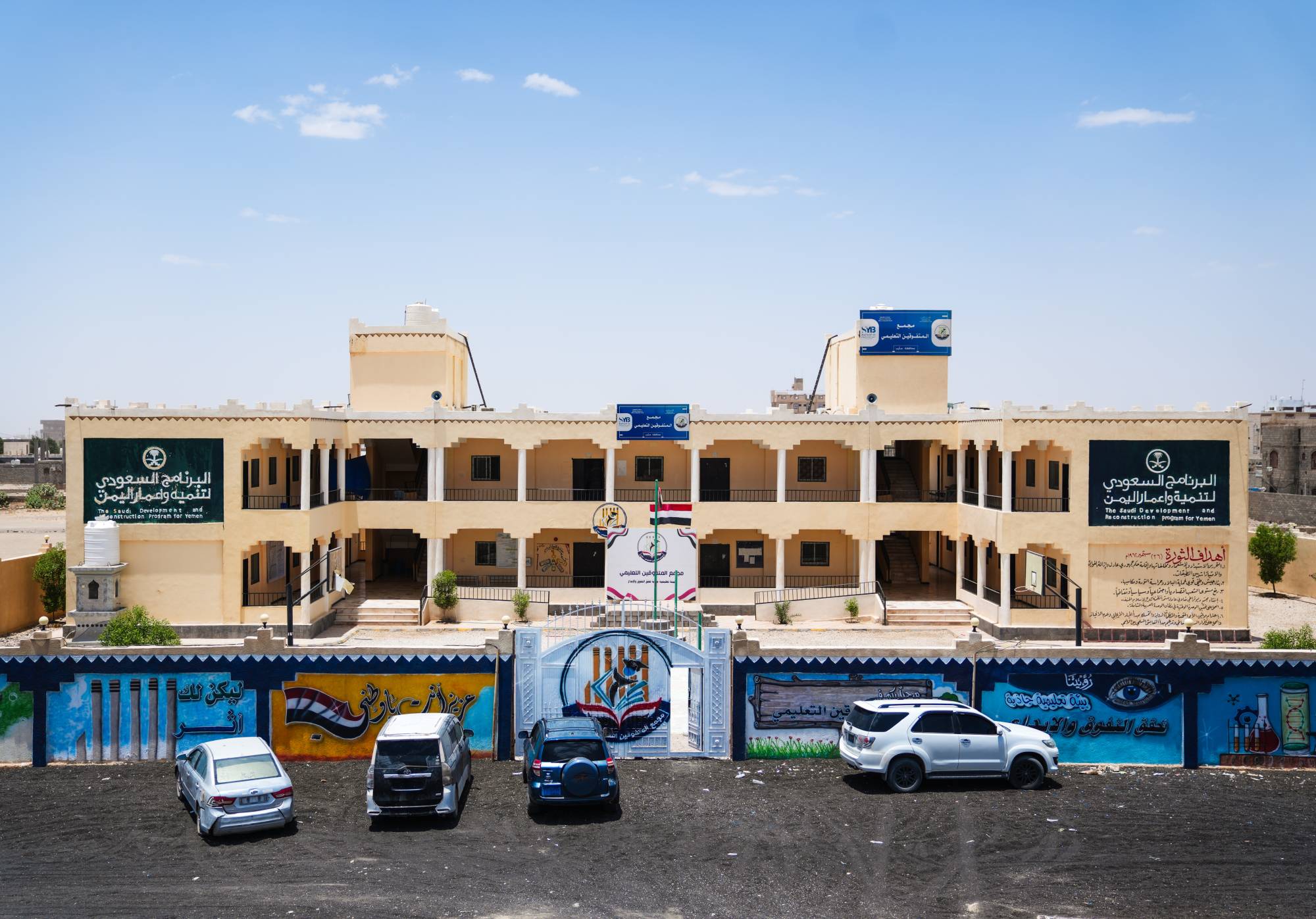
More than 200 high-achieving students have enrolled at the complex since its official opening in 2024 (Asharq Al-Awsat)
In a city more familiar with rockets than school bells, a different morning begins at the Model Complex for Gifted Students in Marib.
Built and fully funded by the Saudi Development and Reconstruction Program for Yemen, the complex is now home to dozens of students studying science and mathematics, a scene that captures the triumph of knowledge over years of war.
Four years ago, at the height of Houthi attacks on Marib in 2022, Asharq Al-Awsat visited the site for the first time. The building was then in its final stages of preparation, while nearby neighborhoods, including al-Rawda and al-Matar, were under repeated Houthi ballistic missile fire.
One missile struck a house only about 500 meters from the gifted students’ center, offering a stark image of two opposing projects: one that builds people, and another that destroys them.
Even as the war reached one of its fiercest stages, the Saudi Development and Reconstruction Program for Yemen pushed ahead. What seemed at the time like an educational gamble in the middle of a battlefield has become one of Yemen’s clearest examples of investment in people.
The center was no ordinary education project. It was a dream long held by Sheikh Sultan al-Arada, vice president of Yemen’s Presidential Leadership Council and governor of Marib. He recalled proposing the idea to the Saudi Ambassador to Yemen, Mohammed Al-Jaber, who quickly approved the establishment and full equipping of the project.
When Asharq Al-Awsat returned to the center, the scene had changed completely. The building that stood silent in 2022 under the shadow of war was alive with students. Laboratories were busy, and classrooms echoed with discussion and scientific experiments.
Since its official opening in 2024, more than 200 high-achieving students have enrolled at the center. Many come from different Yemeni provinces after the war forced their families to flee to Marib.
Here, in a city often described as the last line of defense for the republic, Saudi Arabia is fighting a different kind of battle: a battle to build minds, based on the belief that rebuilding people comes before rebuilding nations.
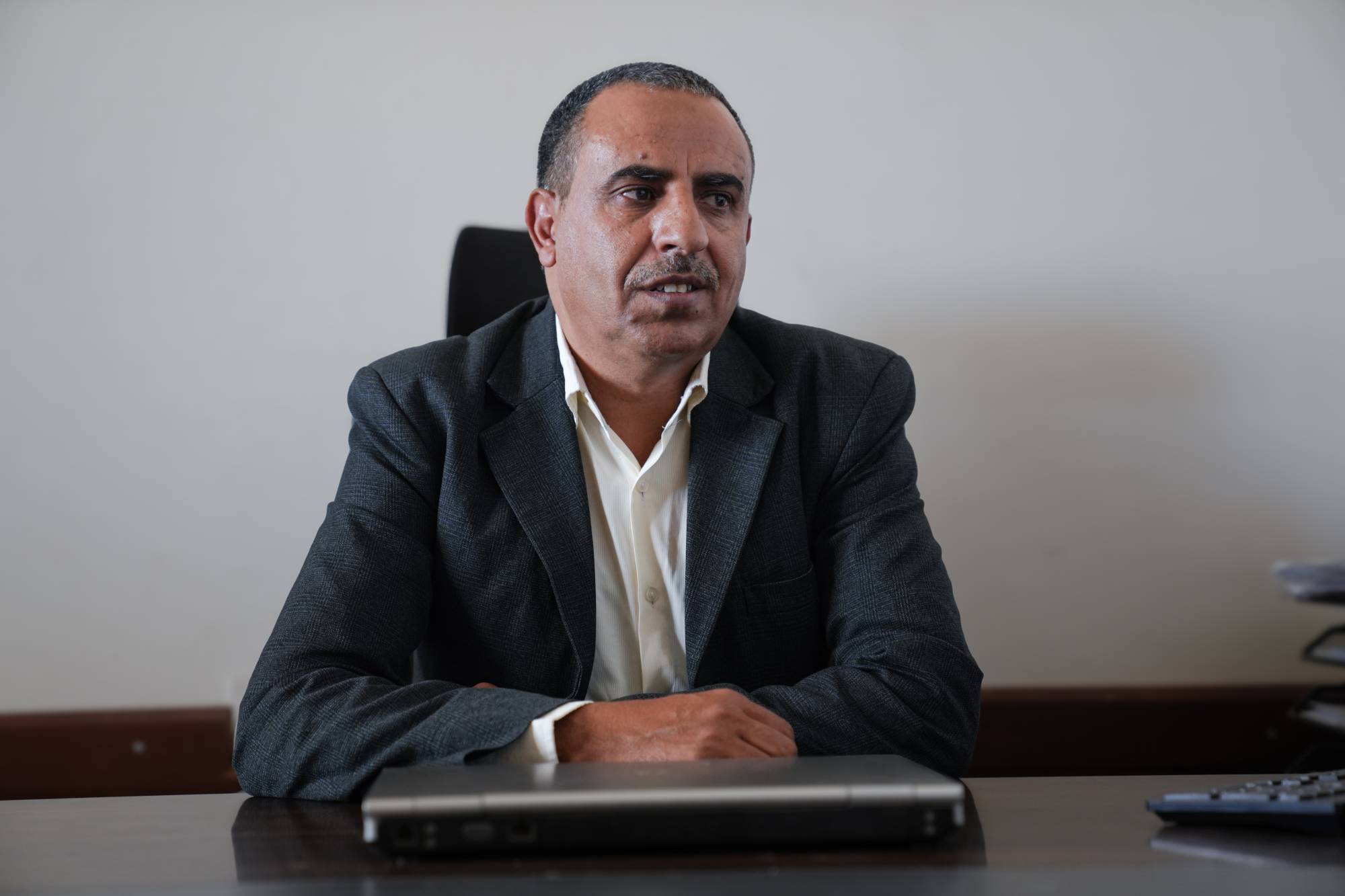
Dr. Mohammed al-Qairi, director of the gifted students’ complex in Marib, said the center’s opening in 2024 marked a turning point for quality education in the province. Demand, he said, exceeded expectations from the first day.
He told Asharq Al-Awsat that 246 students applied for the first intake, with only 120 selected after a series of scientific tests.
Dr. Mohammed al-Qairi, director of the gifted students’ complex in Marib (Asharq Al-Awsat)
In the current academic year, 213 students applied and only 90 were admitted, after the administration decided to reduce admissions to focus more closely on the quality of educational outcomes.
Qairi said the complex no longer serves Marib alone. It now represents all of Yemen, bringing together students who fled with their families from most Yemeni provinces and turning Marib into a wartime hub for the country’s scientific elite.
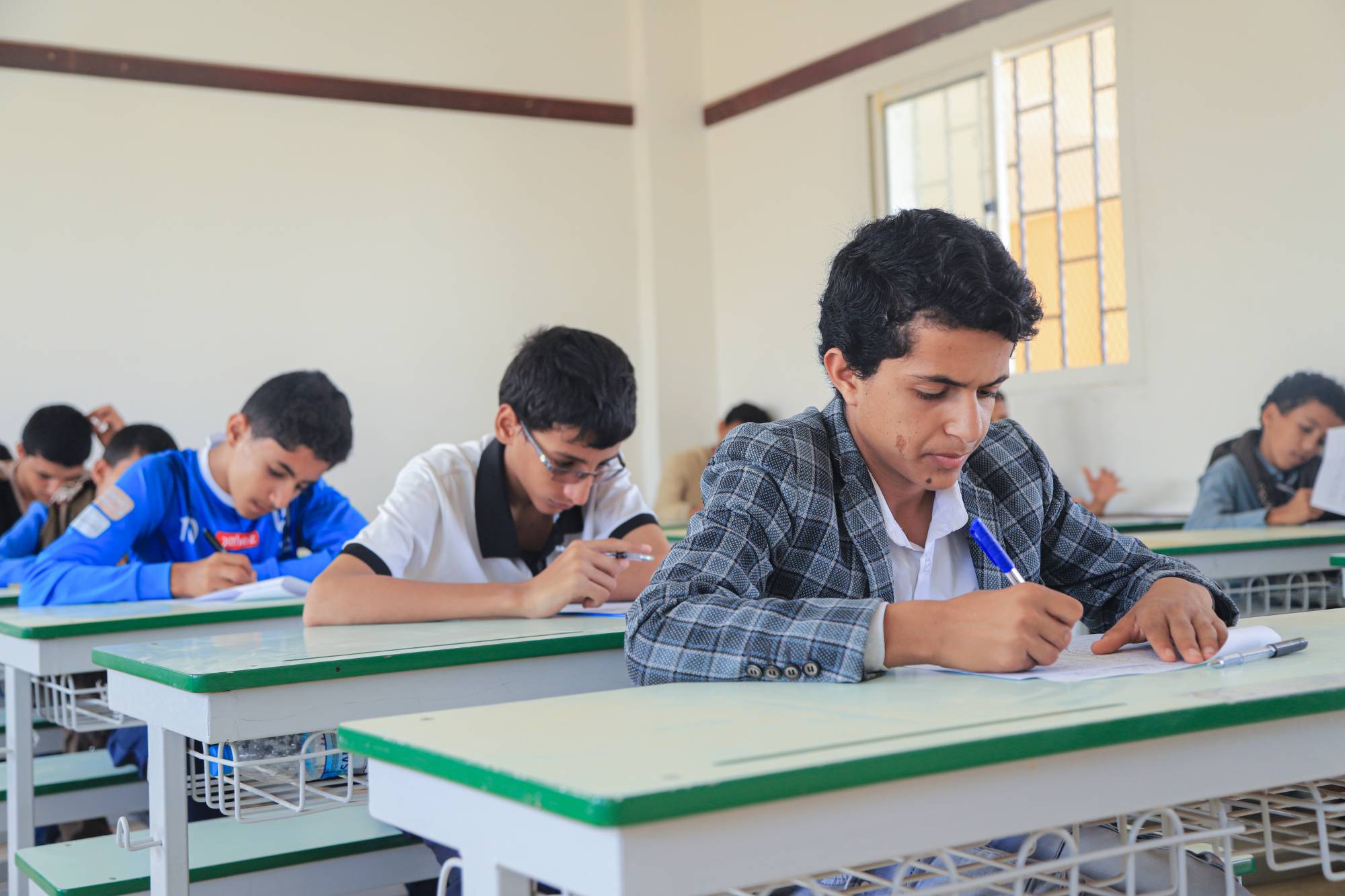
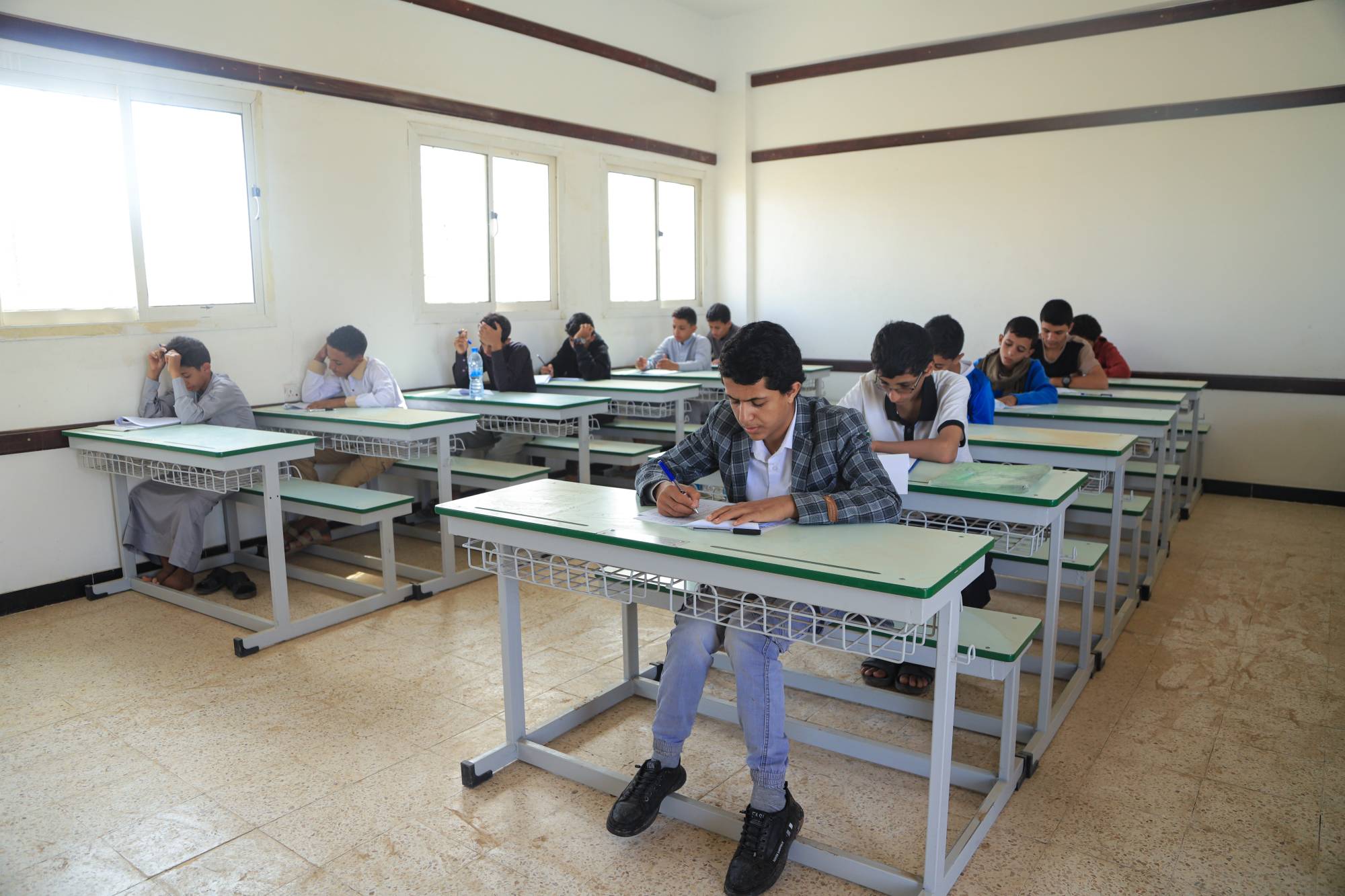
Applicants sit rigorous tests in Arabic, English, mathematics and science, as well as a special intelligence assessment. To remain at the complex, students must maintain an average of at least 80 percent.
The complex's students achieved first and second place in Physics and Chemistry during the scientific forum in Marib (Asharq Al-Awsat)
Qairi said Marib had long been seen as distant from quality education projects, and few had imagined it would host a model school for top-performing students of this standard.
“We had a limited experience in the capital Sanaa, but establishing a complex for gifted students in Marib was not something anyone expected,” he said.
“What has been achieved here came thanks to the support of our brothers in the Kingdom of Saudi Arabia, whose role was not limited to implementing service projects, but extended to investing in people. The gifted students’ complex was one of the most important of these projects,” he added.
Applicants sit rigorous tests in Arabic, English, mathematics and science, as well as a special intelligence assessment (Asharq Al-Awsat)
The complex currently teaches students in the first and second years of secondary school. Preparations are underway to open the third secondary year next year, a step those in charge describe as the first real test of the experiment.
Their ambition is clear: to see their students rank among the top performers in the Republic of Yemen.
Although the project is still new, results have come quickly. Students from the complex won first place in physics at the Marib province level and second place in chemistry at the scientific forum, achievements that project officials see as an early sign of success.
“We are still at the beginning of the road, but we aspire for this complex to become a factory for the top students of the republic, and a model to be followed in the rest of the provinces,” Qairi said.
The complex marked a turning point in the journey of quality education in Marib Governorate (Asharq Al-Awsat)
The ambitions are not limited to male students. Qairi said plans would soon be announced to establish a similar complex for high-achieving female students, widening access to quality education.
He said the building is equipped with classrooms, laboratories, furniture and administrative equipment, but still needs supporting facilities, including shaded areas to protect students from the heat and the completion of a guard room.
Such needs, he said, do not diminish the value of the project, but would strengthen its educational environment.
“In a country exhausted by war, discovering a gifted student or preparing a researcher, doctor, or engineer, becomes another form of reconstruction,” he said.
Sources to Asharq Al-Awsat: Hamas Submits Response to Mladenov Amendments, Expects Rejectionhttps://english.aawsat.com/arab-world/5290949-sources-asharq-al-awsat-hamas-submits-response-mladenov-amendments-expects
Mourners attend the funeral of three Palestinians who were killed in an Israeli strike in Khan Younis in the southern Gaza Strip on Wednesday. (Reuters)
Sources to Asharq Al-Awsat: Hamas Submits Response to Mladenov Amendments, Expects Rejection
Mourners attend the funeral of three Palestinians who were killed in an Israeli strike in Khan Younis in the southern Gaza Strip on Wednesday. (Reuters)
Asharq Al-Awsat has learned that the Hamas delegation that arrived in Cairo on Tuesday handed mediators its response to amendments submitted to the movement on June 17 by Nickolay Mladenov, the Board of Peace’s high representative for Gaza.
Two senior Hamas sources and two sources from Palestinian factions involved in the talks told Asharq Al-Awsat about some details of the response.
One source described the changes as mainly “minor amendments” to the reply Hamas and the factions had submitted to mediators and Mladenov on June 15.
Mladenov later amended that reply and returned it to the movement and the factions for further review. The sources, however, did not sound optimistic that Mladenov would respond positively or accept the latest changes.
Among the initial details obtained by Asharq Al-Awsat from the four sources, who spoke separately, was that Hamas renewed its demand for “all dues to be paid to employees who had worked in its government.”
The demand rejects Mladenov’s earlier amendment, which limited the commitment to those who would work under the National Committee for the Administration of Gaza from the moment it begins its duties, rather than to any previous period.
‘Infrastructure’
The sources provided consistent accounts of the response to Clause 8, which addresses the inventory and storage of weapons.
They said Hamas removed the term “infrastructure,” which Mladenov had added in his amendments and defined at the time as including “tunnels, weapons depots, and weapons manufacturing workshops.”
The sources said the factions want the weapons clause implemented in a “gradual and sequential” manner, according to a timetable to be carried out within 14 days of agreement on the paper.
Hamas also stressed in its response that the issue should be tied to “a clear political track on Palestinians’ self-determination and guarantees of their sovereign rights.”
A Hamas source and a Palestinian factional source said the amendments to those two clauses, along with other provisions, were made “slightly,” following Hamas contacts with factions over the past few days aimed at producing a unified response.
But the factional source said Hamas “did not actually consult the factions directly,” although a meeting in Egypt had been placed on the agenda before the response was submitted. They added that “a meeting between Hamas and the factions will be held within two days.”
Notably, Hamas sent a leadership delegation to Cairo headed by Zaher Jabarin, a member of the movement’s political bureau, a member of the negotiating delegation and head of its West Bank bureau.
Such a move was unusual, and faction activists saw it as a sign of Hamas frustration with Mladenov’s repeated amendments.
A senior Hamas source told Asharq Al-Awsat: “Either we reach new approaches, the mediators find other solutions, or we return to disputes as before.”
Another factional source struck a similar tone, saying they expected “Mladenov, as well as Israel, to reject these amendments from the factions.”
That, they said, could return the situation to where it was, despite Israel’s threat to expand its operations in Gaza and what the Board of Peace has promoted as steps it could take separately from any agreement with Hamas.
لم تشترك بعد
انشئ حساباً خاصاً بك لتحصل على أخبار مخصصة لك ولتتمتع بخاصية حفظ المقالات وتتلقى نشراتنا البريدية المتنوعة