EU Diplomat Demands Accountability Following Israeli Settler Rampage in West Bank

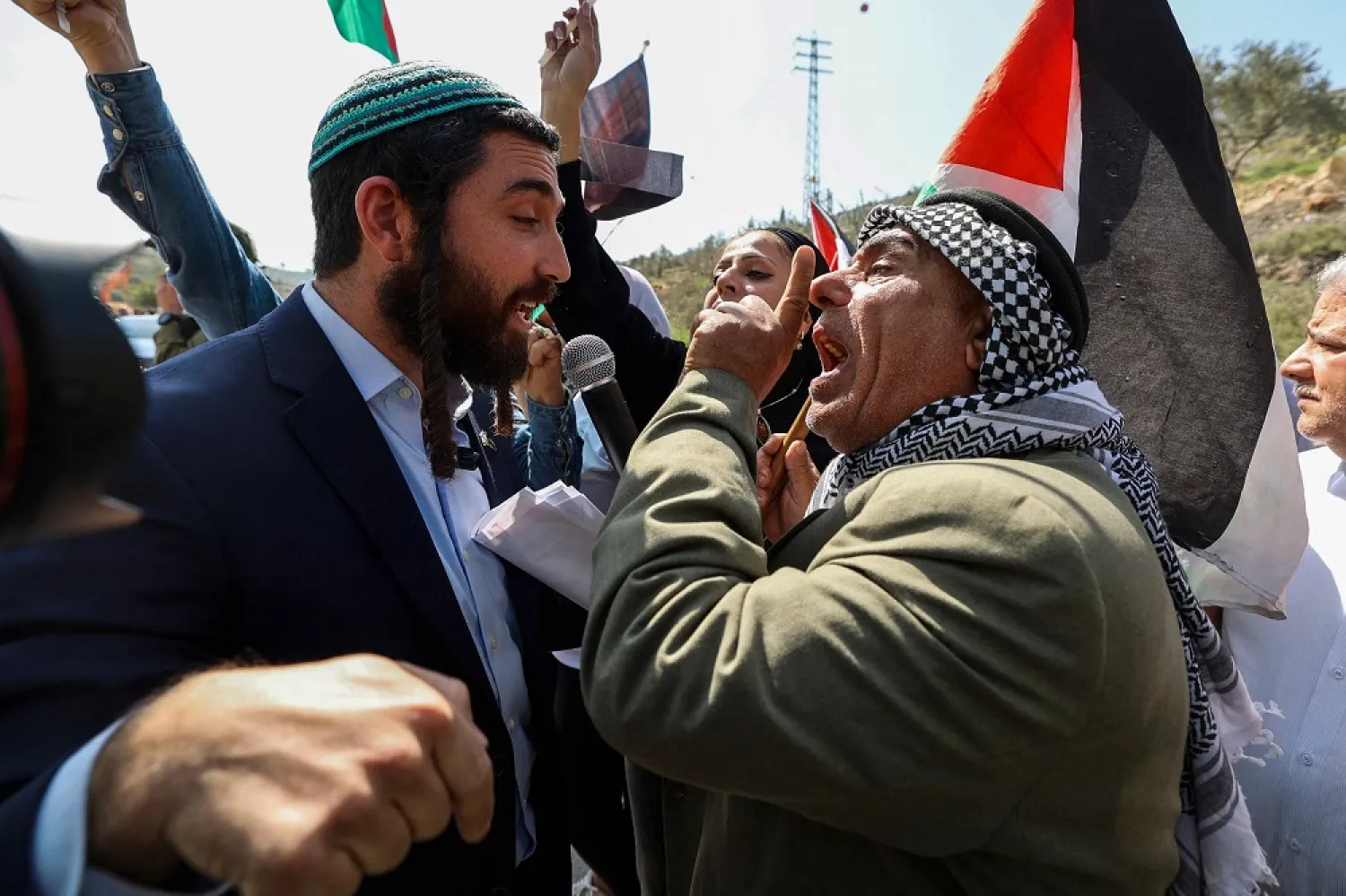
Knesset (Parliament) member for Israel's Religious Zionism party Tzvi Sukkot (L) is confronted as he tries to interrupt a rally by Palestinian and Israeli peace activists protesting at the entrance of Huwara in the occupied West Bank, on March 3, 2023, following deadly violence by Israeli settlers. (AFP)
TT

EU Diplomat Demands Accountability Following Israeli Settler Rampage in West Bank

Knesset (Parliament) member for Israel's Religious Zionism party Tzvi Sukkot (L) is confronted as he tries to interrupt a rally by Palestinian and Israeli peace activists protesting at the entrance of Huwara in the occupied West Bank, on March 3, 2023, following deadly violence by Israeli settlers. (AFP)

The European Union's envoy to the Palestinians called on Friday for accountability and for perpetrators to be brought to justice after a rampage by Israeli settlers this week in the occupied West Bank in which one Palestinian was killed and dozens of houses, shops and cars were torched.

Ambassador Sven Kuhn von Burgsdorff, heading one of the biggest EU delegations to visit the West Bank, said the officials wanted to see with their own eyes the damage left by Sunday's violence in and around the Palestinian village of Huwara. The rampage followed a Palestinian gun attack that killed two Israeli brothers.

"It is absolutely necessary for us that accountability is fully ensured, that the perpetrators be brought to justice, that those who lost property be compensated," Kuhn von Burgsdorff said.

Local media reported that, in a rare move, Israel's Defense Minister Yoav Gallant on Thursday signed administrative detention orders for two suspects over the rampage, after a Jerusalem court ordered police to release all seven people who had been detained in connection with the rampage.

Amnesty International condemned the release of the suspects in a statement on Friday. It also condemned the use of administrative detention, which it said was a practice that violated international law.

Israeli rights group Yesh Din found that 93% of investigations into settler attacks in the West Bank between 2005 and 2022 were closed without indictment.

Israeli Major General Yehuda Fuchs, who commands the Israeli military in the area, said on Tuesday that his forces had prepared for attempted settler retribution over the gun attack but had been surprised by the intensity of the violence, which he said was perpetrated by dozens of people. He called it a "pogrom carried out by outlaws".

Violence in the West Bank has surged over the past year with stepped-up Israeli military raids following a spate of Palestinian attacks. The United States, Jordan and Egypt have appealed for calm, concerned about an escalation ahead of the Muslim holy month of Ramadan and the Jewish Passover festival in late March and early April.

Washington’s call to Netanyahu

The United States has demanded that Israeli Prime Minister Benjamin Netanyahu disavow a call on Wednesday by far-right Finance Minister Bezalel Smotrich for the village of Huwara to be erased.

On the night of the rampage, Netanyahu urged people not to take the law into their own hands, but he has not publicly addressed Smotrich's statement or responded to the unusual criticism by Washington, a close ally.

The UN human rights chief on Friday criticized Smotrich for his remarks, describing them as "an unfathomable statement of incitement to violence and hostility".

Volker Turk was addressing the Geneva-based UN Human Rights Council, where he formally presented a report on the situation in the occupied Palestinian territories.

Late on Thursday, Palestinian officials said Israeli forces shot dead 15-year-old Mohammad Nidal Saleem in the back in the West Bank town of Azzoun.

Ahmad Enaya, the town's mayor, said an Israeli military vehicle drove into town and when teens hurled rocks at the car, soldiers responded with live fire.

The Israeli military said in a statement that soldiers shot at suspects who had hurled explosives at forces while they were conducting a search in the area for people who launched fireworks at Israeli vehicles passing near Azzoun.

It said it was aware of reports of people being wounded but did not confirm any Palestinian fatalities.

A statement by the public hospital in Qalqilya, near Azzoun, said two other people were treated for gunshot wounds.

"The terrorism waged by settlers, in cooperation with the occupation government, is unprecedented," said Walid Assaf, a former Palestinian Authority official who monitored Israeli settlements, speaking at Saleem's funeral in Azzoun on Friday.

At least 62 Palestinians, including gunmen and civilians, have been killed since the start of 2023, the Palestinian health ministry said. Thirteen Israelis and a Ukrainian tourist died in Palestinian attacks in the same period, according to official Israeli figures.

Palestinians seek to establish a state in the West Bank, East Jerusalem and Gaza, areas Israel captured in a 1967 war.

"We Palestinians will remain steadfast and we will defend our existence in the face of this occupation," said Assaf.

Iraq Closes Sheeb Border Crossing with Iran to Check Security

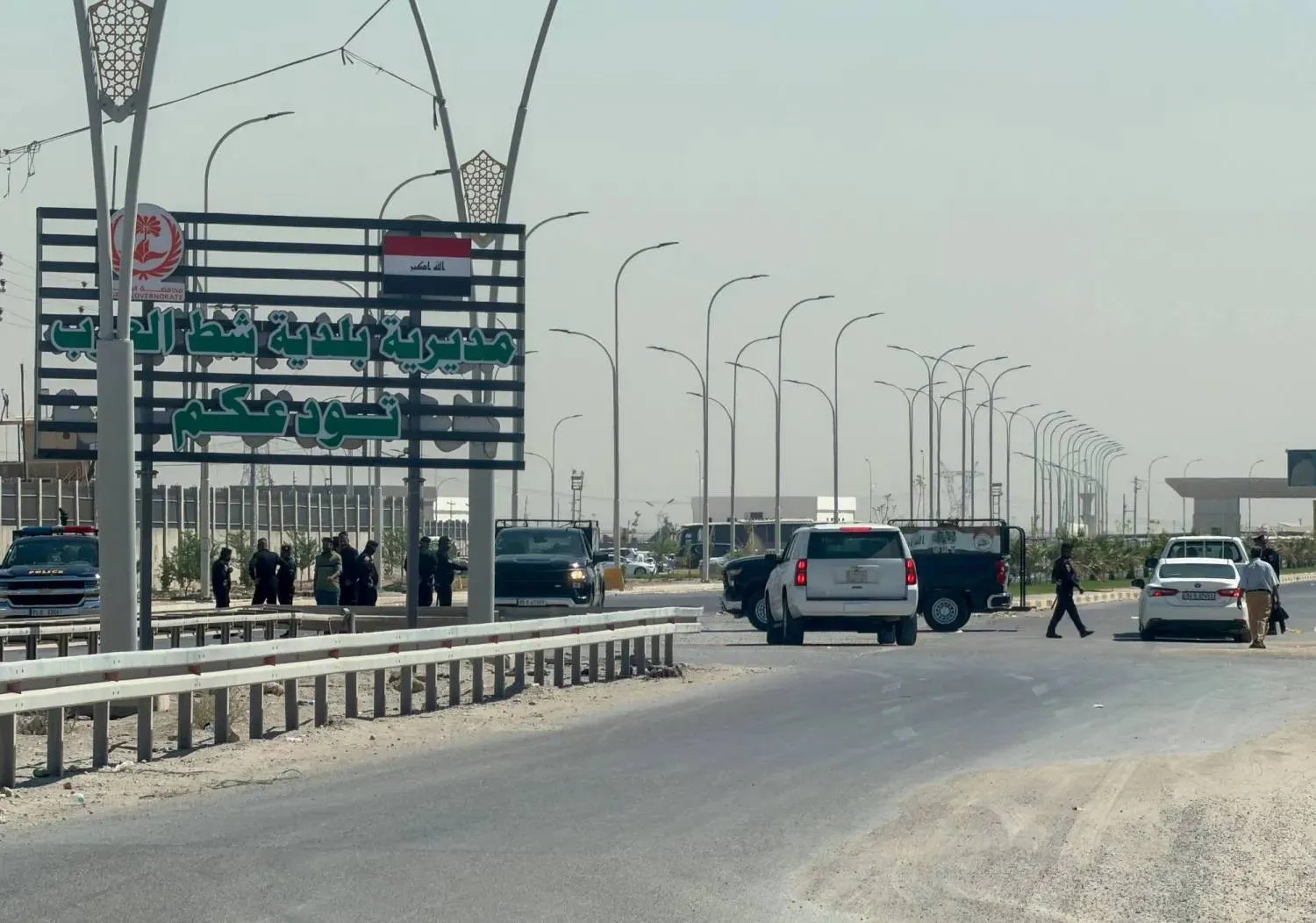
 Security personnel stand near the Shalamsheh border crossing between Iraq and Iran, after Iraqi authorities ordered its closure as a precautionary measure following the latest drone attacks on Saudi Arabia, in Basra, Iraq, September 12, 2026. (Reuters)
Security personnel stand near the Shalamsheh border crossing between Iraq and Iran, after Iraqi authorities ordered its closure as a precautionary measure following the latest drone attacks on Saudi Arabia, in Basra, Iraq, September 12, 2026. (Reuters)
TT

Iraq Closes Sheeb Border Crossing with Iran to Check Security

 Security personnel stand near the Shalamsheh border crossing between Iraq and Iran, after Iraqi authorities ordered its closure as a precautionary measure following the latest drone attacks on Saudi Arabia, in Basra, Iraq, September 12, 2026. (Reuters)
Security personnel stand near the Shalamsheh border crossing between Iraq and Iran, after Iraqi authorities ordered its closure as a precautionary measure following the latest drone attacks on Saudi Arabia, in Basra, Iraq, September 12, 2026. (Reuters)

Iraq has closed the busy Sheeb border crossing with Iran to review security and install detection equipment to stop the smuggling of prohibited materials, ‌an Iraqi ‌border official said ‌on ⁠Wednesday.

Sheeb would be ⁠closed to passengers, vehicles and commercial trucks until further notice, two other sources at the crossing said.

Iraq ⁠ordered the closure ‌of ‌another crossing with Iran, Shalamsheh, ‌in September as a ‌precaution after drone attacks on Saudi Arabia, two security sources said at ‌the time. Riyadh said the drones had been ⁠launched ⁠from Iraq.

The current security measures at Sheeb are weak and inadequate, the Iraqi border crossings official told Reuters.


Arab League Chief Condemns Israeli Attacks on South Lebanon, Urges Action

Arab League Secretary-General Nabil Fahmy listens to a Lebanese Army officer pointing out areas occupied by Israeli forces in Zawtar al-Gharbiyeh, South Lebanon, alongside Social Affairs Minister Haneen Sayed (AP). 
TT

Arab League Chief Condemns Israeli Attacks on South Lebanon, Urges Action

Arab League Secretary-General Nabil Fahmy listens to a Lebanese Army officer pointing out areas occupied by Israeli forces in Zawtar al-Gharbiyeh, South Lebanon, alongside Social Affairs Minister Haneen Sayed (AP). 

Arab League Secretary-General Nabil Fahmy condemned Israeli attacks on South Lebanon as “unacceptable,” calling for concrete Arab action to support the country, strengthen its army and help displaced residents return home.

Fahmy made the remarks during a visit to the southern city of Tyre, where he met senior Lebanese Army officers at the Benoit Barakat barracks, accompanied by Social Affairs Minister Haneen Sayed.

Fahmy said he had chosen Lebanon as one of his first foreign destinations since taking office to see firsthand the challenges facing its people.

His visit to the south, he explained, was meant to reassure residents that the Arab world and the international community recognized their suffering and were prepared to provide tangible support.

He pointed to a September resolution by the Arab League’s ministerial council that addressed Lebanon’s crisis and its underlying causes, particularly repeated Israeli attacks on civilians and infrastructure.

After touring the town of Zawtar and the city of Nabatieh, Fahmy described the destruction he witnessed as “distressing.”

He accused Israel of systematically demolishing residential areas, seizing land and seeking to displace civilians, potentially paving the way for further occupation.

Despite the devastation, he expressed confidence that Lebanese residents would remain attached to their land.

The Arab League was working with the Lebanese government to explore reconstruction efforts and ways to restore stability, he added.

While rebuilding would require action across several sectors, Fahmy stressed that Arab solidarity could not be limited to statements of condemnation.

“This is the beginning of a sustained process, not the end of the road,” he said, reaffirming the League’s commitment to Lebanon.

Army seeks support, post-UNIFIL arrangements

Brig. Gen. Nicolas Tabet, commander of the Lebanese Army’s South Litani Sector, welcomed the visit as a sign of Arab solidarity at a time of mounting security and humanitarian challenges.

He said Israeli attacks had left widespread destruction and displaced thousands of Lebanese, while continued occupation and security threats prevented families from returning safely to their villages.

The situation was also hampering the army’s deployment to the internationally recognized border.

Tabet called for Arab and international pressure to halt Israeli attacks, secure a full withdrawal from Lebanese territory and uphold the country’s sovereignty.

Despite difficult conditions and limited resources, the army remained committed to its duties, he said, urging the Arab League to mobilize diplomatic support, strengthen the military and help rebuild the south.

He also called for lasting security arrangements after the mandate of the United Nations Interim Force in Lebanon (UNIFIL) ends.

Such arrangements, developed with the UN and international partners, would be essential to preventing a security vacuum and implementing Security Council Resolution 1701.

Describing Fahmy’s visit as a rare and welcome gesture, Tabet said it offered reassurance that Lebanon had not been left to face its challenges alone.


End of UNIFIL Mission Impacts Hundreds of Jobs in South Lebanon

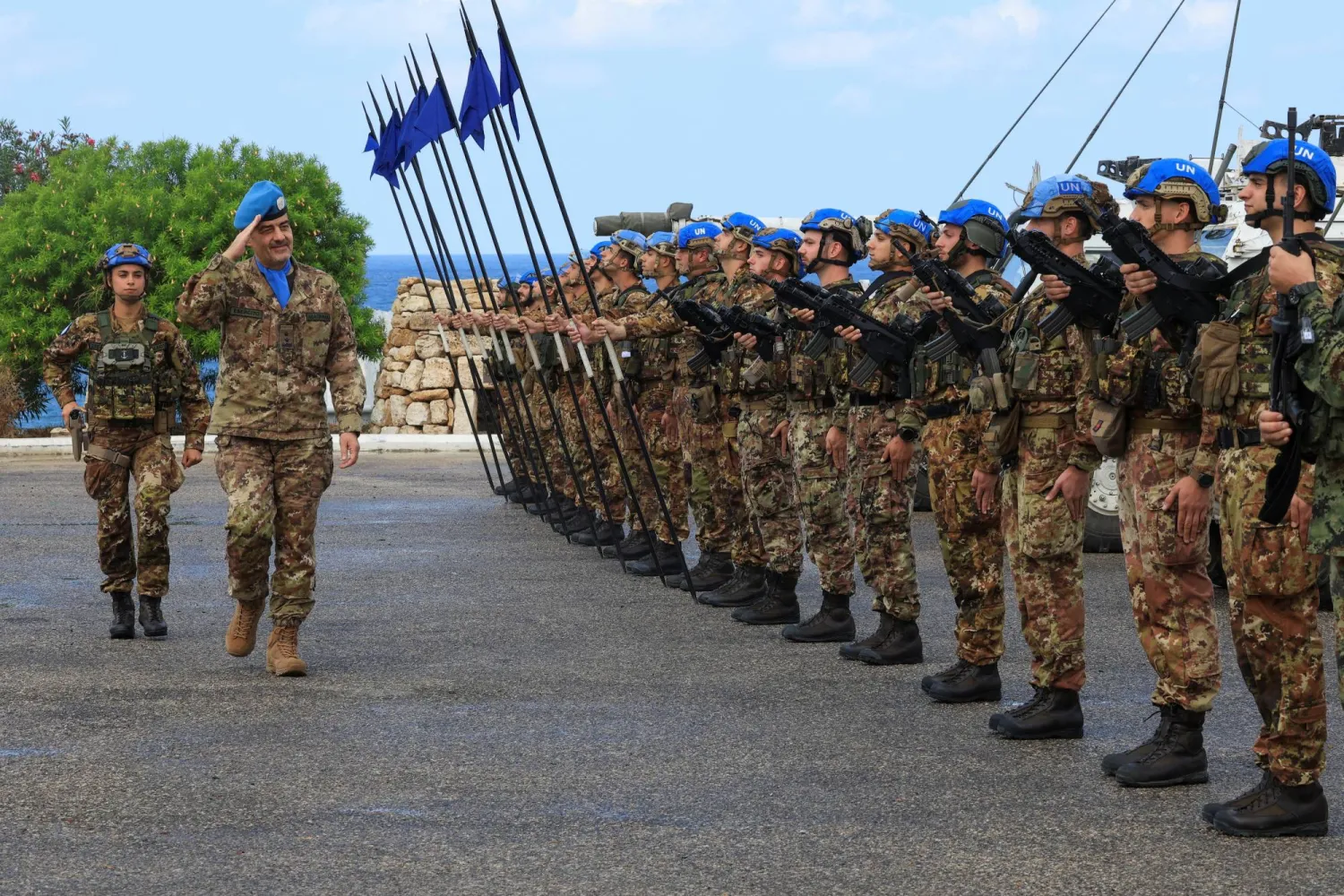
Head of Mission and Force Commander of the United Nations Interim Force in Lebanon (UNIFIL) Major General Diodato Abagnara of the Italian Army reviews the troops at the UNIFIL base, near Mansouri, Southern Lebanon, September 19, 2026. REUTERS/Mohamed Azakir
TT

End of UNIFIL Mission Impacts Hundreds of Jobs in South Lebanon

Head of Mission and Force Commander of the United Nations Interim Force in Lebanon (UNIFIL) Major General Diodato Abagnara of the Italian Army reviews the troops at the UNIFIL base, near Mansouri, Southern Lebanon, September 19, 2026. REUTERS/Mohamed Azakir

As UNIFIL’s mandate in Lebanon draws to a close, the implications of its withdrawal extend beyond military and security operations to the labor market in southern Lebanon, where the mission’s decades-long presence has sustained hundreds of jobs and supported local businesses that depend on its demand for goods and services.

As job cuts begin ahead of the withdrawal process, which is set to gather pace at the end of this year, concerns are mounting over the economic and social impact on employees and their families, as well as on small and medium-sized businesses that depend on spending generated by the international force’s presence.

400 Local Employees Work for UNIFIL

According to UNIFIL spokesperson Candice Ardell, the mission currently employs around 400 local staff, most of whom are based in southern Lebanon, while some positions are based in Beirut.

In comments to Asharq Al-Awsat, Ardell said local employees perform a wide range of duties, from the technical work required to support the mission to security, translation, media, political and civil affairs, among other functions.

Most of these positions are based in the south. Many employees live in the area, while others commute to work from elsewhere, she added.

Ardell denied that job cuts had begun as part of UNIFIL’s force reduction and withdrawal process, explaining that the process was expected to start after Dec. 31, 2026.

Families Depend on UNIFIL Salaries

In the border town of Rmeish, 85 families still have members employed directly by UNIFIL on a permanent basis, earning monthly salaries on which they and their families depend for their livelihoods.

Milad Alam, a former Rmeish mayor, told Asharq Al-Awsat in an earlier interview that around 250 other families also have members working for companies contracted by UNIFIL, adding that they, too, stand to lose their monthly sources of income.

Researcher Mohammad Shamseddine said the number of people employed by or contracted to UNIFIL had fallen significantly, noting that the current workforce was well below the roughly 1,200 employees it had previously numbered.

Annual Losses Estimated at $45 Million to $55 Million

Economist Jassem Ajaka warned that UNIFIL’s withdrawal from southern Lebanon would have economic and financial repercussions extending well beyond the south, affecting the Lebanese economy as a whole. The fallout would include reduced foreign currency inflows, job losses and weaker trade and investment, while placing additional pressure on the state treasury.

In comments to Asharq Al-Awsat, Ajaka said UNIFIL’s annual budget stood at about $553 million, estimating that the withdrawal would result in a direct loss of $45 million to $55 million a year in foreign currency inflows, as international forces cease spending locally on contracts with domestic suppliers, restaurants, shops and supply chains.

Ajaka estimated that UNIFIL’s withdrawal would eliminate $15 million to $22 million in annual wages for Lebanese staff, whose average net annual compensation ranges from $15,000 to $25,000.

He estimated that UNIFIL’s withdrawal would add $25 million to $40 million in annual costs for the Lebanese treasury, as the Lebanese army takes over expenses previously covered through cooperation with the international force, putting further pressure on public finances and potentially widening the primary budget deficit.

The economist concluded saying that the real estate sector would be among the hardest hit, particularly in Naqoura, Tyre, Marjayoun and Bint Jbeil. The termination of hundreds of rental contracts held by UNIFIL’s civilian and military personnel could result in annual losses of $10 million to $18 million. He also warned that commercial and residential property values in affected areas could fall by 25% to 45%.