


EU Diplomat Demands Accountability Following Israeli Settler Rampage in West Bank

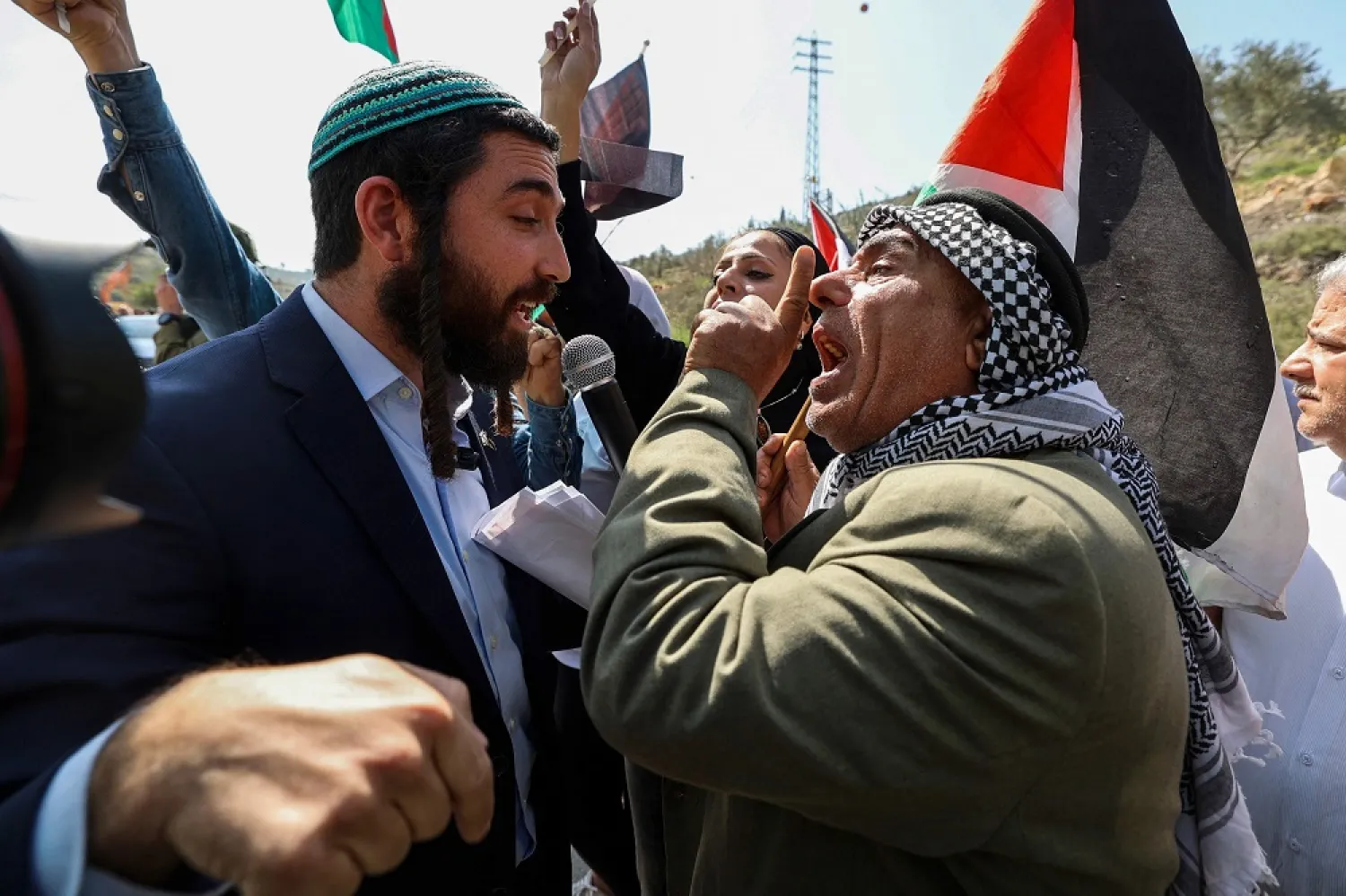
Knesset (Parliament) member for Israel's Religious Zionism party Tzvi Sukkot (L) is confronted as he tries to interrupt a rally by Palestinian and Israeli peace activists protesting at the entrance of Huwara in the occupied West Bank, on March 3, 2023, following deadly violence by Israeli settlers. (AFP)
TT

EU Diplomat Demands Accountability Following Israeli Settler Rampage in West Bank

Knesset (Parliament) member for Israel's Religious Zionism party Tzvi Sukkot (L) is confronted as he tries to interrupt a rally by Palestinian and Israeli peace activists protesting at the entrance of Huwara in the occupied West Bank, on March 3, 2023, following deadly violence by Israeli settlers. (AFP)

The European Union's envoy to the Palestinians called on Friday for accountability and for perpetrators to be brought to justice after a rampage by Israeli settlers this week in the occupied West Bank in which one Palestinian was killed and dozens of houses, shops and cars were torched.

Ambassador Sven Kuhn von Burgsdorff, heading one of the biggest EU delegations to visit the West Bank, said the officials wanted to see with their own eyes the damage left by Sunday's violence in and around the Palestinian village of Huwara. The rampage followed a Palestinian gun attack that killed two Israeli brothers.

"It is absolutely necessary for us that accountability is fully ensured, that the perpetrators be brought to justice, that those who lost property be compensated," Kuhn von Burgsdorff said.

Local media reported that, in a rare move, Israel's Defense Minister Yoav Gallant on Thursday signed administrative detention orders for two suspects over the rampage, after a Jerusalem court ordered police to release all seven people who had been detained in connection with the rampage.

Amnesty International condemned the release of the suspects in a statement on Friday. It also condemned the use of administrative detention, which it said was a practice that violated international law.

Israeli rights group Yesh Din found that 93% of investigations into settler attacks in the West Bank between 2005 and 2022 were closed without indictment.

Israeli Major General Yehuda Fuchs, who commands the Israeli military in the area, said on Tuesday that his forces had prepared for attempted settler retribution over the gun attack but had been surprised by the intensity of the violence, which he said was perpetrated by dozens of people. He called it a "pogrom carried out by outlaws".

Violence in the West Bank has surged over the past year with stepped-up Israeli military raids following a spate of Palestinian attacks. The United States, Jordan and Egypt have appealed for calm, concerned about an escalation ahead of the Muslim holy month of Ramadan and the Jewish Passover festival in late March and early April.

Washington’s call to Netanyahu

The United States has demanded that Israeli Prime Minister Benjamin Netanyahu disavow a call on Wednesday by far-right Finance Minister Bezalel Smotrich for the village of Huwara to be erased.

On the night of the rampage, Netanyahu urged people not to take the law into their own hands, but he has not publicly addressed Smotrich's statement or responded to the unusual criticism by Washington, a close ally.

The UN human rights chief on Friday criticized Smotrich for his remarks, describing them as "an unfathomable statement of incitement to violence and hostility".

Volker Turk was addressing the Geneva-based UN Human Rights Council, where he formally presented a report on the situation in the occupied Palestinian territories.

Late on Thursday, Palestinian officials said Israeli forces shot dead 15-year-old Mohammad Nidal Saleem in the back in the West Bank town of Azzoun.

Ahmad Enaya, the town's mayor, said an Israeli military vehicle drove into town and when teens hurled rocks at the car, soldiers responded with live fire.

The Israeli military said in a statement that soldiers shot at suspects who had hurled explosives at forces while they were conducting a search in the area for people who launched fireworks at Israeli vehicles passing near Azzoun.

It said it was aware of reports of people being wounded but did not confirm any Palestinian fatalities.

A statement by the public hospital in Qalqilya, near Azzoun, said two other people were treated for gunshot wounds.

"The terrorism waged by settlers, in cooperation with the occupation government, is unprecedented," said Walid Assaf, a former Palestinian Authority official who monitored Israeli settlements, speaking at Saleem's funeral in Azzoun on Friday.

At least 62 Palestinians, including gunmen and civilians, have been killed since the start of 2023, the Palestinian health ministry said. Thirteen Israelis and a Ukrainian tourist died in Palestinian attacks in the same period, according to official Israeli figures.

Palestinians seek to establish a state in the West Bank, East Jerusalem and Gaza, areas Israel captured in a 1967 war.

"We Palestinians will remain steadfast and we will defend our existence in the face of this occupation," said Assaf.



Sudan Health Minister: War Has Inflicted $11bn in Health Sector Damage

Sudanese child who fled the city of El Fasher with his family receives treatment at a camp in the town of Tawila (file photo - AP)
TT

Sudan Health Minister: War Has Inflicted $11bn in Health Sector Damage

Sudanese child who fled the city of El Fasher with his family receives treatment at a camp in the town of Tawila (file photo - AP)

Sudan’s health system has suffered an unprecedented collapse since war erupted in mid-April 2023, with most hospitals in the capital, Khartoum, and other cities across several states turned into military barracks.

A severe shortage of medical services has fueled widespread epidemics, disease outbreaks and worsening malnutrition.

Health Minister Haitham Mohamed Ibrahim told Asharq Al-Awsat that losses to the sector are “very large.”

“The destruction has affected all Sudanese states,” he said, citing the sabotage of hospitals and health institutions, the looting of medicines, vehicles and equipment, and the direct targeting of health workers.

He said Saudi Arabia is one of Sudan’s main supporters, particularly through the King Salman Humanitarian Aid and Relief Center, mainly by providing medical supplies, equipment and medicines.

Health sector losses

Preliminary estimates put health sector losses at about $11 billion, Ibrahim said, noting that final figures will only be determined after the war ends, as large areas remain under the control of the Rapid Support Forces.

He outlined a $2 billion reconstruction plan to secure basic services and restore the health system in states recaptured by the Sudanese army. But rebuilding what the war destroyed will require additional funding, he said.

“Attacks on hospitals have exceeded 500 incidents, and the tragedy is ongoing,” Ibrahim said. Several health workers have been killed, while others remain under house arrest in North Darfur, unable to reach their families.

Rebuilding and rehabilitating the system will require “massive budgets and exceptional efforts,” he added.

Sudan needs at least $300 million now to secure essential medicines and medical supplies.

Saudi support

Total Saudi humanitarian and relief assistance during the Sudan crisis exceeded $134 million as of early November 2025, according to new figures.

Donations through the Saudi public campaign to support the Sudanese people via the “Sahem” platform have surpassed $19.4 million, based on recent official estimates.

The campaign was launched in May 2023 under directives from Custodian of the Two Holy Mosques King Salman bin Abdulaziz and Crown Prince and Prime Minister Mohammed bin Salman. More than 537,000 donors have contributed.

Ibrahim reiterated that Saudi Arabia remains a key supporter, especially through the King Salman Humanitarian Aid and Relief Center, which primarily supplies medical consumables, equipment, and medicines.

Malnutrition crisis

Sudan ranks among countries in the World Health Organization’s Eastern Mediterranean Region with high malnutrition rates, Ibrahim said. The national average stands at about 15%, rising to 30% in some states, particularly in areas cut off from regular aid, notably in Darfur and parts of Kordofan.

The Health Ministry, working with UNICEF and other UN agencies and nutrition programs, has opened more than 400 supplementary and therapeutic feeding centers in Darfur to serve those in need.

Vaccination coverage fell below 40% in 2023 and 2024 at the outset of the war, he said, but climbed to more than 70% by the end of 2025. He described the rebound as “a major achievement” that helped reduce measles and diphtheria cases.

Authorities have launched campaigns to reach unvaccinated children, alongside polio drives and routine immunization programs targeting more than 9 million children across Sudan.

Funding constraints

Weak funding remains the main challenge facing the health system, Ibrahim said, pointing to widening health and humanitarian gaps, particularly in western states and Darfur. Reconstruction needs and efforts to improve the work environment to restore services to citizens add further pressure.

Access to some areas in the five Darfur states and parts of Kordofan remains difficult, he said, forcing heavy reliance on international and national organizations operating on the ground.

Securing drug supplies

By 2025, stability in the supply of essential medicines had been fully restored, with more than 700 drug items secured without interruption for chronic and life-saving treatments, Ibrahim said.

Several pharmaceutical factories have resumed operations, with more than three fully operational and four preparing to begin production, a move he said would strengthen supply sustainability and health security.

Availability of essential medicines has risen from less than 30% to more than 75%, with a relative decline in shortages of life-saving drugs.

Storage capacity has expanded at the state level, and the reopening of the main Medical Supplies Center in Khartoum has boosted capacity by more than 60% compared with the previous period.

Disease outbreaks

As the health crisis deepens, 79 dengue fever cases have been recorded in the Merowe locality in Northern State, according to the latest official report.

Outbreaks of malaria and dengue in the capital and several states are part of recurring epidemic waves in recent years, Ibrahim said, stressing that authorities have “a clear strategy to combat disease vectors.”

He announced a major malaria eradication campaign to be launched under the patronage of the prime minister, underscoring the need to sustain vector control programs at the locality and administrative unit levels.

The Rapid Support Forces control all hospitals and health facilities in the five Darfur states and large parts of Kordofan. Ongoing clashes and indiscriminate shelling have directly disrupted medical facilities and destabilized health workers.

Delivering services to areas outside government control remains extremely difficult, the minister said, citing reports of severe shortages that require urgent and sustained health and humanitarian intervention.


Israeli Agent Confession Reveals How Deep Hezbollah Has Been Infiltrated

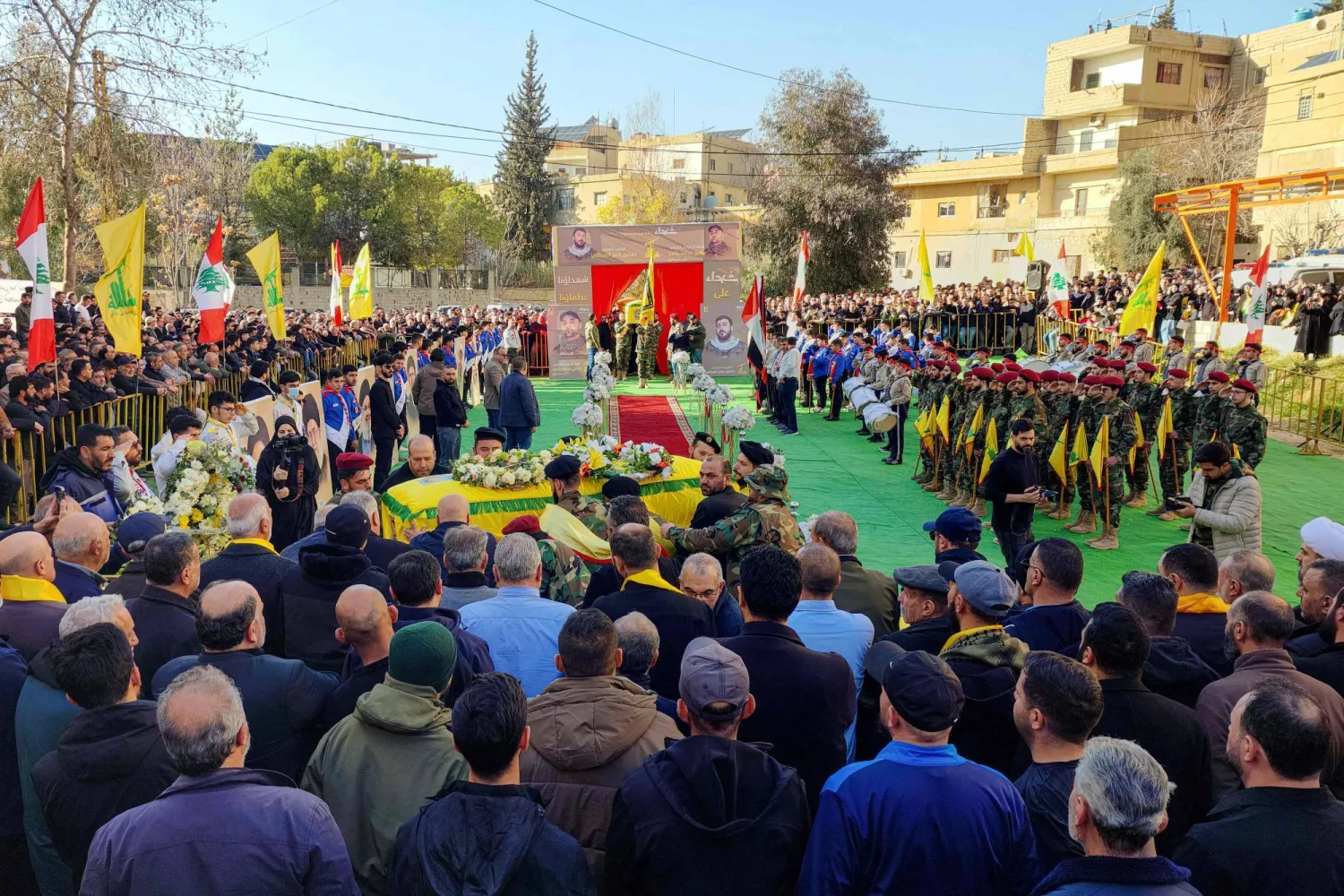
Hezbollah supporters are seen during the funeral of slain member Hussein Yaghi in the eastern Bekaa, Lebanon. (AFP)
TT

Israeli Agent Confession Reveals How Deep Hezbollah Has Been Infiltrated

Hezbollah supporters are seen during the funeral of slain member Hussein Yaghi in the eastern Bekaa, Lebanon. (AFP)

Investigations into detainee “A.M.”, a native of the southern town of Ansar arrested last week on charges of collaborating with Israel, show he did more than carry out assigned tasks under an Israeli agenda.

According to the findings, A.M. took the initiative to supply precise information about sites that were later destroyed, providing coordinates for military locations, including Hezbollah missile depots and drone manufacturing facilities.

The case also underscores the scale of effort by Israel’s Mossad intelligence agency to recruit agents. High-risk recruits are enlisted abroad, then transferred to Israel and assigned sensitive missions.

Phased training

Security sources said the Mossad recruited A.M. in 2020 and put him through multi-stage training courses. He was deployed at the height of the latest war between Israel and Hezbollah in 2024 and continued operating even after the November 2024 ceasefire, suggesting his case mirrors others.

Some agents have been arrested; others, sources said, are still moving freely inside Lebanon.

A.M.’s file is considered one of the most serious, given the missions he carried out.

Asharq Al-Awsat learned from security sources that the detainee, who holds a master’s degree from the University of Turin in Italy, was viewed as a valuable catch by a Mossad officer using the alias “Rami Murad.”

The officer recruited him in a European country in 2020 and maintained regular contact before introducing him to another handler, “Michael Leva,” who identified himself as a Mossad officer.

Leva asked the Lebanese national to gather security information in exchange for money. After agreeing, A.M. underwent a polygraph test, which he passed. He began by providing personal details about himself and his family, as well as security-related information about Lebanon. He was later tasked with supplying information about Hezbollah members.

Meetings in Germany

Security sources said A.M. met his handler several times in Germany, providing information on Hezbollah members and their phone numbers. He also identified the types of bulldozers and heavy machinery used by the Iran-backed party in southern Lebanon, including the names and contact details of their owners.

In October 2021, A.M. met Michael again in Cologne, where he underwent a second polygraph test. He provided additional information about residents of Ansar and Hezbollah members.

In late 2022, A.M. traveled with Michael from Germany to Israel. Upon arrival, the Mossad officer took his phone and informed him he would remain in Israel for three days. The next day, he was moved to a private room in a nearby building and subjected to a third polygraph test.

After passing, he was questioned about multiple sites in southern Lebanon, reviewing three-dimensional maps displayed on screens. He and his handler conducted a detailed review of Hezbollah-affiliated locations for which A.M. had already provided coordinates.

Sources said he also underwent several training courses inside the occupied Palestinian territories under the supervision of specialized trainers.

From intelligence to operations

While A.M.’s role was officially limited to gathering information, sources say his activities took on an operational dimension.

He supplied Mossad handlers with reports on institutions, individuals, centers, factories and hospitals affiliated with or funded by Hezbollah. He also documented the locations of surveillance cameras in Ansar, nighttime movements in southern areas, Hezbollah military movements and the party’s funding sources.

His reports extended to displaced residents from border villages during the war, Hezbollah’s handling of them and the assistance provided, as well as rental costs, electricity subscriptions and other expenses incurred due to displacement.

41 detainees

With his arrest, the number of agents detained since the start of the Israeli war on Lebanon in September 2024 has risen to 41.

A judicial source told Asharq Al-Awsat that the military court attaches “utmost importance” to these cases, whether before investigative judges or during trials before the military court.

According to security sources, after the ceasefire, A.M. provided the Mossad with precise information about bulldozer and heavy machinery showrooms in the southern towns of Msayleh, Daoudiyeh and Ansar that were later bombed and destroyed. He also prepared detailed reports on southern traders importing bulldozers, heavy machinery and spare parts.

Sources said he photographed Hezbollah sites in Ansar, as well as in Tyre, Nabatieh and the western Bekaa, and supplied detailed information about Hezbollah members, some of whom were later assassinated by Israel.

Inspecting targets after the ceasefire

After the ceasefire between Israel and Hezbollah took effect, A.M. inspected about 30 strike sites, according to informed sources, providing detailed assessments. The targets included Hezbollah military facilities, supply warehouses, missile and weapons depots, electronic equipment and drone factories.

His role was not confined to executing instructions. Sources revealed he proactively relayed everything he knew or heard about Hezbollah, its members, locations and funding methods.

He photographed dozens of sites in southern Lebanon, including buildings, commercial complexes, roads and military positions linked to Hezbollah, and sent the images and video footage to his handlers.


Israeli Settlers Burn Tents, Vehicles in West Bank Village, Say Residents

 Palestinians check damage to a burned vehicle, which Palestinians say was damaged by Israeli settlers, in Susiya near Hebron in the Israeli-occupied West Bank February 25, 2026. (Reuters)
Palestinians check damage to a burned vehicle, which Palestinians say was damaged by Israeli settlers, in Susiya near Hebron in the Israeli-occupied West Bank February 25, 2026. (Reuters)
TT

Israeli Settlers Burn Tents, Vehicles in West Bank Village, Say Residents

 Palestinians check damage to a burned vehicle, which Palestinians say was damaged by Israeli settlers, in Susiya near Hebron in the Israeli-occupied West Bank February 25, 2026. (Reuters)
Palestinians check damage to a burned vehicle, which Palestinians say was damaged by Israeli settlers, in Susiya near Hebron in the Israeli-occupied West Bank February 25, 2026. (Reuters)

Israeli settlers set ‌fire to vehicles and tents in the Palestinian village of Susiya on Tuesday night, residents said, in the latest incident of settler violence against Palestinians in the Israeli-occupied West Bank.

Videos verified by Reuters showed a masked group of men, who residents said were Israeli settlers, approaching the village near the city of Hebron, and later burning vehicles and Palestinian property.

"They attack us almost every day, repeatedly, because we live near the main road...Last night they burned everywhere," Halima Abu Eid, a Susiya resident told Reuters on Wednesday.

The ‌Israeli military ‌said they had dispatched soldiers to deal with ‌reports ⁠of "deliberate burnings of ⁠Palestinian property" and had opened an investigation into the incident.

Violence by Israeli settlers against Palestinians in the West Bank has increased sharply since the beginning of the war in Gaza in October 2023, with over 800 Palestinians displaced due to settler attacks in 2026 according to United Nations data.

Attacks where masked settlers arrive ⁠at night to destroy Palestinian property or attack ‌residents have become common, as Israeli settlers ‌seek to control large swathes of land in the West Bank.

An ‌Israeli official previously blamed settler violence on a "fringe minority", although ‌Reuters reporting has shown well-organized plans to take Palestinian land in public settler social media channels.

The United Nations has documented at least 86 instances of settler violence from February 3 to 16, leading to the displacement ‌of 146 Palestinians and the injury of 64.

Israeli indictments of settler violence are rare. At ⁠the end of ⁠2025, Israeli monitoring group Yesh Din said of the hundreds of cases of settler violence it had documented since October 7, 2023, only 2% resulted in indictments. Israel's far-right governing coalition has enabled the rapid spread of settlements, with some ministers openly stating they want to "bury" a Palestinian state.

Most world powers deem Israel's settlements, on land it captured in a 1967 war, illegal, and numerous UN Security Council resolutions have called on Israel to halt all settlement activity.

Israel disputes the view that its settlements are unlawful and it cites biblical and historical ties to the land.