Iraq Fashionistas Champion Climate-friendly Vintage Wear

Global fashion accounted for two percent of greenhouse gas emissions in 2019 and climate-conscious social media influencers are pushing for sustainable fashion. AHMAD AL-RUBAYE / AFP
TT

Iraq Fashionistas Champion Climate-friendly Vintage Wear

Global fashion accounted for two percent of greenhouse gas emissions in 2019 and climate-conscious social media influencers are pushing for sustainable fashion. AHMAD AL-RUBAYE / AFP

In a palm grove north of Baghdad, bemused Iraqi shepherds looked on as models paraded second-hand garments down an improvised catwalk, seeking to raise awareness of the fashion industry's environmental impact.

Haute couture has given way to upcycled outfits, sourced entirely from used clothes, as the models strut, pause and pivot on the runway, a sign of the growing popularity of chic, environmentally friendly vintage wear among young Iraqis, AFP said.

"We don't want overproduction of clothes, we have to reuse them," said Mohamed Qassem, 25, a hairdresser and organizer of the fashion show near Al-Hussainiya village.

The global fashion industry accounted for two percent of greenhouse gas emissions in 2019, according to the World Resources Institute.

Campaigners and a growing number of climate-conscious social media influencers have led a push toward sustainable fashion.

Many young people in climate-stressed Iraq, like Qassem, have become passionate about vintage clothing.

The palm grove event showcased fluorescent green puffer jackets, long black leather coats, ample double-breasted blazers, and modern takes on traditional costumes.

In many parts of Iraq, scarred by decades of conflict, peaceful rhythms are gradually returning to daily life and second-hand clothing offers aspiring fashionistas an affordable chance to express themselves.

Climate threats
As Baghdad's streets see more "fast-fashion" and imported brands, the outfits at the Al-Hussainiya event predominantly feature green elements, a nod to the show's environmental message.

Iraq, synonymous with date production, has seen its iconic date palms placed under stress by the effects of climate change and the years of conflict.

"The goal is not to focus only on clothes, but also abandoned orchards, palm trees that disappear every day," Qassem said.

The United Nations says oil-rich Iraq is one of the five countries most exposed to the impacts of climate change, already witnessing extreme summer heat, frequent droughts, desertification and regular dust storms, which will exacerbate as the planet heats.

The designs at the fashion show will not be put on sale. Organizers mainly hope the symbolic parade will raise awareness.

Ahmed Taher, a 22-year-old stylist who put together the sets for the show, said "second-hand pieces are clothes of excellent quality".

"When you wear them, you have the impression of wearing luxury clothes. It's different from what you find in stores."

A business student, Taher offers Baghdad's hipsters vintage clothes on Instagram -- where he has around 47,000 followers -- selling pieces for around $20.

"We want to wear unique clothes and not all look like each other," he said.

'Last a lifetime'
A student-turned-model for the day, Safaa Haidar, said she was attracted to vintage clothes as she could shop "according to my personality".

But in Iraq, where the UN estimates nearly one-third of the 42 million inhabitants live in poverty, many wear used clothing out of necessity.

In the winding alleys of central Baghdad's second-hand clothes market, stalls overflow every Friday with shirts, shoes and jeans, with shoppers checking sizes in front of the sellers.

Here a shirt can cost barely $2, while other pieces can sell for as much as $60 or even $200.

Mohamed Ali, a 20-year-old engineering student, came to buy shoes.

"It's not that we can't afford to buy new, but here we find better quality and unique pieces," he said.

Ali recounted his parents' stories from life in the 1990s, when Western sanctions against Iraq meant they would wear clothes, even "inside out, until they were worn out, because they could not afford" new ones.

Now, Ali and most of his friends shop for vintage clothes for their durability and style, he said.

Merchant Hassan Refaat, 22, sells imported second-hand clothes which find a new life in Iraqi wardrobes.

He also imports goods from Iraq's northern autonomous Kurdistan region, bordering major textile producer Türkiye.

"Second-hand clothes are of better quality than the new clothes available on the market," he said.

"Very often, they are branded pieces, and the brands last a lifetime."


A Nonprofit in France Is Fighting Fast-Fashion Waste, One Sneaker at a Time

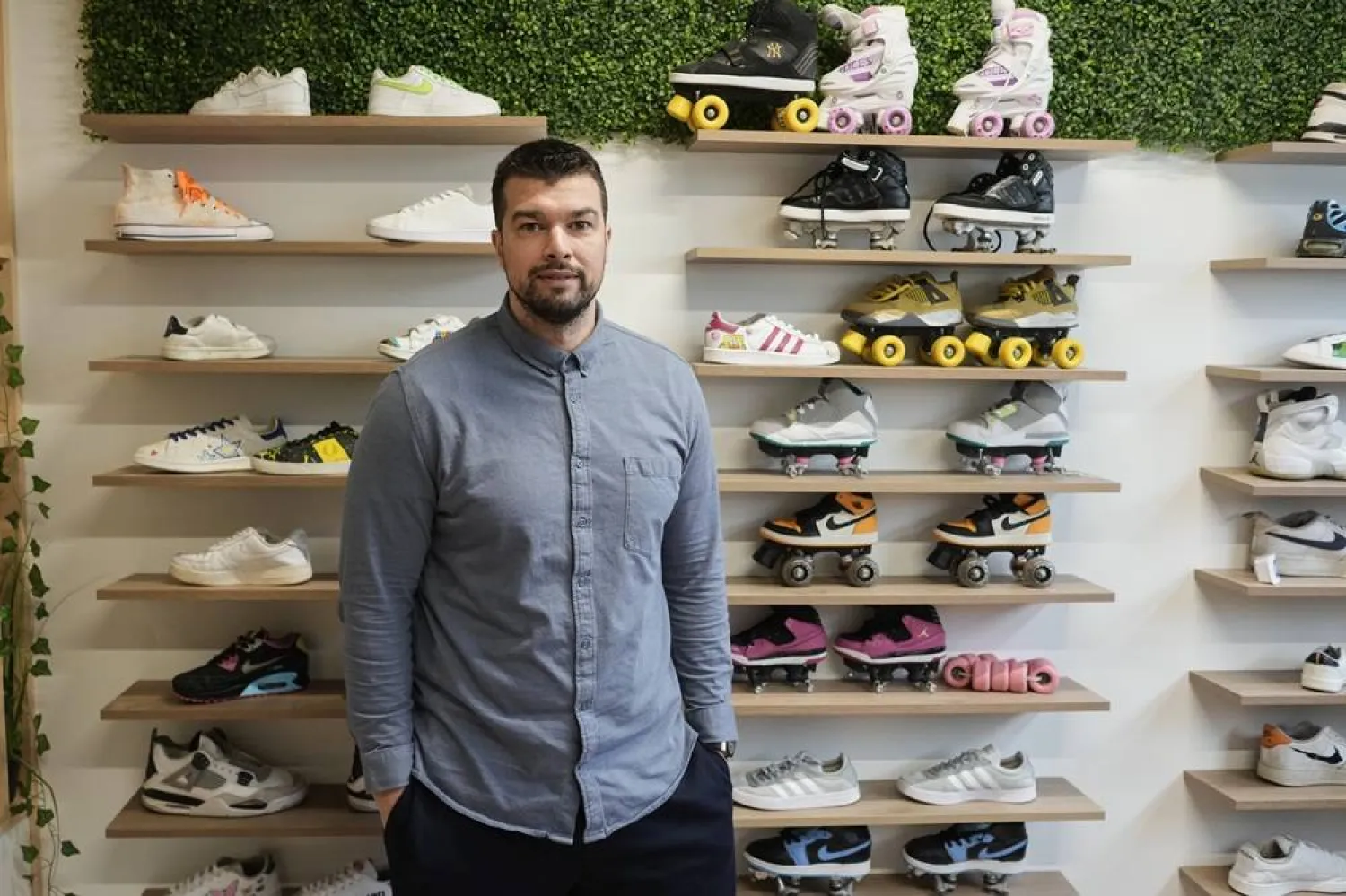
 Mohamed Boukhatem, co-founder and director of SneakCoeurZ, a nonprofit organization giving used footwear a second life, poses in Champs-sur-Marne, east of Paris, Wednesday, March 25, 2026. (AP)
Mohamed Boukhatem, co-founder and director of SneakCoeurZ, a nonprofit organization giving used footwear a second life, poses in Champs-sur-Marne, east of Paris, Wednesday, March 25, 2026. (AP)
TT

A Nonprofit in France Is Fighting Fast-Fashion Waste, One Sneaker at a Time

 Mohamed Boukhatem, co-founder and director of SneakCoeurZ, a nonprofit organization giving used footwear a second life, poses in Champs-sur-Marne, east of Paris, Wednesday, March 25, 2026. (AP)
Mohamed Boukhatem, co-founder and director of SneakCoeurZ, a nonprofit organization giving used footwear a second life, poses in Champs-sur-Marne, east of Paris, Wednesday, March 25, 2026. (AP)

Hundreds of used sneakers arrive each week at a workshop east of Paris, where workers inspect them and ask a simple question: Can a shoe be saved?

The nonprofit SneakCœurZ is in the business of sorting the shoes to check which ones can be resold or redistributed, and which have to be rejected. It says it collected 30,000 pairs of used sneakers last year and resold 2,000 pairs, and wants to scale up that process.

“Today, there is no project of this scale in the sneaker sector,” said Mohamed Boukhatem, the organization's director general and co-founder. “We are the only ones able to industrialize both the processes and the collection of sneakers for reuse.”

The group's work underscores a growing waste problem in France, where the capital Paris is long one of the world’s fashion and luxury hubs.

The stakes are huge: the textile industry is among the world’s most polluting, and the fashion and textiles sector accounts for up to 8% of global greenhouse gas emissions, according to the United Nations. The European Parliament has said textiles were the third-largest source of water degradation and land use in the European Union in 2020.

Refashion, the French government-approved eco-organization for clothing, household linen and footwear, says 259 million pairs of shoes were sold in France in 2024.

It says only about a third of used textiles and footwear are separately collected, with much of the rest left in cupboards or thrown away with household waste.

At its workshop in Champs-sur-Marne, workers for SneakCœurZ inspect the used shoes and check which can be salvaged.

“The structural elements of the shoe are what determine whether we can refurbish it or not,” workshop manager Paul Defawes Abadie said.

“A damaged Velcro strap isn’t a deal breaker. A lace isn’t a deal breaker. Dirt is never a deal breaker,” he said. “What really matters is the wear of the structural materials, especially the outsole.”

Pairs that make the cut are cleaned from the sole upward, disinfected inside and, in some cases, whitened under UV light before being put back into circulation.

The nonprofit says it redistributed more than 7,000 pairs to people in need and helped create 19 jobs.

“Over the next three years, the goal is to triple or even quadruple these volumes and move to an industrial scale,” Boukhatem said.

France has tried to respond to the issue of fast-fashion waste with law, as well as rhetoric.

Its 2020 anti-waste law requires unsold nonfood goods to be reused, donated or recycled instead of destroyed.

Authorities introduced a state-backed repair bonus for clothing and shoes in November 2023. Separately, lawmakers are still working on a bill aimed at reducing the textile industry’s environmental impact.

The bill passed the National Assembly in March 2024 and the Senate in June 2025, and the government said in February that it was still aiming for a joint parliamentary committee this spring.


H&M's Q1 Profit Grows More Than Expected, Sees March Sales Up 1%

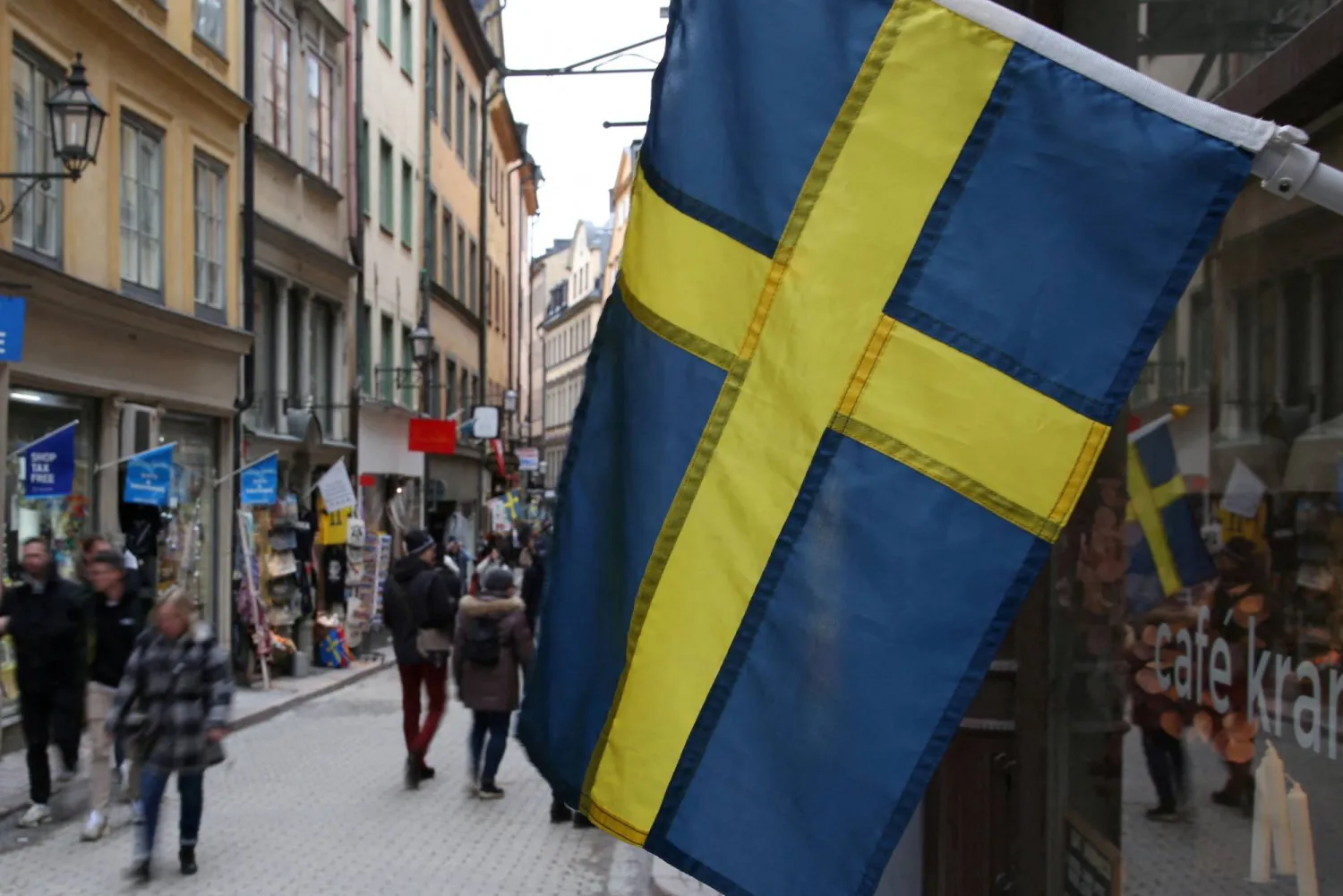
FILE PHOTO: A Swedish flag hangs outside a business on a street of the old city of Stockholm, Sweden, February 24, 2024. REUTERS/Tom Little/File Photo
TT

H&M's Q1 Profit Grows More Than Expected, Sees March Sales Up 1%

FILE PHOTO: A Swedish flag hangs outside a business on a street of the old city of Stockholm, Sweden, February 24, 2024. REUTERS/Tom Little/File Photo

Swedish fashion retailer H&M reported on Thursday a slightly bigger rise than expected in December-February operating profit, and predicted March sales would be up 1% in local currencies.

"Towards the end of the quarter our well-received spring collections contributed to a positive sales trend, which also continued into March," CEO Daniel Erver said in a statement.

Operating profit in H&M's fiscal first quarter, ⁠which includes the key ⁠Christmas shopping period, rose for a third consecutive quarter to 1.51 billion crowns ($162 million) from a year-earlier 1.20 billion and a mean forecast in an LSEG poll of analysts of 1.39 billion, on an organic sales decrease of 1%.

The rival ⁠to Inditex in January flagged that local-currency sales in the first two months of the quarter were down 2%.

According to Reuters, H&M said it is closely monitoring developments in the Middle East and the implications for global trade.

"With good flexibility in the supply chain and a low proportion of air freight, there are opportunities to adapt the flow of goods to changed conditions," it said. "Middle Eastern markets account for a ⁠small portion ⁠of the company’s total sales and the markets are operated through franchise partners."

On February 28, the United States and Israel launched coordinated strikes against Iran. Iran has in response launched strikes against Israel, US bases and Gulf states.

It has attacked vessels and infrastructure throughout the Gulf region and effectively closed the Strait of Hormuz, hitting global supply chains and causing soaring energy costs, raising concern over war-driven inflation and potential impact on consumer demand.


Next Says UK Sales Have Held Up Since Iran War Started

Women tour a popular outdoor shopping mall in Beijing, China, Sunday, March 8, 2026. (AP Photo/Andy Wong)
TT

Next Says UK Sales Have Held Up Since Iran War Started

Women tour a popular outdoor shopping mall in Beijing, China, Sunday, March 8, 2026. (AP Photo/Andy Wong)

British clothing retailer Next has not seen a noticeable drop off in UK sales since the US-Israeli war on Iran started at the end of February, its boss said on Thursday.

"Eight weeks, ⁠including the war ⁠weeks, have been good in the UK," CEO Simon Wolfson told Reuters after Next published full-year ⁠results.

He said sales in the Middle East, which account for about 6% of the group's annual turnover, fell "dramatically" in the first few days of the war and demand remains "suppressed.”

Wolfson said if ⁠Next ⁠did have to raise prices around June or July to make up for higher costs caused by the war, the increases would only be 1% to 2%.