


King Charles III Makes World Debut as Tour Starts in Germany

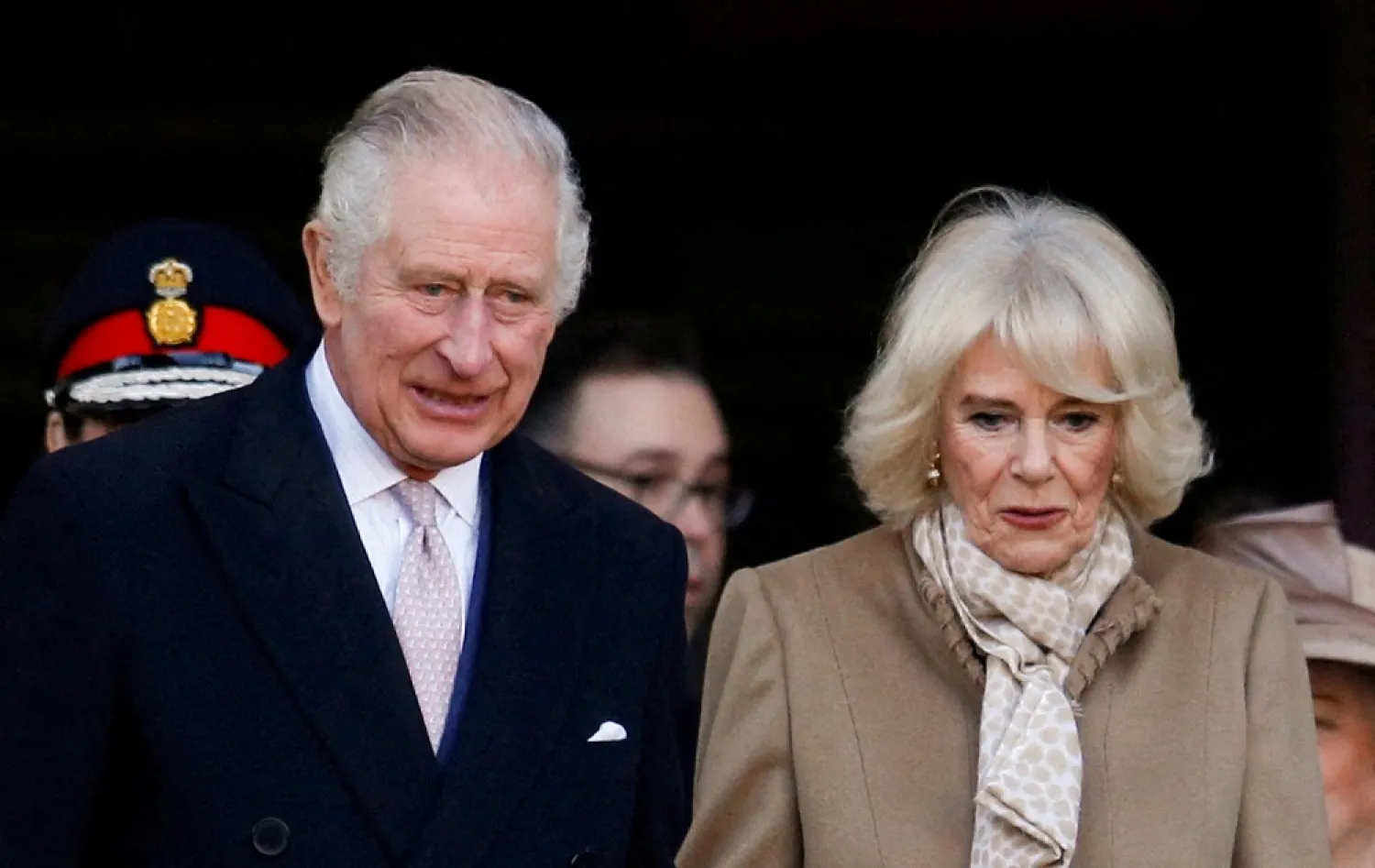
Britain's King Charles and Queen Camilla leave after their visit to the Bolton Town Hall, in Bolton, Britain January 20, 2023. (Reuters)
TT

King Charles III Makes World Debut as Tour Starts in Germany

Britain's King Charles and Queen Camilla leave after their visit to the Bolton Town Hall, in Bolton, Britain January 20, 2023. (Reuters)

Britain’s new king will make his debut on the world stage Wednesday, three days later and 550 miles (885 kilometers) northeast of where he had intended.

Although King Charles III will be greeted with a hearty “willkommen” in Berlin rather than “bienvenue” in Paris, his goals remain the same: to cement Britain’s improving relations with Europe and show that he can help the UK win hearts and minds abroad just as his mother did so successfully for seven decades.

But the decision to cancel the first leg of his trip due to protests over planned pension changes in France may make it harder for Charles to make his mark during his first big international mission as monarch. And first impressions matter as Charles, 74, prepares for his coronation on May 6.

“Charles will have fewer opportunities to present himself,” said Arianne Chernock, a royal expert and professor of modern British history at Boston University. “This means that he’ll need to be very disciplined about using those opportunities available to maximize his impact — there won’t be many second chances on this trip.”

Charles, who ascended the throne after the death of Queen Elizabeth II in September, had something bigger in mind when this coming out party as king was announced.

Billed as a multi-day tour of the European Union’s two biggest countries, the trip was designed to underscore British Prime Minister Rishi Sunak’s efforts to rebuild relations with the bloc after six years of arguments over Brexit and highlight the countries’ shared history as they work together to combat Russian aggression in Ukraine.

Now everything rests on Germany.

The truncated trip starts Wednesday in Berlin, where German President Frank-Walter Steinmeier will welcome Charles and Camilla, the queen consort, at the historic Brandenburg Gate.

The king is scheduled to give a speech to the Bundestag, Germany’s parliament, on Thursday. He will also meet Chancellor Olaf Scholz, talk to Ukrainian refugees and meet with British and Germany military personnel who are working together on joint projects.

The royal couple go to Hamburg on Friday, where they will visit the Kindertransport memorial for Jewish children who fled from Germany to Britain during the Third Reich, and attend a green energy event before returning to the UK.

The king was urged to make the trip by Sunak, who during his first six months in office negotiated a settlement to the long-running dispute over post-Brexit trading rules for Northern Ireland and reached a deal with France to combat the people smugglers ferrying migrants across the English Channel in small boats.

Sunak hopes goodwill created by a royal visit can help pave the way for progress on other issues, including Britain’s return to an EU program that funds scientific research across Europe.

This is the first big test of whether Charles can be an effective conduit for the “soft power” the House of Windsor has traditionally wielded, helping Britain pursue its geopolitical goals through the glitz and glamor of a 1,000-year-old monarchy.

The Windsors are among the most recognizable people on the planet. While their formal powers are strictly limited by law and tradition, they draw attention from the media and the public partly because of the historic ceremonies and regalia that accompany them — and also because the public is fascinated by their personal lives.

The late Queen Elizabeth II was the embodiment of this — the monarch everyone wanted to meet for tea, if for no other reason than that she’d been around so long.

Elizabeth’s influence stemmed in part from the fact that she made more than 100 state visits during her 70 years on the throne, meeting presidents and prime ministers around the world in a reign that lasted from the Cold War to the information age.

But questions remain about whether Charles has the same star power as his mother, dubbed “Queen of the World” by one biographer, Robert Hardman.

Charles has fewer years to make his mark and will not try to copy her, said Bronwen Maddox, who heads the Chatham House public affairs think tank in London.

“He’s getting this (opportunity) towards the end of his life, and it’s very much a chance to make the best of it without claiming that it is the same, in any way, as his mother,” she said. “I think he will find his own way to do it.”

Charles, a former naval officer who is the first British monarch to earn a university degree, is expected to insert heft where his glamorous mother once wielded star power.

As Britain’s head of state, the king meets weekly with the prime minister and retains his mother’s role as leader of the Commonwealth.

His visit to Germany will showcase these roles while also giving him an opportunity to highlight the causes he holds dear, like sustainability and the environment.

But there will also be a full dose of the pomp and circumstance that screams royal visit, starting with a ceremonial welcome at the Brandenburg Gate, the neoclassical landmark in the center of Berlin that has provided the backdrop to so much of German history. White tie and tiaras are expected to be on display during a state dinner at Schloss Bellevue, the German president’s official residence.

There will be plenty, therefore, to attract the crowds in Germany and demonstrate to people back home that Charles has eased into the role of monarch and chief diplomat.

“In some ways, Charles does not have to do very much for people to follow him because there’s the mystique of the institution,” Chernock said. “I think people are fascinated by his family and all of the drama surrounding it. So he could stand perfectly still and not utter a word and he would still draw crowds.”



Before Megalodon, Researchers Say a Monstrous Shark Ruled Ancient Australian Seas

 A illustration made in Sept. 3, 2025, of a gigantic 8 meter (26 foot) long mega-predatory lamniform shark swimming beside a long-necked plesiosaur in the seas off Australia 115 million years ago. (Pollyanna von Knorring/Swedish Museum of Natural History via AP)
A illustration made in Sept. 3, 2025, of a gigantic 8 meter (26 foot) long mega-predatory lamniform shark swimming beside a long-necked plesiosaur in the seas off Australia 115 million years ago. (Pollyanna von Knorring/Swedish Museum of Natural History via AP)
TT

Before Megalodon, Researchers Say a Monstrous Shark Ruled Ancient Australian Seas

 A illustration made in Sept. 3, 2025, of a gigantic 8 meter (26 foot) long mega-predatory lamniform shark swimming beside a long-necked plesiosaur in the seas off Australia 115 million years ago. (Pollyanna von Knorring/Swedish Museum of Natural History via AP)
A illustration made in Sept. 3, 2025, of a gigantic 8 meter (26 foot) long mega-predatory lamniform shark swimming beside a long-necked plesiosaur in the seas off Australia 115 million years ago. (Pollyanna von Knorring/Swedish Museum of Natural History via AP)

In the age of dinosaurs — before whales, great whites or the bus-sized megalodon — a monstrous shark prowled the waters off what's now northern Australia, among the sea monsters of the Cretaceous period.

Researchers studying huge vertebrae discovered on a beach near the city of Darwin say the creature is now the earliest known mega-predator of the modern shark lineage, living 15 million years earlier than enormous sharks found before.

And it was huge. The ancestor of today’s 6-meter (20-foot) great white shark was thought to be about 8 meters (26 feet) long, the authors of a paper published in the journal Communications Biology said.

“Cardabiodontids were ancient, mega-predatory sharks that are very, very common from the later part of the Cretaceous, after 100 million years ago,” said Benjamin Kear, the senior curator in paleobiology at the Swedish Museum of Natural History and one of the study’s authors. “But this has pushed the time envelope back of when we’re going to find absolutely enormous cardabiodontids.”

Sharks have a 400-million-year history but lamniforms, the ancestors of today’s great white sharks, appear in the fossil record from 135 million years ago. At that time they were small — probably only a meter in length — which made the discovery that lamniforms had already become gigantic by 115 million years ago an unexpected one for researchers.

The vertebrae were found on coastline near Darwin in Australia’s far north, once mud from the floor of an ancient ocean that stretched from Gondwana — now Australia — to Laurasia, which is now Europe. It’s a region rich in fossil evidence of prehistoric marine life, with long-necked plesiosaurs and ichthyosaurs among the creatures discovered so far.

The five vertebrae that launched the quest to estimate the size of their mega-shark owners were not a recent discovery, but an older one that had been somewhat overlooked, Kear said. Unearthed in the late 1980s and 1990s, the fossils measured 12 centimeters (4.7 inches) across and had been stored in a museum for years.

When studying ancient sharks, vertebrae are prizes for paleontologists. Shark skeletons are made of cartilage, not bone, and their fossil record is mostly made up of teeth, which sharks shed throughout their lives.

“The importance of vertebrae is they give us hints about size,” Kear said. “If you’re trying to scale it from teeth, it’s difficult. Are the teeth big and the bodies small? Are they big teeth with big bodies?”

Scientists have used mathematical formulas to estimate the size of extinct sharks like megalodon, a massive predator that came later and may have reached 17 meters (56 feet) in length, Kear said. But the rarity of vertebrae mean questions of ancient shark size are difficult to answer, he added.

The international research team spent years testing different ways to estimate the size of the Darwin cardabiodontids, using fisheries data, CT scans and mathematical models, Kear said. Eventually, they arrived at a likely portrait of the predator’s size and shape.

“It would’ve looked for all the world like a modern, gigantic shark, because this is the beauty of it,” Kear said. “This is a body model that has worked for 115 million years, like an evolutionary success story.”

The study of the Darwin sharks suggested that modern sharks rose early in their adaptive evolution to the top of prehistoric food chains, the researchers said. Now, scientists could scour similar environments worldwide for others, Kear said.

“They must have been around before,” he said. “This thing had ancestors.”

Studying ancient ecosystems like this one could help researchers understand how today’s species might respond to environmental change, Kear added.

“This is where our modern world begins,” he said. “By looking at what happened during past shifts in climate and biodiversity, we can get a better sense of what might come next.”


Move over Larry: Maximus the PM's Cat Grabs Belgium Spotlight

Larry the Downing Street cat is a global celebrity in his own right, with more than 900,000 followers on X. JUSTIN TALLIS / AFP/File
TT

Move over Larry: Maximus the PM's Cat Grabs Belgium Spotlight

Larry the Downing Street cat is a global celebrity in his own right, with more than 900,000 followers on X. JUSTIN TALLIS / AFP/File

It is no secret that a tabby named Larry wields considerable power in Downing Street. Now in Belgium, a rescue cat named Maximus has shot to social media stardom as bewhiskered sidekick and PR weapon of Prime Minister Bart De Wever.

Taken in from a shelter by the Flemish conservative leader over the summer, the grey fluffball has become a fixture on Instagram -- snapped batting at string or lolling around in the boss's office.

But while Larry has risen above politics as Chief Mouser to six British prime ministers, the adventures of De Wever's four-legged friend come with a dose of salty commentary on Belgium's turbulent public life, said AFP.

Cartoon bubbles have captured Maximus musing sardonically -- in Flemish -- on everything from the country's long-running budget showdown to strikes over his boss's austerity measures, or a new voluntary military service for young Belgians.

'Maximus, can you catch a drone?'

Less than six months after his account went live in July, Maximus has caught up with his master when it comes to Instagram followers.

The account name -- @maximustp16 -- stands for "Maximus Textoris Pulcher", a cryptic reference to that of his boss, which means "The Weaver" in Dutch.

Those in the know say the fel-influencer's posts are put up by the prime minister's personal assistant.

But the Belgian leader -- known for his deadpan sense of humor -- is also pretty prolific online, and regularly cross-posts with the cat's account when he wants to strike a lighter note.

Since taking office in February, De Wever has posted a whole series of vignettes of himself with Maximus, pushing him in a stroller or taking a nap by his side.

His first response in October to the news of a foiled plot to attack him using drone-mounted explosives?

A post showing the prime minister and reclining cat with the cartoon caption "Maximus, can you catch a drone?"

"No -- but I'm catching dreams like no one else!" the mog replies.

'Noise and hot air'

All good fun, but what is the strategy at work?

For political analyst Dave Sinardet the spoof account is chiefly a way for the 54-year-old De Wever to freshen up his public image -- and show he does not take himself too seriously.

"It's a smart way to do political PR," said Sinardet, a university professor in Brussels. "It makes politicians seem friendlier, gentler -- considering that most people see them as rational, even arrogant figures."

The Flemish nationalist faces an uphill challenge -- under fire from left-wing parties who accuse him of unpicking social protections with rolling strikes and protests targeting his government all year.

Deploying pets as political PR assets is nothing new: every US president in history, with the exception of Donald Trump, has posed with animals at the White House.

Larry the Downing Street cat is a global celebrity in his own right, with his @Number10cat account on X boasting almost 900,000 followers.

But De Wever's posts with Maximus are not to everyone's liking at home.

A video of the prime minister pretending to play "Amazing Grace" on the bagpipes -- the pipe being Maximus's tail -- during tense budget talks had the opposition hissing.

"Quite the summary of their politics: noise and hot air," snapped the socialist lawmaker Patrick Prevot.


Indonesia Floods Were 'Extinction Level' for Rare Orangutans

Residents rest as they search for the remains of their house, buried under piles of uprooted trees swept by the flash flood, in Lintang Baru village in Aceh Tamiang, northern Sumatra, on December 11, 2025. (Photo by Aditya Aji / AFP)
TT

Indonesia Floods Were 'Extinction Level' for Rare Orangutans

Residents rest as they search for the remains of their house, buried under piles of uprooted trees swept by the flash flood, in Lintang Baru village in Aceh Tamiang, northern Sumatra, on December 11, 2025. (Photo by Aditya Aji / AFP)

Indonesia's deadly flooding was an "extinction-level disturbance" for the world's rarest great ape, the tapanuli orangutan, causing catastrophic damage to its habitat and survival prospects, scientists warned on Friday.

Only scientifically classified as a species in 2017, tapanulis are incredibly rare, with fewer than 800 left in the wild, confined to a small range in part of Indonesia's Sumatra.

One dead suspected tapanuli orangutan has already been found in the region, conservationists told AFP.

"The loss of even a single orangutan is a devastating blow to the survival of the species," said Panut Hadisiswoyo, founder and chairman of the Orangutan Information Centre in Indonesia.

And analysis of satellite imagery combined with knowledge of the tapanuli's range suggests that the flooding which killed nearly 1,000 people last month may also have devastated wildlife in the Batang Toru region.

The scientists focused on the so-called West Block, the most densely populated of three known tapanuli habitats, and home to an estimated 581 tapanulis before the disaster.

There, "we think that between six and 11 percent of orangutans were likely killed," said Erik Meijaard, a longtime orangutan conservationist.

"Any kind of adult mortality that exceeds one percent, you're driving the species to extinction, irrespective of how big the population is at the start," he told AFP.

But tapanulis have such a small population and range to begin with that they are especially vulnerable, he added.

Satellite imagery shows massive gashes in the mountainous landscape, some of which extend for more than a kilometer and are nearly 100 meters wide, Meijaard said.

The tide of mud, trees and water toppling down hillsides would have carried away everything in its path, including other wildlife like elephants.

David Gaveau, a remote sensing expert and founder of conservation start-up The Tree Map, said he was flabbergasted by the before-and-after comparison of the region.

"I have never seen anything like this before during my 20 years of monitoring deforestation in Indonesia with satellites," he told AFP.

The devastation means remaining tapanulis will be even more vulnerable, with sources of food and shelter now washed away.

Over nine percent of the West Block habitat may have been destroyed, the group of scientists estimated.

In a draft paper shared with AFP and set to be published as a pre-print in coming days, they warned the flooding represents an "extinction-level disturbance" for tapanulis.

They are urging an immediate halt to development in the region that will damage remaining habitat, expanded protected areas, a detailed survey of the affected area and orangutan populations and work to restore lowland forests.

The highland homes currently inhabited by tapanulis are not their preferred habitat, but it is where remaining orangutans have been pushed by development elsewhere.

Panut said the region had become eerily quiet after the landslides.

"This fragile and sensitive habitat in West Block must be fully protected by halting all habitat-damaging development," he told AFP.