


Baghdad and KRG Close to Deal to Resume Iraq’s Northern Oil Exports

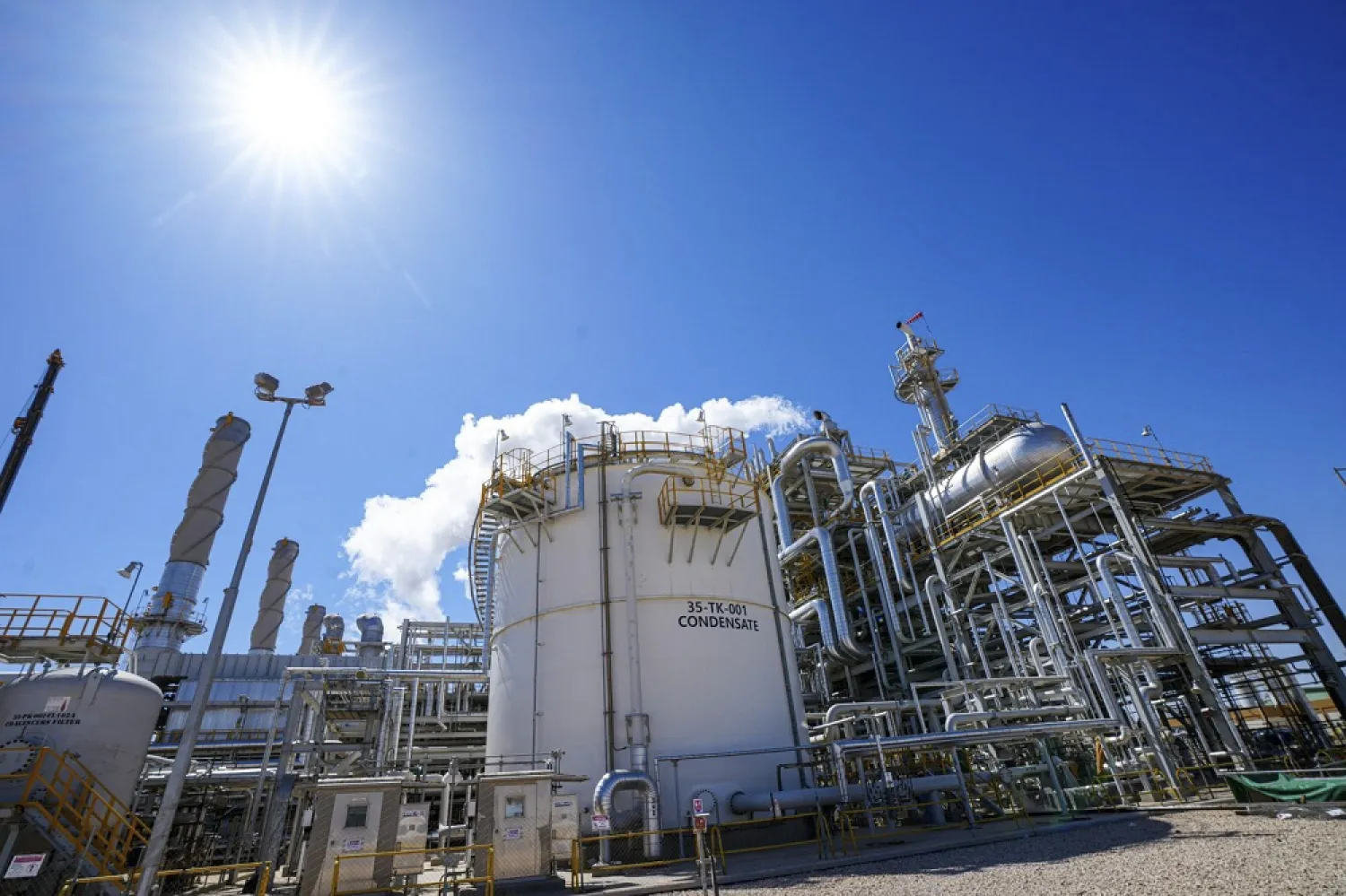
This handout photo released by the Iraqi prime minister's office on April 1, 2023, shows a view of installations at the Karbala oil refinery in the eponymous governorate, on the date it launched operations. (Iraqi Prime Minister Media Office / AFP)
TT

Baghdad and KRG Close to Deal to Resume Iraq’s Northern Oil Exports

This handout photo released by the Iraqi prime minister's office on April 1, 2023, shows a view of installations at the Karbala oil refinery in the eponymous governorate, on the date it launched operations. (Iraqi Prime Minister Media Office / AFP)

Iraq's federal government and the Kurdistan Regional Government (KRG) are close to striking a deal aimed at resuming northern oil exports, four sources familiar with the discussions told Reuters on Saturday.

Türkiye stopped pipeline flows from the Kirkuk fields in northern Iraq's semi-autonomous Kurdistan region to its port of Ceyhan on March 25, after it lost an arbitration case brought by Baghdad.

In the case, Iraq accused Türkiye of violating their 1973 pipeline agreement by allowing the Kurdish government to export oil without Baghdad's consent between 2014 and 2018.

The halted flows of around 450,000 barrels per day (bpd) only accounted for about 0.5% of global oil supply, but the stoppage, which forced oil firms operating in the region to halt output or move production into rapidly-filling storage tanks, still helped boost oil prices last week back to near $80/bbl.

An initial agreement between the two sides states that Iraq's northern oil exports will be jointly exported by Iraq's state-owned marketing company SOMO and the KRG's ministry of natural resources (MNR), according to two of the sources – a senior Iraqi oil official and a KRG official.

Revenues will be deposited in an account managed by the MNR and supervised by Baghdad, the KRG official said.

The preliminary agreement has been sent to Iraq's prime minister for final approval, according to two of the sources. The KRG source expects the deal to be confirmed by Monday.

The KRG declined to comment. Iraq's oil ministry spokesman could not immediately be reached outside regular business hours.

Baghdad and the KRG have agreed to continue meetings following the resumption of oil exports to find solutions to other lingering problems.

"[These include] the contracts of the foreign companies operating in Kurdistan and the Kurdish debts," the senior Iraqi oil official said.

With its oil exports at a standstill, Kurdistan had halted repayments to energy traders including Vitol and Petraco on crude cargo deals worth $6 billion, trading sources said.

Another sticking point in discussions so far has come from the Turkish side.

A second arbitration case relating to the 1973 pipeline agreement for the period from 2018 onwards remains open, and one source said this could take around two years to settle.

Türkiye wants that case resolved before reopening the pipeline, three sources told Reuters.

A Turkish senior official said Türkiye has yet to be informed about the initial agreement by the KRG or federal Iraqi officials and that discussions are ongoing.



Gold Eases as Inflation Jitters, Iran War Cloud US Rate Outlook

AFP: A photo shows gold bangles and necklaces for sale at a gold shop at the Grand Baazar in Istanbul
TT

Gold Eases as Inflation Jitters, Iran War Cloud US Rate Outlook

AFP: A photo shows gold bangles and necklaces for sale at a gold shop at the Grand Baazar in Istanbul

Gold prices nudged lower in thin trade on Monday, weighed down by inflation worries that clouded the US monetary policy outlook, while markets awaited developments in US-Iran peace negotiations.

Spot gold was down 0.5% at $4,588.71 per ounce, as of 0655 GMT. US gold futures for June delivery fell 0.9% to $4,600.60.

Markets in China, Japan and the UK are closed for holidays.

Federal Reserve Chair Jerome Powell closed out eight years as head of the US central bank last Wednesday with interest rates on hold and rising concern about inflation, Reuters reported.

"Gold is still feeling the lingering effects of last week's hawkish Fed messaging, particularly the notable dissenting voices pushing back against further easing," said Tim Waterer, chief market analyst at KCM Trade.

Federal Reserve officials, who dissented against the policy statement last week, said the oil price shock from the Iran war means the US Fed should be clear it can no longer lean towards interest rate cuts, with a rise in borrowing costs possible in the future.

Increasing oil prices could encourage central banks to hold interest rates higher for longer, which would pressure non-yielding assets such as gold.

Oil prices eased but held above $100 a barrel, with the lack of clarity around a potential US-Iran peace deal remaining in focus.

President Donald Trump said the United States would start helping to free ships stranded in the Gulf by the US-Israeli war on Iran from Monday, as a tanker reported being hit by unknown projectiles in the Strait of Hormuz.

Iranian state media reported that Washington conveyed its response to Iran's 14-point proposal via Pakistan, and that Tehran was now reviewing it.

"We see gold largely trading in a $4,400-$5,500 range by year-end. The upper end of that range would require a durable reduction in Middle East tensions and some easing of inflation pressures, while persistent high oil prices would keep the metal toward the lower half of the range," Waterer added.

Spot silver fell 0.6% to $74.91 per ounce, platinum held steady at $1,989, and palladium was down 0.4% at $1,519.78.


Global LNG Exports Fall to Two-Year Low

Maritime tracking data indicates that global LNG shipments decreased to 33 million tons last month (X)
TT

Global LNG Exports Fall to Two-Year Low

Maritime tracking data indicates that global LNG shipments decreased to 33 million tons last month (X)

Global exports of liquefied natural gas fell to the lowest in almost two years in April, as the war in the Middle East disrupted flows of the super-chilled fuel through the Strait of Hormuz, Bloomberg reported.

Shipments declined to about 33 million tons, the lowest level since May 2024, according to ship-tracking data compiled by Bloomberg.

The drop came after Qatar — the second-largest exporter last year — halted production following strikes on the world’s biggest plant by Iran in March, with the damage set to take years to repair.

Despite the ceasefire in the war with Iran, the Strait of Hormuz, through which about one-fifth of the world's oil and LNG supplies pass, remains closed. Since the start of the conflict, only one LNG tanker has transited the strait.

Nevertheless, lost volumes have been partially offset by new production elsewhere in the world. According to ship-tracking data compiled by Bloomberg, April shipments were down only 7 percent from the previous year, suggesting that increased output from suppliers, including the United States and Canada, has partially compensated for the reduced volumes from Qatar.

In the United States, the massive Golden Pass LNG terminal shipped its first cargo last month. Qatar also delivered some volumes to Kuwait, which can export them without transiting the Strait.


Turkish Inflation Jumps to 4.18% m/m in April, Exceeding Forecasts

Passers-by walk at Galata bridge on a rainy spring day in Istanbul, Türkiye, Saturday, May 2, 2026. (AP)
TT

Turkish Inflation Jumps to 4.18% m/m in April, Exceeding Forecasts

Passers-by walk at Galata bridge on a rainy spring day in Istanbul, Türkiye, Saturday, May 2, 2026. (AP)

Turkish consumer price inflation surged to 4.18% month-on-month in April, while the annual figure climbed to 32.37%, data from the Turkish Statistical Institute showed on Monday, with both measures exceeding economists' forecasts.

In a Reuters poll, monthly inflation was forecast to be 3.28%, with the annual rate seen at 31.25%, as the Iran war drives ‌a sharp ‌rise in fuel prices and ‌expectations ⁠of a slower-than-anticipated disinflation ⁠trend.

The biggest monthly price rises in April were shown by the clothing and footwear sector, with 8.94% inflation, and the housing sector at 7.99%, while key transport sector prices were up 4.29% and ⁠food and drinks sector prices ‌were up 3.7%.

In ‌March, consumer price inflation dipped to 1.94% month-on-month, ‌while the annual figure fell to ‌30.87%, both figures below forecasts.

The data also showed the domestic producer index rose 3.17% month-on-month in April for an annual increase of 28.59%.

The ‌central bank flagged rising inflation risks in its monetary policy committee ⁠statement ⁠last month, when it kept main interest rates steady, saying it was closely monitoring fallout from the Iran war and potential second-round effects.

In February, Türkiye's central bank raised its year-end inflation forecast range by two percentage points to 15–21%, while keeping its interim 16% target unchanged, despite market doubts over whether the disinflation trend seen through much of 2025 remains on track.