Kremlin Followed EU-China Talks, Doubts China Will Change Stance

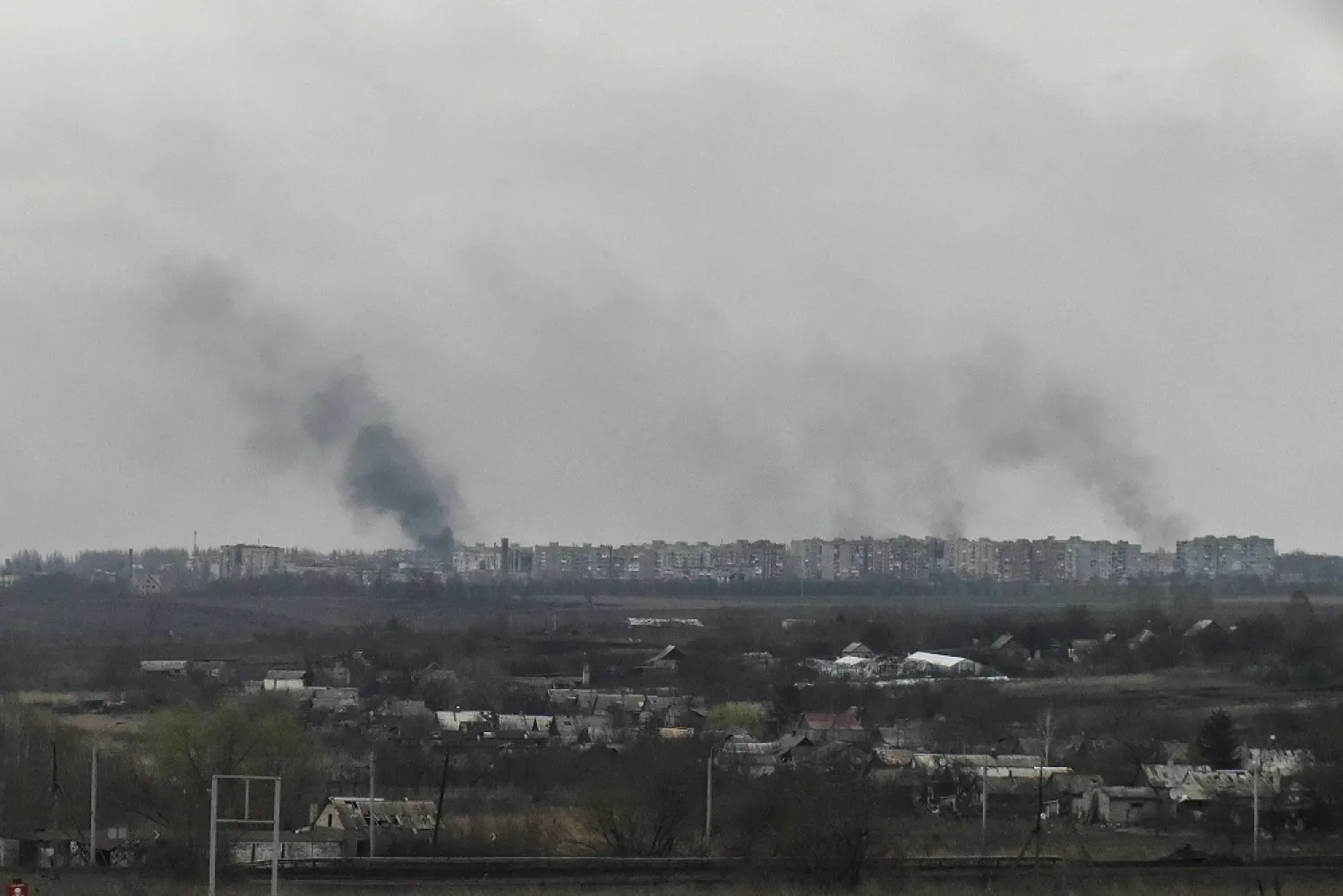
Smoke rises from the town of Bakhmut as heavy fighting for the control of the town continues, Donetsk region, eastern Ukraine, 06 April 2023 (issued 07 April 2023). (EPA)
TT

Kremlin Followed EU-China Talks, Doubts China Will Change Stance

Smoke rises from the town of Bakhmut as heavy fighting for the control of the town continues, Donetsk region, eastern Ukraine, 06 April 2023 (issued 07 April 2023). (EPA)

The Kremlin said on Friday it had followed "important talks" between Chinese President Xi Jinping, French President Emmanuel Macron and EU Commission chief Ursula von der Leyen, but said it doubted China would change its position on the Ukraine conflict under external pressure.

China has proposed its own "peace plan" for Ukraine in Beijing's first major diplomatic intervention into the conflict, but Ukraine and some Western leaders remain skeptical of Xi's close relationship with Russian President Vladimir Putin.

Kremlin spokesman Dmitry Peskov told reporters on Friday that the Kremlin had "monitored" the talks between the EU and China, but underlined that Russia had its own "rich relations" with Beijing.

"China is a very serious, very big power with its own sovereign position ... This is not the kind of country that changes its positions rapidly under external influence," Peskov said, when asked if Russia was concerned Europe could persuade Xi regarding Ukraine.

After the talks, Xi expressed willingness to speak to Ukraine's President Volodymyr Zelenskiy directly, according to von der Leyen, while Macron said he had urged Beijing to "bring Russia back to its senses".


US, Iran No Closer to Ending War

Vessels in the Strait of Hormuz, Musandam, Oman, May 8, 2026. REUTERS/Stringer
TT

US, Iran No Closer to Ending War

Vessels in the Strait of Hormuz, Musandam, Oman, May 8, 2026. REUTERS/Stringer

The US and Iran appeared no closer on Saturday to finding an end to their war after the two sides traded fire in the Gulf amid a tenuous ceasefire, while a US intelligence analysis concluded Tehran could withstand a naval blockade for months.

Recent days have seen the biggest flare-ups in fighting in and around the Strait of Hormuz since a ceasefire began a month ago, and the United Arab Emirates came under renewed attack on Friday.

Washington has been awaiting Tehran's response to a US proposal that would formally end the war before talks on more contentious issues, including Iran's nuclear program.

Speaking in Rome on Friday, Secretary of State Marco Rubio said the US was expecting a response that day, although an Iranian foreign ministry spokesperson said Tehran was still weighing its response.

Sporadic clashes continued on Friday between Iranian forces and US vessels in the Strait of Hormuz, ⁠Iran's semi-official Fars news ⁠agency reported. The Tasnim news agency later cited an Iranian military source saying the situation had calmed but warning more clashes were possible.

The US military said it struck two Iran-linked vessels attempting to enter an Iranian port, with a US fighter jet hitting their smokestacks and forcing them to turn back.

Tehran has largely blocked non-Iranian shipping through the strait since the war began with US-Israeli airstrikes across Iran on February 28. Before the war, one-fifth of the world's oil supply passed through the narrow waterway.

The US imposed a blockade on Iranian vessels last month. But a CIA assessment indicated Iran would ⁠not suffer severe economic pressure from a US blockade of Iranian ports for about another four months, according to a US official familiar with the matter, raising questions over President Donald Trump's leverage over Tehran in a conflict that has been unpopular with voters and US allies.

A senior intelligence official characterized as false the “claims” about the CIA analysis, which was first reported by the Washington Post.

Clashes extended beyond the waterway. The UAE said its air defenses engaged with two ballistic missiles and three drones from Iran on Friday, with three people sustaining moderate injuries.

Trump said on Thursday the ceasefire, announced on April 7, was still holding despite the flare-ups, ⁠while Iran accused the US ⁠of breaching it.

"Every time a diplomatic solution is on the table, the US opts for a reckless military adventure," Foreign Minister Abbas Araghchi said on Friday.

Iran's Mehr news agency reported that one crew member was killed, 10 wounded and six missing after a US Navy attack on an Iranian commercial ship late on Thursday.


Report: Iran Influencing US Public Opinion Through AI

FILE PHOTO: A message reading "AI artificial intelligence," a keyboard, and robot hands are seen in this illustration taken January 27, 2025. REUTERS/Dado Ruvic/Illustration/File Photo
TT

Report: Iran Influencing US Public Opinion Through AI

FILE PHOTO: A message reading "AI artificial intelligence," a keyboard, and robot hands are seen in this illustration taken January 27, 2025. REUTERS/Dado Ruvic/Illustration/File Photo

Iran is gaining ground in the information war with a succession of viral AI-made videos that aim to widen divisions in the US and blur the line between entertainment and propaganda, according to a report published by The Wall Street Journal on Friday.

The clips, produced and distributed by pro-Iranian groups and the country’s diplomatic missions, typically mock America’s war aims with the help of a Lego-styled US President Donald Trump and a similarly rendered cast of supporting characters.

A recent video portrayed Trump as a buccaneer in a Lego-themed take on the “Pirates of the Caribbean.” American forces are depicted struggling to open up the Strait of Hormuz and blockade Iranian ports, only to see their ships sink instead.

“The content they are producing is using language and conversations that were already happening on both the left and right,” said Narges Bajoghli, associate professor at Johns Hopkins. “They found that if they are funny enough and clever enough they can go viral.”

She added, “This time around the green light has been fully given to a younger generation to put this content out. And they are using global pop culture to do so.”

The content, produced by entities like Explosive Media, with apparent government backing, marks a shift from Tehran's traditional communication strategy, which emphasized devotion to its Iranian revolution.

Iranian embassies and state-run entities help spread the videos, which have increased online engagement by 30 times since before the war, according to the WSJ report.

The Iranian Embassy in Thailand posted a clip of Trump appearing to fall asleep while sitting at his desk in the Oval Office.

“Open the strait or I will covfefe. Thank you for your attention to this matter,” says another X post by the same embassy, referring to a post the president had published earlier.

For years, Iran had trouble communicating what it stands for to a Western audience. It used to rely on a more serious narrative.

The WSJ report said Iran’s Revolutionary Guard began investing in media production companies targeting young people and global audiences, but this strategy did not gain full support until after the outbreak of the recent war and the rise of a new generation more open to global digital culture.


US Says 2 Dead, One Survivor in Latest Eastern Pacific Boat Strike

This screen grab from a video posted on the X account of US Southern Command (SOUTHCOM) on May 8, 2026, shows a vessel after being struck at the direction of Commander General Francis L. Donovan on May 8, 2026.. (Photo by US Southern Command / AFP)
TT

US Says 2 Dead, One Survivor in Latest Eastern Pacific Boat Strike

This screen grab from a video posted on the X account of US Southern Command (SOUTHCOM) on May 8, 2026, shows a vessel after being struck at the direction of Commander General Francis L. Donovan on May 8, 2026.. (Photo by US Southern Command / AFP)

The US military said on Friday it had struck another boat alleged to be trafficking drugs in the eastern Pacific Ocean, killing two people and leaving one survivor.

The latest strike -- which follows dozens of similar attacks in recent months -- bring the US campaign's death toll to at least 192, according to an AFP tally.

US Southern Command (SOUTHCOM) said one person survived the strike, without specifying their condition, adding that the US Coast Guard had been notified to launch a search and rescue mission.

As with many previous attacks, SOUTHCOM said on X that the boat hit was "operated by Designated Terrorist Organizations" and that "intelligence confirmed the vessel was transiting along known narco-trafficking routes."

Black-and-white video accompanying the post shows a small boat moving through the water before it is hit with a projectile, followed by a large explosion.

President Donald Trump's administration began targeting alleged smuggling boats in early September, insisting it is effectively at war with what it calls "narco-terrorists" operating out of Latin America.

But his administration has not provided definitive evidence that the vessels it has been striking are involved in drug trafficking.

Legal experts and rights groups suggest the strikes could amount to extrajudicial killings because they have apparently targeted civilians who do not pose an immediate threat to the United States.

Friday's attack is at least the tenth in a month.

The deadly strikes have marked a stark shift in the US approach to drug trafficking, which has historically focused on interdicting vessels and seizing the material.

The US military has not said how long the operation, dubbed "Southern Spear" is intended to last.