Tunisian Dies After Setting Himself on Fire in Protest Against Police

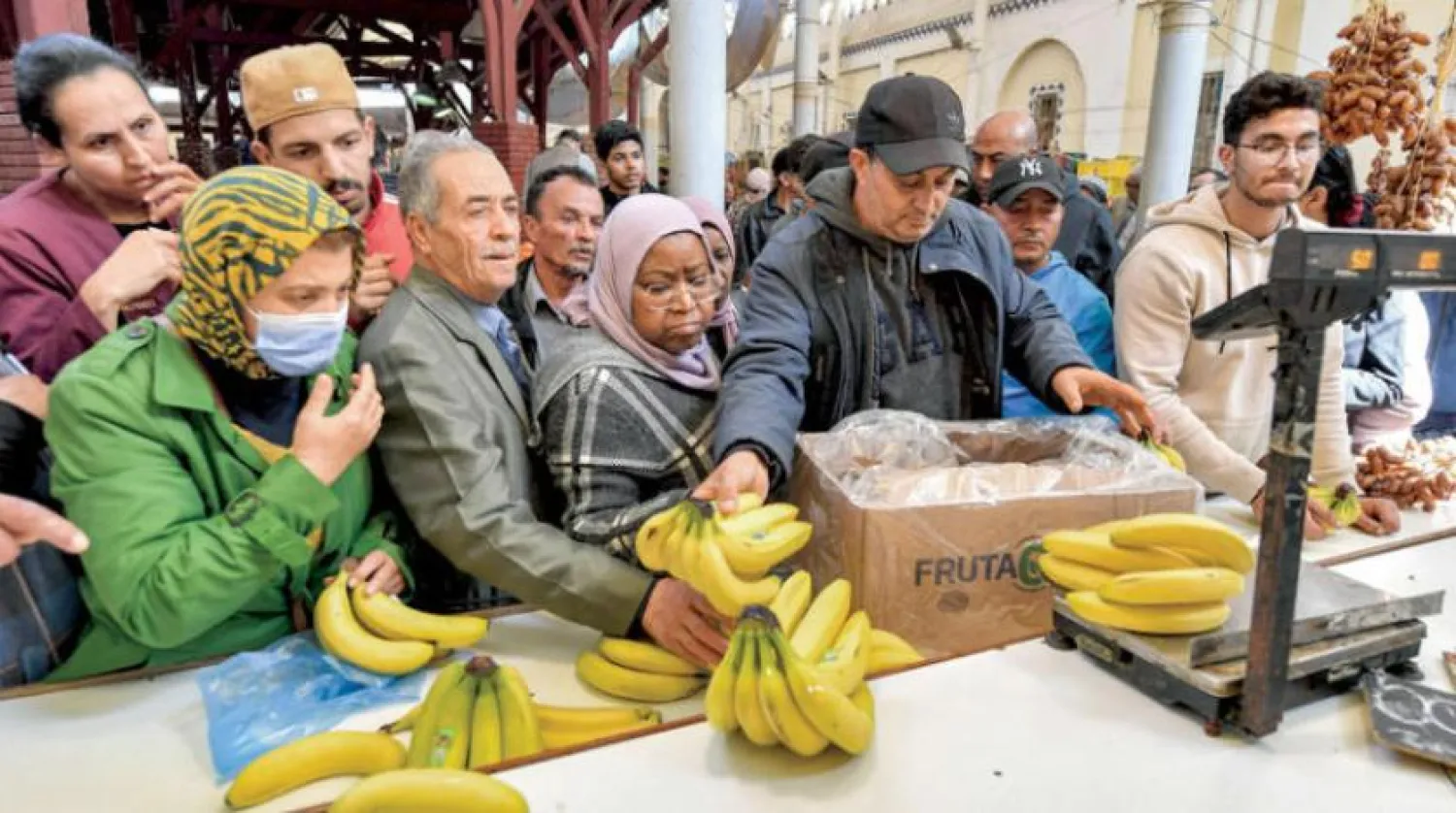
Authorities in Tunisia set a limit to the price of selling bananas at 5 dinars before the month of Ramadan - AFP
TT

Tunisian Dies After Setting Himself on Fire in Protest Against Police

Authorities in Tunisia set a limit to the price of selling bananas at 5 dinars before the month of Ramadan - AFP

A professional footballer in Tunisia has died after setting himself alight earlier this week in what he called a protest against the "police state" ruling the country, his brother said Friday.

Nizar Issaoui, 35, suffered third-degree burns from his action in the village of Haffouz in the central region of Kairouan, his brother Ryad told AFP.

He was taken from hospital in Kairouan to the specialist burns hospital in the capital Tunis, but doctors were unable to save his life, the brother said.

Issaoui's protest recalled that of street vendor Mohamed Bouazizi, who burned himself to death on December 17, 2010, sparking the Tunisian revolution that was the trigger for the Arab Spring uprisings which toppled authoritarian regimes across the Middle East.

News of Issaoui's death sparked protests on the streets of Haffouz on Thursday evening, Tunisian media reported. Young demonstrators hurled stones at police who responded with tear gas.

There was no immediate comment from the authorities.

On Friday, hundreds of mourners gathered outside Issaoui's house awaiting his funeral, shouting: "With our blood and with our soul we will sacrifice ourselves for you, Nizar".

During his funeral, clashes broke out between protesters and the police, who fired tear gas, local media reported.

Issaoui was a free agent at the time of his death, after a career that saw him play for a range of clubs from the lower divisions to the top flight.

In a Facebook post shortly before his fatal action, Issaoui said he had sentenced himself to "death by fire".

"I have no more energy. Let the police state know that the sentence will be executed today," he wrote.

According to Tunisian media, Issaoui decided to make his extreme protest against the police after officers accused him of "terrorism" when he complained that he was unable to buy bananas for less than 10 dinars ($3.30) a kilogramme, double the price set by the government.

A video selfie circulating on social media shows Issaoui screaming: "For a dispute with someone selling bananas at 10 dinars, I get accused of terrorism at the police station. Terrorism for a complaint about bananas."For a dispute with someone selling bananas at 10 dinars.


Palestinian Factions Hold Preliminary Talks in Cairo Ahead of Broader Dialogue

A boy sits amid belongings next to a structure used as a living room after it was demolished by Israeli authorities, who said it had been built without a permit, in the Palestinian village of Umm al-Khair, in the Israeli-occupied West Bank, on October 14, 2026. (Photo by HAZEM BADER / AFP)
TT

Palestinian Factions Hold Preliminary Talks in Cairo Ahead of Broader Dialogue

A boy sits amid belongings next to a structure used as a living room after it was demolished by Israeli authorities, who said it had been built without a permit, in the Palestinian village of Umm al-Khair, in the Israeli-occupied West Bank, on October 14, 2026. (Photo by HAZEM BADER / AFP)

A new round of Palestinian diplomatic activity is underway in the Egyptian capital, Cairo, for the second time in less than a week, aimed at paving the way for comprehensive dialogue following the postponement of Palestinian elections to September 2027 from next November, and discussing arrangements for the next phase.

According to Palestinian sources who spoke to Asharq Al-Awsat on Wednesday, four Palestinian factions are beginning a limited round of national dialogue in Cairo through a series of bilateral and group meetings. The talks are part of preparations for a broader national dialogue involving a wide range of factions, including Fatah, and possibly even Palestinian President Mahmoud Abbas.

The four factions are Fatah, Hamas, Islamic Jihad and the Popular Front for the Liberation of Palestine (PFLP). Their delegations will hold bilateral and joint meetings to consult on the participants and agenda for the broader dialogue.

Fatah Rejects Participation of Dahlan's Faction

According to three Palestinian sources who spoke separately to Asharq Al-Awsat, Fatah remains adamantly opposed to the participation of the Democratic Reform Current, a breakaway faction led by Mohammed Dahlan.

Fatah also rejects the participation of Palestinian factions that emerged around the start of the Second Intifada in late 2000, including the Popular Resistance Committees, the Palestinian Mujahideen Movement, the Palestinian Freedom Movement (Al-Ahrar) and other smaller factions that it says receive funding from Iran, Hezbollah and Hamas.

The sources explained that Fatah, by contrast, insists on the participation of all Palestine Liberation Organization (PLO) factions, including those that no longer have a significant popular base or an active political role, such as As-Sa'iqa, the Palestinian Democratic Union (FIDA), the Palestinian Popular Struggle Front and the Palestine Liberation Front.

One source confirmed that the meetings would address arrangements concerning the PLO and the Palestinian internal political landscape as a whole, as well as the Palestinian National Council and other issues.

A third source from a faction participating in the Cairo talks said all outstanding disputes were expected to be resolved during the meetings, which could last two days or be extended if necessary.

The source said discussions would focus on ending the Palestinian division entirely, establishing clear mechanisms for forming the Palestinian National Council and setting an official date for comprehensive national dialogue to be convened at the direct invitation of President Abbas.

The source explained that, if approved, the comprehensive national dialogue would address numerous issues, including the conditions for joining the PLO and restructuring it, the Palestinian National Council and legislative and presidential elections.

Meanwhile, a Palestinian source close to the factions and currently in Cairo told Asharq Al-Awsat on Wednesday that Palestinians were placing considerable hopes on Egypt's role this time, following the election postponement, and on Cairo's sponsorship of efforts to bridge divisions, achieve broad national consensus and convene comprehensive dialogue soon despite the difficulties.

The source noted that the current consultations among Palestinian factions largely center on mechanisms for managing the Palestinian political landscape and its future direction.

The main disagreements concern the nature of the anticipated dialogue and whether it will lead to the establishment of a temporary leadership framework for the PLO and agreement on a national unity government in accordance with previous agreements, or merely result in conventional discussions without binding outcomes, as has happened in the past.

The source said the direction of the talks would become clearer in the coming hours.

Rebuilding the Political System

Fatah spokesperson Abdel Fattah Dawla said the meetings taking place Wednesday with several factions present in Cairo were intended to build on previous consultations and the positive atmosphere established with Egyptian officials and representatives of Palestinian factions.

"The ongoing meetings on Wednesday with some of the factions present in Cairo are aimed at continuing the efforts launched during previous consultations and building on the positive atmosphere achieved with our brothers in Egypt and representatives of Palestinian factions, with the goal of creating the conditions for comprehensive national dialogue. All of this lays the foundation for a new phase of joint national action," he said.

Dawla believes that "the fundamental guarantee for the success of the dialogue is genuine political will among all parties and a readiness to move from managing disagreements to resolving them, and from exchanging positions to committing to implementable national understandings."

He told Asharq Al-Awsat: "We also need specific implementation mechanisms, agreed timelines and follow-up committees to ensure that whatever is agreed upon is translated into practical steps, whether in administering the Gaza Strip, unifying institutions or rebuilding the political system on democratic and participatory foundations, and renewing the legitimacy of its institutions through elections when conditions allow for a fair and inclusive process."

Regarding Cairo's current role, the Fatah spokesperson said Egypt could help create an appropriate environment for dialogue, bring opposing viewpoints closer together and assist the factions in moving beyond discussions of their differences toward agreement on a shared national vision.

Cairo, meanwhile, remains committed to its role in ending the suffering of the Palestinian people, according to a statement issued Wednesday by Egypt's Foreign Ministry marking the first anniversary of the Sharm El-Sheikh Peace Summit.

The ministry stressed Egypt's continued commitment to implementing the peace plan, consolidating the ceasefire, beginning reconstruction efforts and completing the Israeli withdrawal.


Gold Miners on Egypt-Sudan Border: Security Risks, Tangled Ties

Items seized during an Egyptian military operation on June 22 (Egyptian Military Spokesman)
TT

Gold Miners on Egypt-Sudan Border: Security Risks, Tangled Ties

Items seized during an Egyptian military operation on June 22 (Egyptian Military Spokesman)

Egypt’s military rolled out a three-phase crackdown on illegal gold mining along the Sudanese border between June and October as the practice spread, before reports emerged from Sudan of a bombardment that killed and wounded miners in the border area.

Egyptian military and strategic affairs experts told Asharq Al-Awsat that the prospectors, known locally as “dahaba,” threaten stability and national security, leaving authorities no alternative but to confront them.

That, they said, has driven the military’s campaigns since June.

They expected tougher measures against border violations, warning that illegal gold mining sites could become “support hubs for terrorist groups.”

Videos released by Egypt’s military spokesman since the launch of the “Southern Shield” campaign said illegal gold mining “is no longer merely an encroachment on the state’s resources, but has become an organized criminal activity that threatens national security and fuels arms, drug and human trafficking.”

One video described the south as part of a mineral-rich belt where legal mining is expanding.

“However, criminal networks have exploited the rugged mountainous terrain to establish illegal mining sites using heavy equipment, four-wheel-drive vehicles and advanced communications devices.”

The military spokesman said the groups “include armed Egyptian and foreign elements, some of whom have attacked military and police forces and targeted legally operating mining companies, necessitating a broad security campaign based on precise intelligence to dismantle these sites and eliminate sources of threat.”

Illegal mining

Sudan’s Transitional Sovereignty Council said it had formed a fact-finding committee to investigate “the incident involving a number of Sudanese miners in the border area between Egypt and Sudan.”

The committee includes representatives from the public prosecution service and judicial and security bodies, the council said in an official statement on Monday. Its task is “to investigate the circumstances of the incident and establish all related facts.”

In Egypt, military spokesman Colonel Ahmed Atman said on Monday that military and civilian police law enforcement units were pressing ahead with the campaign’s third phase against illegal gold mining in the Eastern Desert.

The operation followed the dropping of warning leaflets to criminal elements and aimed “to enforce full sovereignty within Egypt’s borders and protect its national assets and resources,” he said.

The first phase took place in June. That month, the military said it detected 58 instances of unauthorized gold prospecting and seized 20 metal detectors, 118 power generators and 86 metric tons of rock containing gold ore.

Protecting territorial borders is vital to safeguarding the state’s standing and stability, Egyptian strategic affairs expert Major General Samir Farag told Asharq Al-Awsat.

Sudan’s instability undermines conditions along the border and efforts to secure it, he said, allowing gangs to infiltrate Egyptian territory to smuggle weapons and drugs and mine gold illegally.

That, he said, “prompts Egypt to protect its borders, nothing more.”

“The dahaba are trained gangs that pose grave risks to Egyptian national security and create pockets of threat in the south of the country, opening the door to wider threats,” Farag said.

Authorities are reinforcing border guard posts and stepping up mounted and mobile patrols, using modern vehicles and satellite communications to prevent any unauthorized presence on Egyptian soil, he added.

National security

Egyptian military and strategic affairs expert Major General Osama Kabir said illegal gold prospectors pose two main threats to national security.

“The first is the security threat to the borders, because they breach them, bring in unauthorized workers and possess weapons,” he said. The campaign, he added, is confronting border intruders first and illegal gold prospectors second.

“This illegal activity goes beyond gold mining and is linked to extensive smuggling and infiltration networks, including irregular migration, human trafficking syndicates, and the smuggling of drugs, weapons and ammunition that help spread crime and terrorism within the country,” Kabir told Asharq Al-Awsat.

The second threat is economic, he said.

“The country’s assets, mineral wealth, soil, ores, gold and antiquities — everything that forms part of the foundations of the state’s economy — are threatened, particularly by gold theft and the depletion and smuggling of mineral resources. Security and military campaigns therefore uphold the law.”

Farag said the armed forces and security agencies strictly follow legal rules during the campaigns. They act decisively, in line with official procedures and prescribed warnings, against attempts to breach the border or flee after smuggling and sabotage offenses, he said.

Kabir said the military and police coordinate fully, enforcing the law through professional, carefully organized plans.

He expected the campaigns to continue to protect the country’s territorial, geographic and political borders, with firm action against offenders under the law.

That approach, he said, also takes humanitarian considerations into account: reviewing detainees’ cases to deport those uninvolved and taking stringent judicial action against those actively involved in sabotage and smuggling.



Local Official: More Than 500 Die of Hunger in Darfur

A woman prepares food to be distributed to people in need in Khartoum, Sudan, Wednesday, Sept. 23, 2026. (AP Photo/Marwan Ali)
TT

Local Official: More Than 500 Die of Hunger in Darfur

A woman prepares food to be distributed to people in need in Khartoum, Sudan, Wednesday, Sept. 23, 2026. (AP Photo/Marwan Ali)

A local official at a displacement camp in Sudan's western Darfur region said more than 500 people had died from hunger and malnutrition recently, appealing for urgent humanitarian intervention to save the lives of hundreds of thousands of displaced people.

Humanitarian conditions in the region continue to deteriorate amid the ongoing conflict between the Sudanese army and the Rapid Support Forces (RSF).

Speaking to Asharq Al-Awsat, Mohammed Yaqoub, a local official at the Tawila displacement camp in North Darfur State, said many displaced families were unable to obtain even the minimum amount of food needed to survive, with conditions claiming the lives of more than 500 people at the camp.

Earlier this week, the General Coordination of Displaced Persons and Refugees in Darfur announced that hundreds of displaced people had arrived at Tawila camp, which received 1,726 families comprising 8,390 people amid severe shortages of food, water and shelter supplies.

UN and local estimates indicate that more than three million displaced people are currently living in camps across Darfur as a result of the war that erupted in Sudan in April 2023.

Tawila camp is located 60 kilometers from El Fasher, the capital of North Darfur, and continues to receive waves of displaced people, placing growing pressure on humanitarian assistance provided by international and local organizations operating in the area.

Urgent Need for Aid

Yaqoub told Asharq Al-Awsat that nearly 16,000 displaced people had arrived in recent days at camps in the Shangil Tobaya, Kutum and Koma areas of Darfur, amid dwindling supplies of food and drinking water and declining healthcare services due to shortages in international funding.

According to the latest report by UN humanitarian agencies, 34 million people in Sudan are in urgent need of emergency humanitarian assistance, with famine expected to threaten 20 areas across Darfur and Kordofan.

Yaqoub said deaths among pregnant women and children were rising daily at an alarming rate because of shortages of doctors and medicines at the only functioning hospital in the Tawila area. He appealed to health organizations to intervene immediately and provide whatever medical assistance was available to displaced people.

The local official also reported widespread malnutrition among children, along with outbreaks of malaria, dengue fever and chronic illnesses, raising fears of further deaths among women and men, particularly older people.

He warned of the risk of diseases and epidemics spreading as health conditions deteriorate and drinking water and lifesaving medicines remain scarce.

Signs of Famine

Yaqoub told Asharq Al-Awsat that hundreds of displaced people had died from hunger and thirst while traveling to displacement camps in Darfur.

"The severe shortage of humanitarian assistance and the emerging signs of famine, whose effects are beginning to cast a shadow over living conditions in Darfur, threaten the lives of millions of displaced people amid the continuing war and declining humanitarian response," he said.

In a recent report, the General Coordination of Displaced Persons and Refugees, which monitors humanitarian conditions in Darfur, described conditions in the camps as extremely dire, calling for urgent relief assistance and swift international intervention.

The group warned that shortages of food, basic necessities and healthcare were exposing the most vulnerable populations to growing humanitarian risks, including rising death tolls resulting from the humanitarian catastrophe facing the region.