First of Iranian Hajj Pilgrims Arrive in Saudi Arabiahttps://english.aawsat.com/home/article/987021/first-iranian-hajj-pilgrims-arrive-saudi-arabia
First of Iranian Hajj Pilgrims Arrive in Saudi Arabia
Muslim pilgrims pray near the Kaaba, at the Grand Mosque in Saudi Arabia's city of Mecca. (AFP)
Mecca: Tarek al-Thaqfi
TT
TT
First of Iranian Hajj Pilgrims Arrive in Saudi Arabia
Muslim pilgrims pray near the Kaaba, at the Grand Mosque in Saudi Arabia's city of Mecca. (AFP)
Saudi Minister of Hajj and Umrah Dr. Mohammed Benten revealed on Sunday that the first Iranian pilgrims had started arriving in the Kingdom to perform the annual Hajj rites.
He stressed that the ministry has completed preparations of all Hajj services for the pilgrims, including Iranians, who started arriving in Saudi Arabia.
The Iranian pilgrims landed in Medina.
Preparations to receive pilgrims from Qatar are also complete, said Benten.
The minister had inspected the contract signed between the south Asia company and the pilgrims affairs office, as well as the contract signed between the company and the Qatar pilgrims affairs bureau.
In addition, he toured the civil institutions for non-Arab pilgrims from African countries and South Asia in order to present the operation plans for the 2017 Hajj season.
The presentation included several of the programs, goals, and execution, assessment and supervision mechanisms.
He also presented the food, transportation, awareness and accommodation services and efforts to improve them in line with the directives of Custodian of the Two Holy Mosques King Salman bin Abdulaziz.
At the end of his tour, Benten stressed the importance of providing quality services that reflect the hospitality of Custodian of the Two Holy Mosques towards the pilgrims.
He highlighted the importance of Hajj organizers exerting efforts and bolstering cooperation to offer the best services and ensure the success of this year’s pilgrimage.
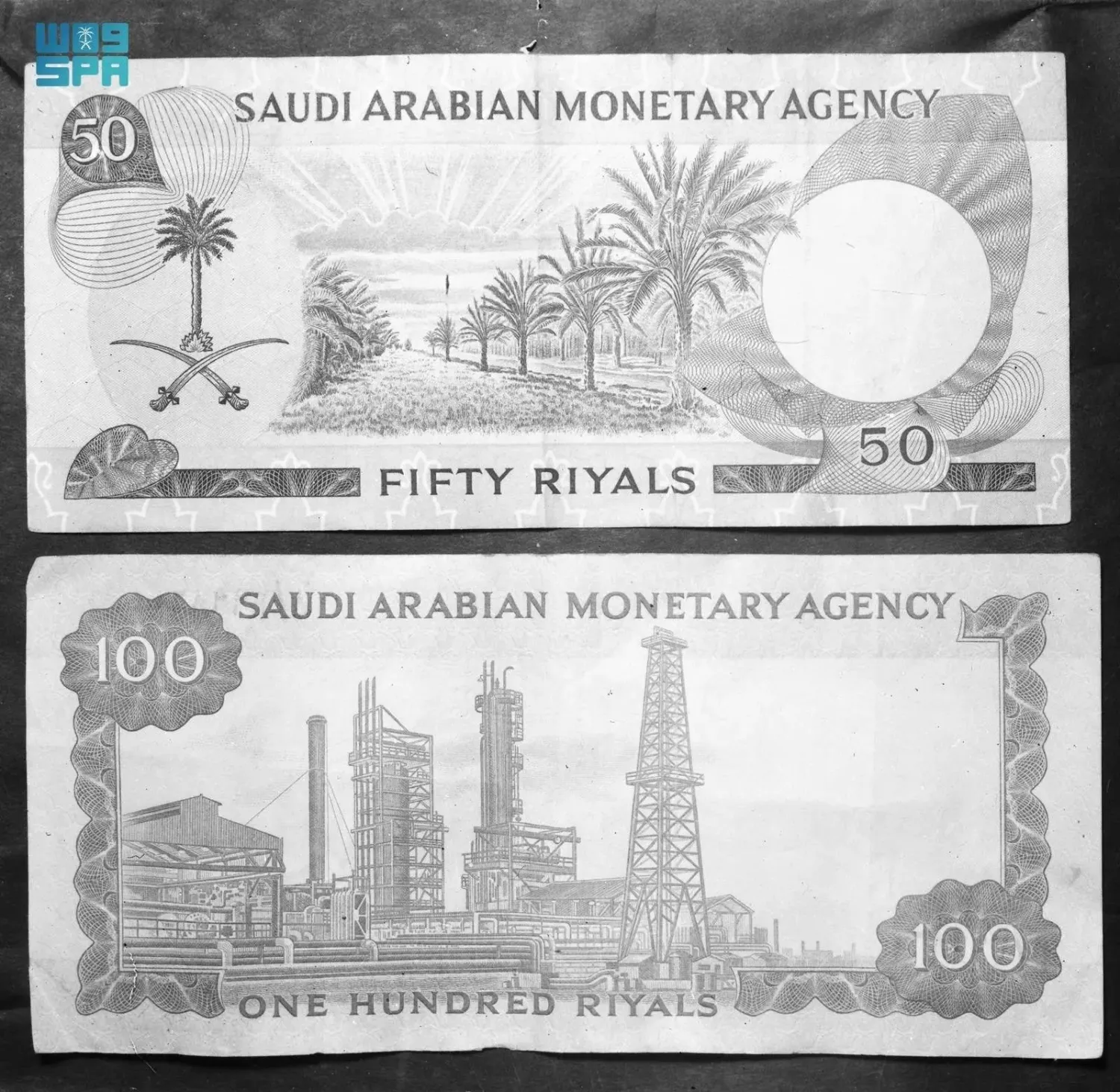
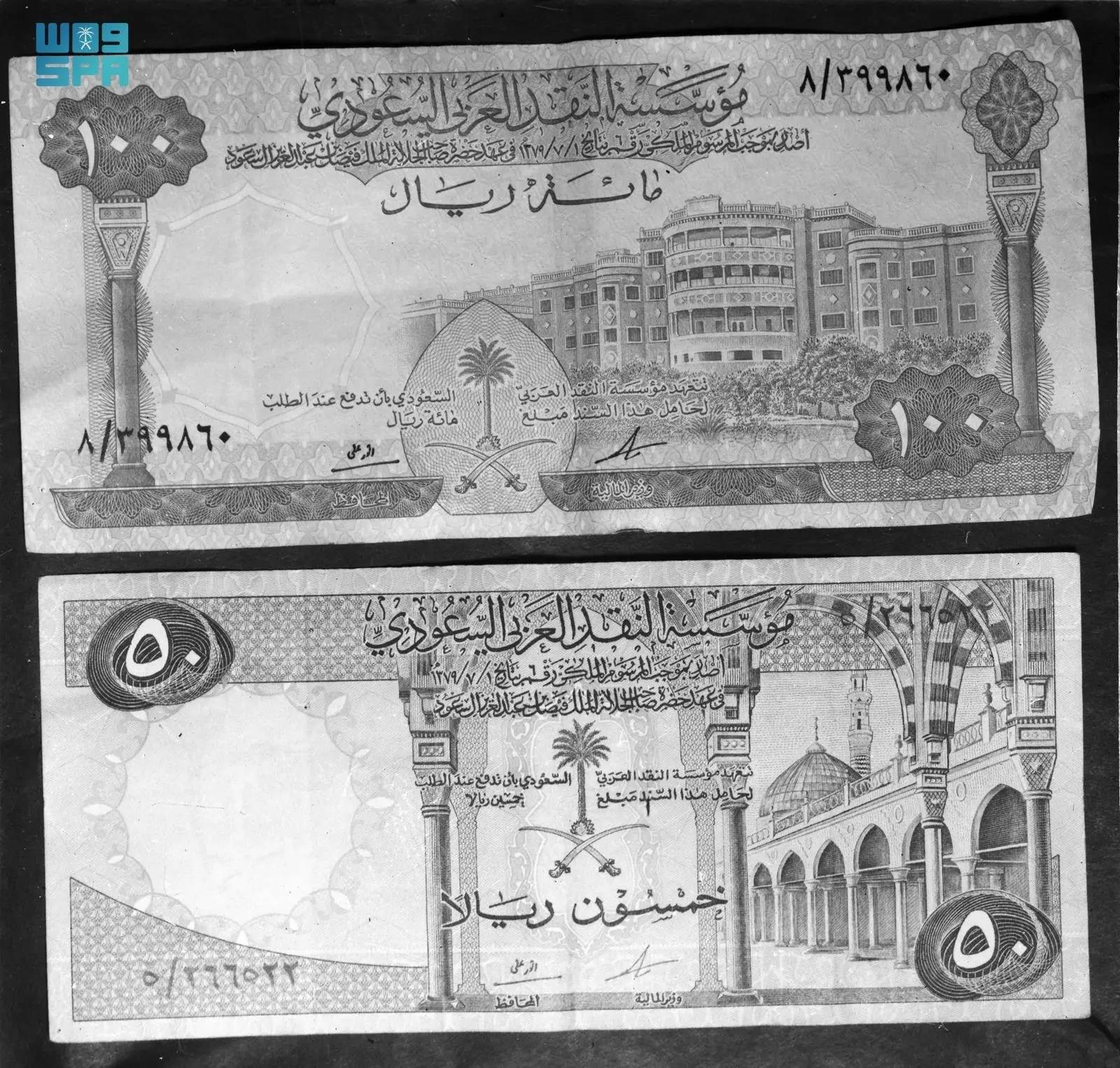
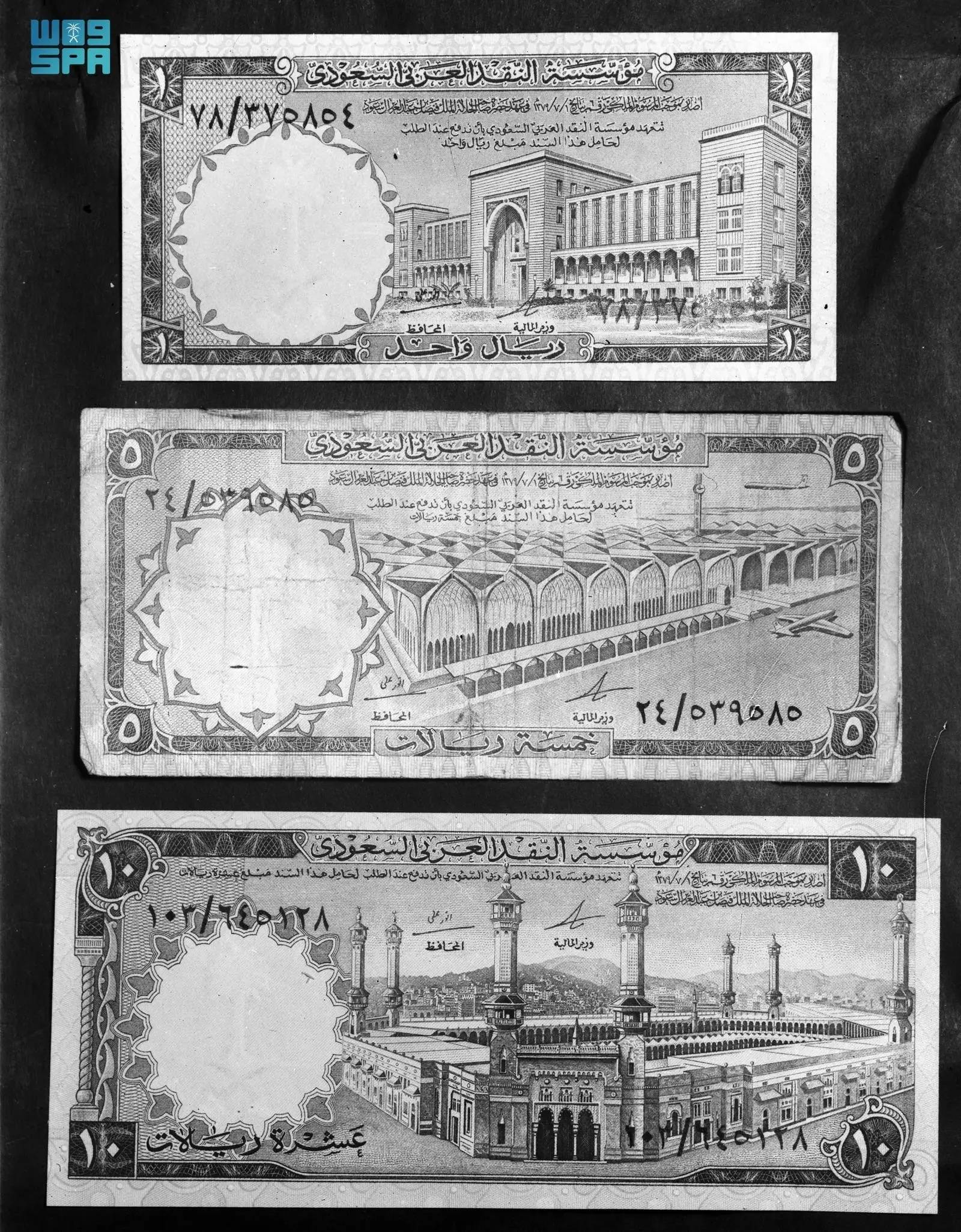
The Saudi Riyal: Tracing Three Centuries from Diriyah’s Markets to Global Financial Iconhttps://english.aawsat.com/features/5243324-saudi-riyal-tracing-three-centuries-diriyah%E2%80%99s-markets-global-financial-icon
The Saudi riyal serves as a living record of three centuries of progress, representing not merely a unit of value but a document of the nation’s journey and renaissance. (SPA)
TT
TT
The Saudi Riyal: Tracing Three Centuries from Diriyah’s Markets to Global Financial Icon
The Saudi riyal serves as a living record of three centuries of progress, representing not merely a unit of value but a document of the nation’s journey and renaissance. (SPA)
The history of the Saudi riyal is deeply intertwined with the evolution of the Saudi state, evolving from its early days as a fluctuating medium of exchange to its modern, regulated form through significant political, social, and economic transformations, reported the Saudi Press Agency on Saturday.
A comprehensive overview of this trajectory begins with the diverse currencies of the First Saudi State, passes through the regulatory milestones of the unification era, and culminates in today’s sophisticated monetary structure.
First Saudi State: Vibrant markets and multiple currencies
With the establishment of the First Saudi State in the mid-12th century AH (mid-18th century CE), the Arabian Peninsula lacked a unified monetary system, and a variety of currencies circulated, driven by trade across a vast geography.
According to the historical guide for Founding Day published by the King Abdulaziz Foundation for Research and Archives (Darah), First Saudi State founder Imam Muhammad bin Saud bin Muhammad bin Muqrin focused on building a robust economic foundation by securing financial resources and encouraging trade between Diriyah and other regions. Consequently, markets in Diriyah and Najd flourished, attracting merchants who traded in gold, silver, and barter.
As noted in Dr. Abdullah Al-Saleh Al-Uthaimin’s "History of the Kingdom of Saudi Arabia," popular currencies included the Austrian silver Maria Theresa thaler, locally known as Al-Riyal Al-Fransi (literally the French riyal), which became a staple due to its consistent purity and weight.
According to Dr. Mohammed Al-Manshat’s "Organizations of the First Saudi State," Diriyah’s markets reached a peak of prosperity during the reign of Imam Saud bin Abdulaziz. Political and security stability allowed merchants to move freely, facilitating smooth and reliable financial transactions.
The history of the Saudi riyal is deeply intertwined with the evolution of the Saudi state. (SPA)
Regional diversity and variety of coins
Monetary patterns varied by region. In Najd, denominations such as Al-Jadeeda, Al-Khurda, Al-Muhammadiya, and Al-Mushakhas were used according to market needs. Al-Khurda served as the smallest unit, while Al-Jadeeda was used for everyday transactions.
In Al-Ahsa, an agriculturally vital hub, a local currency called Al-Tawila, a bent copper bar combined with silver, was commonly used. Meanwhile, the Hijaz experienced a high degree of currency diversification, as Makkah and Madinah welcomed pilgrims carrying various coins from across the Muslim world.
The reign of King Abdulaziz: Foundations of organization
The entry of King Abdulaziz bin Abdulrahman Al Saud into Riyadh in 1319 AH (1902) marked a pivotal economic turning point. Initially, he maintained the existing currencies to preserve market stability while gradually introducing a unified currency.
According to the Saudi Central Bank (SAMA), an early significant step was counterstamping circulating coins with the word "Najd" to indicate official adoption. After the unification of the Hijaz and Najd in 1343 AH (1925), the word "Hijaz" was added to reflect the expanding political unity.
By 1343 AH, monetary reform shifted from stamping to minting. SAMA records show the issuance of the first Saudi copper coins in half- and quarter-qirsh denominations, bearing King Abdulaziz’s name and the mint location, Umm Al-Qura. These were the first legal-tender coins of the Saudi state.
In 1346 AH (1927), King Abdulaziz abolished all foreign circulating currencies and introduced the first pure Saudi silver riyal. To support this, he issued a royal decree - published in the Umm Al-Qura gazette - outlining the state’s new monetary policies. After the formal unification of the Kingdom in 1351 AH (1932), the riyal became the official currency. By 1354 AH (1935), a new silver riyal bearing the name "Kingdom of Saudi Arabia" was issued, symbolizing national unity and stability.
Saudi Arabian Monetary Agency: Regulation and supervision
To manage the expansion of economic activity, King Abdulaziz issued two royal decrees in 1371 AH (1952) establishing the Saudi Arabian Monetary Agency (SAMA), now the Saudi Central Bank. SAMA was tasked with regulating currency issuance, maintaining its value, and supervising the banking system. It began operations in 1372 AH (1953), focusing on introducing the Saudi gold pound and completing the minting of the silver riyal.
With the establishment of the First Saudi State in the mid-18th century CE, the Arabian Peninsula lacked a unified monetary system. (SPA)
Pilgrim receipts and paper currency
Recognizing that heavy coins were becoming impractical for a modernizing economy and burdensome for pilgrims, King Abdulaziz sought a more efficient solution. This led to the introduction of "pilgrim receipts" by SAMA in 1372 AH (1953). Initially issued in 10-riyal denominations, these receipts were printed in Arabic, Persian, English, Urdu, Turkish, and Malay.
Though intended as a temporary convenience to be exchanged for silver, the receipts quickly gained the trust of merchants, citizens, and pilgrims alike. This success led SAMA to issue five-riyal notes in 1373 AH (1954) and one-riyal notes in 1375 AH (1956).
The public’s preference for these receipts over heavy coins paved the way for a permanent transition to paper currency. In 1381 AH (1961), the first official paper issue of the Saudi riyal was released during the reign of King Saud bin Abdulaziz, featuring enhanced security and depictions of historical landmarks.
The sixth issue: Trust and security
The sixth issue of the Saudi currency was released in 1438 AH (2016) under the reign of Custodian of the Two Holy Mosques King Salman bin Abdulaziz Al Saud, bearing the slogan "Trust and Security." This series incorporated the latest global technologies and security standards for both paper and metal denominations.
Furthermore, the adoption of the official Saudi Riyal Symbol on February 20, 2025, reinforced the Kingdom’s financial and national identity. The symbol’s design, inspired by Arabic calligraphy, reflects pride in the cultural heritage that defines the nation.
From the barter systems of Diriyah to the internationally recognized symbol of today, the Saudi riyal serves as a living record of three centuries of progress, representing not merely a unit of value but a document of the nation’s journey and renaissance.
AI Revolution Looms Over Berlin Film Festhttps://english.aawsat.com/entertainment/5243320-ai-revolution-looms-over-berlin-film-fest
Director and screenwriter Yoshitoshi Shinomiya attends a press conference for “A New Dawn” during the 76th Berlin International Film Festival, in Berlin, Germany, 18 February 2026. (EPA)
TT
TT
AI Revolution Looms Over Berlin Film Fest
Director and screenwriter Yoshitoshi Shinomiya attends a press conference for “A New Dawn” during the 76th Berlin International Film Festival, in Berlin, Germany, 18 February 2026. (EPA)
The artificial intelligence revolution sweeping through the entertainment sector was at first glance not evident at this year's Berlin Film Festival, but the potential for widespread changes was still on people's minds.
The festival has had the air of an arthouse bubble when it comes to the topic of AI and the event's leadership is keeping above the fray.
"At present, we do not intend to issue any statements regarding the use of AI in the film industry," the festival said in a statement sent to AFP, adding: "We are monitoring developments with great interest."
Nevertheless, some of the filmmakers present addressed the question of how the technology is changing the industry.
Yoshitoshi Shinomiya, director of the only animated feature in competition, "A New Dawn," told reporters he had briefly considered using AI in his film.
"During production, we weren't entirely sure we would be able to complete the film. At one point we wondered whether we should use AI for the backgrounds," he said.
But Shinomiya concluded that AI is not yet "well-developed enough" to do that sort of work.
Juliette Prissard from Eurocinema, an organization representing French film and TV producers, said it's only a matter of time until the tools improve.
"It's reasonable to think that in one, two or three years... you won't be able to tell the difference anymore," she told AFP.
AI can already "write scripts" and replace extras in crowd scenes or even generate "digital replicas" of someone.
- 'No choice' -
In France, where foreign-language films are frequently shown with dubbing, voice actors have already been raising the alarm about AI's impact on their profession.
But Prissard warns other film industry jobs could be replaced in the "near" future, such as "technicians, the set designers" and even "the producers themselves".
Sevara Irgacheva, secretary general of the European Film Agency Directors' association (EFAD), said that already "junior jobs are disappearing: all the assistant editors, assistant screenwriters".
Despite this, the industry "is leaning toward accepting" AI "because, in any case, we have no choice".
The tools have the potential to help the sector become more efficient and "save time at every stage of production", particularly in the more "bureaucratic" aspects of the process.
A survey carried out in early 2025 by France's National Center for Cinema (CNC) found that 90 percent of film and audiovisual professionals surveyed were already using AI tools in their work.
In Berlin, Austrian director Georg Tiller presented a short film mixing filmed footage and AI-generated images, saying it was an attempt to encourage his fellow filmmakers to fight for a place in the new "digital cinema".
"If we don't then I fear that that we will die a slow death, because it will just steamroll over us," Tiller told AFP.
- The 'temptation' of deregulation -
The issue garnered some relief with a December agreement between OpenAI and Disney, which allowed the use of the entertainment giant's characters on Sora, the AI-generated video platform.
In return, Disney now has "privileged access" to OpenAI's "highly sophisticated" tools, giving it a "technological advantage over the rest of the sector," said Prissard.
But the use of AI in cinema has prompted thorny legal questions over intellectual property and the very notion of authorship, at a time when legislation is only just beginning to grapple with the subject.
Under EU rules, streaming platforms such as Netflix and Amazon Prime must carry at least 30 percent of European content in their catalogues.
Prissard questioned how those enforcing the rules "will be able to tell the difference" between original creations and "synthetic" ones.
Given "the fear of falling behind" the United States and China in developing AI technologies, Prissard said that Europe may succumb to the "temptation to allow more leeway to innovate without obstacles".
Saudi Arabia Dispatches 81st Flight in Ongoing Humanitarian Air Bridge to Gazahttps://english.aawsat.com/gulf/5243318-saudi-arabia-dispatches-81st-flight-ongoing-humanitarian-air-bridge-gaza
The plane was loaded with essential food baskets and shelter kits. (SPA)
TT
TT
Saudi Arabia Dispatches 81st Flight in Ongoing Humanitarian Air Bridge to Gaza
The plane was loaded with essential food baskets and shelter kits. (SPA)
Saudi dispatched on Saturday its 81st relief plane to the Gaza Strip.
Operated by the King Salman Humanitarian Aid and Relief Center (KSrelief) and coordinated with the Ministry of Defense and the Saudi Embassy in Cairo, the plane arrived in Egypt’s El-Arish carrying essential food baskets and shelter kits destined for Gaza.
This ongoing air bridge is a key component of the Kingdom's commitment to alleviating the severe living conditions of the Palestinian people and providing vital humanitarian support to Gaza.
لم تشترك بعد
انشئ حساباً خاصاً بك لتحصل على أخبار مخصصة لك ولتتمتع بخاصية حفظ المقالات وتتلقى نشراتنا البريدية المتنوعة