


Kuwait Maintains Qatar Crisis Resolution Efforts as Saudi, France Discuss Counter-Terrorism

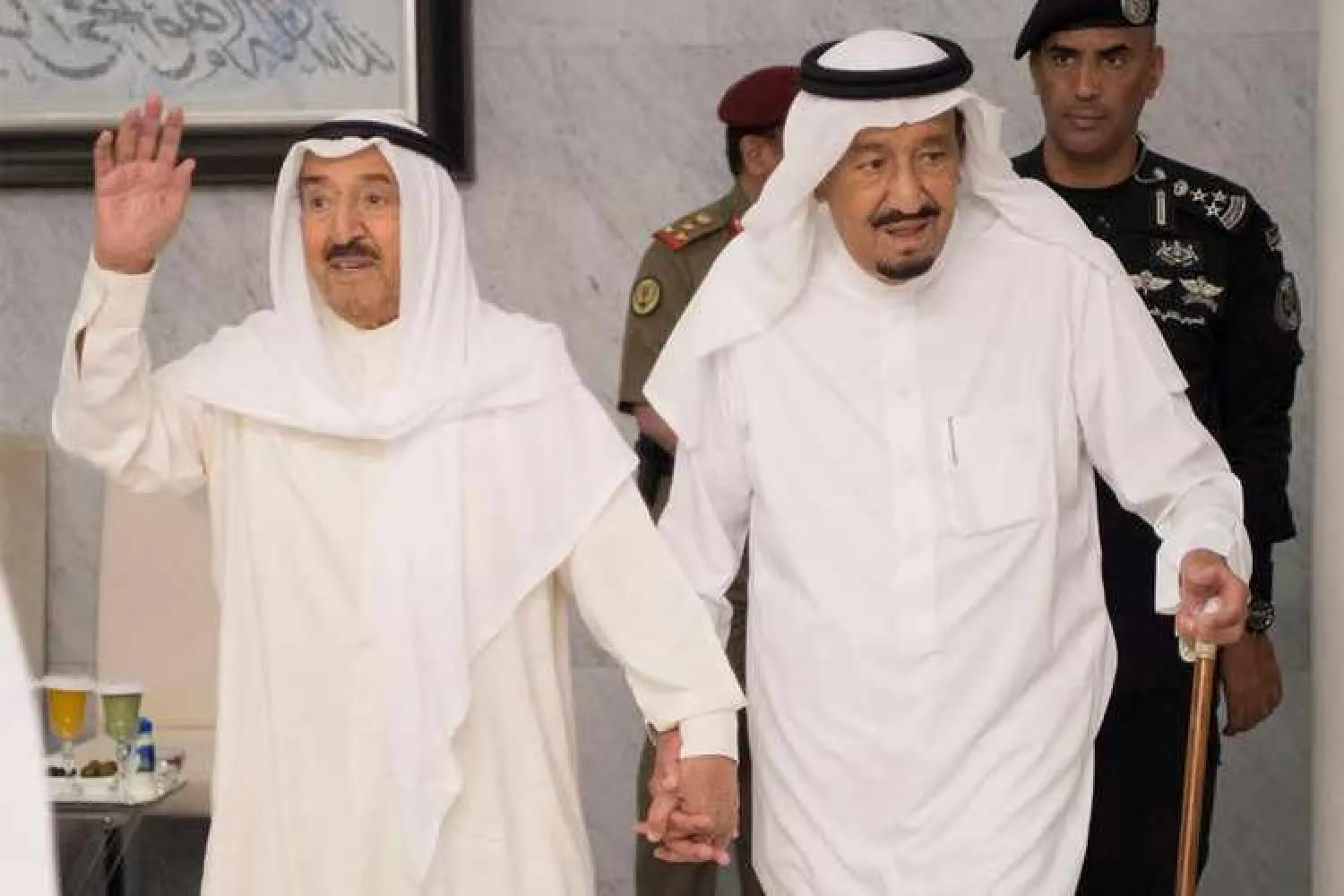
Saudi Arabia’s King Salman bin Abdulaziz holds hands with Emir of Kuwait Sabah Al-Ahmad Al-Jaber Al-Sabah in Jeddah, June 6, 2017. (Reuters)
TT

Kuwait Maintains Qatar Crisis Resolution Efforts as Saudi, France Discuss Counter-Terrorism

Saudi Arabia’s King Salman bin Abdulaziz holds hands with Emir of Kuwait Sabah Al-Ahmad Al-Jaber Al-Sabah in Jeddah, June 6, 2017. (Reuters)

Saudi Arabia and France agreed to promote efforts to fight terrorism and extremism and counter-terrorist financing.

Vice Custodian of the Two Holy Mosques Prince Mohammed bin Salman bin Abdulaziz received a telephone call from French President Emmanuel Macron on Tuesday.

The two officials reviewed bilateral relations in various fields and means to fight terrorism and extremism, a statement by the Saudi Press Agency said.

It added that they both underlined the need to exert more efforts to dry up the sources of terrorism and stressed both countries’ keenness on the security and stability of the region.

Macron also held a telephone conversation with Abu Dhabi Crown Prince Sheikh Mohammed bin Zayed, reported the Emirates News Agency (WAM).

WAM said the two leaders tackled cooperative relations and the latest developments in the region, as well as efforts exerted to combat terrorism and extremism. They also discussed the best means to support regional and international efforts to consolidate security and stability in the region.

Macron’s talks with Gulf leaders came at a time when Kuwait is leading diplomatic efforts to resolve the Gulf crisis, in the wake the Arab quartet’s insistence on Qatar’s need to comply with international efforts to prevent terrorism financing.

In this regard, Prince Mohammed received on Monday a written letter addressed to the Custodian of the Two Holy Mosques King Salman bin Abdulaziz from the Kuwaiti Emir.

Kuwaiti Deputy Prime Minister and Foreign Minister Sheikh Sabah Khaled Al-Hamad Al Sabah and State Minister Sheikh Mohammed Abdullah al-Mubarak Al Sabah delivered the message during a meeting with Prince Mohammed in Jeddah.

The Kuwaiti envoys conveyed a similar letter to Egyptian President Abdel Fattah al-Sisi, before heading to the Sultanate of Oman, the UAE and later Bahrain.

Kuwait News Agency (KUNA) said that the letter to Sultan Qaboos of Oman covered the latest developments on the regional and international arenas and issues of common concern.

The Kuwaiti envoys also delivered a similar message to Sheikh Khalifa bin Zayed Al Nahyan, President of the UAE, KUNA reported.

In Manama, Bahrain’s King Hamad bin Isa al-Khalifa received Kuwaiti envoys Sheikh Sabah Khaled Al-Hamad Al Sabah and Sheikh Mohammed Al-Abdullah al-Mubarak Al Sabah, who delivered a written message to the Bahraini monarch.

In parallel, Kuwait’s cabinet announced on Tuesday that the Kuwaiti emir would visit Washington on September 6 on his first visit to the United States since President Donald Trump took office.



Trump to Travel to China Next Month, with US Trade Policy in Focus

US President Donald Trump arrives at Joint Base Andrews in Maryland, US, February 19, 2026. (Reuters)
TT

Trump to Travel to China Next Month, with US Trade Policy in Focus

US President Donald Trump arrives at Joint Base Andrews in Maryland, US, February 19, 2026. (Reuters)

US President Donald Trump will travel to China from March 31 to April 2 for a highly anticipated meeting between the world's two biggest economies, following the Supreme Court's decision to overturn Trump's sweeping tariffs against imported goods.

A White House official confirmed the trip on Friday, just before the highest US court struck down many of the tariffs Trump has used to manage sometimes-tense relations with China.

Trump is expected to visit Beijing and meet Chinese President Xi Jinping as part of a lavish, extended visit. Trump was last in China in 2017, ‌the most ‌recent trip by a US president.

A key topic had been whether ‌to ⁠extend a trade ⁠truce that kept both countries from further hiking tariffs. After Friday's ruling, however, it was not immediately clear whether - and under what legal authority - Trump would restore tariffs on imports from China.

TRUMP SEES TRADE IMBALANCE AS NATIONAL EMERGENCY

The administration has said the tariffs were necessary because of national emergencies related to trade imbalances and China's role in producing illicit fentanyl-related chemicals.

"That's going to be a wild one," Trump told foreign leaders visiting Washington on Thursday ⁠about the trip. "We have to put on the biggest display you've ‌ever had in the history of China."

The Chinese ‌embassy in Washington did not immediately respond to a request for comment. Beijing has not ‌confirmed the trip.

The visit would be the leaders' first talks since February and their first ‌in-person visit since an October meeting in South Korea. At that October meeting, Trump agreed to trim tariffs on China in exchange for Beijing cracking down on the fentanyl trade, resuming US soybean purchases and keeping rare earth minerals flowing.

While the October meeting largely sidestepped the sensitive issue of ‌Taiwan, Xi raised US arms sales to the island in February.

Washington announced its largest-ever arms sales deal with Taiwan in December, ⁠including $11.1 billion in ⁠weapons that could ostensibly be used to defend against a Chinese attack. Taiwan expects more such sales.

China views Taiwan as its own territory, a position Taipei rejects. The United States has formal diplomatic ties with China, but it maintains unofficial ties with Taiwan and is the island's most important arms supplier. The United States is bound by law to provide Taiwan with the means to defend itself.

Xi also said during the February call that he would consider further increasing soybean purchases, according to Trump.

Struggling US farmers are a major political constituency for Trump, and China is the top soybean consumer.

Although Trump has justified several hawkish policy steps from Canada to Greenland and Venezuela as necessary to thwart China, he has eased policy toward Beijing in the past several months in key areas, from tariffs to advanced computer chips and drones.


Diplomacy Is Still the Only Viable Path to Peace in Ukraine, UN Refugee Chief Barham Salih Says

UNCHR High Commissioner Barham Salih talks during an interview with The Associated Press in Kyiv, Ukraine, Friday, Feb. 20, 2026. (AP)
TT

Diplomacy Is Still the Only Viable Path to Peace in Ukraine, UN Refugee Chief Barham Salih Says

UNCHR High Commissioner Barham Salih talks during an interview with The Associated Press in Kyiv, Ukraine, Friday, Feb. 20, 2026. (AP)

There are many obstacles to a peace deal in Ukraine, but a diplomatic solution remains the only viable option, the newly appointed head of the UN refugee agency said Friday, warning that humanitarian operations are increasingly overstretched because of multiple global crises.

Barham Salih, Iraq’s former president who was elected UNHCR high commissioner in December, made his first visit to Ukraine since taking office.

After traveling to Ukraine’s front-line cities, including Kharkiv and Zaporizhzhia, he met with President Volodymyr Zelenskyy and discussed the latest in efforts to secure a peace deal. He also discussed the future of UNHCR operations as Ukraine endures Russian attacks on its energy grid during a harsh winter.

“You have to be hopeful, but I do understand the difficulties in the situation, and it’s clear, of course, there are many, many impediments along the way, but at the end of the day, there is no military solution. There needs to be peace, a durable and just peace so that people can go back to their lives,” he said, speaking to The Associated Press in an interview in Kyiv.

“Things are not necessarily easy, definitely not easy, but let’s redouble the effort to make sure that diplomacy has a chance and really bring about a durable and just peace to this war that has been going on for far too long,” he added.

Of the agency’s $470 million appeal for Ukraine, only $150 million has been pledged. The shortfall reflects deep cuts across the humanitarian sector, making it increasingly difficult to deliver aid across multiple crises.

There are 3.7 million Ukrainians displaced within the country and nearly 6 million Ukrainians outside the country who have become refugees in Europe and elsewhere, he said.

“This tells you the gap between what is needed and what is available,” he said. “My appeal to the international community is, really, this is not the moment to walk away, this is not a moment to look the other way round. These vulnerable populations need support. We should deliver this help to them.”

The UN agency in Ukraine predicts 10.8 million Ukrainians will require humanitarian assistance in 2026, according to a report from the agency. The most critical needs are concentrated along the war’s front lines in the eastern and southern parts of Ukraine, as well as in the northern border region. Intensified hostilities produce fresh waves of displacement.

The agency’s Ukraine appeal competes with large-scale conflicts in Sudan and Gaza. Since his appointment, Salih has spent only one week in his Geneva office, traveling to Kenya, Chad, Türkiye and Jordan before visiting Ukraine.

Drastic cuts to US humanitarian funding under President Donald Trump has accelerated the erosion of global humanitarian infrastructure and severely undermined the ability of organizations to deliver aid.

There are 117 million displaced people worldwide, including at least 42 million refugees, Salih said. Two-thirds face protracted displacement and remain dependent on humanitarian assistance.

Deciding where to prioritize given shrinking resources is “difficult” he said.

“It’s really very difficult to prioritize given the scale of the problem. I was in Kenya and I was in Chad recently and I was in Türkiye and in Jordan talking to refugees from Syria. And of course, now in Ukraine, these are all pressing issues, pressing requirements,” he said.

“We need to be there to help people, but also I have to say we really need to look at durable solutions too as well. It’s not a matter of sustaining dependency or humanitarian assistance,” he added.

In his meeting with Zelenskyy, Salih said they discussed the need to focus on the “recovery phase and sustainable solutions and self reliance as we go forward,” he said.


What Is ALS, the Disease That Killed Actor Eric Dane?

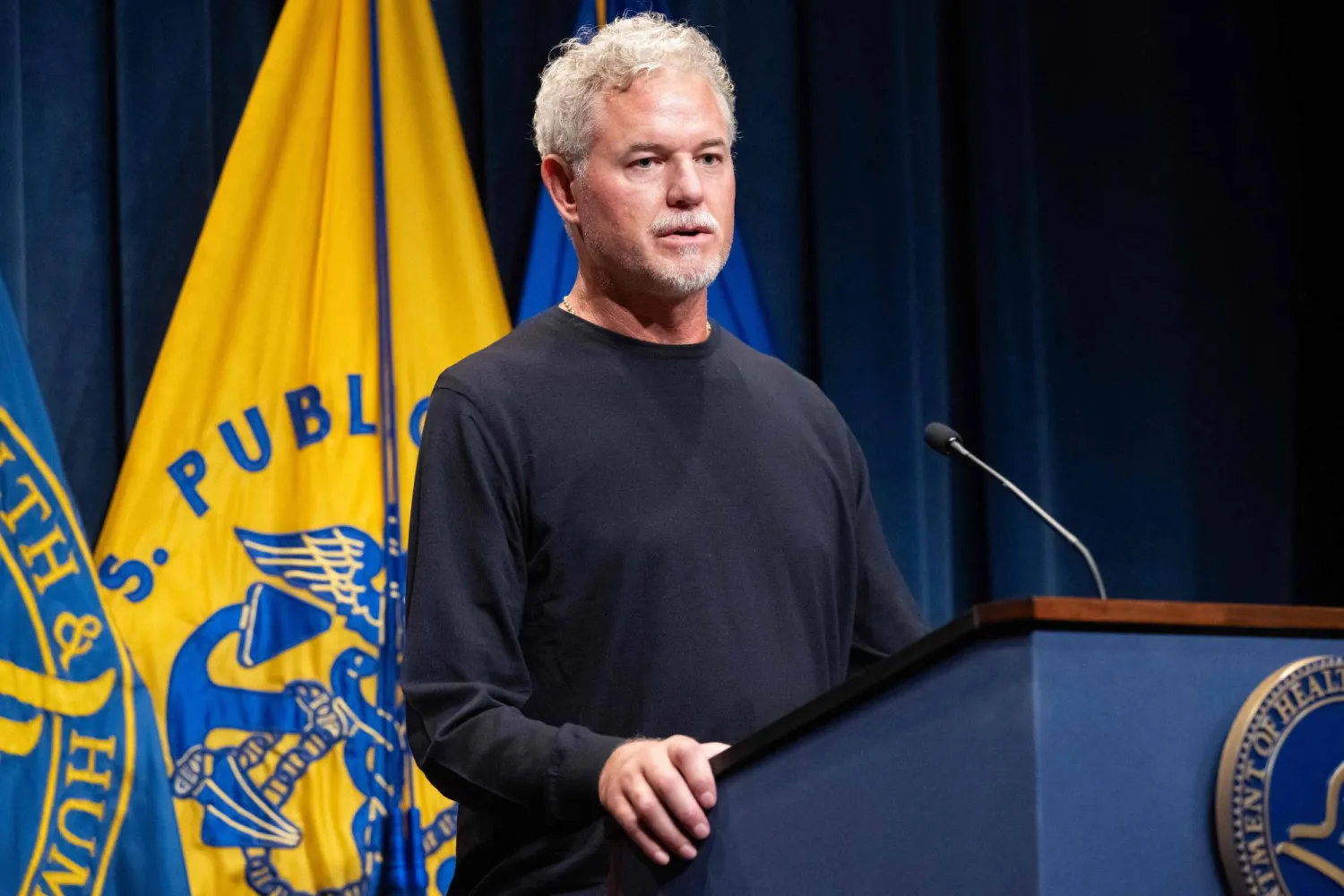
US actor Eric Dane speaks about his ALS diagnosis during a news conference to discuss health insurance at the Department of Health and Human Services Headquarters in Washington, DC, on June 23, 2025. (AFP)
TT

What Is ALS, the Disease That Killed Actor Eric Dane?

US actor Eric Dane speaks about his ALS diagnosis during a news conference to discuss health insurance at the Department of Health and Human Services Headquarters in Washington, DC, on June 23, 2025. (AFP)

Eric Dane, known for his roles on "Grey’s Anatomy" and "Euphoria," died this week from amyotrophic lateral sclerosis at age 53.

The fatal nervous system disease, also known as Lou Gehrig’s disease, killed Dane less than a year after he announced his diagnosis.

According to the Centers for Disease Control and Prevention, ALS is rare. In 2022, there were nearly 33,000 estimated cases, say researchers, who project that cases will rise to more than 36,000 by 2030.

The disease is slightly more common in men than in women and tends to strike in midlife, between the ages of 40 and 60.

Here’s what to know.

What is ALS? It affects nerve cells in the brain and spinal cord, causing loss of muscle control and getting worse over time.

ALS causes nerve cells in the upper and lower parts of the body to stop working and die. Nerves no longer trigger specific muscles, eventually leading to paralysis. People with ALS may develop problems with mobility, speaking, swallowing and breathing.

The exact cause of the disease is unknown, and Mayo Clinic experts said a small number of cases are inherited.

It’s called Lou Gehrig’s disease after the Hall of Fame New York Yankees player. Gehrig was diagnosed with ALS in 1939 on his 36th birthday, died in 1941 and was the face of ALS for decades.

What are some signs of ALS? Experts say the first symptoms are often subtle. The disease may begin with muscle twitching and weakness in an arm or leg.

Over time, muscles stop acting and reacting correctly, said experts at University of California San Francisco Health. People may lose strength and coordination in their arms and legs; feet and ankles may become weak; and muscles in the arms, shoulders and tongue may cramp or twitch. Swallowing and speaking may become difficult and fatigue may set in.

The ability to think, see, hear, smell, taste and touch are usually not affected, UCSF experts said.

Eventually, muscles used for breathing may become paralyzed. Patients may be unable to swallow and inhale food or saliva. Most people with ALS die of respiratory failure.

How is ALS diagnosed and treated? The disease is difficult to diagnose because there’s no test or procedure to confirm it. Generally, doctors will perform a physical exam, lab tests and imaging of the brain and spinal cord.

A doctor may interpret certain things as signs of ALS, including an unusual flexing of the toes, diminished fine motor coordination, painful muscle cramps, twitching and spasticity, a type of stiffness causing jerky movements.

There’s no known cure for ALS, but the drug riluzole has been approved for treatment. According to the Mayo Clinic, it may extend survival in the early stages of the disease or extend the time until a breathing tube is needed.

Another much-debated drug, Relyvrio, was pulled from the US market by Amylyx Pharmaceuticals in 2024. Its development had been financed, in part, by the ALS Association, the major beneficiary of the 2014 " ice bucket challenge " viral phenomenon.

Other medications are sometimes prescribed to help control symptoms.

Choking is common as ALS progresses, so patients may need feeding tubes. People may also use braces, wheelchairs, speech synthesizers or computer-based communication systems.

After the onset of the disease, experts say patients may survive from two years to a decade. Most people live from two to five years after symptoms develop, and about a fifth live more than five years after they are diagnosed.