
Elias Atallah: Syrian Officer Jameh Jameh Pressed the Button and Killed President René Moawad

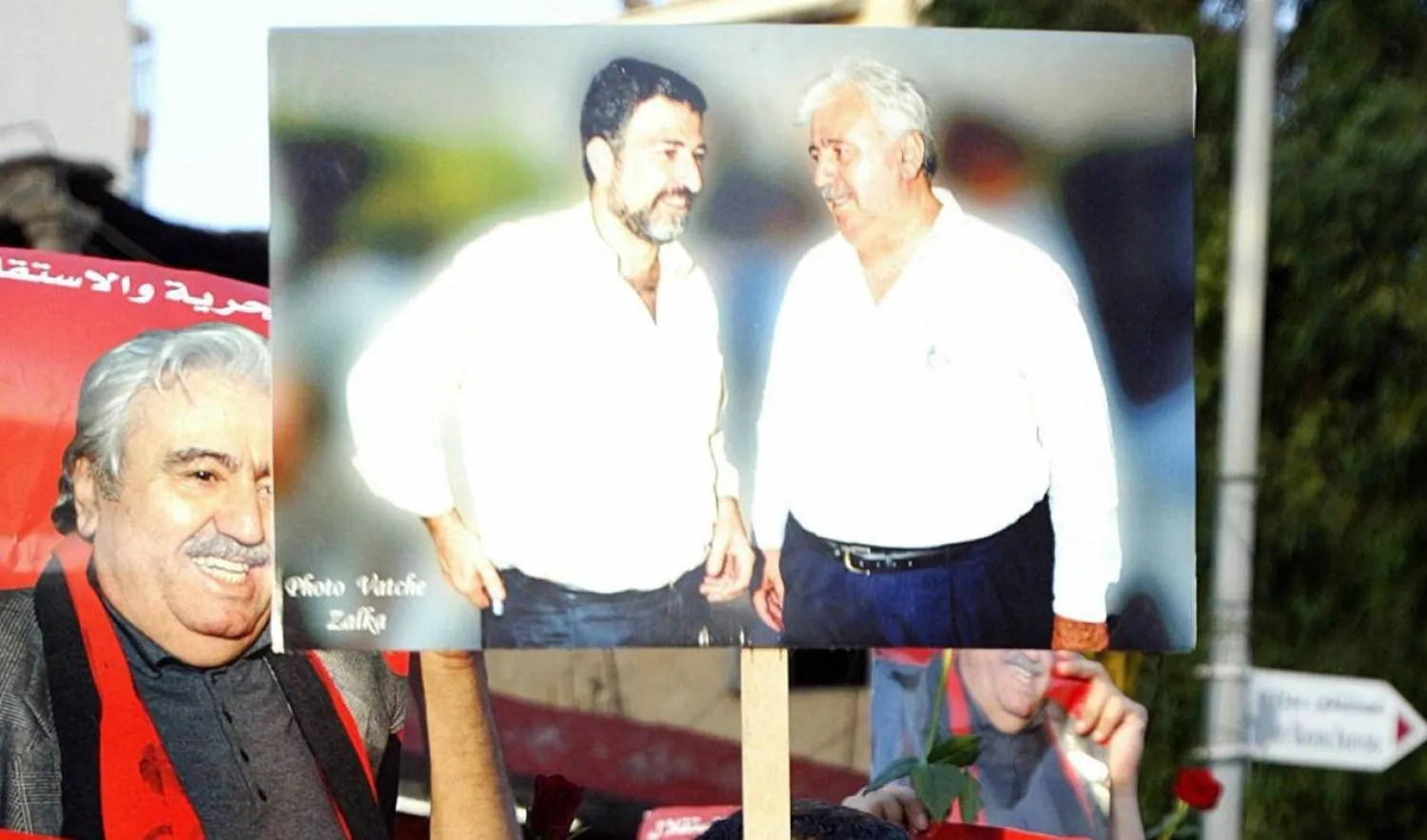
Elias Atallah (not seen) holds a photo of George Hawi and Samir Kassir during Kassir’s funeral in 2005 (AFP)
TT

Elias Atallah: Syrian Officer Jameh Jameh Pressed the Button and Killed President René Moawad

Elias Atallah (not seen) holds a photo of George Hawi and Samir Kassir during Kassir’s funeral in 2005 (AFP)

In this final part of an interview with Asharq Al-Awsat, Elias Atallah, former political bureau member of the Lebanese Communist Party and coordinator of operations for the Lebanese National Resistance Front (JNFR), recounted a turbulent chapter of Lebanon’s modern history.

Atallah revisited the blood-soaked years of the 1980s, when Lebanon was torn apart by wars with Israel, battles in Beirut, and the volatile triangle of Syrian, Palestinian and Lebanese entanglements. He said his experience had been “harsh and painful.”

Confrontation with Israel had reached its zenith; the price of war in Beirut had been high; and relations within the Lebanese-Palestinian-Syrian triangle had been dangerously booby-trapped.

He said that a long-running exchange of strikes had taken place, between the Communist Party and Elie Hobeika, who served as the security chief and later head of the Lebanese Forces.

“I met him about twenty times,” Atallah explained. “He was a man without a heart and absolutely without feeling. It would be wrong to call him pragmatic. He was Machiavellian, willing to do anything to get what he wanted. He was physically brave and would openly state his opinion. He tried to present himself as a deep intelligence man. He had no cultural formation but he was physically strong and courageous.”

Atallah recounted a hunting trip that illustrated Hobeika’s ruthlessness. “I intended to go to Syria to shoot birds,” he said. “George Hawi (the Communist Party’s secretary-general) said we would go together with Elie Hobeika. I disliked the idea but I went. In the wheat plain I noticed Hobeika sliding the rifle under his arm and firing - a method that did not hit birds but could be used against people. I told him, ‘It seems you only go hunting people.’ He replied, ‘Yes, I killed people, but they deserved to die.’ We argued. George invited us to lunch; he had bought a lamb. I pretended I would join them but I climbed into a car and returned to Beirut.”

Atallah added that Hobeika boasted of operations he had carried out, including the explosive device that struck the Communist Party office on Baalbek Street near the Arab University. “We were supposed to hold a Central Council meeting,” he said. “It seems Hobeika received information, so he put his men to plant the explosives. Chance played its role. Our comrade George Batal asked me to drive him to the meeting and I was delayed a few minutes. I was about 150 meters away when the blast shook out. There were dead and injured.”

Atallah also described kidnappings. “One day Hobeika’s group kidnapped three of our youths in the Jiyyeh area; they were transporting explosives for the resistance. I had no option but to kidnap an important person in return,” he recalled. “That was what happened. Two were released because he had killed the third. They two told us Hobeika’s fighters were testing new rifles and pistols by firing at captives they had.”

When asked whether the two men had spoken about the Iranian diplomats whose fate later became the subject of rumors - that one of them had died while his captors were testing a firearm on the bulletproof vest he had been compelled to wear - Atallah replied: “I did not know the fate of the Iranian diplomats, but Hobeika told me in a meeting that he had kidnapped them.”

The former Lebanese Communist Party official contended that Hafez al-Assad had not stopped at Hobeika’s past because he sought to push through a “tripartite agreement,” a formula Atallah described as “a plan to consume Lebanon.” He suggested that Hobeika’s relationship with General Michel Aoun (who later became president) had not begun in the mid-1980s as commonly reported; rather, Atallah believed they had “a prior relationship somewhere in Syria, a matter that required research to untangle.”

He claimed Walid Jumblatt had suffered humiliations under Hafez al-Assad, including being forced to eat lunch with military officers among them Major General Ibrahim Huweija, who had overseen the assassination of Jumblatt’s father, Kamal. While Atallah did not deny that Assad supplied Jumblatt with weapons and tanks during the Mountain War, he stressed that Assad had not given Jumblatt “the right to decide.”

The Soviet abduction

Atallah described the 1985 abduction of four Soviet embassy staff in Beirut in detail. “They called us at the Soviet embassy,” he said. “They told me that yesterday four people from the embassy apparatus were kidnapped; I did not think they were high-ranking, then they disappeared.”

Despite intense searching, day after day, they had found no trace. Walid Jumblatt mobilized everything he had; Atallah and his group did all they could, both publicly and covertly. Days passed without a hint.

Then a senior KGB general, “Yuri,” arrived as an envoy. He thanked them and, it seemed, realized they had failed to locate the missing men. “He told me, in broken Arabic: ‘Look, sheikh; today the detainees ate a breakfast that included labneh, olives and cucumbers, and they were wearing striped pajamas of a particular color. Your fate is at stake. We, the Soviet Union, do not let these matters pass without consequence, be it from the small or the big. I expect them tomorrow at 4 pm, and after that everyone will know his role.’”

General Yuri went alone to see Sayyed Mohammad Hussein Fadlallah, the cleric often portrayed in the media as the spiritual godfather of Hezbollah, a depiction Atallah said he did not necessarily accept as accurate. Fadlallah received him and, by four in the afternoon, three of the four Soviets had been released. Fadlallah’s guards explained that the fourth Soviet had resisted during the transfer, tried to seize a rifle, and was shot dead. The account appeared credible, as he had been killed only recently.

Finger-pointing fell on the Islamic Dawa Party and on an element hidden under the mantle of the Amal movement.

On assassinations and Tripoli battles

Atallah denied that the Communist Party had planned the assassination of Bashir Gemayel. “Absolutely not,” he insisted. “From the time I led these apparatuses, we decided in principle to refuse involvement in assassinations. There was one assassination attempt on General Michel Aoun in the Baabda palace courtyard, and when the Syrian army moved to remove Aoun, the perpetrator fired and we took custody of him. That attempt did not go through us.”

On the battles in Tripoli in the north, Atallah pointed to a bitter rift between Hafez al-Assad and Yasser Arafat. “One day Assad told him: ‘I will pursue an independent decision. Independent of whom?’ Arafat replied: ‘Independent of you. You do not recognize Palestine; Palestine, in turn, does not recognize Syria.’”

Arafat returned to Tripoli in 1983 and entered what Atallah described as Assad’s personal battle with the Palestinian leader. “One hundred percent, it was a mistake for us to participate,” Atallah admitted. “We should have declared ourselves unable to intervene.”

The Communist Party paid dearly: 34 dead in the first round in 1983, and 21 more in the second round during the period of Sheikh Saeed Shaaban. “We paid 55 martyrs for no justification,” he said.

A meeting with Hafez al-Assad

Atallah recalled a 1984 visit with George Hawi to Hafez al-Assad in which Hawi had pushed for immediate unity between Lebanon and Syria. The idea, Atallah said, had been alien to Lebanese sentiment and even dangerous.

In their palace meeting Assad spoke for two hours, repeating themes that were familiar from other encounters, according to Atallah. Oddly, Assad probed into where exactly Atallah lived in Ramlet, down to the house’s location on the side of the road near Saida. As they departed, Assad turned to Hawi with a warning: “Never repeat the story of immediate Lebanon-Syria unity. This talk is dangerous and forbidden. There are things to be carried out silently, without words.”

On Hariri, Hawi and Syrian-Iranian partnerships

When asked who killed Prime Minister Rafik Hariri, Atallah answered bluntly: “Three, and one leader: Bashar al-Assad.” He argued that after the departure of investigator Detlev Mehlis, the tribunal had lost its way. He named Assef Shawkat and other Syrian officers, as well as Hezbollah, as participants. He noted wryly that all Syrian intelligence officers who had overseen Lebanon were themselves later killed, including Rustom Ghazaleh, who was “torn to pieces.”

As for George Hawi’s assassination, Atallah maintained that until 2005 most assassinations in Lebanon were Syrian operations, but from that year onward there had been Syrian-Iranian partnerships in carrying out killings.

The killing of René Moawad

The climax of Atallah’s testimony came with his version of the assassination of President René Moawad, elected on November 5, 1989. Moawad had no presidential palace or guard, as Baabda Palace was still held by General Michel Aoun. He lived instead in a Hariri-owned building in West Beirut, considered secure because it lay inside the Syrian intelligence perimeter.

Atallah said Syrian intelligence had placed Major Jameh Jameh in charge of Moawad’s security, with Ghazi Kanaan and Hafez al-Assad’s blessing. Moawad, suspicious, had asked that Jameh be lodged in the adjacent Beaurivage Hotel and kept away from his entourage.

Atallah then recounted a chilling episode: A Communist soldier, recruited into Moawad’s guard at Syrian request, was later given a tiny explosive to attach to the president’s clothing during a church crowd in Ehden. Atallah said he learned of the plan and warned Moawad personally, along with George Hawi and Karim Mroueh. He remembered Moawad’s hands trembling as he heard the soldier’s name and the Syrian officer behind the plot.

The attempt failed when the soldier vanished. Ten days later, Moawad was killed. Witnesses later told Atallah they saw Jameh Jameh on the rooftop of the building, holding a device. “He pressed the button and the explosion went off,” they said. Jameh descended calmly and walked away.

Reflections on failure and lessons

Atallah ended the final part of his Asharq Al-Awsat interview with reflections on the futility of the cycle of violence. “I review this past not because I want to live in it, but because I hope no one will repeat it,” he said. His aim was twofold: “To state my criticisms of what happened, and to show the truth about the national resistance and the failure of resistances that were political projects, not national ones.”

He continued: “Hezbollah’s so-called resistance was not resistance. It was the occupation of the liberated land and turned into a profession. Resistance ceased to be a mission and became a career.”

Response from the Ibrahim Qais Family to Elias Atallah’s Testimony 

To the esteemed Editor-in-Chief and Editorial Board of Asharq Al-Awsat:  

We, the family of the late Ibrahim Qais, address you with this letter in exercise of our right of reply to what was stated in the interview titled: “Elias Atallah: Syrian Officer Jameh Jameh Pressed the Button and Killed President René Moawad”, published in your newspaper on September 20, 2025.  

We kindly request that you publish this response in full, in order to preserve the credibility of your newspaper and to clarify the facts:  

What was attributed to the late Ibrahim Qais by Mr. Elias Atallah in the interview is completely false.  

Our father was not a witness to what Atallah claims, and he never said that he saw Jameh Jameh press the detonation button in the assassination of President René Moawad.  

The truth is that on October 22, 1989, Independence Day, we - the Qais family - were gathered with the family of our friend Majed Muqalled for lunch at our home, located near the Daaboul Travel Agency building, opposite a plot of land that separated us from Beirut prison. Muqalled, like our father, was seated with us. When the presidential convoy passed by the house, Majed went out onto the balcony to watch, and the explosion occurred at that very moment.  

The violent blast came from the Flippers playroom, which was adjacent to Raml al-Zarif School, where an explosive device had been detonated remotely. We experienced that horrifying moment in which the windows shattered and the house was damaged, and several family members and neighbors were injured.  

Our father, who rushed to help our wounded mother, was not observing the buildings or following any specific individuals; he was in the midst of the destroyed house, searching for his children and aiding the injured.  

Mr. Atallah’s claim that Jameh Jameh was seen on the roof of a building across the street pressing the detonation button contradicts both logic and the facts:  

First: Jameh Jameh was part of the convoy itself, as confirmed by MP Michel Moawad in a documented testimony, and the Syrian officer’s cars were about 150 meters ahead of the vehicle carrying the martyred president. 

Second: The buildings that Atallah claims our father and Majed Muqalled witnessed the explosion from were at the very heart of the blast and were directly damaged. 

Third: There was no way anyone could have witnessed the “pressing of the button”; we were all victims of this criminal explosion, right at the scene of the crime.  

If Atallah’s statements were truly accurate, why did he not report them during his years in a position of decision-making within the Communist Party, or in the years that followed? Why did he not disclose them while serving as a member of parliament for the city of Tripoli? It would have been more appropriate for him to show the courage to confront the truth directly instead of hiding behind colleagues who have passed away and can no longer refute his fabrications.  

Mr. Atallah’s attempt to implicate our late father Ibrahim Qais as a sole witness - alive, according to his account - in one of the most serious political and security cases in Lebanese history is nothing but a baseless slander lacking any credibility.  

Our father, the well-known communist activist, never exploited bloodshed and never accepted being part of a game of defamation or falsification. 
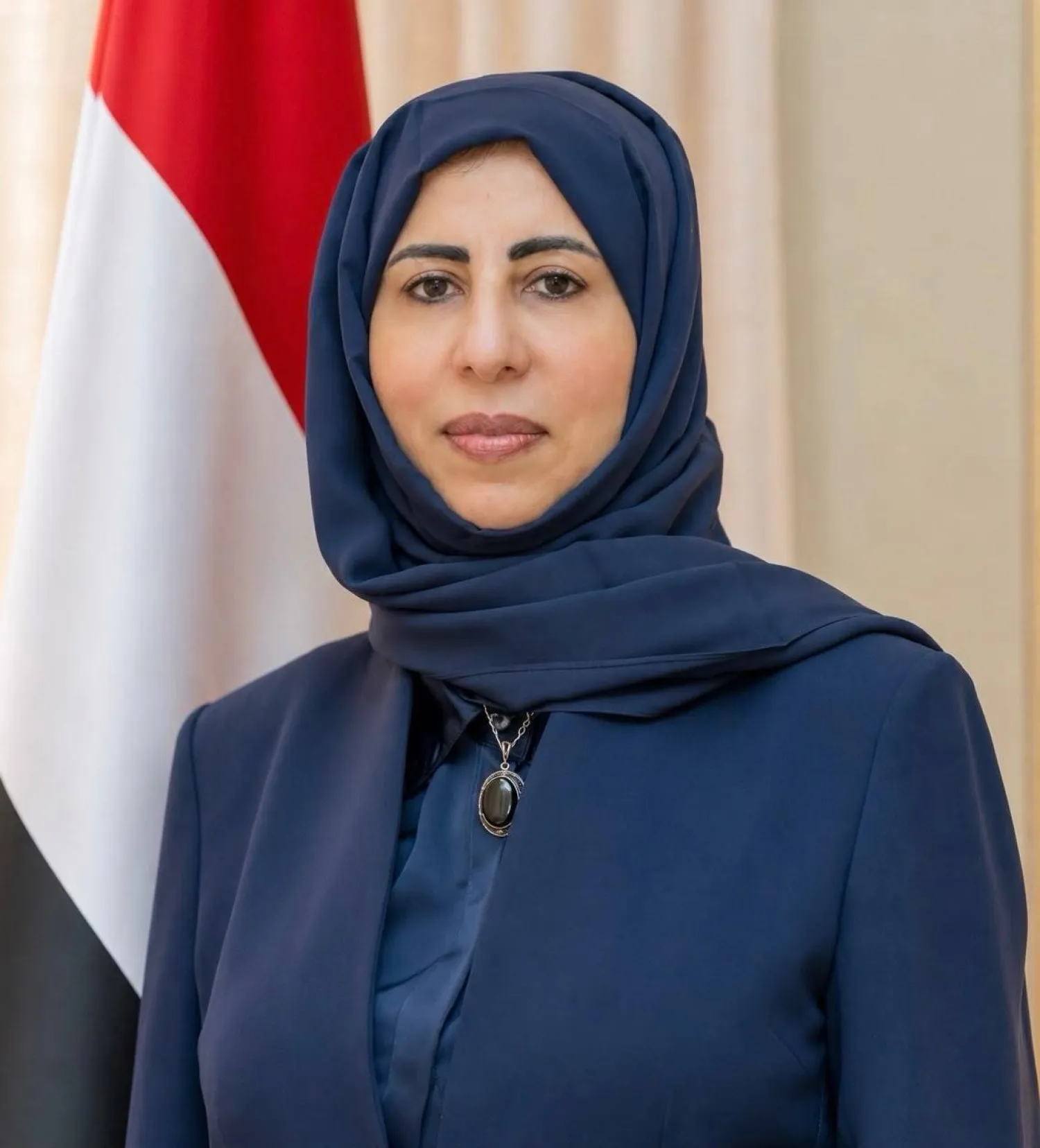


Bin Habrish to Asharq Al-Awsat: Hadhramaut on Threshold of New Era

Sheikh Amr bin Habrish, First Deputy Governor of Hadhramaut (Asharq Al-Awsat)
TT

Bin Habrish to Asharq Al-Awsat: Hadhramaut on Threshold of New Era

Sheikh Amr bin Habrish, First Deputy Governor of Hadhramaut (Asharq Al-Awsat)

After nearly 500 days spent in the mountains and highlands, Sheikh Amr bin Habrish, First Deputy Governor of Hadhramaut and commander of the Hadhramaut Protection Forces, has returned to the provincial capital, Mukalla, declaring what he described as the beginning of a “new phase” that will shape a different future for Yemen’s largest eastern governorate.

In an interview with Asharq Al-Awsat from his residence overlooking the Arabian Sea, Bin Habrish said Hadhramaut is currently experiencing “a state of stability and reassurance,” which he attributed to the steadfastness of its people and to Saudi support and intervention that came “at the right time.”

He said the current ambition is to build a state based on institutions under which all citizens are united, while preserving Hadhramaut’s distinct character. Bin Habrish also affirmed his commitment to integrating the Hadhramaut Protection Forces into “fair” state institutions.

Addressing security concerns, he described terrorism as “manufactured” and said it has no social base in Hadhramaut. He accused external powers and local actors of exploiting it for their own agendas, while stressing readiness to confront terrorism in all its forms.

Bin Habrish offered his account of the recent handover of military camps led by the Nation’s Shield Forces, saying the achievements were made possible by the resistance of Hadhramaut’s people on their own land, and by Saudi support and what he called the Kingdom’s “honest and decisive” stance at a critical moment.

He said this outcome would not have been possible without the “genuine bond” between Hadhramaut’s society and Saudi Arabia, adding that this relationship has helped restore security and stability to Mukalla after what he described as unnecessary turmoil.

“We were not satisfied with the arrival of forces and the internal conflict and fighting that followed,” he said, adding that some parties felt emboldened and left no room for dialogue.

He accused the Southern Transitional Council of deploying its forces and “fully occupying the governorate,” stressing that Hadhramaut belongs to its people and that any mistake should have been addressed locally, not imposed by force. “We were compelled to resist,” he said, citing home raids and pursuits as “wrong and unjustified.”

Open Channels with Saudi Arabia

Bin Habrish credited Saudi Arabia’s leadership — King Salman bin Abdulaziz, Crown Prince Mohammed bin Salman, Defense Minister Prince Khalid bin Salman, along with the Special Committee and the Joint Forces Command — for Hadhramaut’s current stability.

He said coordination with the Kingdom takes place “at the highest levels,” with open channels and no barriers, praising Saudi intentions and expressing deep appreciation for its support.

A New Era

Bin Habrish said Hadhramaut is entering a new era rooted in its traditions of peace, wisdom, and culture. He reiterated calls for self-rule based on historical grounds, describing it as the minimum requirement for enabling Hadhramaut to build its institutions and deliver services.

He urged unity, mutual compromise, and prioritizing the governorate’s interests, saying: “We forgive and open a new page. We are not seeking revenge. What matters is that Hadhramaut remains at the center of decision-making. Without it, there can be no development.”


President of Madagascar to Asharq Al-Awsat: Three-Pillar Economic Plan to Revive the Country

President of Madagascar Michael Randrianirina (Presidency)
TT

President of Madagascar to Asharq Al-Awsat: Three-Pillar Economic Plan to Revive the Country

President of Madagascar Michael Randrianirina (Presidency)

President of Madagascar Michael Randrianirina said his country views Saudi Arabia as its “main partner” in the phase of “refoundation” and in building a new development model, revealing to Asharq Al-Awsat a three-pillar economic plan aimed at restoring political and institutional stability, activating structural sectors, and improving the business environment to attract investment, with a focus on cooperation in mining and natural resources, including rare minerals.

In his first interview with an Arab newspaper since assuming office in October, Randrianirina said in remarks delivered via Zoom from his presidential office that Madagascar “possesses real potential in energy, agriculture, mining, tourism, and human capital,” stressing that driving national revival requires consolidating institutional stability and building balanced partnerships with countries such as Saudi Arabia in order to translate potential into tangible outcomes for citizens and youth.

Three-Pillar Economic Plan

The president explained that his plan is based on three main pillars. The first focuses on restoring political and institutional stability through a clear transitional roadmap, the establishment of an executive body to manage and review projects, and the formation of a supporting committee to ensure an orderly and transparent transition.

The second pillar centers on investment in structural sectors, including energy, ports, digital transformation, health, and mining, in partnership with Saudi Arabia and other partners, with the aim of removing the main obstacles to economic revival.

The third pillar, he said, targets creating an attractive environment for investors by improving the business climate, strengthening public-private partnerships, activating special economic zones, and leveraging regional frameworks such as the African Continental Free Trade Area (AfCFTA) and the Southern African Development Community (SADC) to open broader African markets through Madagascar.

Strategic Partnership and “Investment-Ready” Projects

On plans to enhance economic, investment, and trade cooperation between Saudi Arabia and Madagascar, Randrianirina said his objective is to build a long-term strategic partnership within a clear institutional framework and through flagship projects with tangible impact for both countries.

He proposed the creation of a joint Madagascar–Saudi investment body, to be known as “OIMS,” to coordinate and finance projects in energy, ports, health, digital governance, mining, agriculture, and tourism. He noted that Madagascar is simultaneously preparing a package of investment-ready projects aligned with Saudi Vision 2030 and Africa’s regional integration, in order to provide organized and secure opportunities for Saudi capital and expertise.

Saudi Arabia as the “Main Partner”

Randrianirina emphasized that Madagascar considers Saudi Arabia a key partner in priority sectors. In energy and refining, he said the country plans to establish a national oil refinery, supply fuel directly from the Kingdom, and jointly develop heavy oil resources in western Madagascar.

In ports and logistics, he pointed to efforts to modernize and expand the ports of Toliara and Mahajanga to position Madagascar as a logistics and energy hub in the Indian Ocean.

Regarding digital transformation and secure governance, he said Madagascar aims to launch a secure national digital platform for public administration and security, drawing on Saudi experience.

He also highlighted mining and natural resources, including rare minerals, as a cornerstone of cooperation, with the goal of improving valuation and ensuring traceability of Malagasy gold and other mineral resources in a transparent and mutually beneficial manner. He further expressed interest in the health sector, proposing the establishment of a royal health complex in Antananarivo, followed by a gradual expansion of similar facilities in other regions.

Planned Visit to Riyadh

The President said Madagascar is working with Saudi authorities to arrange an official visit in the near future, with the date to be determined in coordination with the Kingdom.

He described the visit as an important opportunity to meet and engage with Crown Prince Mohammed bin Salman, noting that Vision 2030 has brought about a qualitative transformation in the Kingdom’s image and economic trajectory. He said Saudi Arabia has strengthened its role as a major player in economic modernization, energy diversification, digital transformation, and global investment, while maintaining its central role in the Arab and Islamic worlds.

He added that the reforms and major projects achieved under the vision are a source of inspiration for Madagascar’s refoundation efforts, expressing a desire to benefit from the Saudi experience in areas including energy, infrastructure, digital transformation, health, and natural resource development.

The president said he hopes the visit will include meetings with the Custodian of the Two Holy Mosques King Salman bin Abdulaziz and Crown Prince Mohammed bin Salman, as well as sectoral meetings covering energy, ports, digital transformation, health, mining, defense and security, trade, culture, and sports, alongside discussions on establishing the joint investment body.

Historical Links with the Arab World

Randrianirina noted that Madagascar had historical links with the Arab world prior to the arrival of Western powers, explaining that Arab sailors, traders, and scholars reached its coasts and left their mark on certain languages, place names, and customs.

Three Major Challenges

The president acknowledged three main challenges facing his country: poverty and food insecurity, lack of infrastructure, and weak institutions. He said a large segment of the population still lives in poverty and that food security is not guaranteed in several regions, stressing that addressing these challenges requires investment in agriculture and rural infrastructure and the search for partners to support sustainable value chains that improve farmers’ incomes.

On infrastructure, he said the capacity of the energy and port sectors remains insufficient, hindering growth and trade, noting that upcoming discussions with Saudi Arabia focus on projects such as the refinery, heavy oil development, the ports of Toliara and Mahajanga, and digital infrastructure. He added that repeated crises have weakened institutions, and that his government is working to strengthen the rule of law, anti-corruption mechanisms, and public investment governance through independent oversight and transparent reporting to restore trust.

Combating Corruption

The President said financial corruption is a serious problem in Madagascar as it undermines public trust and diverts resources away from development. He explained that the anti-corruption strategy is based on three levels: establishing an executive body with clear procedures, independent audits, and periodic reporting; using digitalization to improve traceability and reduce misuse; and strengthening anti-corruption bodies while supporting judicial independence.

When asked about allegations of financial corruption linked to the previous leadership, he said his focus is on institutions rather than personal accusations, stressing that addressing any allegations falls under the jurisdiction of the competent judicial and oversight bodies, which must be protected from political interference and allowed to operate in accordance with the law and due process.

Duty to the Country and Its Youth

The president concluded by saying that he assumed office out of a sense of duty toward the country and its youth, noting that young people represent a significant demographic weight in Madagascar and are demanding change, dignity, and a better future through jobs, education, stability, and opportunities within their own country.


Microsoft President: Saudi Arabia is Moving from Exporting Oil to Exporting Artificial Intelligence

Naim Yazbeck, President of Microsoft for the Middle East and Africa (Microsoft) 
TT

Microsoft President: Saudi Arabia is Moving from Exporting Oil to Exporting Artificial Intelligence

Naim Yazbeck, President of Microsoft for the Middle East and Africa (Microsoft) 

As Saudi Arabia accelerates its national transformation under Vision 2030, the region’s technology landscape is undergoing a decisive shift. For the first time, “the region is not merely participating in a global transformation, it is clearly leading it,” said Naim Yazbeck, President of Microsoft for the Middle East and Africa, in an interview with Asharq Al-Awsat.

Yazbeck argued that Saudi Arabia now stands at the forefront of what he called “a historic turning point not seen in the past century,” defined by sovereign cloud infrastructure, artificial intelligence, and national innovation capabilities.

He noted that Saudi Arabia’s rapid progress is driven by clear political will, explaining that the state is not simply modernizing infrastructure, but views AI as a strategic pillar comparable to the historical role of oil. While oil underpinned the economy for decades, AI has emerged as the new resource on which the Kingdom is staking its economic future.

According to Yazbeck, the recent visit of Crown Prince and Prime Minister Mohammed bin Salman to the United States underscored this shift, with AI and advanced technologies taking center stage in discussions, reflecting Saudi Arabia’s intent to build a globally influential knowledge economy.

This direction marks the start of a new phase in which the Kingdom is no longer a consumer of imported AI technologies but a developer of local capabilities and a producer of exportable knowledge, strengthening technological sovereignty and laying the foundation for an innovation-driven economy.

A Distinctive Tech Market

Yazbeck stressed that the regional landscape, especially in Saudi Arabia, is witnessing an unprecedented shift. Gulf countries are not only deploying AI but also developing and exporting it. The Kingdom is building advanced infrastructure capable of running large-scale models and providing massive computing power, positioning it for the first time as a participant in global innovation rather than a mere technology importer.

He pointed to a common sentiment he encountered in recent meetings across Riyadh’s ministries, regulatory bodies, national institutions, and global companies: “Everyone wants to be ahead of AI, not behind it.” Ambition has translated into action through revised budgets, higher targets, and faster project timelines.

He added that Saudi institutions now demand the highest standards of data sovereignty, especially in sensitive financial, health, and education sectors. The regulatory environment is evolving rapidly; Saudi Arabia has modernized its cybersecurity, data governance, cloud, and AI frameworks faster than many countries worldwide, turning regulatory agility into a competitive asset.

Yazbeck emphasized that success is not measured by the number of AI projects but by their alignment with national priorities, productivity, healthcare, education, and cybersecurity, rather than superficial, publicity-driven initiatives.

The ‘Return on Investment’ Equation

According to the Microsoft official, building an AI-driven economy requires more than advanced data centers. It begins with long-term planning for energy production and the expansion of connectivity networks. He further said that running large models demands enormous electrical capacity and long-term stability, which the Kingdom is addressing through strategic investments in renewable energy and telecommunications.

Yazbeck said return on investment is a central question. Nationally, ROI is measured through economic growth, job creation, higher productivity, enhanced innovation, and stronger global standing. At the institutional level, tangible results are already emerging: with tools such as Copilot, employees are working faster and with higher quality, shedding routine tasks and redirecting time toward innovation. The next phase, he added, will unlock new business models, improved customer experiences, streamlined operations, and higher efficiency across sectors.

Sovereignty and Security

Digital sovereignty is now indispensable, Yazbeck said. Saudi Arabia requires cloud providers to meet the highest accreditation standards to host sensitive national systems, which are criteria Microsoft is working to fulfill ahead of launch. Once the new cloud regions in Dammam go live, they will become part of the Kingdom’s sovereign infrastructure, requiring maximum protection.

Microsoft invests billions annually in cybersecurity and has repelled unprecedented cyberattacks, an indicator of the threats national infrastructure faces. The company offers a suite of sovereign cloud solutions, data-classification tools, and hybrid options that allow flexible operation and expansion. Yazbeck noted that sovereignty is not a single concept but a spectrum that includes data protection, regulatory control, and local hosting all play critical roles.

Data: The Next Source of Advantage

Yazbeck identified data as the decisive factor in AI success. He warned that any model built on unclean data becomes a source of hallucinations. Thus, national strategy begins with assessing the readiness of Saudi Arabia’s data landscape.

He revealed that the Kingdom, working with SDAIA, the Ministry of Communications, and national companies, is constructing a vast, high-quality data ecosystem, laying the groundwork for competitive Arabic language models.

He also called for a robust framework for responsible AI, saying that speed alone is not enough. He stressed that safe and trustworthy use must be built from the start, noting that Microsoft is collaborating with national bodies to craft policies that prevent misuse, protect data, and ensure fairness and transparency.

Skills: A National Advantage

Human capability is the true engine of national power; Yazbeck underlined, pointing that infrastructure means little without talent to run and advance it. He stated that Saudi youth represent the Kingdom’s greatest competitive advantage.

Microsoft has trained more than one million Saudis over the past two years through programs with SDAIA, the Ministry of Communications, the Ministry of Education, and the MISK Foundation. Its joint AI Academy has graduated thousands of students from over 40 universities, and it has launched broad programs to train teachers on AI tools in education.